
REVIEW · DAY OF THE DEAD TOURS
Day of the Dead Tour in Mixquic from Mexico City
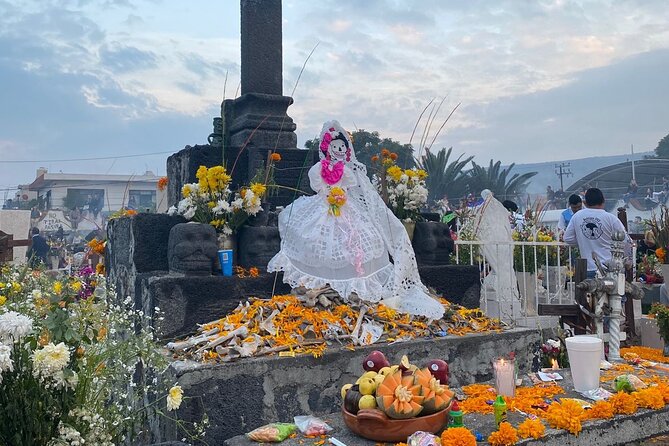
Candles, copal, and a village that does not do small. This Mixquic tour is built around Día de Muertos in San Andrés Mixquic, including the church area and the unforgettable Alumbrada on November 2, when the cemetery glows with thousands of candles. I especially like the way the tour sets you up with proper context and etiquette, and how the guide helps you find your bearings before the crowd surge.
Here’s the part I’d flag: Mixquic is famous for a reason, and on the big days it can feel very crowded. If your idea of a tour is lots of quiet walking and slow stops, you may end up feeling like you’re mostly paying for transport and timing.
In This Review
- What you’ll notice right away
- Why Mixquic for Día de Muertos works on a 2:00 pm start
- Price and what you really get for $99
- Getting to Mixquic: the transfer time is the real commitment
- Stop 1: Mexico City meetup and the ride south-east
- Stop 2: San Andrés Mixquic streets, ofrendas, and Church of San Andrés Apóstol
- The Alumbrada on November 2: where candles and incense take over
- Meals that fit the holiday: pan de muerto and atole
- How the guide makes this tour feel like more than transport
- Crowd factor: when it can feel like crowd control
- The timing you should plan around for best results
- Who this tour is best for (and who might prefer another option)
- Practical tips to get the most out of Mixquic
- Should you book this Día de Muertos tour from Mexico City?
- FAQ
- What time does the tour start?
- How long is the Día de Muertos tour in Mixquic?
- Where do I meet the tour group in Mexico City?
- Is hotel pickup included?
- What’s included in the price?
- Is admission charged for the stops?
- When does the Alumbrada happen?
- Does the tour run in English?
- Is the tour refundable if plans change?
- Are service animals allowed?
What you’ll notice right away
- The schedule is built for November 2 evening light so you get the cemetery atmosphere when it matters most
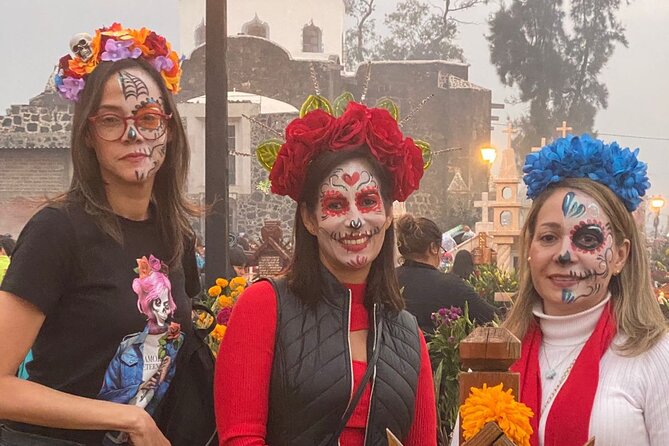
- A local guide focuses on etiquette and flow (Adriana gets praised for keeping big groups on track)
- A real village setting beats a generic show with decorated streets, ofrendas, and the Church of San Andrés Apóstol area
- Alumbrada means candles plus copal incense right by the church cemetery loop
- You’re fed simply and appropriately with pan de muerto and atole
- The meet point is central, not at your hotel (small group) so double-check where you need to be
More of the marigold season
- Mexico City: Day of the Dead Guided Tour
★ 3.4 · 97 reviews - Day of the Dead Tour in Mexico City
★ 3.5 · 78 reviews - Day of the Dead Tour in San Andres Míxquic From Mexico City
★ 3.7 · 52 reviews - The real “Dia de muertos” tour in Mixquic + secret cemetery
★ 4.0 · 27 reviews
Why Mixquic for Día de Muertos works on a 2:00 pm start
Mixquic is south-east of Mexico City, in the village area of San Andrés Mixquic, and the celebration runs across the full holiday stretch. What makes it special is the rhythm: families prepare the offerings, visitors arrive, and then November 2 brings the big cemetery moment around the Church of San Andrés Apóstol.
Starting at 2:00 pm is smart. You’re not trying to catch the whole thing at the peak sprint. Instead, you’re heading out in daylight, getting your first orientation, and then shifting into the evening atmosphere when the Alumbrada takes over.
Price and what you really get for $99
At $99.00 per person, you’re not just buying entry into Mixquic. You’re buying three things that matter on this holiday: round-trip transportation from Mexico City, a guided walking experience in the village, and included food.
You also get structure. On Día de Muertos, it’s easy to wander and feel like you’re watching from the sidelines. The tour is designed to help you understand what you’re seeing—ofrendas, candles, cemetery rituals—and how to behave so you don’t accidentally get in the way of local families.
The trade-off is time and crowd physics. If you’re the type who wants flexibility, small windows for photos, and lots of uncrowded space, you might find the “tour” part constrained by how packed the area gets.
Getting to Mixquic: the transfer time is the real commitment
Plan your day around the drive. The tour includes transport from Mexico City, and the transfer can vary with traffic, but the itinerary calls for about 2 hours 30 minutes each way.
That means this is not a quick afternoon detour. You’re committing to a long outing—around 8 to 9 hours total—so you’ll want to treat it like a full experience day, not just an evening event. If you get stuck in traffic, the schedule won’t magically fix itself; the tour will follow local road reality.
Small detail that matters: this is offered from a central meeting point at Lunario (Av. P.º de la Reforma 50, Polanco V Secc), and small-group pickup isn’t at your hotel. If you’re staying somewhere far from Polanco, it can be tempting to cut it close. Don’t. You want extra margin because pickup time is where holiday stress can start.
Wider loops around Mexico City
- Teotihuacan Hot Air Balloon Flight from Mexico City / Volare★ 5.0 · 3,262 reviews
- Teotihuacan Private Tour from Mexico City★ 5.0 · 1,890 reviews
- Historic Center Food Tour in Mexico City★ 5.0 · 1,263 reviews
- The best tour to Teotihuacán from Mexico City★ 5.0 · 1,236 reviews
- From Mexico City: Puebla, Cholula and Tonantzintla Day Trip★ 4.3 · 1,191 reviews
Stop 1: Mexico City meetup and the ride south-east
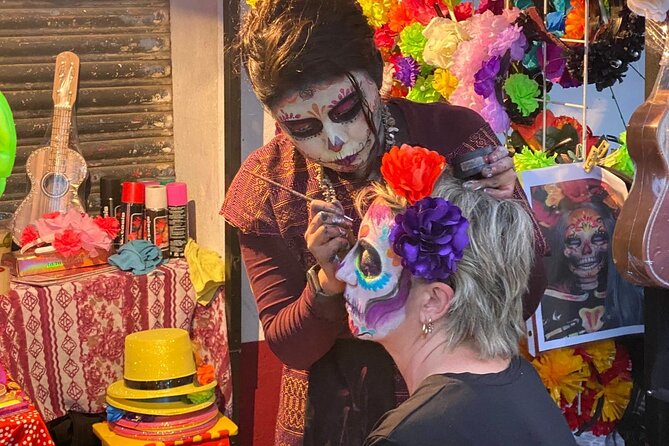
You meet your guide and board for Mixquic from Lunario in Polanco. From there, the first major phase is transit. This part is straightforward, but it’s where you set your mindset: you’re not there yet, and the experience starts building later.
Also, keep an eye on communication. The tour asks you to provide a valid contact phone number with an international prefix so the guide can reach you for pickup. If you’re hard to find, you risk missing the group—something no one wants during a day with massive holiday crowds.
Stop 2: San Andrés Mixquic streets, ofrendas, and Church of San Andrés Apóstol
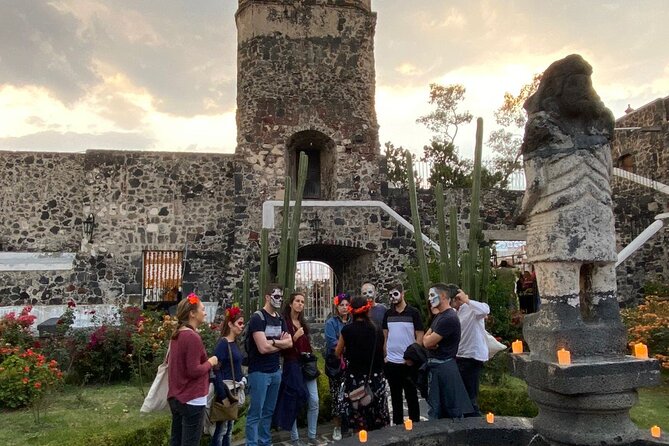
Once you reach Mixquic, the tour becomes about meaning, not just movement. You’ll walk through decorated streets and learn how families honour departed souls through offerings (ofrendas), candles, and cemetery-related rituals.
You’ll also visit the area of the Church of San Andrés Apóstol. Even if you only catch a portion of the church surroundings, this is where the celebration’s structure shows up clearly: what’s being honored, how the offerings are arranged, and why so many visitors come with that slightly reverent tone.
One of the biggest “you’ll be glad you did it” moments is learning etiquette. You don’t have to be perfect, but you do want to avoid blocking people, stepping where you shouldn’t, or lingering where families are actively participating. The guide-led first portion is valuable because it gives you practical rules fast, before the streets get crowded.
The Alumbrada on November 2: where candles and incense take over
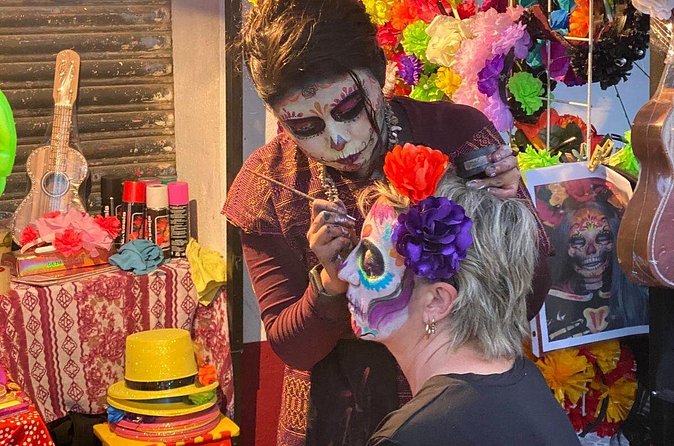
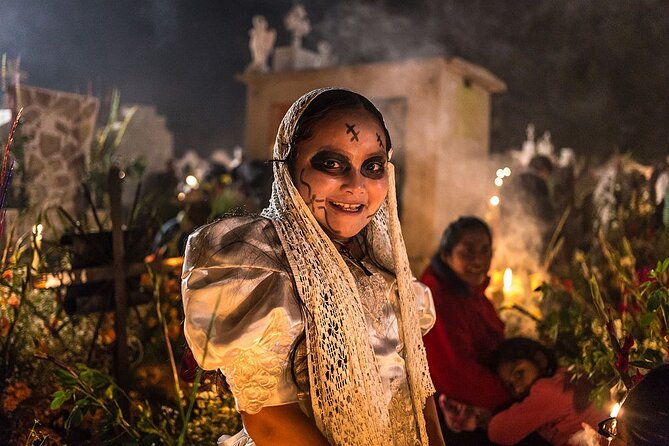
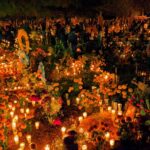
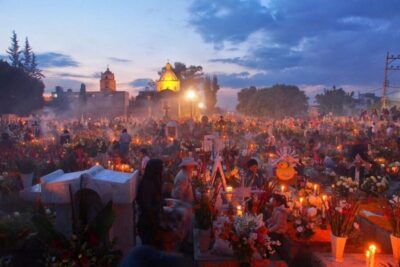
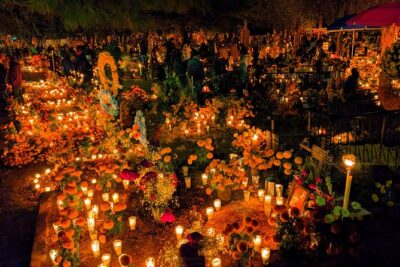
Here’s the headline moment: Alumbrada. On November 2, the cemetery around the church is illuminated with thousands of candles, and copal incense fills the air. The effect is hard to describe with words because it’s sensory: light, smell, and sound all tied to the rituals families are performing.
The tour is built to get you there during the time when it’s most meaningful. That matters because the vibe changes through the night. Early on, you might feel like you’re seeing preparations and offerings. Later, you’re more likely to feel the cemetery atmosphere as a living space—full of visitors, families, and movement.
Practical note: when a lot of people converge, you’re not always going to have the exact walking lane you’d like. The tour handles coordination with checkpoints, but you should still expect slower movement during peak periods.
Meals that fit the holiday: pan de muerto and atole
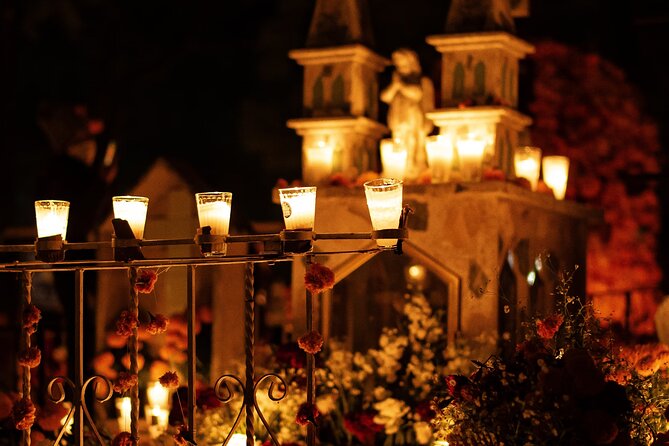
One of the simplest values in this tour is that you’re not left hunting for food in the middle of a crowd. Meals included are pan de muerto and atole—a classic pairing that matches the season.
This is the kind of included snack that helps you enjoy the evening. You’ll have energy for walking, and the food experience feels more connected to what’s going on than grabbing something generic. Keep in mind it’s not positioned as a big sit-down meal; it’s more like holiday fuel.
If you have dietary needs, the tour data doesn’t list options, so it’s worth planning carefully and carrying water.
How the guide makes this tour feel like more than transport
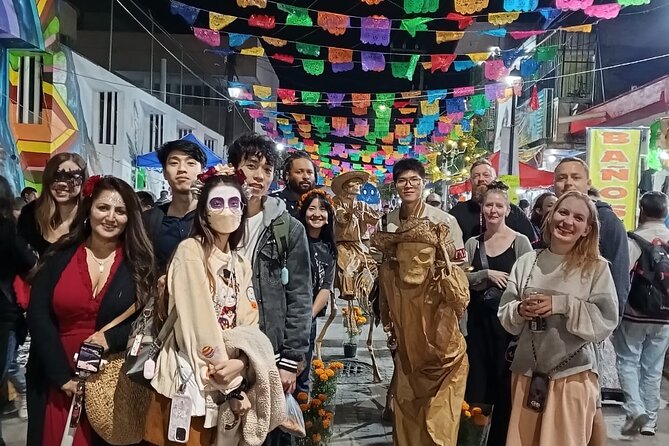
The guide is the difference between seeing Mixquic and understanding what you’re seeing. In the reviews, Adriana is repeatedly praised for being communicative and for managing the group effectively, including during the busiest time of year.
That matters because this experience is not just sightseeing. It’s a communal ritual space, and you’re sharing it with families, not just other visitors. A good guide does two jobs at once: they explain what you’re looking at, and they help keep the group together so nobody gets lost in the crush.
Also, I like that the tour isn’t only lecture time. One of the best-reviewed formats here is guided context early on, and then time to experience the village atmosphere more freely afterward. That balance keeps you from feeling locked into a “follow the leader” loop for the entire night.
Crowd factor: when it can feel like crowd control
Here’s the honest downside. Even before the cemetery peak, the area can be packed. That can limit how “tour-like” the walking feels. You might not get the kind of slow, thoughtful pacing you’d prefer.
One review put it bluntly: it can start to feel more like a big event than the calm village experience you may have imagined. That doesn’t mean the tradition isn’t beautiful—it means the crowd density affects how much you can savor without interruption.
My practical advice: go with a goal. If your goal is photos, pick a few key moments, not everything. If your goal is atmosphere and meaning, accept that you’ll be standing sometimes, not always moving. And if you want space, consider that Día de Muertos is simply not built for quiet.
The timing you should plan around for best results
You’ll spend about 4 hours in Mixquic, while the itinerary frames the rest as 2 hours 30 minutes transfers. That’s a lot of time, and it helps you avoid the worst “rush in, rush out” feeling some people get.
Still, November 2 is the day the cemetery illumination is specifically highlighted. If you’re booking for the most dramatic Alumbrada, you should expect the evening to be the toughest part for crowd navigation.
If the tour is flexible with which portions you linger at, follow the guide’s cues. With this kind of event, the timing of where you stand can be the difference between a clear view and a blocked one.
Who this tour is best for (and who might prefer another option)
This tour is a strong fit if you want:
- A guided introduction so you understand ofrendas, candles, and cemetery rituals without guessing
- English-speaking support from a multilingual local guide
- A structured day that includes transport and a light meal, so you can focus on the experience
- A chance to see Alumbrada and the church area during the most intense part of the celebration
It may not be ideal if:
- You hate crowds and want lots of breathing room
- You’re the type who wants independent wandering without group pacing
- You’re traveling on a tight budget and think you’d rather hire your own transport instead
For many people, the value comes from not having to organize the day yourself. But if you already know how to navigate the route and you’re comfortable going on your own, this tour will feel more expensive than a DIY plan.
Practical tips to get the most out of Mixquic
Here’s what I’d do to make the evening smoother:
- Arrive early to the Lunario meeting point. On holiday days, timing matters more than usual.
- Bring a layer. Even in Mexico City, evenings can cool down, and you’ll be standing around.
- Expect slow movement near the cemetery. Wear shoes that handle uneven sidewalks.
- Respect the ritual space. If families are involved in an offering or candles, keep space and move only when it’s appropriate.
- Keep water in mind. The included food is helpful, but it’s not a full meal plan for a long day.
And if you’re traveling during the busiest time, mentally budget for “crowd moments.” You can still have a meaningful experience; you just have to adjust what you’re aiming to do.
Should you book this Día de Muertos tour from Mexico City?
If you want context, not just a ticket to a famous place, I’d say yes. The included transportation, the guide’s role in etiquette, and the chance to catch Alumbrada make this a solid way to experience Mixquic without doing a DIY puzzle while traffic and crowds are already at max speed.
But if you’re expecting quiet streets and leisurely walking like it’s any normal village evening, I’d think twice. On the big days, Mixquic is crowded. The experience can still be moving and beautiful, but the comfort level depends on your crowd tolerance.
Bottom line: book if you value guidance and the night’s candle-lit atmosphere. Skip or switch plans if you want a relaxed, low-crowd tour day.
FAQ
What time does the tour start?
The tour starts at 2:00 pm.
How long is the Día de Muertos tour in Mixquic?
It runs about 8 to 9 hours total, including transfers and time in Mixquic.
Where do I meet the tour group in Mexico City?
For the small-group tour, you meet at Lunario, Av. P.º de la Reforma 50, Polanco V Secc, Miguel Hidalgo, 11580 Ciudad de México, CDMX.
Is hotel pickup included?
Hotel pickup and drop-off are included for private tours. For small-group tours, it’s not included, and you meet at Lunario.
What’s included in the price?
Included are a multilingual local guide, round transportation from Mexico City, meals (pan de muerto and atole), and a walking tour of Mixquic.
Is admission charged for the stops?
The itinerary lists admission ticket free for both the Mexico City transfer stop and the Mixquic stop.
When does the Alumbrada happen?
The Alumbrada takes place specifically on November 2, when the cemetery around the church is illuminated with thousands of candles.
Does the tour run in English?
Yes. The tour is offered in English.
Is the tour refundable if plans change?
You can cancel up to 24 hours in advance for a full refund.
Are service animals allowed?
Yes, service animals are allowed.
More Tours in Mexico City


More Tour Reviews in Mexico City



Marigold Season: More Day of the Dead



Fresh from our Mexico City notebook


Day of the Dead Tours, compared.
 ★ 3.4Day of the Dead Guided TourFrom $5797 reviews
 ★ 3.5Day of the Dead Tour in Mexico CityFrom $7378 reviews
 ★ 3.7Day of the Dead Tour in San Andres Míxquic From Mexico CityFrom $9452 reviews
 ★ 4.0The real “Dia de muertos” tour in Mixquic + secret cemeteryFrom $32827 reviews
 ★ 5.0Special Pre-Hispanic Day of the Dead TourFrom $5816 reviews
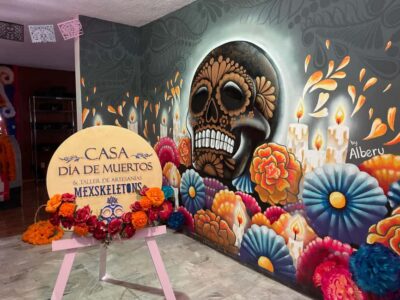 ★ 5.0Day of the Dead House and craft workshopFrom $1115 reviews
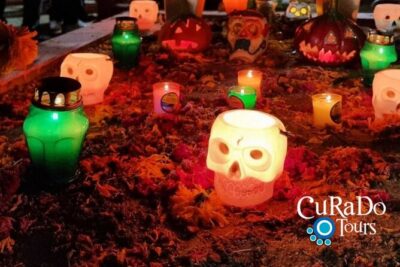 ★ 4.5Day of the Dead Night in Xochimilco: Dinner & beer tastingFrom $1359 reviews
 ★ 5.0Day of the Dead, Legends & Ghosts Mystery tourFrom $389 reviews
Browse the lists this tour appears in