
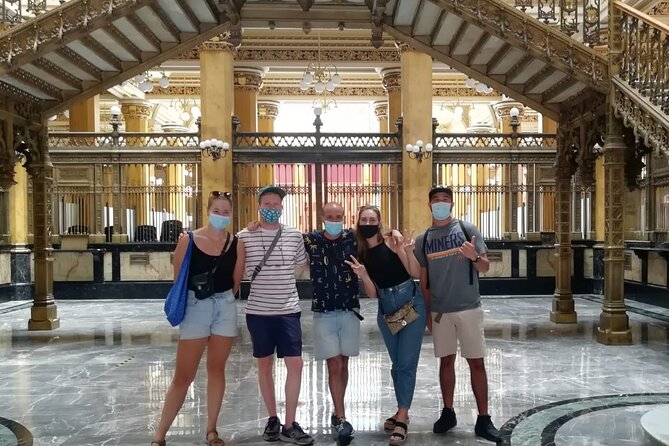
REVIEW · HISTORIC CENTER WALKING TOURS
Walking Tour of the Historic Center of Mexico City
Centro feels different at street level.
This 3-hour, small-group walk strings together pre-Hispanic roots, colonial power, and early 20th-century art in one tight route, from the Zócalo through Palacio de Bellas Artes.
I especially love two parts: first, the pacing fits a true orientation walk, so you can ask questions and get context on what you’re looking at. Second, the tour builds in included access stops at the Museo Vivo del Muralismo and the Ventana Arqueologica, where the city’s layers show up in a very physical way. Guides like Fer (listed as Fernanda), Luis, and Alexia are repeatedly praised for their storytelling and for keeping the group comfortable.
The main drawback is simple: it’s still a lot of walking on uneven pavement, and there are limited places to sit. If you’re sensitive to altitude or heat, plan for shade, water, and slower breaks when the guide offers them.
In This Review
- Key Things You’ll Notice on This Walk
- Why This Historic Center Walk Works as a First Visit
- Meeting at Plaza de la Constitución (Zócalo): Your Main Anchor Point
- Catedral Metropolitana: Learning the Big Story Without Paying for Entry
- Templo Mayor Ruins Outside View: The Meaning of Rain, Sun, and Place
- Museo Vivo del Muralismo: Diego Rivera’s Work in a Real Political Setting
- Plaza de Santo Domingo: Where Colonial Events and Global Trade Collide
- Plaza Tolsa and the Little Horse: Rest, Stories, and Photo-Friendly Stops
- Ventana Arqueologica: Seeing the Past Under the Sidewalk
- Palacio de Bellas Artes: A Must-See Stop Built for Awe (and Sense-Making)
- Palacio Postal and the House of Tiles: Beautiful Exteriors, Low Pressure
- Comfort, Timing, and How to Prepare
- Tickets and What’s Actually Included
- Language, Group Size, and the Pace You Should Expect
- Should You Book This Tour?
- FAQ
- How long is the walking tour?
- Is admission included at every stop?
- What language is the tour offered in?
- How big is the group?
- Where do the tour start and end?
- Is the tour affected by weather?
- What is the cancellation window?
Key Things You’ll Notice on This Walk
- Small group, big coverage: up to 10 travelers, focused on the Historic Center’s core highlights
- Pre-Hispanic to modern art in sequence: you see how one era’s city planning shaped the next
- Included stops that make history tangible: Museo Vivo del Muralismo murals and Ventana Arqueologica views
- Outside-the-building explanations where tickets aren’t included: Catedral Metropolitana and Palacio Postal are mainly seen from the street
- Comfort habits matter here: shade and careful street crossings are part of the experience
- A smart finish point: you end near Palacio de Bellas Artes and the House of Tiles, easy for more exploring
More laps of the Zocalo and the old streets
- Historic Downtown Walking Tour
★ 5.0 · 1,289 reviews - Mexico City: Historic Downtown Walking Tour
★ 4.8 · 1,039 reviews - Walking Tour of the Historic Center of Mexico City
★ 5.0 · 870 reviews - Mexico City Historical Centre Food Tour with 7 Authentic Tastings
★ 5.0 · 723 reviews
Why This Historic Center Walk Works as a First Visit
Mexico City can feel overwhelming fast. This tour helps you get your bearings fast by clustering the most important landmarks into one logical walking flow. You start at the political heart of the city and end near two of its most famous art-and-photo stops, so you leave with a mental map you can reuse for the rest of your trip.
The best part is the way the guide connects buildings to lived history. You’re not just looking at stone and murals; you’re learning what the site meant—religiously, politically, and economically. Even if you only know Mexico City from photos, the walking order makes it easier to understand why the city grew where it did.
And because it’s a small group (maximum 10), you’re more likely to get quick answers to real questions—especially about what you’re seeing right now, like why the cathedral looks the way it does or how the Templo Mayor ruins relate to the layout around them.
Meeting at Plaza de la Constitución (Zócalo): Your Main Anchor Point
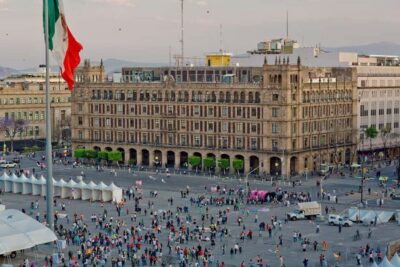
Your tour begins in the Zócalo, the enormous central square that sits beside major institutions. Here you’ll see the National Palace, the Supreme Court of Justice, and surrounding streets lined with traditional crafts—especially silverwork shops.
This stop is short, but it’s a strong start. The Zócalo isn’t just a pretty square; it’s where Mexico City’s power and public life concentrate. Standing here first helps you understand the rest of the route. You’ll realize quickly that the Historic Center isn’t a random collection of sights—it’s a planned, layered core where each era left its mark.
You’ll also get a feel for the scale of the city center. That matters later, because you’ll be moving in and out of crowds and crossing open areas that can feel intimidating if you don’t know where you’re headed.
Catedral Metropolitana: Learning the Big Story Without Paying for Entry
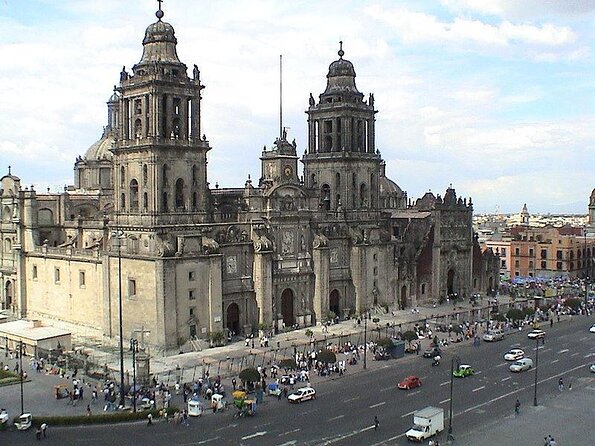
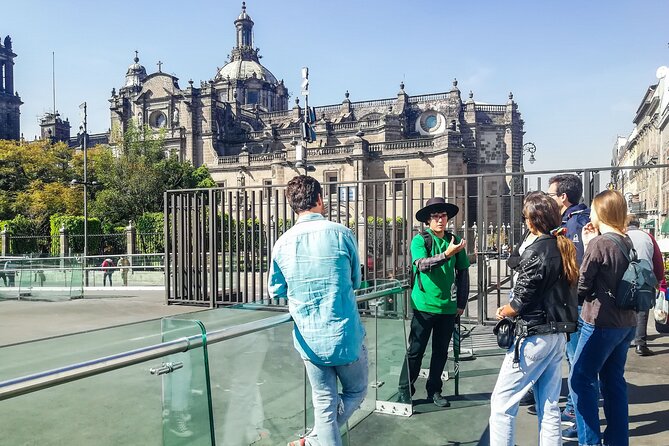
Next comes the Catedral Metropolitana de la Ciudad de México. The tour focuses on what you can understand from the outside: the cathedral’s construction story, how it ties to the city’s origins, and how different styles show up in the architecture—Baroque and neoclassical elements are part of the explanation.
This is an efficient setup for first-timers. Even if you don’t go in (admission isn’t included), you still learn how to read the cathedral’s features and why people have been drawn to this spot for centuries. It’s a good way to avoid turning your day into one long museum detour.
Practical note: cathedral exteriors sit in a busy street corridor. If you’re trying to take photos, you’ll get better results when you pause exactly when the guide points out specific details rather than wandering for long.
More of Mexico City taken slowly, on foot
- Frida Kahlo VIP [Museum Tickets Included] Walk, Markets & Churros★ 5.0 · 982 reviews
- Anthropology Museum Private Experience Walking Tour★ 5.0 · 355 reviews
- Walking Tour in Mexico City for Exploring their Cultural Heritage★ 5.0 · 245 reviews
- Walking Tour – Impressive murals in Historical Center of Mexico City★ 5.0 · 224 reviews
- Muralist Art Semi Private Walking Tour in Mexico City Downtown★ 5.0 · 188 reviews
Templo Mayor Ruins Outside View: The Meaning of Rain, Sun, and Place
After the cathedral area, the route brings you to the archaeological ruins of the Templo Mayor, dedicated to the god of rain and the god of the sun. Even from the outside, the explanation helps you connect what you see to why it mattered to the Mexicas.
What I like about this stop is that it doesn’t treat the ruins like a detached artifact. The guide talks about the importance of the temple and helps you understand the geographical distribution—so the ruins start to make sense in relation to the surrounding city.
This is also the part of the tour where you’ll feel the “layers” theme most clearly. Mexico City doesn’t just preserve history; it builds on top of it. Seeing the temple’s position while you’re still walking the modern streets is a real eye-opener.
Museo Vivo del Muralismo: Diego Rivera’s Work in a Real Political Setting
Then you reach one of the highlights: the Museo Vivo del Muralismo inside the Ministry of Education building. This is an included admission stop, and it’s designed to show murals as living public history, not just framed paintings.
You’ll spend about 25 minutes inside, enough time to get oriented to the murals’ themes and to understand how Diego Rivera’s early 20th-century work fits broader social and political struggles. The tour connects the murals to topics like festivals and traditions, social conflict, trade, and politics—so the art becomes a way to learn what people were arguing about at the time.
A standout detail from guides is their willingness to give the group a little breathing space. I’ve seen mentions of time spent in a courtyard to look at Rivera murals closely, which is exactly what you want if you’re trying to absorb the scenes rather than rush past them.
If you like art that tells stories instead of art that just looks pretty, you’ll enjoy this stop a lot. It also gives you a break from continuous outdoor walking while still staying within the same historical arc.
Plaza de Santo Domingo: Where Colonial Events and Global Trade Collide
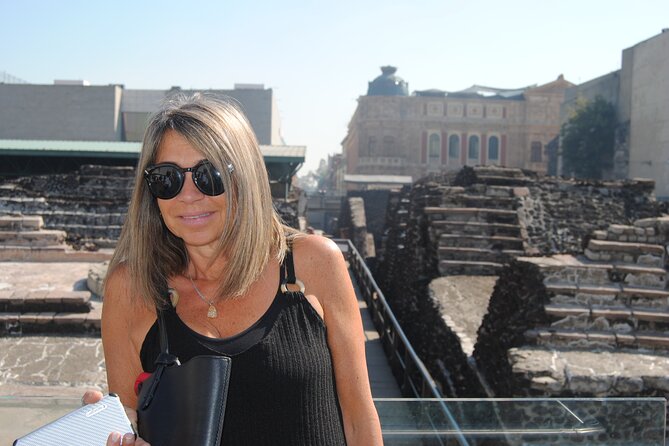
From the mural stop, the tour shifts to Plaza de Santo Domingo, another important Historic Center square with a very specific story. You’ll learn how the plaza witnessed major events of the viceroyalty of New Spain.
You’ll also hear about trade—especially spices and products connected to Asia—which is a reminder that Mexico City wasn’t isolated. It sat in networks that stretched across oceans. The plaza story includes the holy inquisition and even attempts by France to conquer Mexico, so the conversation moves from everyday life to big political swings.
The admission here is free for the time you spend at the square. This keeps the tour balanced: you get one major ticketed interior (Museo Vivo del Muralismo) and then a second set of powerful context stops outdoors.
Plaza Tolsa and the Little Horse: Rest, Stories, and Photo-Friendly Stops
Plaza Tolsa is one of those “pause and think” moments built into the walk. You’ll stop to rest in the shadows, and the guide uses the break to talk about themes like indigenous languages, the tradition of the day of the dead, music, politics, and gastronomy.
This matters more than it sounds. Historic Center sightseeing can become “checklist tourism” if you don’t slow down. Plaza Tolsa gives you time to reset your brain and connect history to what Mexico City still celebrates today.
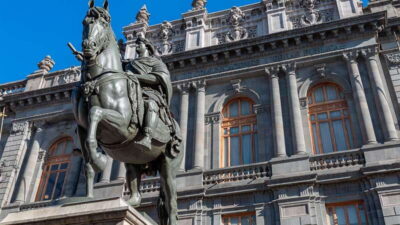
You’ll also see the equestrian statue of Charles IV, known as the little horse. Around it, the tour also references the exterior of the National Museum of Art and the Mining Palace. These aren’t random photo stops; they help show how power, wealth, and art were displayed across the city’s public spaces.
If you want a clean photo, wait for the guide’s position cue. Squares can be crowded, and the timing of when you stand matters.
Ventana Arqueologica: Seeing the Past Under the Sidewalk
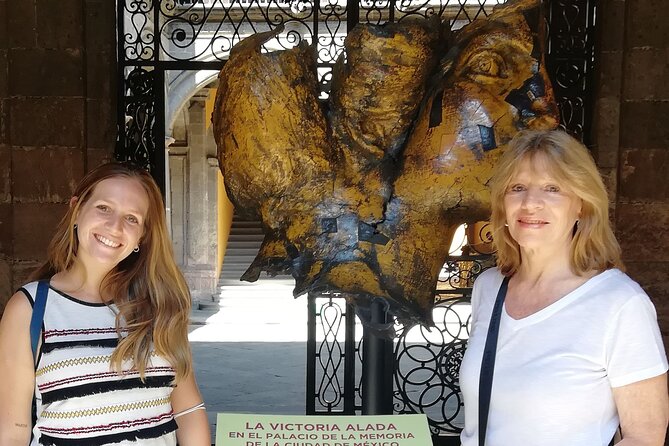
Next is Ventana Arqueologica, an included admission stop where you get to see the past under a street next to the main temple area. This is a short stop, but it’s a memorable one because it changes your perspective of the street itself.
You’ll discover how the ruins were found and what secrets are hidden beneath parts of the city center. That idea—the city has a second city under it—sticks with you after the walk.
This is also a good place for anyone who likes “how did they find it?” explanations. The short time means you won’t get stuck waiting around, but you still leave with a sense of what’s possible to notice if you look carefully on your own later.
Palacio de Bellas Artes: A Must-See Stop Built for Awe (and Sense-Making)
Palacio de Bellas Artes is one of those places that usually lives up to the hype. The tour gives you about 15 minutes here, and even if you’ve seen it in photos, it has a way of feeling larger in person.
The experience focuses on both the exterior and the building’s artistic reputation. The palace is famous for its role in Mexico City culture and for how it visually represents art and national identity. Even without deep time inside, the stop helps you connect the mural themes you saw earlier to a bigger story about how art shaped public life.
If you’re sensitive to walking distance, this is also one of the easier “rewards” in the route, since you can stand, look, and take photos without needing to rush to another ticketed site.
Palacio Postal and the House of Tiles: Beautiful Exteriors, Low Pressure
The tour rounds out with two highly photogenic stops: Palacio Postal and the House of Tiles.
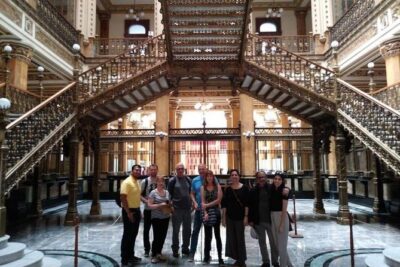
For Palacio Postal, admission isn’t included. The tour explanation centers on the palace as a working building and on the economic and political consequences of constructing something so grand. Even from the outside, it’s a great reminder that architecture can be a form of policy—showing ambition, investment, and the role of communication and commerce.
Then you finish near the Palace of Fine Arts and the tile house. The House of Tiles is famous for the tiles, and it’s an icon of Mexico City—perfect for a few final photos and for ending your day with something visually distinct.
The way the finish point is chosen is smart. You don’t end in the middle of nowhere; you finish near the kind of area where it’s easy to keep exploring on foot or grab something to eat nearby.
Comfort, Timing, and How to Prepare
This is a walking tour, and the main fitness issue is the surface. You’ll cover a lot of ground in about three hours, and you’ll be on cobblestones and uneven pavement at times. If you have mobility challenges, plan carefully and consider whether you’ll be okay with slower pace and fewer seating opportunities.
Heat is another real factor. You’ll often be outdoors in strong sun between stops. The experience is designed to account for that, with guides providing shade when possible and handling street crossings carefully.
What to pack:
- Comfortable shoes for cobblestones
- Water and sunscreen
- A light layer, even if it’s sunny
- A flexible mindset: some stops are brief by design, and you’ll get more value by watching for what the guide points out
If you need a bathroom break, the guide’s approach is typically practical and accommodating. The key is to ask early rather than waiting until you’re desperate.
Tickets and What’s Actually Included
This matters for planning your money and time. Admission is included at the Museo Vivo del Muralismo and at Ventana Arqueologica. Those are the two stops where you get interior access that matches the tour’s larger story.
For Catedral Metropolitana and Palacio Postal, admission isn’t included, and the tour focuses on what you can see and learn from the outside. That doesn’t make them less valuable; it just means you should treat them as learning stops rather than guaranteed entry tickets.
Other stops you’ll enjoy with free admission time, especially plazas and exterior architectural photo points.
If you like control over your itinerary, this structure is a good deal. You get meaningful ticketed content without turning the entire walk into a schedule of paid entries.
Language, Group Size, and the Pace You Should Expect
The tour is offered in English and is built for a group max of 10 travelers. That small-group size is a big part of why it works well. You get more back-and-forth, and it’s easier for the guide to keep everyone together on narrow streets.
The pace is not frantic, but it’s steady. Stops are short, typically 5 to 25 minutes depending on the site. If you want extra time in a place, you’ll have to ask for it, and the group may or may not be able to accommodate every request without affecting the rest of the walk.
Should You Book This Tour?
Book it if you want an efficient first pass through Mexico City’s Historic Center that connects major sites into one story. It’s especially worth it if you care about how pre-Hispanic and colonial eras shaped the streets you’re walking today, and if you want Diego Rivera’s murals and buried ruins included rather than optional.
Skip it or choose another option if you hate walking long distances on uneven pavement or need lots of seating breaks. The route is designed for movement, not lounging.
My bottom line: if you’re aiming to understand the city’s layers quickly, this tour gives you a strong mental map, practical context, and a handful of standout stops that make the history feel real.
FAQ
How long is the walking tour?
The tour runs about 3 hours.
Is admission included at every stop?
No. Admission is included for the Museo Vivo del Muralismo and Ventana Arqueologica. Admission is not included for Catedral Metropolitana de la Ciudad de Mexico and Palacio Postal.
What language is the tour offered in?
The tour is offered in English.
How big is the group?
This experience has a maximum of 10 travelers.
Where do the tour start and end?
It starts at Plaza de la Constitución in the Centro Histórico and ends at the side of the Palacio de Bellas Artes, near the tile house.
Is the tour affected by weather?
Yes. It requires good weather. If it’s canceled due to poor weather, you’ll be offered a different date or a full refund.
What is the cancellation window?
You can cancel for a full refund up to 24 hours in advance. If you cancel less than 24 hours before the start time, the amount you paid is not refunded.
More Tours in Mexico City





More Tour Reviews in Mexico City




The Centro Historico on Foot






Fresh from our Mexico City notebook

Historic Center Walking Tours, compared.
 ★ 5.0Historic Downtown Walking TourFrom $261,289 reviews
 ★ 5.0Historic Center Food Tour in Mexico CityFrom $1151,263 reviews
 ★ 4.8Historic Downtown Walking TourFrom $261,039 reviews
 ★ 5.0Mexico City Historical Centre Food Tour with 7 Authentic TastingsFrom $65723 reviews
 ★ 4.9Authentic Downtown Food TourFrom $115260 reviews
 ★ 5.0Culinary Secrets of the Centro HistóricoFrom $140257 reviews
 ★ 5.0Walking Tour – Impressive murals in Historical Center of Mexico CityFrom $51224 reviews
 ★ 5.0Muralist Art Semi Private Walking Tour in Mexico City DowntownFrom $58188 reviews
Browse the lists this tour appears in