
REVIEW · HISTORIC CENTER WALKING TOURS
Historic Downtown Walking Tour
Three hours, a city makeover on foot. This small-group downtown walk links the Aztec core to today’s power centers, with an expert local guide who can answer your questions on the spot. People often praise guides such as Stefania, Emilio/Emiliano, Daniela, and Nadia for clear English and big-picture storytelling, which makes the Centro Histórico feel easier to navigate from day one.
I love two things most: you get real access at landmark stops like the Metropolitan Cathedral and the Palacio Postal, and you come away with a simple timeline of how Mexico City became what you see now. One possible drawback is pace—this tour moves briskly through crowded streets—so if you hate being rushed, you may want to stay close to the guide and plan for lots of walking.
In This Review
- Key Things To Know Before You Go
- Your 3-Hour Run Through Centro Histórico
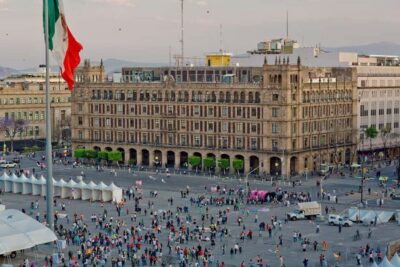
- Zócalo: Mexico City’s Main Square in 15 Minutes
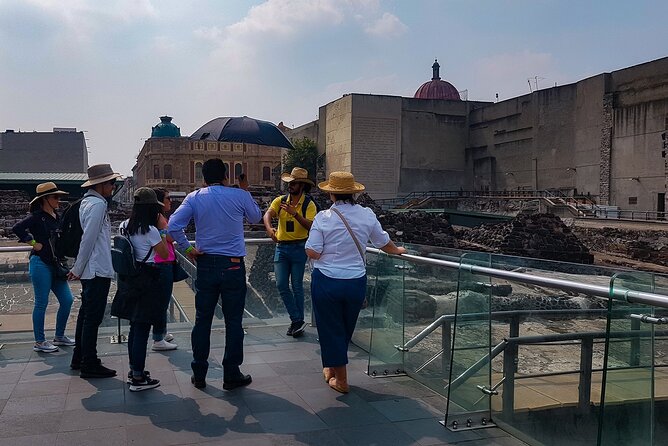
- Plaza Manuel Gamio and Templo Mayor Ruins: The Aztec Layer Underfoot
- Metropolitan Cathedral: Going Inside the Cathedral Heart
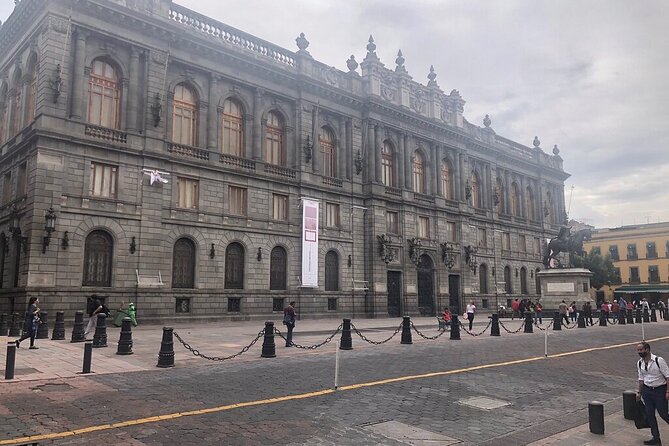
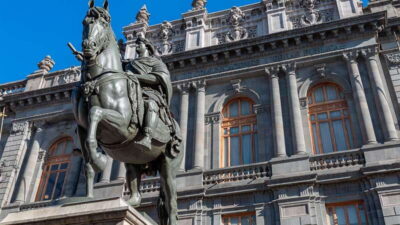
- Plaza Manuel Tolsá and El Caballito: The Statue Stop You Will Remember
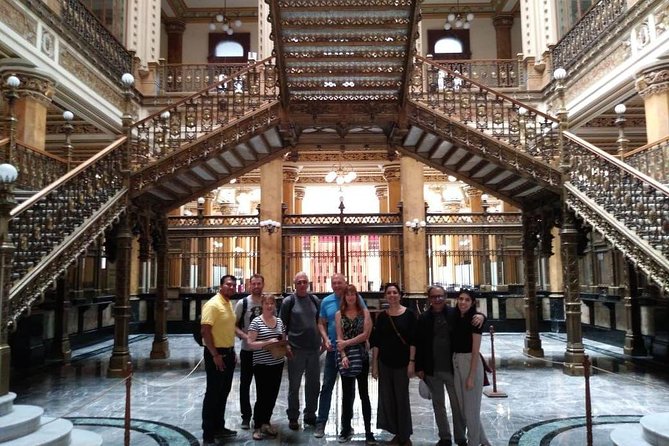
- Palacio Postal: Step Into a Glamorous Post Office
- Palacio de Bellas Artes: Art Nouveau at the Edge of the Route
- Pacing, Group Size, and Staying With the Guide
- Price and Value: Why $26.53 Can Actually Make Sense
- Making the Most of the Route After Bellas Artes
- Should You Book This Historic Downtown Walking Tour?
- FAQ
- How long is the Historic Downtown Walking Tour in Mexico City?
- How much does the tour cost?
- Is the tour offered in English or Spanish?
- Where does the tour start and where does it end?
- What are the main stops on the route?
- Are tickets included?
- How large is the group?
- What is not included in the price?
- Is the tour suitable if I have moderate physical fitness?
Key Things To Know Before You Go
- Small group stays intimate: capped around 15 for a more personal feel, with a stated max of 25.
- You see the city’s layers fast: Aztec ruins, colonial faith, and 20th-century art in one route.
- Go inside major landmarks: including the cathedral and the Palacio Postal.
- Guides help you connect the dots: many guides are praised for making history feel practical and understandable.
- It is a short walk with a full hit list: expect quick stop times and a steady flow of sights.
- Good for first-time orientation: it sets you up for what to do on the rest of your Mexico City day.
More laps of the Zocalo and the old streets
- Historic Downtown Walking Tour
★ 5.0 · 1,289 reviews - Mexico City: Historic Downtown Walking Tour
★ 4.8 · 1,039 reviews - Walking Tour of the Historic Center of Mexico City
★ 5.0 · 870 reviews - Mexico City Historical Centre Food Tour with 7 Authentic Tastings
★ 5.0 · 723 reviews
Your 3-Hour Run Through Centro Histórico
If Mexico City feels huge when you first land, this is the kind of tour that helps your brain stop spinning. In about three hours, you cover the core of the Centro Histórico—where street life is constant, signage is everywhere, and the city’s biggest landmarks sit close enough to stitch together into one story.
The best part for me is that you do not just pass buildings. You walk up, look, and then you get context you can actually use. A strong guide can explain why the Zócalo matters, how the Aztec capital shaped the ground beneath your feet, and why the city later piled on Catholic architecture and modern cultural institutions. Names that come up a lot in feedback include Stefania, Emilio/Emiliano, Daniela, Mar, Estefania, and Nadia—people note they tend to keep explanations clear and structured, with enough personality to hold attention even when the plaza gets loud.
That said, it is still a city-center walk. Crowds, noise, and other tour groups can make it harder to hear at some stops, and the route is efficient rather than slow and leisurely.
Zócalo: Mexico City’s Main Square in 15 Minutes
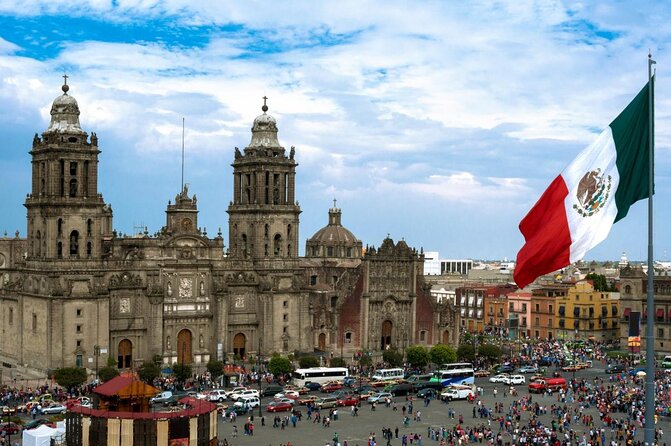
Your first major stop is the Zócalo, Mexico’s best-known central square. This is the place where politics, religion, protests, celebrations, and everyday life overlap. Even when you only spend around 15 minutes here, the square sets the frame for everything you’ll see next.
What I like about starting here is how quickly you get oriented. You learn why the Zócalo is often called the Heart of Mexico and how it functions as the city’s civic center. It is not just a pretty plaza—you understand it as a geographic and symbolic anchor.
The tradeoff is time. Fifteen minutes goes fast in a crowded square, so if you want extra photos or a longer sit-down break, you’ll need to plan that after the tour.
Plaza Manuel Gamio and Templo Mayor Ruins: The Aztec Layer Underfoot
From the main square, the walk moves toward the ruins of the ancient Aztec city, the Templo Mayor area, reached via Plaza Manuel Gamio. This is where Mexico City stops being only a colonial-and-modern skyline and becomes a place where older civilizations are literally part of the map.
You are shown the ruins with enough guidance to understand what you are looking at—how Templo Mayor fits into the Aztec worldview and why this site matters to the story of the city. It is especially useful if you are visiting for the first time, because you can often tell the difference between building styles and eras once someone gives you a basic timeline.
A practical consideration: even if the focus is outdoors and the stop is about 30 minutes, the ground and pathways can feel busy and tight. Keep your eyes on the guide, and do not count on wandering away for long stretches if the group is moving.
More of Mexico City taken slowly, on foot
- Frida Kahlo VIP [Museum Tickets Included] Walk, Markets & Churros★ 5.0 · 982 reviews
- Anthropology Museum Private Experience Walking Tour★ 5.0 · 355 reviews
- Walking Tour in Mexico City for Exploring their Cultural Heritage★ 5.0 · 245 reviews
- Walking Tour – Impressive murals in Historical Center of Mexico City★ 5.0 · 224 reviews
- Muralist Art Semi Private Walking Tour in Mexico City Downtown★ 5.0 · 188 reviews
Metropolitan Cathedral: Going Inside the Cathedral Heart
Next up is the Metropolitan Cathedral, a major Catholic landmark that many people describe as the heart of the Catholic faith in Mexico. The itinerary includes time to go inside, about 30 minutes, which is a big deal. Seeing the façade is one thing. Going in lets you experience the scale and the spiritual, architectural atmosphere in a way photos cannot fully replicate.
This stop is a turning point in how you read the Centro Histórico. You go from the Aztec layer to the place where colonial Mexico flexed power, faith, and artistic ambition. A good guide makes that transition feel logical rather than random—connecting why the city keeps rebuilding itself in the same central space.
One drawback to know in advance: cathedral interiors can be visually dense and quiet compared with the plaza outside. If your guide speaks quickly (a few past experiences note that can happen), you might want to slow yourself down with your own observations—look first, listen second—so you do not miss what is in front of you.
Plaza Manuel Tolsá and El Caballito: The Statue Stop You Will Remember
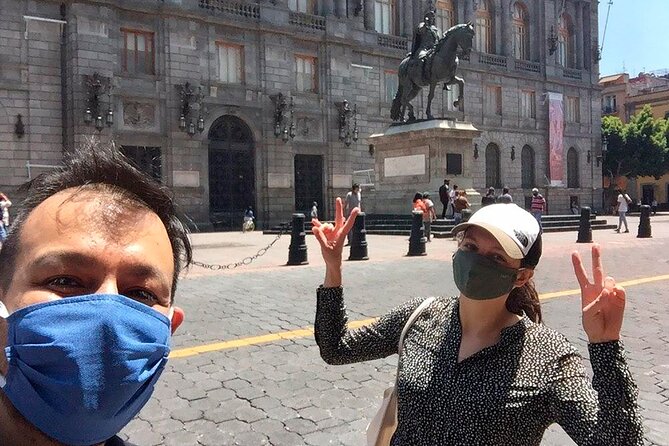
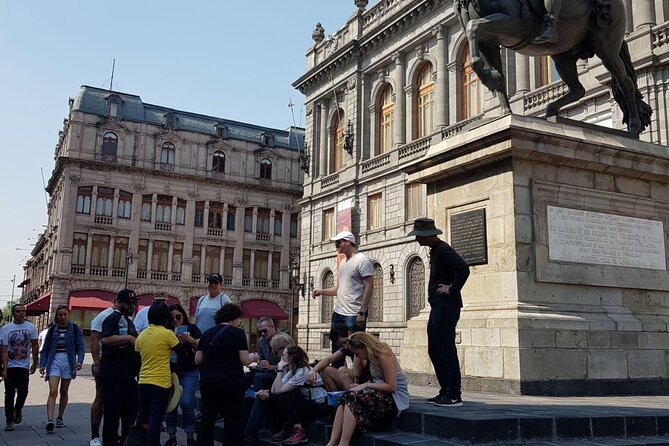
Plaza Manuel Tolsá is short—around 10 minutes—but it is a smart breather and a landmark marker. This is where you encounter one of Mexico City’s most emblematic statues, a spot so recognizable that it often gets referenced later as a meeting/end point.
I like this stop because it breaks up the heavier sites. It is also a useful moment for orientation: once you recognize El Caballito’s area, you can mentally anchor where you are in the Centro Histórico maze.
The limitation is simple: 10 minutes is not for long conversations or extended photo hunts. It is for seeing it, learning the story behind it, and then moving on.
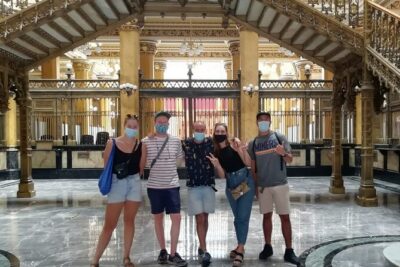
Palacio Postal: Step Into a Glamorous Post Office
Then you get to one of the most fun surprises of the route: the Palacio Postal. This is the kind of place that makes you stop mid-walk because it looks like it belongs in a movie set—grand, ornate, and still used in a way that feels very Mexico City.
You spend about 15 minutes here, including time to go inside. The value is not just the building’s beauty. It is the perspective it gives you on how the city’s modern institutions formed alongside older traditions. With a guide, you can connect what you see to the bigger shift from early empire centers to modern infrastructure and national identity.
If you care about photos, go slowly for a moment once inside. It is easy to rush when everyone is moving, but this is one of those stops where a careful look pays off.
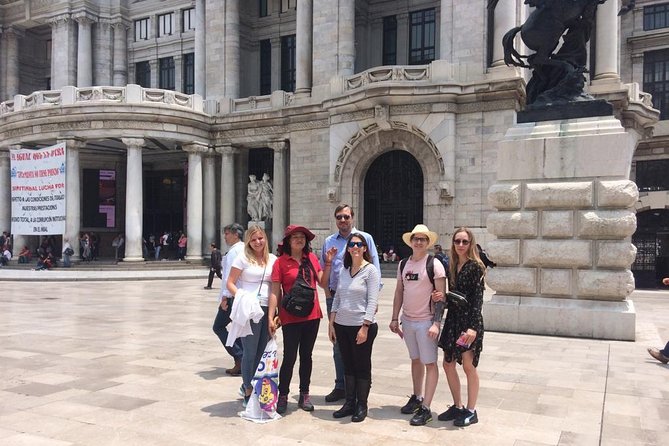
Palacio de Bellas Artes: Art Nouveau at the Edge of the Route
The walk finishes near the Palacio de Bellas Artes, often described as an art nouveau building and a symbol of 20th-century Mexico City architecture. Your time here is about 15 minutes, so think of it as a highlight preview rather than a full museum visit.
For me, this stop is where the city’s cultural identity becomes visible. After seeing Aztec remains and colonial-religious authority, Bellas Artes makes sense as the next layer: Mexico City presenting itself as a modern cultural capital.
If you want more depth, this is also a good point to decide what you’ll do next. Many people leave this tour wanting a longer visit to nearby museums and cultural spaces, and Bellas Artes is a common target.
Pacing, Group Size, and Staying With the Guide
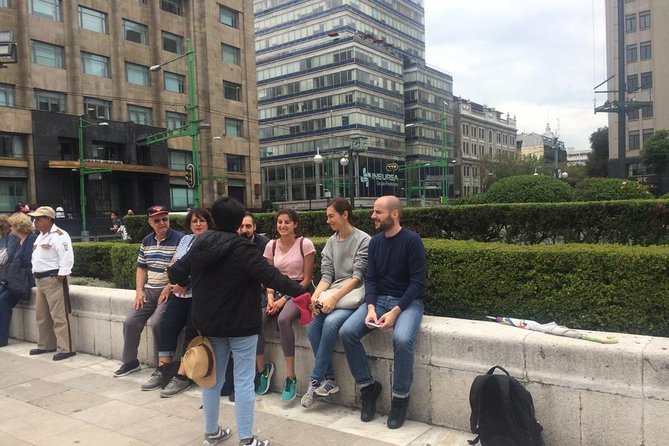
This tour is designed to be efficient. In practice, that means a steady walking rhythm and short stop times: Zócalo (about 15), Templo Mayor ruins (about 30), Cathedral (about 30), Plaza Manuel Tolsá (about 10), Palacio Postal (about 15), Bellas Artes area (about 15). Altogether, it usually lands near the advertised three hours.
The good news: group caps are meant to keep it intimate. Past experiences often praise guides for projecting their voice so you can still hear them even amid plaza noise. The even better news: several guides are specifically noted for pacing that keeps people engaged without dragging.
The real caution: crowd conditions can change quickly. If the streets are packed, it helps to stay close so you do not get separated in traffic between plazas. One recurring complaint in feedback is that guides may pack in a lot of information and speak fast, sometimes making it harder if accents are hard to catch. If you know you struggle with fast speech, it is worth asking the guide a question early and then keeping your questions for later too.
Price and Value: Why $26.53 Can Actually Make Sense
At $26.53 per person for roughly three hours, the price feels reasonable for what you get: a certified local guide plus a tight route through top historic sites. The biggest value for me is not the landmarks themselves—it is the explanations that help you connect them.
Also, many of the listed stops are marked as free admission, and the tour includes entrance tickets to museums where needed. That matters in a city where ticketing can add up fast. Even if you still end up paying for other attractions later, getting your bearings early can prevent wasted time and duplicate routes.
You also get language choice—English or Spanish—so you can match your comfort level. For many first-timers, that alone is worth the price because it reduces confusion in a complex area.
One thing not included: transport to the meeting point and lunch. Plan on handling those yourself. Pack water, and decide how you’ll eat after the walk rather than during it.
Making the Most of the Route After Bellas Artes
One of the underrated perks of a downtown orientation tour is what it does to the rest of your day. Once you understand why each site is there—Aztec roots, colonial authority, modern civic and cultural identity—you start recognizing patterns everywhere you walk next.
Here is how I’d use this day:
- Ask your guide for a couple of food stops after you finish, then follow at least one suggestion.
- If you plan museums, use the tour to pick one anchor museum and one smaller add-on.
- Come back later to spend time where you felt the strongest pull—cathedral details, postal interior architecture, or the Bellas Artes area.
Even if you do not see everything in the route, you leave with a plan. That is the best kind of souvenir: knowing where to go next without guessing.
Should You Book This Historic Downtown Walking Tour?
I think you should book it if you want a fast, structured start in Mexico City’s Centro Histórico. It is ideal for first-time visits, for couples and small groups who want to learn without getting lost, and for anyone who likes architecture and clear explanations that tie eras together.
Skip it or adjust your expectations if you hate brisk pacing, you dislike crowded walking environments, or you need quiet time at each stop. The route is efficient, not slow. You will be moving.
FAQ
How long is the Historic Downtown Walking Tour in Mexico City?
It lasts about 3 hours.
How much does the tour cost?
The price is $26.53 per person.
Is the tour offered in English or Spanish?
Yes. You can choose tours in English or Spanish.
Where does the tour start and where does it end?
It starts at C. de Monte de Piedad 11, Centro Histórico de la Cdad. de México, and ends near El Caballito in front of the National Museum of Art at C. de Tacuba 8, Centro Histórico.
What are the main stops on the route?
You’ll visit the Zócalo, Plaza Manuel Gamio and the Templo Mayor area, the Mexico City Metropolitan Cathedral, Plaza Manuel Tolsá, Palacio Postal, and the Palacio de Bellas Artes area.
Are tickets included?
Entrance tickets to museum stops are included. Many of the listed sights are marked as free admission tickets.
How large is the group?
The group is capped at 15 participants for an intimate experience, and the maximum is stated as 25 travelers.
What is not included in the price?
Tips are not included (optional). Transport to the meeting point and lunch are also not included.
Is the tour suitable if I have moderate physical fitness?
It is designed for travelers with moderate physical fitness. Service animals are allowed, and the meeting area is near public transportation.
More Tours in Mexico City



More Tour Reviews in Mexico City




The Centro Historico on Foot






Fresh from our Mexico City notebook

Historic Center Walking Tours, compared.
 ★ 5.0Historic Center Food Tour in Mexico CityFrom $1151,263 reviews
 ★ 4.8Historic Downtown Walking TourFrom $261,039 reviews
 ★ 5.0Walking Tour of the Historic Center of Mexico City870 reviews
 ★ 5.0Mexico City Historical Centre Food Tour with 7 Authentic TastingsFrom $65723 reviews
 ★ 4.9Authentic Downtown Food TourFrom $115260 reviews
 ★ 5.0Culinary Secrets of the Centro HistóricoFrom $140257 reviews
 ★ 5.0Walking Tour – Impressive murals in Historical Center of Mexico CityFrom $51224 reviews
 ★ 5.0Muralist Art Semi Private Walking Tour in Mexico City DowntownFrom $58188 reviews
Browse the lists this tour appears in