
REVIEW · HISTORIC CENTER WALKING TOURS
Walking Tour of the Historic Center in Mexico City
Aztec ruins meet art on foot. I like how this walk strings together Aztec ruins and major colonial landmarks in about three hours, and I also like that you’re led by a private local guide who explains what you’re seeing while you’re actually there. The only real drawback to plan for is that it’s still a walking tour through busy plazas and streets, so if you’re dealing with knee or mobility limits, you’ll want to communicate that early.
This is a smart value pick if you want your bearings fast in Mexico City’s Centro Histórico. At $29 per person (small-group pricing can vary by date and option), you get a tight route, photo stops, and English service, plus a mobile ticket that keeps things simple.
In This Review
- What makes this Historic Center walk work so well
- Your 3-hour route through Mexico City’s Aztec to Art Nouveau timeline
- Museo del Templo Mayor: the Aztec capital starts under your feet
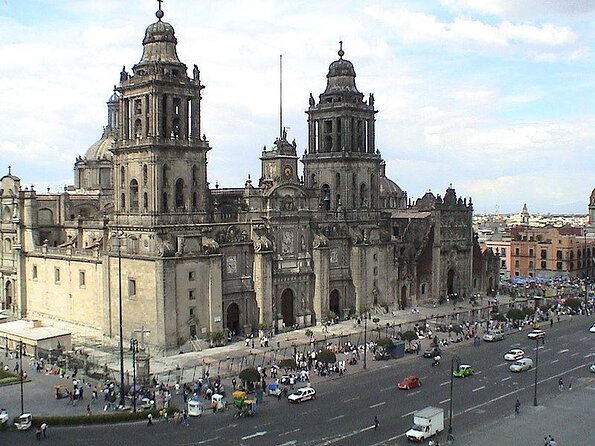
- Catedral Metropolitana: how 16th-century architecture keeps changing
- Zócalo: Mexico City’s main square, from Aztec times to today
- Casa de los Azulejos: Talavera tiles, Orozco, and an indoor photo stop
- Palacio Postal: art nouveau details and a still-working post office
- Palacio de Bellas Artes: murals worth knowing before you look up
- Price and what you should expect for $29
- Picking the right option: small-group vs private customization
- The guiding quality: why these names keep coming up
- Who should book this, and who should rethink it
- Should you book the Historic Center walking tour?
- FAQ
- How long is the Historic Center walking tour?
- Where does the tour start and end?
- What is the price per person?
- What’s included in the tour price?
- Are entrance fees included?
- Is the tour offered in English?
- What should I bring?
What makes this Historic Center walk work so well
- A time-travel route from Templo Mayor to Bellas Artes: You move through centuries without needing to study a textbook first.
- Free-entry anchor stops: Several stops include free admission, so your main cost is optional entries and personal choices.
- Photo-friendly pacing: You get time to pause, look up close, and take pictures at the House of Tiles and Palacio Postal.
- Local guiding that connects the dots: Guides like Andrés, Francisco Cabral Vignola, Eduardo, Ivan, Ariana, and Diana are repeatedly praised for clear, passionate explanations.
- Semi-private size with a real chance to ask questions: Small-group options top out at 12, so it doesn’t feel like a conveyor belt.
More laps of the Zocalo and the old streets
- Historic Downtown Walking Tour
★ 5.0 · 1,289 reviews - Mexico City: Historic Downtown Walking Tour
★ 4.8 · 1,039 reviews - Walking Tour of the Historic Center of Mexico City
★ 5.0 · 870 reviews - Mexico City Historical Centre Food Tour with 7 Authentic Tastings
★ 5.0 · 723 reviews
Your 3-hour route through Mexico City’s Aztec to Art Nouveau timeline
This tour is designed as an orientation in walking form: you start and finish near the grand cultural theater district area around Bellas Artes, then work through the historic core. The advertised duration is about 3 hours, and the tour is timed by stops plus walking between them.
What I like for first-timers is the way it mixes archaeology, religion, politics, and design. You’re not just collecting sights. You’re learning what each place was for, who used it, and how the city’s story kept changing from pre-Hispanic times into the Spanish colonial period and beyond.
Bring comfortable shoes. This is a city built on uneven sidewalks and long views—great for photos, less great for flimsy footwear.
Museo del Templo Mayor: the Aztec capital starts under your feet
Stop one is the Museo del Templo Mayor, where you get a close look at remains connected to the Great Aztec Temple and other structures around the neighborhood. The detail that matters here is age: you’re looking at some of the oldest evidence in this area dating back to the 14th century.
This is where the tour earns its keep. Instead of vaguely saying Aztecs built big things, the guide helps you understand the Aztec empire as a working society—political and social organization, ideology, culture, religion, and everyday life. Then it pulls that story forward to the early years of Spanish colonization starting in 1519.
Practical note: the stop time is about 40 minutes, and the admission ticket here is listed as free. You’ll also want to look up and around, not just straight ahead, because the museum setting helps you connect the ruins to the city’s layout.
Catedral Metropolitana: how 16th-century architecture keeps changing
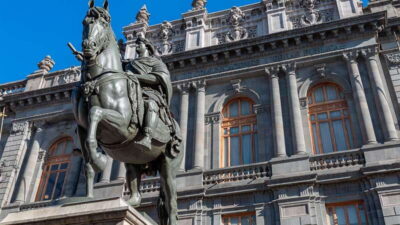
Next you head to the Catedral Metropolitana de la Ciudad de México, a 16th-century landmark that many people know by name but don’t fully understand until they see how it was built over time.
The key idea I’d take from this stop is that the cathedral isn’t one single style. It became a record of successive generations of builders and artists. The result is a mix of architectural and artistic styles you can’t really appreciate from a distance.
This stop runs about 30 minutes and the admission is listed as free, which helps you budget your money for the places where you might want to pay.
Tip: stand back for the overall facade first, then go closer for the details. A good guide will point out what you might miss if you only focus on the biggest images or doors.
More of Mexico City taken slowly, on foot
- Frida Kahlo VIP [Museum Tickets Included] Walk, Markets & Churros★ 5.0 · 982 reviews
- Anthropology Museum Private Experience Walking Tour★ 5.0 · 355 reviews
- Walking Tour in Mexico City for Exploring their Cultural Heritage★ 5.0 · 245 reviews
- Walking Tour – Impressive murals in Historical Center of Mexico City★ 5.0 · 224 reviews
- Muralist Art Semi Private Walking Tour in Mexico City Downtown★ 5.0 · 188 reviews
Zócalo: Mexico City’s main square, from Aztec times to today
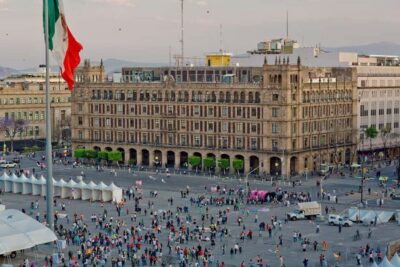
At the Zócalo, you get a break in the walking rhythm and a big-picture lesson. This main square has served as a gathering place since Aztec times, and today it remains the stage for major cultural and political events like ceremonies, festivals, and military parades.
The real value here isn’t just the width of the plaza. It’s understanding that the center of power and community has shifted over centuries, but the role of the square stays important. The tour also helps you notice significant historical buildings around the plaza—useful if you want to keep exploring afterward without getting lost in a sea of facades.
Expect about 40 minutes here, with admission listed as free. Also, plan for crowds. Even when the tour is well paced, you’ll share space with locals and other visitors.
Casa de los Azulejos: Talavera tiles, Orozco, and an indoor photo stop
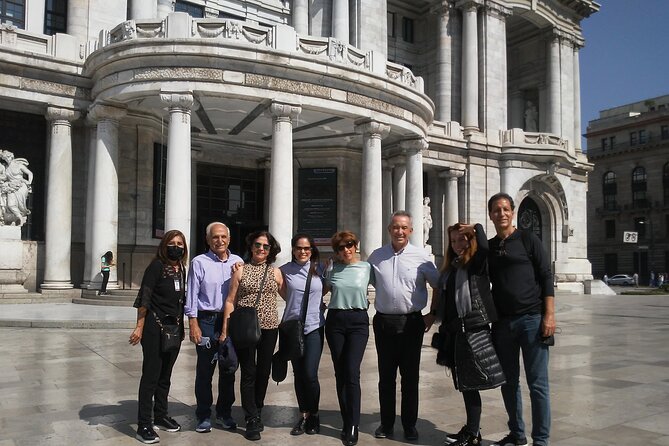
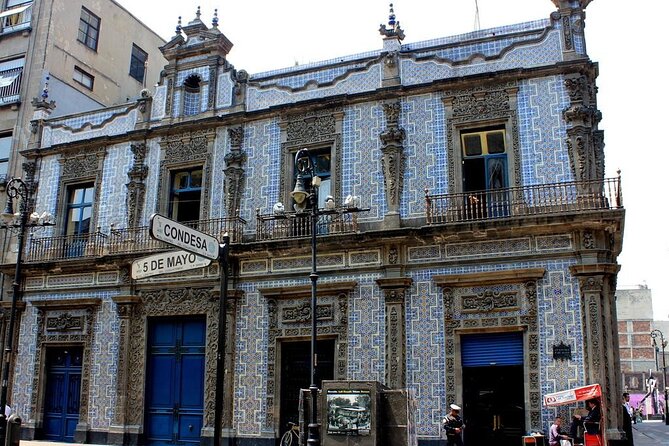
Then comes one of the most visually satisfying moments on the walk: the House of Tiles, known for its colonial facade covered in colorful Talavera tiles. The tour highlights how well those tiles have been preserved over time, which is exactly why this place is worth stopping for rather than just passing by.
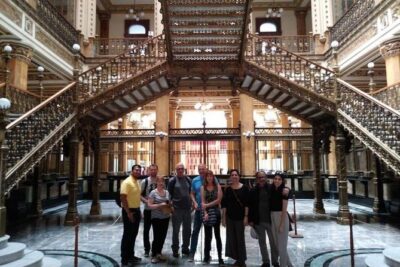
Inside, you get a chance to see a mural by the famed Mexican painter José Clemente Orozco, plus a glass-ceilinged atrium with stone pillars, murals, and a fountain. It’s a compact interior with lots of visual lines—good for photos and good for understanding why this building became famous.
This stop is about 20 minutes and admission is listed as free. Drawback to consider: 20 minutes can feel short once you start looking closely. If you love architecture and tilework, be ready to pick what you want to photograph fastest.
Palacio Postal: art nouveau details and a still-working post office
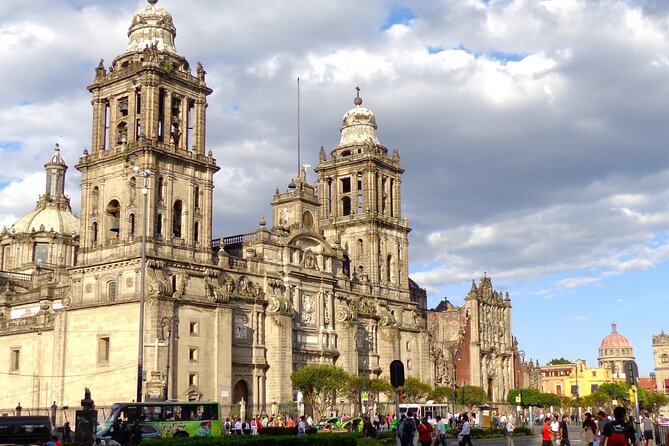
Next you visit Palacio Postal, an art-nouveau building that’s famous for its exterior and interior design. This stop is timed at about 20 minutes, and it’s another free-admission listed highlight.
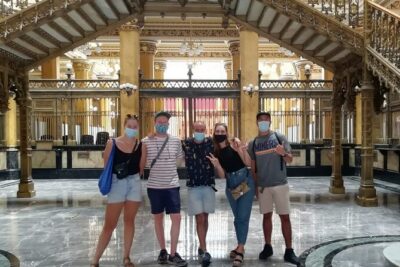
Look for the kind of details most travelers rush past: gargoyles, marble ornaments, and plasterwork. The interesting twist is that this building still functions as a post office. So while the architecture is museum-like, it’s also part of daily city life.
The tour also notes a museum inside that displays objects and historical documents. Even if you don’t go deep into the collection, you’ll come away with a better sense of how this building fits into Mexico City beyond being a pretty backdrop.
Photo tip: walk the facade slowly before you go in. The curves and ornamentation are easier to appreciate when you’re not forcing yourself to choose one angle.
Palacio de Bellas Artes: murals worth knowing before you look up
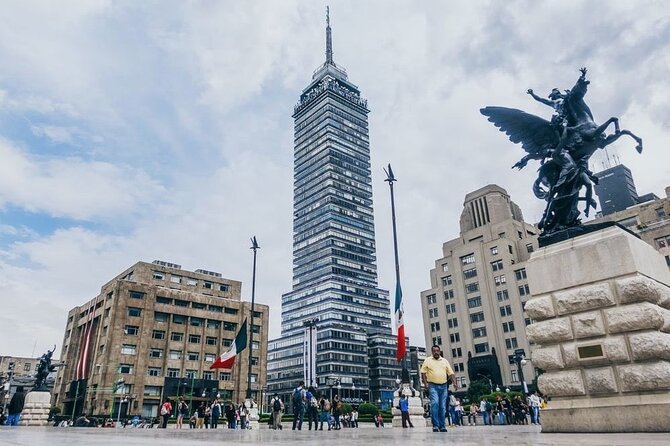
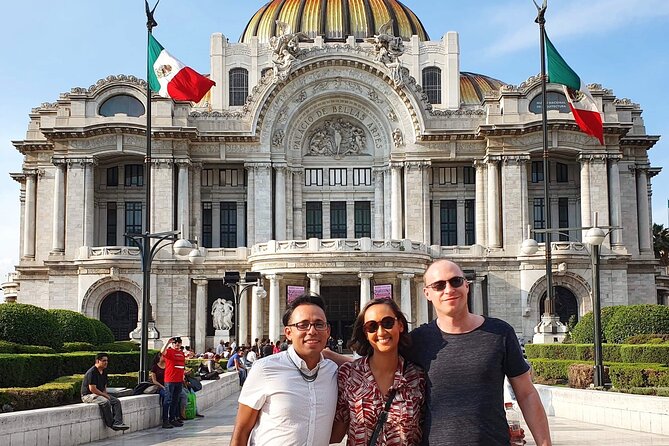
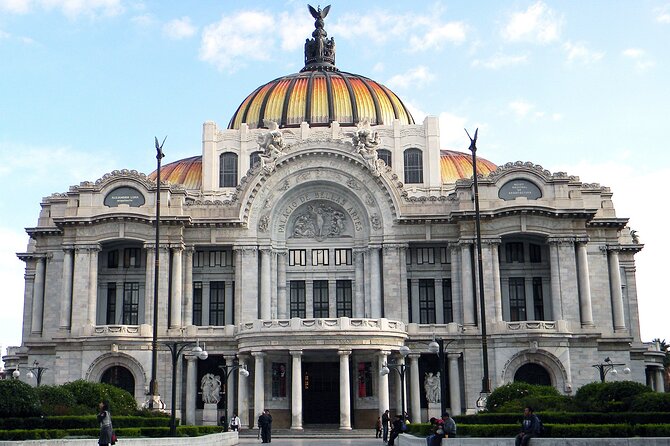
The tour finishes outside Palacio de Bellas Artes, and that matters: the stop is about 20 minutes, with admission to the venue not included. In other words, you’ll get the exterior and enough context to appreciate why people line up for this place, but you’ll need to decide separately if you want to pay to go inside.
Why it’s worth stopping anyway: the theatre’s reputation is tied to murals painted by major Mexican artists from the 1930s, including Diego Rivera, David Alfaro Siqueiros, and José Clemente Orozco. The tour also points out that Bellas Artes hosts national and international cultural events—operas, recitals, lectures, temporary exhibitions, and presentations.
If you’re planning your next step after the tour, this is a great moment to decide. Want more art? You’ll already know what to look for.
Price and what you should expect for $29
At $29 per person, this is priced like a “hit the highlights” orientation tour. The biggest value driver is not just the itinerary—it’s the guiding.
Included in the price is the private local guide service, and the tour lists free admission for several key stops: Templo Mayor (listed free), the Metropolitain Cathedral (listed free), Zócalo (listed free), House of Tiles (listed free), and Palacio Postal (listed free). The one notable exception called out is Palacio de Bellas Artes, where admission is not included.
So your on-the-ground spending usually looks like:
- Optional admission if you want to go inside Bellas Artes
- Snacks and drinks
- Any personal museum add-ons or nearby attractions you decide to see on your own
That’s why I think it’s a good deal for many visitors. You get a structured route with interpretation, and your “pay later” decision is mostly limited to Bellas Artes.
One more practical note: confirmation is received at booking, and the tour uses a mobile ticket, which makes meeting up less stressful.
Picking the right option: small-group vs private customization
This experience comes in different formats. The small-group option is described as English offered and has a semi-private maximum size (up to 12). It’s also labeled as not customizable.
The private option is where customization shows up. You can adjust how long you spend at each included destination, as long as changes fit the default duration and don’t cause a major route shift. That’s useful if you’re the type who wants extra time photographing the tilework at Casa de los Azulejos or slowing down at the museum stop.
If you want flexibility, private is the safer bet. If you just want a strong overview with set timing, the small-group format can work well.
Also, both formats rely on a local guide, and guides may contact you by phone as needed for pickup. Make sure you provide a valid contact number with the international prefix.
The guiding quality: why these names keep coming up
The strongest theme in the guide praise is not just facts. It’s clarity and flow—how the guide connects what you’re standing in front of to the bigger story of Mexico City.
Guides such as Andrés, Francisco Cabral Vignola, Eduardo, Ivan, Ariana, and Diana show up in the reported experience quality for a reason: people consistently describe them as passionate and able to cover major stops and details without turning the tour into a lecture.
There’s also practical adaptability. One guest noted a guide continued the conversation by adjusting to rain conditions, which is a reminder: weather and crowds happen. The tour being a walking format means you’ll appreciate a guide who can handle small disruptions.
Who should book this, and who should rethink it
I’d recommend this tour if you:
- Want a fast orientation in Mexico City’s Centro Histórico
- Care about how Aztec, colonial, and modern cultural layers fit together
- Like photos and want built-in pause time at places like House of Tiles and Palacio Postal
- Prefer learning from a local guide rather than reading placards alone
I’d rethink if you:
- Have mobility limits and can’t do a walking tour through plazas and streets
- Expect lots of seated time or nonstop walking with constant forward motion (the day includes pauses in public areas)
- Are only interested in one narrow theme, like archaeology alone. This tour intentionally covers multiple eras.
The good news: the tour states that most travelers can participate. Just be honest about needs when you book.
Should you book the Historic Center walking tour?
Yes, if you want a structured, good-value walk through Mexico City’s most important historic stops with a local guide doing the explaining. The mix is the selling point: Templo Mayor’s Aztec foundations, the cathedral’s layered construction story, the Zócalo as civic heart, then architecture you can photograph at House of Tiles and Palacio Postal, ending with context for Bellas Artes.
Skip it only if walking and standing in busy places is hard for you, or if you’re hoping the tour price covers every single venue. Bellas Artes entry is not included, so decide ahead of time if you want to pay for the inside experience.
If you book, plan for good shoes, sun protection, and a bit of flexibility. This is one of those days where Mexico City rewards attention.
FAQ
How long is the Historic Center walking tour?
It runs about 3 hours (approx.), with the timing based on the walk between stops.
Where does the tour start and end?
The meeting point listed is near Palacio de Bellas Artes in the Centro Histórico area, and the tour also specifies that small-group Saturday departures start at MUMEDI (Av. Francisco I. Madero 74, Centro Histórico) and finish at Palacio de Bellas Artes.
What is the price per person?
The price is $29.00 per person.
What’s included in the tour price?
The tour includes the service of a private local guide.
Are entrance fees included?
Admission is listed as free for several stops (Templo Mayor, Catedral Metropolitana, Zócalo, House of Tiles, and Palacio Postal). Palacio de Bellas Artes admission is not included.
Is the tour offered in English?
Yes. The tour is offered in English (and the small-group option also lists English and Spanish).
What should I bring?
Wear comfortable shoes and clothes, and bring a hat/cap, sunscreen, and sunglasses. It’s also a good idea to have some cash and a valid ID.
More Tours in Mexico City



More Tour Reviews in Mexico City




The Centro Historico on Foot





Fresh from our Mexico City notebook


Historic Center Walking Tours, compared.
 ★ 5.0Historic Downtown Walking TourFrom $261,289 reviews
 ★ 5.0Historic Center Food Tour in Mexico CityFrom $1151,263 reviews
 ★ 4.8Historic Downtown Walking TourFrom $261,039 reviews
 ★ 5.0Walking Tour of the Historic Center of Mexico City870 reviews
 ★ 5.0Mexico City Historical Centre Food Tour with 7 Authentic TastingsFrom $65723 reviews
 ★ 4.9Authentic Downtown Food TourFrom $115260 reviews
 ★ 5.0Culinary Secrets of the Centro HistóricoFrom $140257 reviews
 ★ 5.0Walking Tour – Impressive murals in Historical Center of Mexico CityFrom $51224 reviews
Browse the lists this tour appears in