
REVIEW · HISTORIC CENTER WALKING TOURS
Walking Tour in Historic Center CDMX
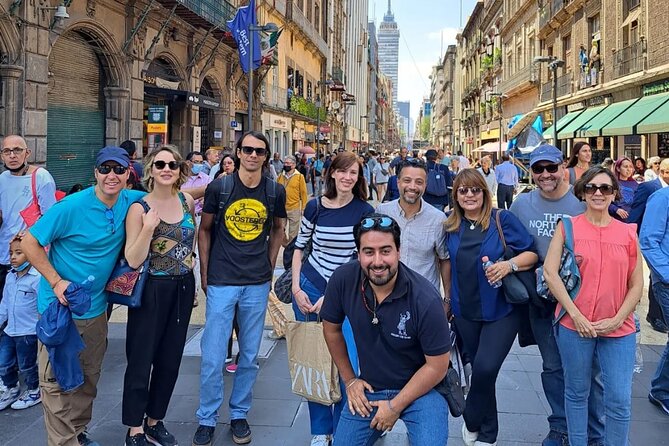
City history walks fast here. This walking tour threads Mexico City’s big ideas through famous buildings, moving from the Diego Rivera mural museum to Aztec Tenochtitlan at Templo Mayor.
I especially like the tight storyline the guide builds, using each stop to explain political, cultural, and ideological change. I also like that your ticket covers several admissions, so you’re not constantly paying at the door.
One possible drawback: it’s a see-it-and-move-on style tour. Even with great guiding, you should expect short time windows at each site rather than slow, in-depth wandering.
In This Review
- Key highlights you’ll feel right away
- Why This Centro Histórico Walk Works: Rivera to Tenochtitlan
- Price and Logistics: what you’re really paying for
- Stop-by-Stop Breakdown of the Historic Center Route
- Stop 1: Museo Mural Diego Rivera (start point energy)
- Stop 2: Alameda Central (a classic pause in the middle)
- Stop 3: Palacio de Bellas Artes (light, drama, and symbolism)
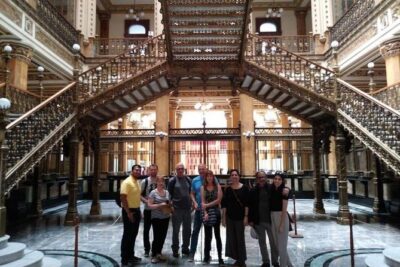
- Stop 4: Palacio Postal (Porfirio Díaz’s modernization)
- Stop 5: Palacio de Mineria (silver and Mexico’s export power)
- Stop 6: Museo Nacional de Arte (a sculpture and the building details)
- Stop 7: Teatro de la Ciudad (theater history, Esperanza Iris, and a dark setting)
- Stop 8: Centro Cultural España en México (going down to Aztec-noble school ruins)
- Stop 9: Museo del Templo Mayor (models, worldview, and the conquest story)
- How the Guides Make It Click: Delta, Diego, Jorge, and Jaime
- What to Watch For at Each Stop (so you don’t feel rushed)
- A quick booking caution
- Timing, walking pace, and where lunch fits
- Should you book the Walking Tour in Historic Center CDMX?
- FAQ
- How long is the walking tour in Mexico City?
- Where does the tour start and where does it end?
- Is the tour offered in English and do I get a mobile ticket?
- What’s included in the price?
- How big is the group?
- Is free cancellation available?
Key highlights you’ll feel right away
- A guided path from Rivera’s message to the Aztecs’ worldview, so it all connects instead of feeling like random sightseeing
- Multiple major museum/palace admissions included across the first half of the route
- Underground and outside storytelling at Centro Cultural España and Templo Mayor, where the guide uses models and context
- Small group size (max 25) that keeps the walk manageable
- English-speaking, certified guides who can handle questions and pace the plan well
More laps of the Zocalo and the old streets
- Historic Downtown Walking Tour
★ 5.0 · 1,289 reviews - Mexico City: Historic Downtown Walking Tour
★ 4.8 · 1,039 reviews - Walking Tour of the Historic Center of Mexico City
★ 5.0 · 870 reviews - Mexico City Historical Centre Food Tour with 7 Authentic Tastings
★ 5.0 · 723 reviews
Why This Centro Histórico Walk Works: Rivera to Tenochtitlan
This is the kind of Central CDMX tour that makes you see the city as one long conversation. You start with modern Mexico’s arguments about power and belief, then you climb backward through colonial-era messages, Porfirian modernization, and institutional art, before landing at the Aztec vision of the capital.
That forward-to-back storytelling matters. Without it, the Palacio de Bellas Artes or the Templo Mayor area can feel like just pretty landmarks. With it, each stop becomes a chapter in how Mexico City got organized, who shaped it, and what people believed they were building.
The route also plays with contrasts. You’ll get light and dark themes, from murals and theater tragedies to what lies beneath the streets. It’s a smart way to keep you engaged for the full 2.5 to a little over 3 hours.
Price and Logistics: what you’re really paying for
The price is $83.64 per person, and the value comes from two places: the guide and admissions. You get a certified guide plus admission tickets included for many of the stops (and free entry for a few others), which adds up on a day when you’d otherwise be paying multiple site fees.
You’ll walk between major landmarks in the Centro Histórico core, so the tour works best when you want a concentrated “best of the center” day without planning each ticket and route yourself. And since it’s offered in English with a mobile ticket, it’s straightforward for travelers who don’t want to juggle paperwork.
Group size is capped at 25, which helps with pace and time control. It’s also near public transportation, so you’re not stuck if you arrive a few minutes off schedule.
Stop-by-Stop Breakdown of the Historic Center Route
Here’s what to expect, why each stop is worth the time, and what to keep in mind.
More of Mexico City taken slowly, on foot
- Frida Kahlo VIP [Museum Tickets Included] Walk, Markets & Churros★ 5.0 · 982 reviews
- Anthropology Museum Private Experience Walking Tour★ 5.0 · 355 reviews
- Walking Tour in Mexico City for Exploring their Cultural Heritage★ 5.0 · 245 reviews
- Walking Tour – Impressive murals in Historical Center of Mexico City★ 5.0 · 224 reviews
- Muralist Art Semi Private Walking Tour in Mexico City Downtown★ 5.0 · 188 reviews
Stop 1: Museo Mural Diego Rivera (start point energy)
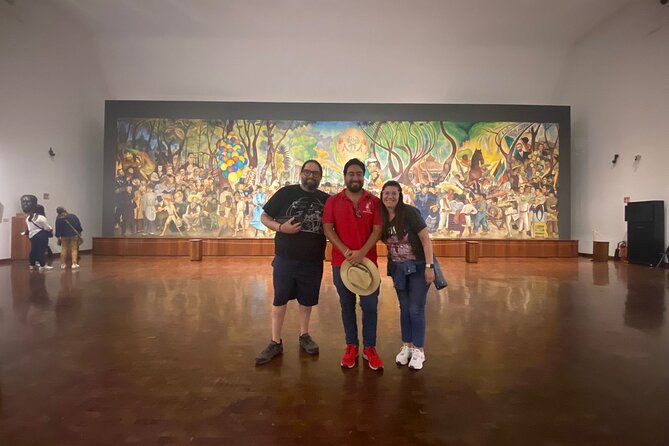
You begin at the Diego Rivera Mural Museum near Calle Colón Balderas in Centro. The tour highlights the fact that the mural was censored, tied to Rivera including the phrase God does not exist. That sets a tone for the rest of the walk: art as politics, and censorship as power.
What you’ll get here is not just murals-on-a-wall viewing. You’ll hear a detailed explanation of the characters who changed Mexico’s political, cultural, and ideological history. With this context, later palaces and institutions make more sense.
Time: about 25 minutes, and admission is included.
Good to know: If you’re sensitive to political and religious themes, you’ll still be in safe hands with a guide framing the historical meaning. Just expect discussion, not just visuals.
Stop 2: Alameda Central (a classic pause in the middle)
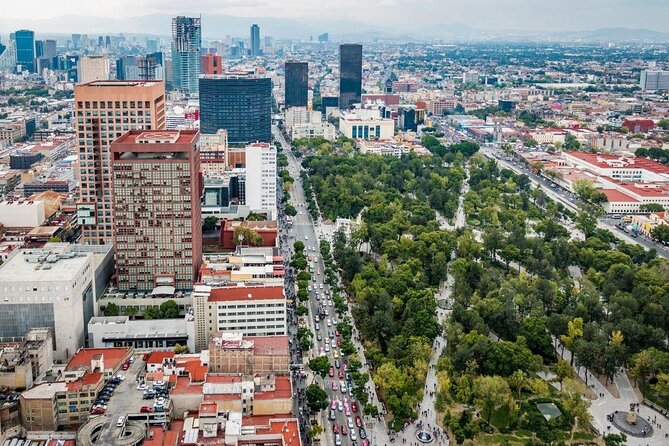
Next comes Alameda Central, described as the first public park in America. You’ll walk through an outdoor setting with classical sculptures and learn how city dwellers relate to public space.
This stop works as a reset. After museum and art, it gives you air, space, and a chance to look at the city from street level. It’s also a great moment to orient yourself for what comes next.
Time: about 10 minutes, admission included.
Stop 3: Palacio de Bellas Artes (light, drama, and symbolism)
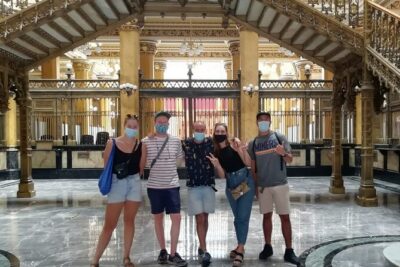
The Palacio de Bellas Artes is one of Mexico City’s most emblematic landmarks, and the tour uses it as a major turning point. You’ll hear the palace’s history in detail and walk through the areas the guide points out.
This stop is also where the tour leans into contrasts—light places and darker themes. That theme-matching is part of why the itinerary feels cohesive rather than like a checklist.
Time: about 20 minutes, admission included.
Reality check: This is not a full building tour where you linger for an hour. You’ll see the big pieces, then move on, so go in ready to absorb rather than to slow down.
Stop 4: Palacio Postal (Porfirio Díaz’s modernization)
At Palacio Postal, you’ll learn it’s part of Porfirio Díaz’s project to beautify and modernize Mexico City. It’s one more example of how architecture wasn’t only about function. It was about how the state wanted to look and grow.
Even if you pass quickly, this stop can teach you how to “read” the center. A façade becomes a political statement when you know what period it comes from.
Time: about 15 minutes, admission included.
Stop 5: Palacio de Mineria (silver and Mexico’s export power)
Next is Palacio de Mineria, with a focus on how Mexico became the number one country in silver exports. That connection between a building and economic power is surprisingly interesting, especially when you notice how often Central CDMX landmarks tie back to resource wealth and national ambition.
Time: about 10 minutes, admission included.
Tip: If you like architecture, snap a few photos fast, then listen. The short timing means you want to capture the look first and let the guide add the meaning second.
Stop 6: Museo Nacional de Arte (a sculpture and the building details)
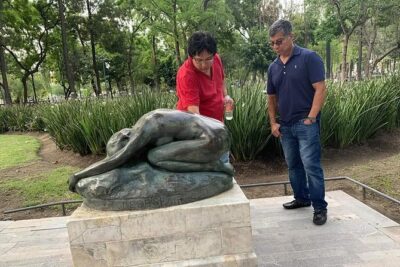
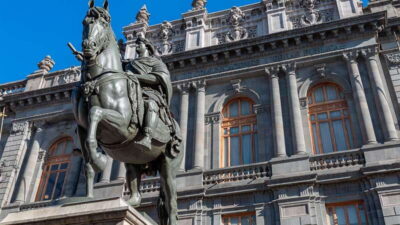
You continue to Museo Nacional de Arte, where you’ll enter to see a sculpture described as made with one hand, plus details of the architecture. This is a quick art-and-design stop that stays useful because it teaches you to notice craft.
It’s one of those moments where you might miss the point if you’re only thinking about photo spots. The guide’s focus on one specific sculpture and architectural details keeps the stop grounded.
Time: about 10 minutes, admission included.
Stop 7: Teatro de la Ciudad (theater history, Esperanza Iris, and a dark setting)
At Teatro de la Ciudad, you’ll hear history of theater in Mexico and the tragic story of Esperanza Iris. The tour adds another layer with what’s opposite the theater: in the 18th century, it was an asylum for women labeled insane.
This stop is where the emotional tone shifts. Theater is performance, but this explanation ties the arts to social treatment and how people were categorized. It’s heavy subject matter, but it’s also part of understanding the center as lived space, not just monuments.
Time: about 15 minutes, admission is free for this stop.
Stop 8: Centro Cultural España en México (going down to Aztec-noble school ruins)
Here you’ll go down to see ruins connected to an Aztec-nobles school for the sons of indigenous elites. The tour frames it as a place where you can feel how layers of history overlap physically.
Underground stops can be a little cooler and can shift your walking rhythm. If you’re the type who likes “where am I standing?” moments, this is a good one.
Time: about 20 minutes, admission is free for this stop.
Stop 9: Museo del Templo Mayor (models, worldview, and the conquest story)
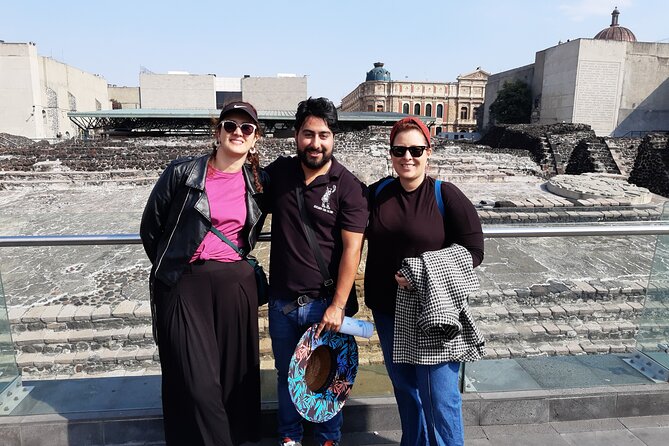
Your final site is Museo del Templo Mayor. This stop ties everything together by explaining how the Aztecs built Tenochtitlan, their worldview, sacrifices, and how the conquest played out.
You’ll be guided through the explanation using models, which matters because you’re often looking at fragments and foundations. The models help you picture the full city form instead of getting stuck on what’s missing.
Time: about 25 minutes, admission is free for this stop.
The tour ends by explaining from the outside the history of the main temple and how the city of Tenochtitlan was built.
How the Guides Make It Click: Delta, Diego, Jorge, and Jaime
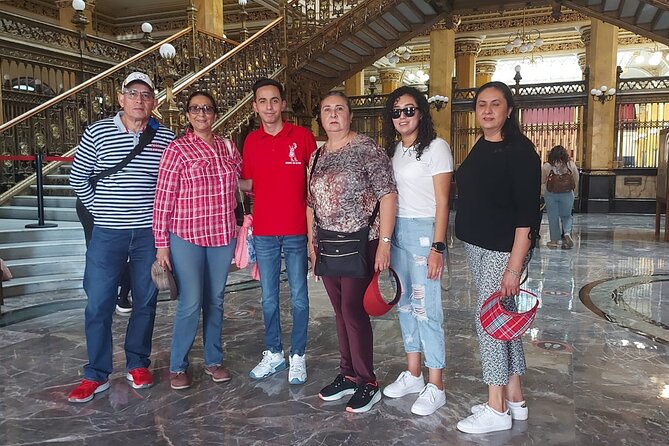
The biggest quality signal here is the guidance style. Multiple guides have shaped the same route with clear English and solid pacing.
I found the guide approach described by different names in the same way: start with context, keep time under control, and adapt when people need extra care. One guide, Delta, was noted for managing time well so the group covered all planned stops. Another, Diego, was praised for being extremely knowledgeable and easy to understand, with essentially perfect English.
Two other names came up often: Jorge and Jaime. Jorge was described as flexible with how long people spent at each place when a solo traveler needed it. Jaime was described as going out of the way to accommodate preferences and delivering a kind, detailed explanation of what you were seeing.
One practical lesson to take into your own day: this tour is more effective when you ask questions. The guide’s job is to connect the dots, and they seem comfortable answering odd questions rather than rushing past them.
What to Watch For at Each Stop (so you don’t feel rushed)
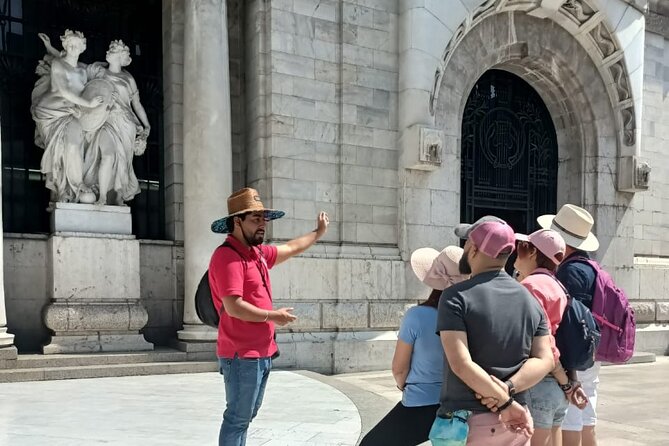
The itinerary is designed as a highlights walk, not a slow museum crawl. That’s fine if you set expectations.
At sites where you have about 10 to 20 minutes, your win strategy is simple:
- Listen for the one idea the guide is emphasizing
- Look for the architectural or symbolic detail they point out
- Take photos quickly, then return attention to the story
Also, don’t expect deep, multi-hour exploration of each building. Even positive feedback notes the tour covers a lot, and each destination would take longer if it were an all-day visit. If you love one specific stop—like Bellas Artes or the Aztec remains—plan a follow-up later on your own.
Crowds can affect how much you feel like you’re seeing. A good tactic is booking earlier in the day to make the walk more comfortable.
A quick booking caution
There was an explicit warning in one piece of feedback about issues tied to third-party booking arrangements. To protect yourself, make sure you receive your mobile ticket and clear confirmation details through your booking process, and verify the local provider name you’ll be meeting with.
Timing, walking pace, and where lunch fits
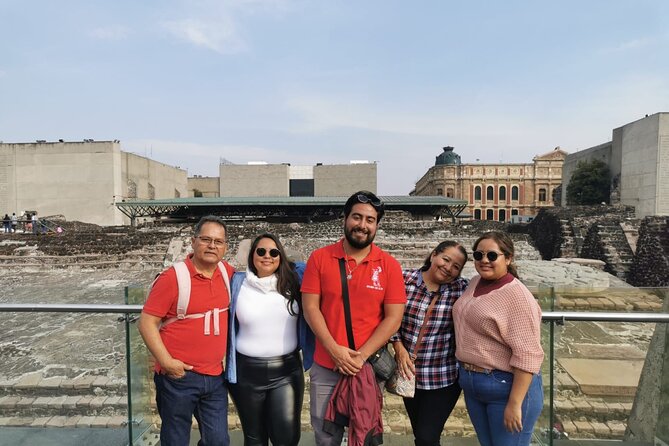
Duration is about 2 hours 30 minutes to 3 hours 10 minutes, so bring realistic expectations for a Centro walking day. That range usually feels about right because you’ll have short indoor windows and a few short outdoor transitions.
Your tour does not include lunch or food and drink. I suggest budgeting for a proper meal afterward, not during the walk. Many people do this as a morning or early afternoon plan, then eat nearby afterward while the day still feels fresh.
Since you end near the Templo Mayor Museum area, think about where you want to continue. You might want to pair the tour with a shorter museum stop or a quick coffee break in the surrounding Centro streets—then take transit onward.
Should you book the Walking Tour in Historic Center CDMX?
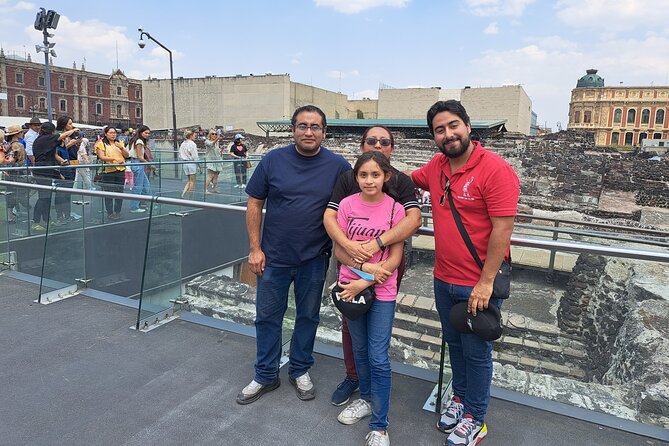
Yes, if you want a guided, story-driven way to understand Central CDMX fast. This tour is strongest when you like connections: art tied to politics, architecture tied to modernization, and archaeology tied to worldview.
Book it if:
- You want English-guided context across multiple iconic places in one outing
- You like walking between landmarks instead of spending hours in just one museum
- You want good value from included admissions at several stops
Skip it or pair it with a longer independent visit if:
- You prefer slow museum time and detailed gallery wandering
- You know there’s one site you want to obsess over for half a day (then return later)
FAQ
How long is the walking tour in Mexico City?
The tour runs about 2 hours 30 minutes to 3 hours 10 minutes.
Where does the tour start and where does it end?
It starts at Museo Mural Diego Rivera, Calle Colón Balderas s/n, Colonia Centro, Cuauhtémoc (06040). It ends at Templo Mayor Museum, Seminario 8, Centro Histórico de la Cdad. de México, Cuauhtémoc (06060).
Is the tour offered in English and do I get a mobile ticket?
Yes. The tour is offered in English, and you receive a mobile ticket.
What’s included in the price?
You get a certified guide. Admission tickets are included for several stops, and some stops are free entry. Tips and lunch are not included.
How big is the group?
The tour has a maximum of 25 travelers.
Is free cancellation available?
Yes. You can cancel for a full refund up to 24 hours in advance.
If you want, tell me your travel month and whether you’re more into art, architecture, or Aztec/colonial history—I can suggest the best time of day to start and what to prioritize for your follow-up visit.
More Tours in Mexico City


More Tour Reviews in Mexico City




The Centro Historico on Foot





Fresh from our Mexico City notebook

Historic Center Walking Tours, compared.
 ★ 5.0Historic Downtown Walking TourFrom $261,289 reviews
 ★ 5.0Historic Center Food Tour in Mexico CityFrom $1151,263 reviews
 ★ 4.8Historic Downtown Walking TourFrom $261,039 reviews
 ★ 5.0Walking Tour of the Historic Center of Mexico City870 reviews
 ★ 5.0Mexico City Historical Centre Food Tour with 7 Authentic TastingsFrom $65723 reviews
 ★ 4.9Authentic Downtown Food TourFrom $115260 reviews
 ★ 5.0Culinary Secrets of the Centro HistóricoFrom $140257 reviews
 ★ 5.0Walking Tour – Impressive murals in Historical Center of Mexico CityFrom $51224 reviews
Browse the lists this tour appears in