
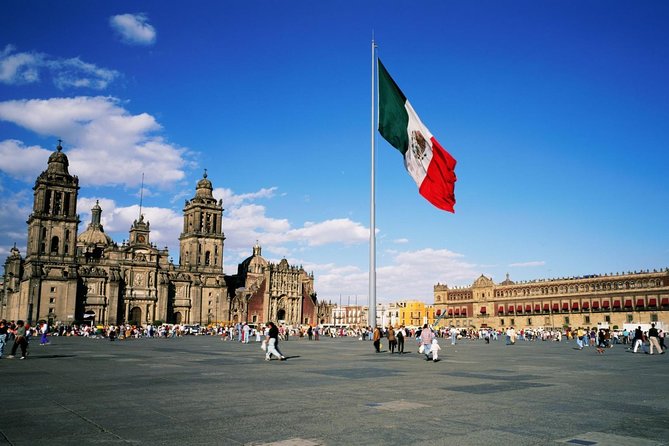
REVIEW · HISTORIC CENTER WALKING TOURS
Private Walking Tour Gems of the Historic Center of Mexico City
Mexico City starts at street level. This private 4-hour walk ties together Aztec origins, colonial power, and 20th-century art with a certified bilingual guide.
What I like most is that you’re not herded. You get a private pace and a local way of explaining why each place matters.
My second favorite part is the built-in art pay-off: Palacio de Bellas Artes is included, with time for the major murals upstairs. One thing to plan around: some big interiors aren’t available on this route—like the National Palace (view only) and the Templo Mayor museum visit (not included).
Key points to know before you go
- Private guide, flexible story: your guide adjusts the walk to your interests and keeps the pace comfortable.
- Orientation that lasts: the route connects Aztec Mexico-Tenochtitlan to the modern capital in a way that helps everything else click.
- Art included: entry to Palacio de Bellas Artes and time in its lobby plus mural floors.
- Great “outside-only” archaeology: Templo Mayor is focused on the exterior site, not a museum add-on.
- Easy refresh breaks: coffee and/or tea is included, and your guide builds in pauses when needed.
- You still cover a lot: expect close to 10,000 steps (around four miles) if you keep the full route.
In This Review
- Start at the Zócalo: your quick orientation to Mexico City’s center
- Templo Mayor outside: Mexico-Tenochtitlan’s sacred center, no museum detour
- Zócalo Plaza de la Constitución: where independence and everyday life overlap
- National Palace views only: Moctezuma’s ground, Mexico’s government today
- Metropolitan Cathedral: multiple styles, and a chance at the sacristy or organ
- Madero Street with coffee breaks: the comfortable way to read colonial-era facades
- Baroque highlights near Madero: Iturbide, La Profesa, and the House of Tiles
- San Francisco convent remains and Plaza Tolsa: quieter stops with sharp meaning
- Palacio Postal courtyard and Bellas Artes murals: where the tour pays off
- Price and value: what $156 buys you in real sightseeing time
- Guides and pacing: what to expect from the people leading your walk
- Who should book this private Centro Histórico tour
- Should you book it?
- FAQ
- What is the duration of this walking tour?
- Where does the tour start and end?
- Is this a private tour?
- Is the tour offered in English?
- What admissions are included?
- Can you go inside the National Palace?
- Does the tour include coffee or tea?
- How much walking should I expect?
- Is there free cancellation?
- Does the tour run in bad weather?
Start at the Zócalo: your quick orientation to Mexico City’s center
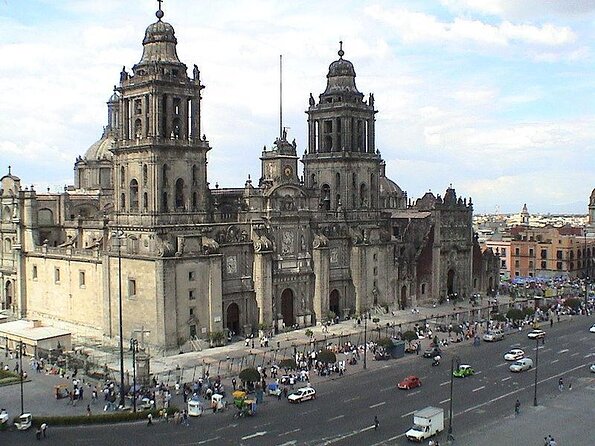
You meet near Av. 5 de Mayo by the Zócalo Central Hotel, right in the Centro Histórico power zone. From the first minutes, you’ll see why this area is the “center of gravity” for the whole city—politics, religion, and big cultural statements all share the same few blocks.
This is the kind of start that makes later sightseeing easier. Once you understand the layout and the timeline, you stop looking at landmarks as random postcards and start seeing them as a single story. That’s a big reason this tour feels like a smart use of time, even if you’re only in Mexico City for a short visit.
More laps of the Zocalo and the old streets
- Historic Downtown Walking Tour
★ 5.0 · 1,289 reviews - Mexico City: Historic Downtown Walking Tour
★ 4.8 · 1,039 reviews - Walking Tour of the Historic Center of Mexico City
★ 5.0 · 870 reviews - Mexico City Historical Centre Food Tour with 7 Authentic Tastings
★ 5.0 · 723 reviews
Templo Mayor outside: Mexico-Tenochtitlan’s sacred center, no museum detour
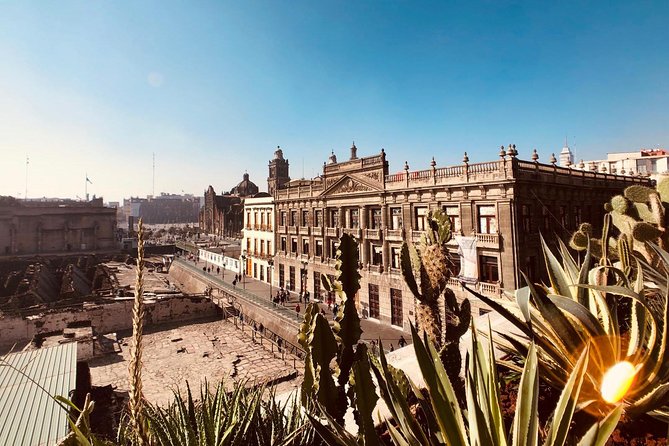
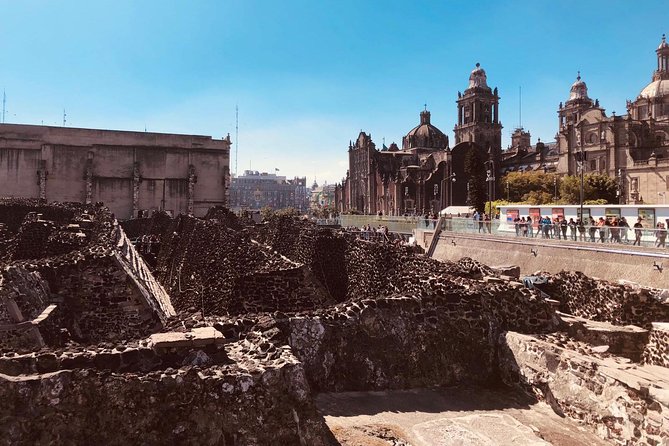
The tour begins at the archaeological site of Mexico-Tenochtitlan: Templo Mayor. You don’t get a full museum visit here—this experience focuses on the exterior. That matters because it keeps the flow moving and still gives you the “origin moment” for the city.
From a panoramic vantage point outside, you’ll take in the scale and placement of the ruins. Your guide will connect it to the idea of the sacred center (the axis mundi) and explain how quickly the Aztec capital rose in just a few centuries. Even without museum entry, you’ll come away with context for why Spanish colonizers later tried to rewrite the city’s meaning.
Practical note: admission for this stop is listed as not included, and the Museum of Templo Mayor isn’t part of the tour. If you know you want the museum indoors, plan to add it separately.
Zócalo Plaza de la Constitución: where independence and everyday life overlap
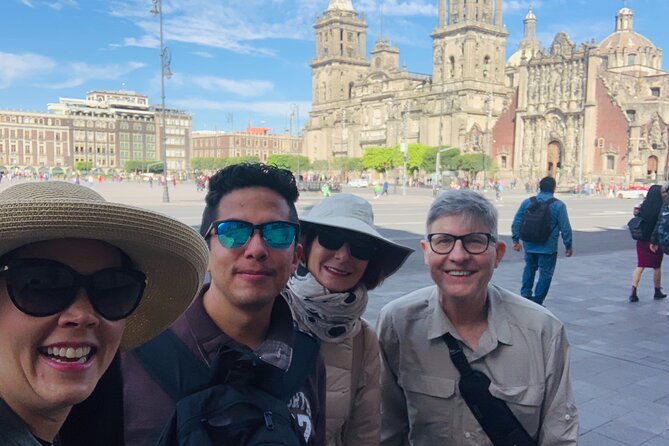
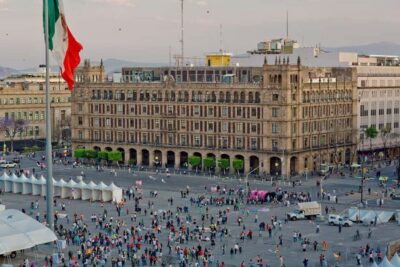
Next up is the Zócalo itself, Plaza de la Constitución—Mexico City’s main public square and a magnet for national moments. Your guide will walk you through the surrounding buildings and explain how the plaza changed meaning across colonial times, independence, and modern celebrations.
One of the best things about learning here is that you’re not learning in a vacuum. You’re standing in the exact space where crowds gather and history gets re-performed. It’s also a practical advantage: the Zócalo is flat, open, and easy for a walking tour to “reset” before heading into tighter streets.
This stop is short, but it sets the tone. You’ll be ready for what comes next: where political power used to sit—and where you can still view it today.
National Palace views only: Moctezuma’s ground, Mexico’s government today
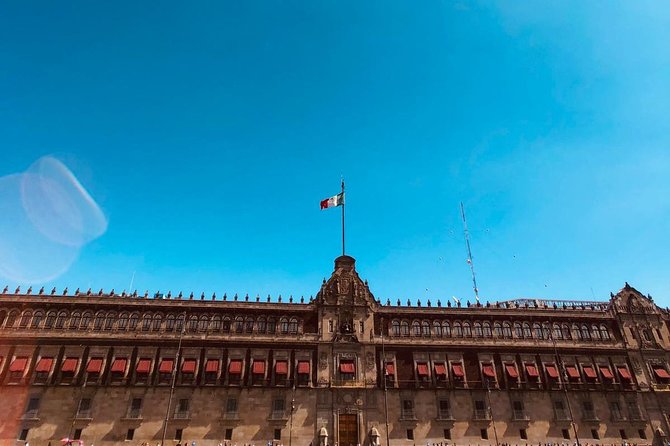
From the Zócalo, you’ll get a panoramic look at the National Palace. The guide links it to the earlier palace of Moctezuma and explains how this spot stayed tied to political authority for centuries.
Just know the limitation up front: you won’t go inside. The tour notes that interior entry isn’t allowed, so your time here is about perspective—seeing the building from where it anchors the city’s civic stage.
If you’re the kind of traveler who likes to understand the “why” behind a building’s location, this is still a strong moment. You’re getting the sightline and the story, even without entering.
More of Mexico City taken slowly, on foot
- Frida Kahlo VIP [Museum Tickets Included] Walk, Markets & Churros★ 5.0 · 982 reviews
- Anthropology Museum Private Experience Walking Tour★ 5.0 · 355 reviews
- Walking Tour in Mexico City for Exploring their Cultural Heritage★ 5.0 · 245 reviews
- Walking Tour – Impressive murals in Historical Center of Mexico City★ 5.0 · 224 reviews
- Muralist Art Semi Private Walking Tour in Mexico City Downtown★ 5.0 · 188 reviews
Metropolitan Cathedral: multiple styles, and a chance at the sacristy or organ
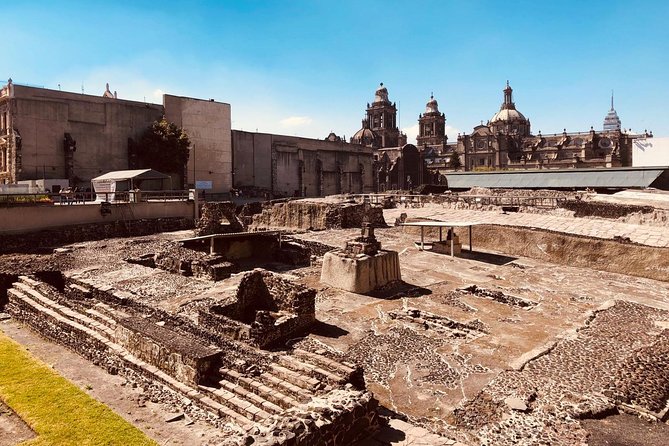
The walk then reaches the Catedral Metropolitana de la Ciudad de México. This cathedral is a timeline you can walk through—Gothic, Herrerian, Mexican Baroque, and Neoclassical features all show up in the same complex.
Inside, you’ll focus on the chapels and the centuries of Catholic Church history they preserve. The guide may also help you catch a special access opportunity: the tour says you might be able to see The Sacristy (often referred to as the Mexican Sistine Chapel) or get a close look at the church organ, depending on timing and accessibility.
In other words, you’re not guaranteed the extra interior peek—but you have a real shot. I like tours that admit this kind of flexibility rather than promising a perfect outcome every day.
Madero Street with coffee breaks: the comfortable way to read colonial-era facades
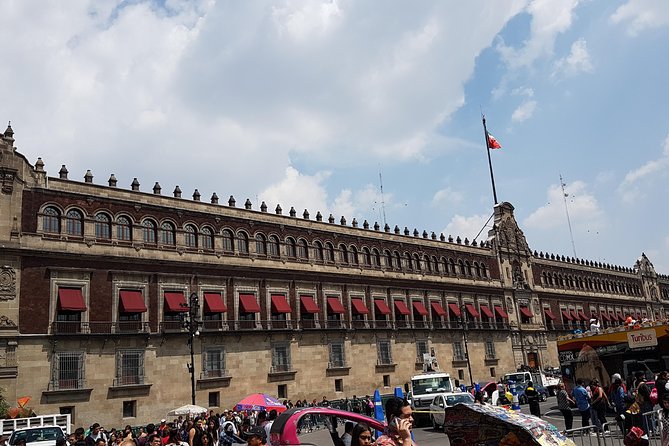
Now you shift from plazas and monuments into a long, memorable pedestrian stretch: Francisco I. Madero Avenue. This is where the city starts to feel like a walking museum—historic churches and colonial-era facades lining the route.
You’ll have about an hour here. Your guide will keep it lively with anecdotes and factual explanations, and they’ll build in pauses. Coffee and/or tea is included on the tour, and your guide will use breaks to help you keep the energy up without rushing.
This is also a good time to adjust the tour to your interests. Want more architecture talk? Want to hear about everyday life and how people lived in the past? The route is built to allow that kind of conversation.
If your legs are the first to complain, Madero Street’s long pedestrian layout is a gift. You can pace yourself and still cover a lot.
Baroque highlights near Madero: Iturbide, La Profesa, and the House of Tiles
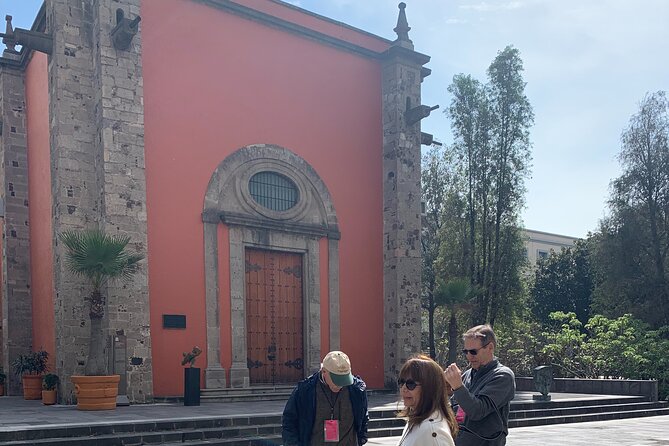
After the Madero stretch, you’ll make a sequence of shorter stops where details matter.
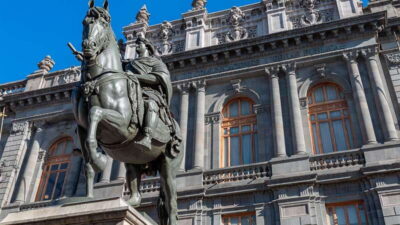
First is Museo Antiguo Palacio de Iturbide (brief exterior focus). This palace is a notable example of Mexican Baroque style, and the guide will point out architecture details and explain Agustín de Iturbide’s role in Mexican history. Even as a short stop, it works well because it gives you a visual “lesson” in Baroque features.
Then comes The Professed: Temple of San Felipe Neri. This stop is about religious art. Expect a quick look at its Baroque altarpiece and the collection of sacred art, with the guide sharing the kind of background that turns artwork into a story about the country’s religious and cultural evolution.
Finally, you’ll reach Casa de los Azulejos (The House of Tiles). It’s a famous stop for a reason: your guide will explain the site’s history and you’ll have a chance to appreciate the interior, including murals and architecture.
A nice pattern here: the tour keeps stepping you through styles and themes—Baroque in one building, religious art in another, decorative splendor in the tiles—so by the time you reach later stops, you’re better at noticing what you’re seeing.
San Francisco convent remains and Plaza Tolsa: quieter stops with sharp meaning
Next is a change of pace. Across the street from the House of Tiles area, you can admire the Former Convent of San Francisco, specifically the Chapel of Aranzazú in a preserved section of the remains.
Then you move toward Plaza Tolsa (Manuel Tolsá Square). This is a small but strategic pause, where you’ll see the exterior of the Mining Palace building.
These stops are shorter, but they add depth. They connect art and architecture to the economic and religious forces that shaped Centro Histórico—wealth, patronage, and the way institutions physically branded their power into the city.
If you like your tour to include at least a couple “less famous but meaningful” moments, this part delivers.
Palacio Postal courtyard and Bellas Artes murals: where the tour pays off
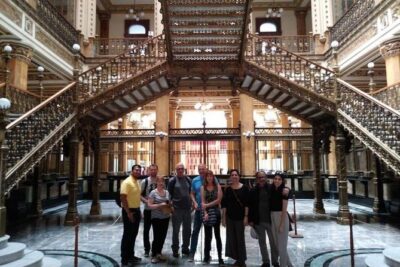
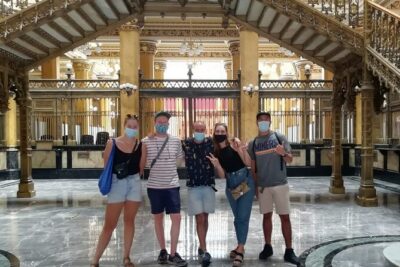
The tour includes an especially photogenic interior moment at Palacio Postal—you’ll enter the stunning courtyard for a look at stained glass. It’s a brief stop, but it’s the kind of space you remember after you leave: light, color, and craftsmanship in a setting that feels grand without needing constant explanation.
Then you finish at Palacio de Bellas Artes, and this is the big included finale. Your time here is longer—about 50 minutes—and it’s structured to give you more than a quick walk-through.
You’ll explore the lobby area, then go up to the second and third floors to see major 20th-century murals by artists such as Diego Rivera, David Alfaro Siqueiros, and Rufino Tamayo (and others). This is the part that turns the earlier stops into something more than chronology. When you get to the murals, you see how Mexico City’s identity kept evolving and re-explaining itself through art.
If you’re an art lover, you’ll feel the value quickly. If you’re not an art person, you’ll still appreciate the scale and symbolism—this is a culture statement you can’t get from a single exterior photo.
Price and value: what $156 buys you in real sightseeing time
At $156 per person, you’re paying for a private certified bilingual guide, a planned route with explanation at each stop, a coffee/tea break, and included entry time at Palacio de Bellas Artes (plus Palacio Postal courtyard entry).
A big value point here is how the included admissions stack up. Bellas Artes and Palacio Postal are not just “quick stops”—they’re timed portions of your afternoon. That matters because guided access reduces wasted time. You’re not trying to figure out which entrances work or where to spend your limited time.
Also, many nearby sites on the route are listed as free for admission (Zócalo area, cathedral, several churches and historic houses). The tour’s structure uses that wisely: you get paid narration for the walk, and the money goes where the experiences are strongest and entry matters.
The trade-offs are real but manageable:
- Some interiors are not accessible (National Palace).
- The Templo Mayor museum is not included; and that stop lists admission as not included.
- Cathedral extra access (sacristy/organ) depends on timing and accessibility.
Still, the overall value feels solid because you’re buying interpretation and time efficiency, not just a route.
Guides and pacing: what to expect from the people leading your walk
This is a private tour, so your guide’s style affects everything. Based on the named guides who’ve led this tour, you’ll likely get someone who can explain pre-Spanish culture, colonial architecture, and mural art clearly and in a way that keeps kids and adults engaged.
Names that have shown up include Alejo, Hermes, Isaias, Hilary, Silvia, Francisco, Hector, Julio, Fabio, Carla, and Alicia. The common thread in those accounts is adjustment: pausing for shade, tailoring the story to your interests, and giving extra recommendations for what to do after the tour.
If you want a tour that feels like a conversation with a local rather than a script, this format is a strong bet.
Who should book this private Centro Histórico tour
This works best if you:
- Want a big-picture overview fast, then use it to explore the city on your own.
- Care about how Aztec → colonial → modern Mexico City fits together.
- Like architecture, churches, and especially Mexican mural art at Bellas Artes.
- Prefer a private walk with room for questions and pacing changes.
It’s also a good fit for families or mixed-age groups, as long as everyone can handle a walking afternoon. One review specifically mentioned close to 10,000 steps, so plan accordingly.
If you only want the biggest “must-see” monuments with zero walking, this route may feel like too much on foot. But for most first-time visitors, it’s a practical way to get your bearings.
Should you book it?
I’d book this tour if you want your Centro Histórico time to feel organized and meaningful, not random. The included finale at Palacio de Bellas Artes is a strong reason by itself, and the rest of the route does a good job of setting up what you’re looking at.
I’d reconsider if you’re hoping for full interior access at every stop. The National Palace is view-only, and the Templo Mayor museum isn’t included. You’re getting interpretation plus the highlights that work on a walking schedule, not a museum marathon.
If that matches your style, you’ll leave with a much clearer map of the city’s layers—and you’ll be ready to enjoy the rest of Mexico City with better instincts.
FAQ
What is the duration of this walking tour?
The tour lasts about 4 hours.
Where does the tour start and end?
It starts at Zócalo Central Hotel on Av. 5 de Mayo 61 in the Centro Histórico and ends at Palacio de Bellas Artes on Av. Juarez S/N in the Centro Histórico.
Is this a private tour?
Yes. Only your group participates, and you’ll have a private certified bilingual guide.
Is the tour offered in English?
Yes, it is offered in English.
What admissions are included?
Admission to Palacio de Bellas Artes is included, and the tour also includes entry to the Palacio Postal interior courtyard. Other sites on the route are listed as free, but the Templo Mayor stop notes that admission ticket is not included.
Can you go inside the National Palace?
No. The tour notes that you won’t be able to visit the interior of the National Palace.
Does the tour include coffee or tea?
Yes. Coffee and/or tea is included as a complimentary break.
How much walking should I expect?
You should expect a walking-style experience covering close to 10,000 steps (about four miles), based on tour feedback.
Is there free cancellation?
Yes. You can cancel for a full refund up to 24 hours before the experience starts.
Does the tour run in bad weather?
The tour requires good weather, and if it’s canceled due to poor weather, you’ll be offered a different date or a full refund.
More Tours in Mexico City


More Tour Reviews in Mexico City




The Centro Historico on Foot





Fresh from our Mexico City notebook

Historic Center Walking Tours, compared.
 ★ 5.0Historic Downtown Walking TourFrom $261,289 reviews
 ★ 5.0Historic Center Food Tour in Mexico CityFrom $1151,263 reviews
 ★ 4.8Historic Downtown Walking TourFrom $261,039 reviews
 ★ 5.0Walking Tour of the Historic Center of Mexico City870 reviews
 ★ 5.0Mexico City Historical Centre Food Tour with 7 Authentic TastingsFrom $65723 reviews
 ★ 4.9Authentic Downtown Food TourFrom $115260 reviews
 ★ 5.0Culinary Secrets of the Centro HistóricoFrom $140257 reviews
 ★ 5.0Walking Tour – Impressive murals in Historical Center of Mexico CityFrom $51224 reviews
Browse the lists this tour appears in