
REVIEW · MURALS & STREET ART TOURS
Palace of Fine Arts Mural Tour
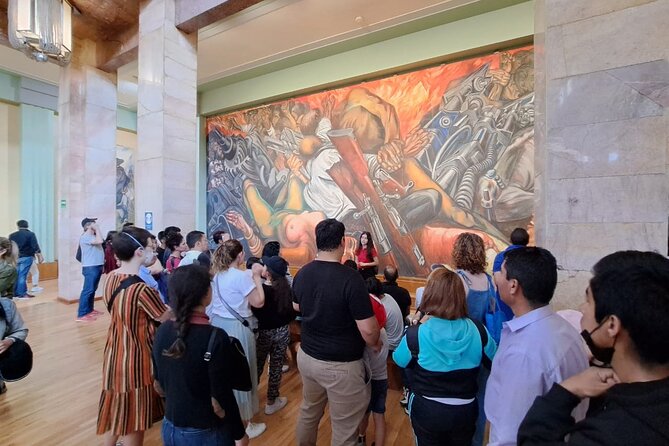
Murals turn the palace into a storybook. This guided walk focuses on why the Palacio de Bellas Artes matters (it was named a UNESCO World Heritage Site in 1987) and how the grand Mexican mural movement shaped national identity inside its halls. You’ll hear the big-picture setup behind Porfirio Díaz’s project and even the behind-the-scenes twist of Diego Rivera’s mural work in Rockefeller Center that was later destroyed.
I especially liked the museum storytelling style, with guides spelling out symbolism and historical context instead of just pointing at paint. Another win is how the tour breaks down major works by top artists, including Rivera, Siqueiros, Orozco, and others, so you can connect what you’re seeing to the ideas driving the murals.
The main thing to plan for: the experience time is about 1 hour to 1.5 hours, and the listing notes that the admission ticket isn’t included, so you may need to budget for entry separately.
In This Review
- Key highlights at a glance
- Why the Palacio de Bellas Artes murals are worth your hour
- Meeting at Palacio de Bellas Artes: what you should expect
- The palace itself: architecture that frames Mexican muralism
- Universe Controlled Man: Diego Rivera’s vision in plain view
- The carnival of Huejotzingo: Rivera beyond the obvious
- Liberation by Gonzales Camarena: why “meaning” is the point
- Katharsis by Orozco: when the guide helps you feel the message
- Siqueiros’ Diptych and Triptych: Torment, apotheosis, and New Democracy
- Rufino Tamayo and the Piedad by Rodríguez Lozano: the pairing to slow down for
- Price and logistics: is $56.75 a good value?
- Who this tour is best for
- Should you book this Palacio de Bellas Artes Mural Tour?
- FAQ
- What language is the tour offered in?
- How long is the Palace of Fine Arts Mural Tour?
- What does the price include?
- Where is the meeting point?
- Is there a limit on group size?
- What is the cancellation policy?
Key highlights at a glance
- UNESCO 1987 setting: the palace itself is part of the story, not just a backdrop
- Told-through-murals approach: you’ll connect meaning, symbols, and history to what’s painted
- Major mural artists covered: Rivera, Siqueiros, Orozco, plus works by Camarena, Tamayo, and Rodríguez Lozano
- Great guide energy in English: Leon is singled out for clear explanations and enthusiasm
- Small-group feel: maximum size is 35 travelers, so it’s easier to track the guide’s points
More walls: further into the muralists
- CDMX: Xochimilco, Coyoacan, Frida Kahlo Museum & Murals Tour
★ 4.4 · 3,025 reviews - Mexico City; ART NACO : Murals & Street Art Bike Tour
★ 5.0 · 284 reviews - EXCLUSIVE TOUR Casa Estudio Frida Kahlo-Diego Rivera Small Groups
★ 5.0 · 237 reviews - Walking Tour – Impressive murals in Historical Center of Mexico City
★ 5.0 · 224 reviews
Why the Palacio de Bellas Artes murals are worth your hour
If you like art, this palace is the kind that makes you slow down fast. The Palacio de Bellas Artes is one of Mexico City’s most emblematic historic-center landmarks, and the murals inside carry that same weight. A good mural guide helps you stop seeing “famous names” and start seeing messages.
What I like about this tour format is that it treats the murals as a system. You’re not just learning titles. You’re learning the context—why these artists made these choices, and what themes they were pushing during Mexico’s mural era.
It also helps that you get a certified guide. The best moments come when the guide connects a visual detail to a political idea or a historical event, so the murals start clicking instead of feeling like homework.
Meeting at Palacio de Bellas Artes: what you should expect
You’ll start at Av. Juárez S/N, Centro Histórico, at the Palacio de Bellas Artes. The tour ends back at the meeting point, so you’re not stuck figuring out where to go after your hour of art talk.
This runs in English, and it’s designed for most travelers to participate. It’s also near public transportation, which is handy in Mexico City, where you usually want flexibility. And yes, service animals are allowed.
Timing matters here. Plan for the session to land somewhere between 60 and 90 minutes, so treat it like a focused stop in your day rather than something you want to stretch out with a long café detour.
The palace itself: architecture that frames Mexican muralism
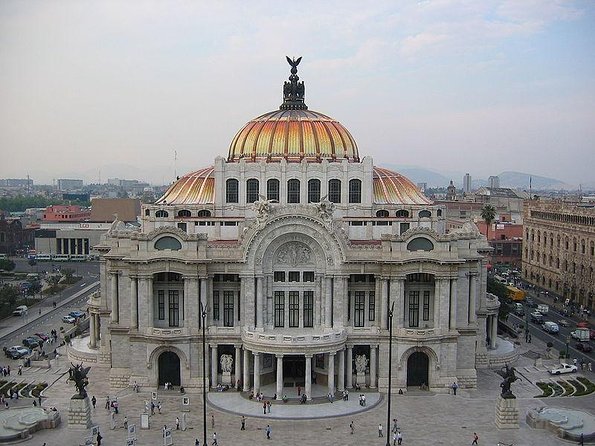
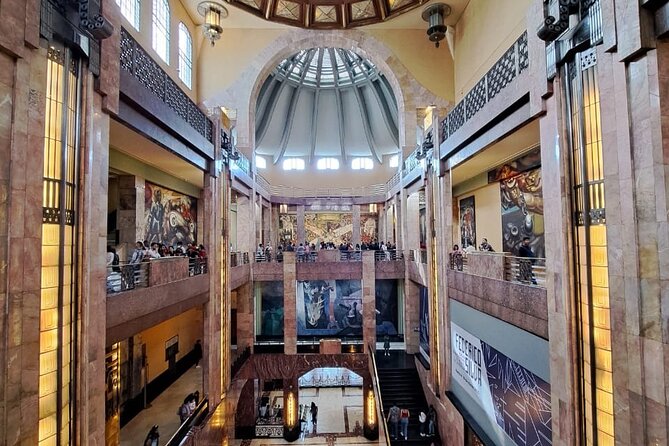
Before you even get deep into specific murals, the guide explains the interior and exterior architecture. That’s a big deal, because Palacio de Bellas Artes isn’t a neutral container. Its design helps shape how monumental art feels when you’re standing under it.
On the outside and inside, you’ll get pointers that make the building easier to read—how the structure supports scale, drama, and sightlines. When you understand that “framing,” the murals start to make more sense as an intentional visual program rather than a random collection.
This is also where you’ll get the tour’s main historical context: the palace is tied to the era of Porfirio Díaz and the cultural ambitions of the time. From there, the murals become more than decoration. They become a counterpoint, a conversation, and sometimes a political argument painted large enough for everyone to see.
- Teotihuacan, Guadalupe Shrine & Tlatelolco Day Tour with Lunch★ 5.0 · 11,603 reviews
- Xochimilco, Coyoacan and Frida Kahlo with Optional Lunch★ 4.5 · 7,320 reviews
- Balloon flight + Breakfast in cave + Pyramids + Pick up CDMX.★ 5.0 · 6,335 reviews
- Teotihuacan pyramids morning or afternoon without tourist traps★ 5.0 · 6,186 reviews
- Teotihuacan Early Access Guided Tour with optional Lunch★ 4.5 · 6,138 reviews
Universe Controlled Man: Diego Rivera’s vision in plain view
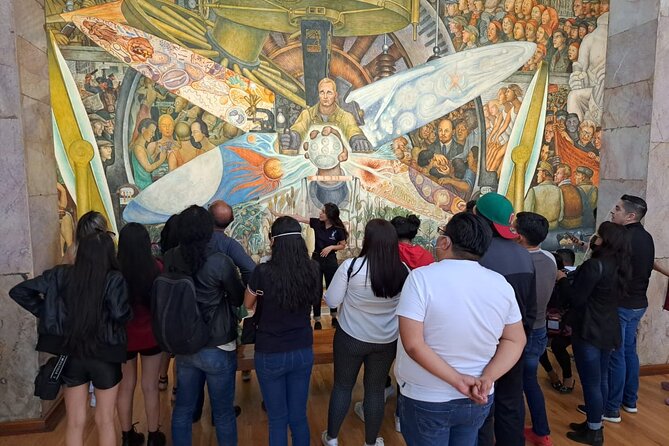
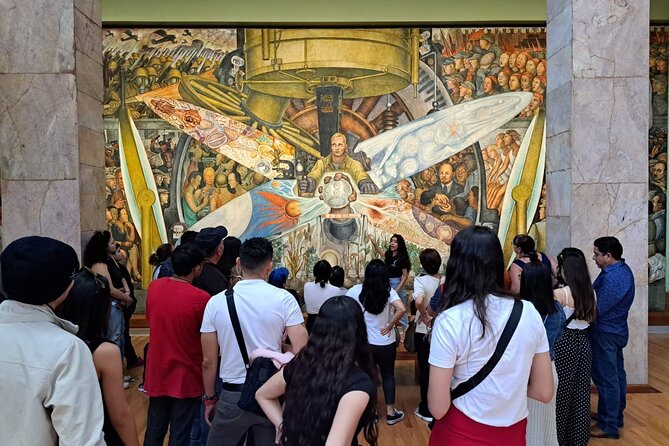
One of the centerpieces is Universe Controlled Man, by Diego Rivera. This is the kind of work where symbolism matters more than it might at first glance. The guide’s job is to show you what to look for and how the components connect to the mural’s theme instead of treating it like a single “impressive” scene.
This part of the tour is where Rivera’s influence becomes very real. You’re not just hearing about him as a famous muralist—you’re learning how his ideas show up in the composition and the figures. The mural connects the human story to broader concepts, so you’ll likely find yourself re-reading the painting as the guide explains the logic behind it.
The tour also brings in a memorable real-world link: the guide explains the mural Diego Rivera painted in Rockefeller Center that was destroyed due to his ideology. That detail gives you a clearer sense of what’s at stake when you see this art in a public place.
The carnival of Huejotzingo: Rivera beyond the obvious
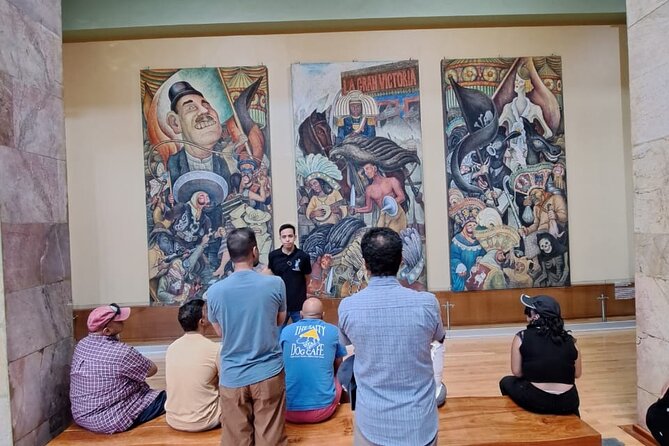
From Rivera’s global-known themes, you shift to The carnival of Huejotzingo, also by Rivera. This one helps you see another side of him: the way muralism can celebrate cultural life while still packing in meaning.
I like that the guide doesn’t let you treat this mural as “just colorful.” Instead, you learn how the carnival setting works as more than a snapshot—it becomes part of a broader idea about identity, tradition, and what communities represent.
If you’re the type who likes art that tells a story you can interpret, this is a solid stop. You’ll leave with something more than a photo. You’ll have a framework for how to read the scenes.
Liberation by Gonzales Camarena: why “meaning” is the point
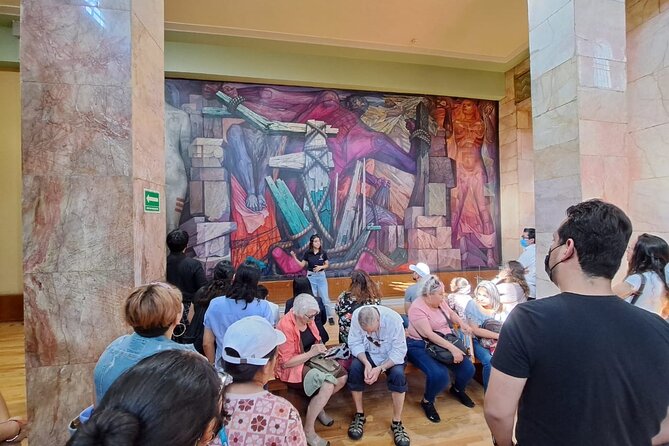
Then you move to Liberation by Gonzales Camarena. This is one of those murals where the theme feels like it should be simple—freedom, release, getting free. But mural art rarely stops at the surface.
With the guide’s explanation, you’ll likely focus on how the painting structures its message: what’s emphasized, what’s symbolic, and how the composition supports the title. This is a good moment to train your eye for “why this figure here?” and “what does this element represent?” Instead of guessing, you get answers that connect art choices to cultural and historical thinking.
Even if you’re not an art expert, this approach helps. You’ll understand what the mural is trying to say and why the artists chose this specific visual language.
Katharsis by Orozco: when the guide helps you feel the message
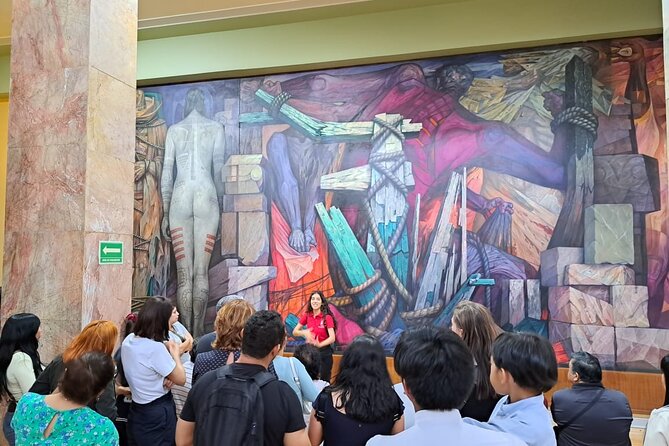
Katharsis by Orozco can hit differently once you know what to look for. Orozco’s mural language often carries intensity, and the guide’s interpretation helps you see why the mood is built into the design.
What I appreciate here is the balance between emotion and explanation. The tour doesn’t only tell you what the work looks like. It talks about what the work communicates and why catharsis is more than a word on a plaque.
In practical terms, this segment is great if you get impatient with long museum explanations. The guide’s points make the mural easier to “read” quickly, so you feel like you’re understanding instead of just standing still and waiting.
Siqueiros’ Diptych and Triptych: Torment, apotheosis, and New Democracy
Next comes the big Siqueiros moment: a Diptych called Torment and apotheosis of Cuauhtémoc, plus the Triptych of the New Democracy. These pieces are where the tour really leans into muralism as public political art.
The guide walks you through the structures—how the diptych pairing works, and how the triptych format builds a sequence of ideas rather than one static statement. That matters because you might otherwise miss how the panels “argue” with each other.
For Cuauhtémoc’s story, the guide helps you connect the name and theme to what’s depicted. And for the New Democracy triptych, you get the sense of how Siqueiros uses scale and visual contrast to push a concept of society, progress, and power.
This is one of those sections where I’d encourage you to pause and look again after the guide speaks. Even a few extra seconds can help you catch what the explanation referred to, like specific figures or symbolic elements that shift how you read the entire mural.
Rufino Tamayo and the Piedad by Rodríguez Lozano: the pairing to slow down for
Finally, the tour includes Rufino Tamayo and the Piedad by Rodríguez Lozano. This is a good way to end, because it changes the texture of the experience. After the big, forceful political statements, you get a calmer moment where you can pay attention to mood and symbolism in a more personal way.
The guide’s explanation helps you understand how this work fits within the broader mural program. Even if you don’t know Tamayo or Rodríguez Lozano yet, the tour gives you entry points so you’re not lost. You’ll have enough context to appreciate why this kind of imagery belongs alongside the more widely known mural giants.
If you tend to focus on the famous names only, this segment can surprise you—in a good way. It adds variety and shows that muralism isn’t just one style or one political note.
Price and logistics: is $56.75 a good value?
At $56.75 per person for about 1 to 1.5 hours, you’re paying for a focused, English-guided breakdown of major murals plus palace context. For many visitors, that’s the sweet spot. You get time savings, and you get interpretation you likely won’t get from reading labels alone.
The value equation improves because the group size is capped at 35 travelers, which usually makes it easier to follow the guide’s pointing and explanations. Plus, the tour includes entries per the listing, but it also notes that the admission ticket isn’t included. In plain terms: plan for the possibility of paying entry separately so you aren’t surprised at the last minute.
Also, booking tends to happen about 6 days in advance on average. If you’re traveling during peak season, I’d rather you lock in your date sooner than later.
Who this tour is best for
This is a great pick if you’re curious about Mexican muralism and want clear, human explanations. If you like seeing how art connects to politics, culture, and identity, you’ll get a lot out of the Rivera, Siqueiros, and Orozco sections.
It’s also a strong choice for travelers who feel intimidated by museums. The guide gives you a route through the artworks and a reason to care about what you’re seeing, mural by mural.
If you’re the type who wants long self-guided time in a museum hall, you might find the pacing a bit focused. But if your goal is understanding, this tour leans exactly there.
Should you book this Palacio de Bellas Artes Mural Tour?
I’d book it if you want the murals to make sense fast. The biggest selling point is the way the guide turns each mural into a story—symbols, context, and the real-world events behind the art. The fact that Leon stands out for clear English explanations and detailed mural storytelling is a good sign you’ll get real interpretation, not just surface-level descriptions.
I’d skip or reconsider if you’re only looking for casual wandering. You’ll get more out of this tour by being ready to listen and look closely. And if you haven’t budgeted for possible separate palace admission, make sure that piece is handled before you go.
Overall, if you’re spending time in Mexico City’s historic center and you want an art experience that’s both structured and meaningful, this is a smart way to spend an hour or ninety minutes.
FAQ
What language is the tour offered in?
The tour is offered in English.
How long is the Palace of Fine Arts Mural Tour?
It runs for about 1 hour to 1 hour 30 minutes.
What does the price include?
The tour price includes a certified guide and entries. The information provided also says the admission ticket is not included, so you may need to plan for separate entry costs.
Where is the meeting point?
You meet at Palacio de Bellas Artes, Av. Juárez S/N, Centro Histórico de la Cdad. de México, Centro, Cuauhtémoc, 06050 Ciudad de México, CDMX, Mexico.
Is there a limit on group size?
Yes. The maximum group size is 35 travelers.
What is the cancellation policy?
You can cancel for a full refund up to 24 hours in advance of the experience start time. If you cancel less than 24 hours before, the amount paid is not refunded.
More Tours in Mexico City


More Tour Reviews in Mexico City




The Walls of Mexico City: More Mural Walks



Fresh from our Mexico City notebook

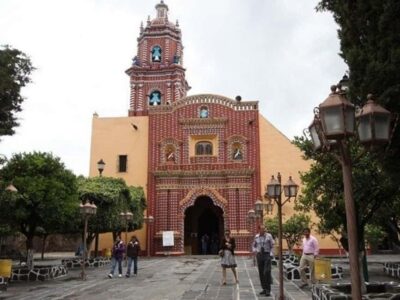
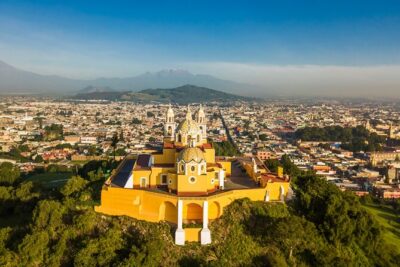
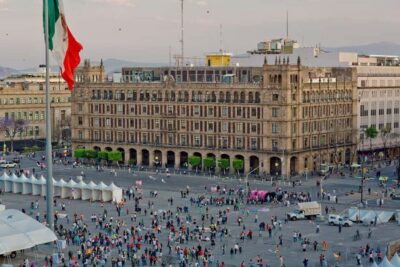
Murals & Street Art Tours, compared.
 ★ 4.4Xochimilco, Coyoacan, Frida Kahlo Museum & Murals TourFrom $893,025 reviews
 ★ 5.0Mexico City; ART NACO : Murals & Street Art Bike TourFrom $60284 reviews
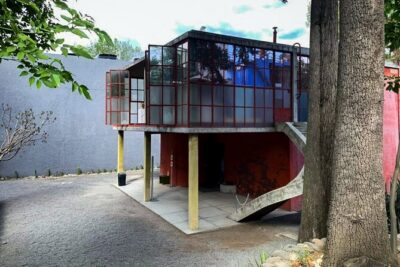 ★ 5.0EXCLUSIVE TOUR Casa Estudio Frida Kahlo-Diego Rivera Small GroupsFrom $50237 reviews
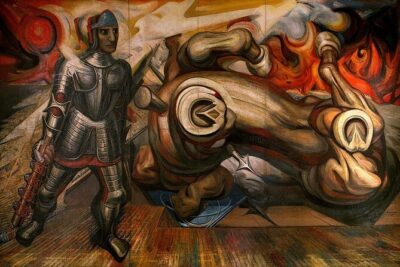 ★ 5.0Walking Tour – Impressive murals in Historical Center of Mexico CityFrom $51224 reviews
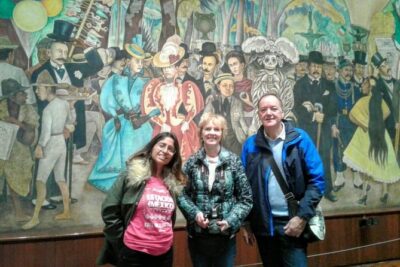 ★ 4.5La Catrina & Muralism: Diego Rivera’s Legacy & Frida KahloFrom $66197 reviews
 ★ 5.0Muralist Art Semi Private Walking Tour in Mexico City DowntownFrom $58188 reviews
★ 4.7Art Naco, murals & street art bike tourFrom $52166 reviews
★ 5.0Muralist Art Semi Private Walking Tour in Mexico City DowntownFrom $58188 reviews
★ 4.7Art Naco, murals & street art bike tourFrom $52166 reviews
 ★ 4.9Iztapalapa: Cable Car Tour and Urban Art From the HeightsFrom $24124 reviews
Browse the lists this tour appears in