

REVIEW · MURALS & STREET ART TOURS
Iztapalapa: Cable Car Tour and Urban Art From the Heights
Cable cars show Mexico City differently. This Iztapalapa Cablebús tour gives you big views from above plus city stories you can’t really get from street level—especially the rooftop murals and the way daily life looks from the air. I love that it’s not a museum-style lecture; it’s history and culture tied to what you’re literally looking at overhead.
One possible drawback: the route includes open-air time on the Cablebús and you’ll want to be ready for motion. If you’re sensitive, take the motion-sickness prevention seriously before you go.
In This Review
- Key takeaways
- Entering Bellas Artes: the easy start that saves you later
- Metro first, cable car next: how you get the “from above” effect
- The Cablebús murals: urban art you can actually read
- Getting into Iztapalapa: small moments that change how you see the city
- The park with volcanoes: a view break that feels like a reset button
- Music lessons on the move: cumbia, sonidero, and urban rock
- Tortilla-making: why this included bite of culture is worth it
- Food timing: what’s included, what’s not, and how to plan
- How long is it really, and how much walking?
- Who should book this and who should skip it
- Price and value: is $24 worth it?
- Practical tips before you go
- Should you book the Iztapalapa Cablebús + Urban Art tour?
- FAQ
- Where is the meeting point?
- How long does the tour last?
- What transport is included?
- Is tortilla-making included?
- Are meals included?
- Is the group size small?
- What language is the tour offered in?
- What should I bring?
- Who should not take this tour?
- What is the price?
Key takeaways
- Cablebús views without the walking: you spend time looking down at the city, not grinding your feet on uneven streets
- Urban art from a new angle: murals read differently when you’re higher up and moving slowly
- A guided way into public transit: you ride metro plus cable car with a small group, not guesswork
- Local context in plain language: you’ll hear about Iztapalapa’s growth and the rhythms of the area
- Food culture included (tortillas): you get hands-on tortilla-making, plus optional snack buys with cash
More walls: further into the muralists
- CDMX: Xochimilco, Coyoacan, Frida Kahlo Museum & Murals Tour
★ 4.4 · 3,025 reviews - Mexico City; ART NACO : Murals & Street Art Bike Tour
★ 5.0 · 284 reviews - EXCLUSIVE TOUR Casa Estudio Frida Kahlo-Diego Rivera Small Groups
★ 5.0 · 237 reviews - Walking Tour – Impressive murals in Historical Center of Mexico City
★ 5.0 · 224 reviews
Entering Bellas Artes: the easy start that saves you later
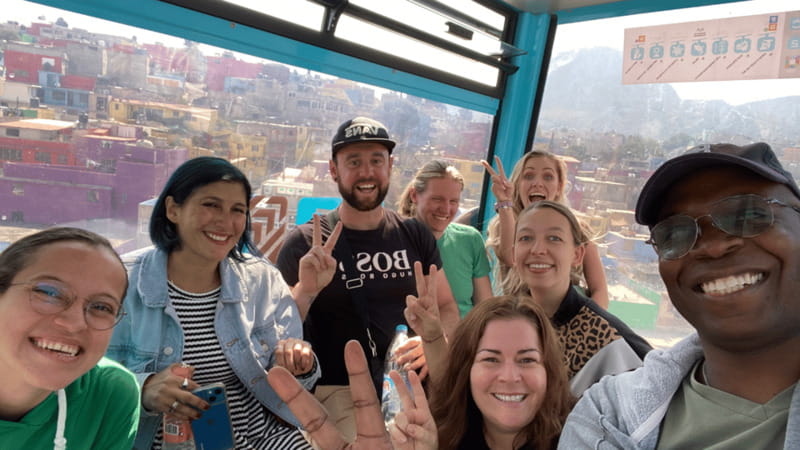
You start at the Bellas Artes area, meeting at the Parisian entrance of the Bellas Artes subway on the left side of the palace. Look for the guide in a green shirt with an umbrella. It’s a simple meetup, but if you’re the kind of person who hates waiting around, you’ll appreciate how clear this start is.
Then you head into the metro for about 45 minutes. This matters more than it sounds. Mexico City’s transit can feel like a puzzle when you’re new, and this tour helps you understand how the system works before you’re on your own later in the trip.
Also, the group is capped at 9 people, which is a big deal in a place this large. You’ll be able to hear the guide, and you won’t feel like you’re being shoved along like luggage.
Metro first, cable car next: how you get the “from above” effect
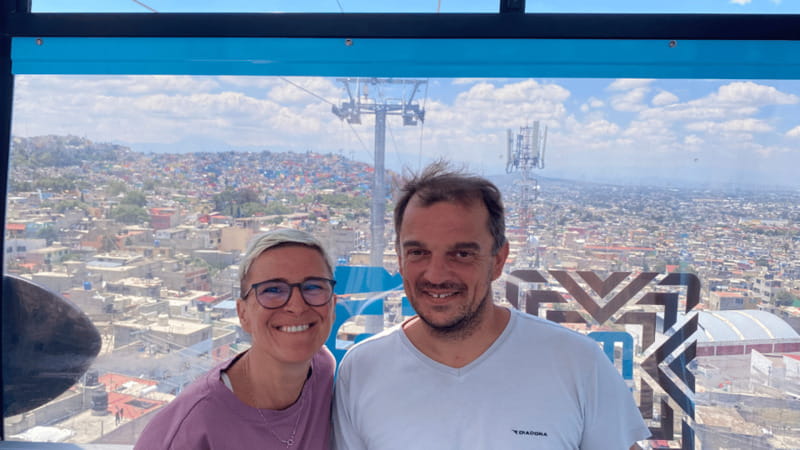
After the metro ride, you switch to the Cablebús for about 40 minutes of ride time. The Cablebús line here is described as the longest in the world, and you can feel why: it’s not a short spin, it’s sustained time in the air.
This is why the tour works. Most city views come from a tower or a viewpoint with a ticket price attached. Here, you get the same “wow” feeling, but it’s tied to a real commute route—so the scenery feels earned, not staged.
You’ll see architecture, labyrinth-like streets, and the surrounding mountains as the cable car carries you over Iztapalapa. The guide also points out cultural and historical context along the way, especially when it comes to the murals and the neighborhood’s role in the wider city.
One practical note: the tour includes public transport card access, so you’re not scrambling for tickets in the middle of the day. That alone can save you time and stress.
The Cablebús murals: urban art you can actually read
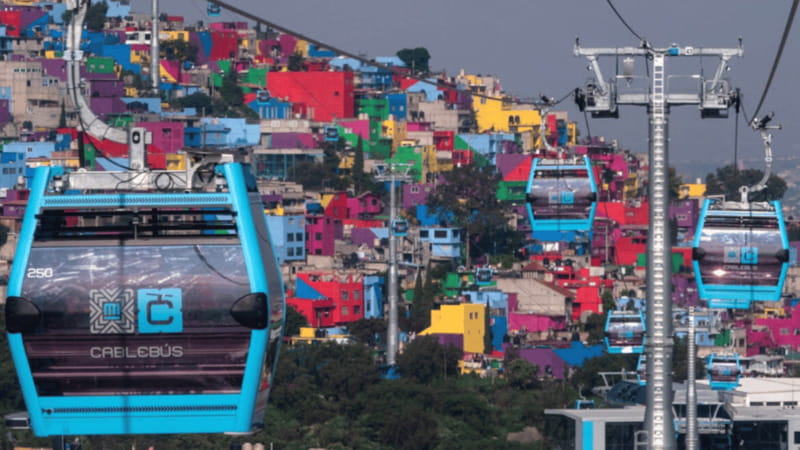
This tour’s signature is how it pairs height with storytelling. From above, murals and rooftop artwork don’t just look pretty. They become part of how you understand the community.
You’ll spot murals during the cable car ride and also on the way through the neighborhood. I like that the guide’s framing makes you notice the details: who painted, what stories are being told, and why that art shows up where you’d normally just expect rooftops.
It’s also a nice reminder that street art here isn’t separate from daily life. It’s attached to buildings, commutes, and pride. From the air, you get a clear sense of scale that you simply won’t get standing on a sidewalk.
And if you’re thinking, okay, but will this just be one big photo moment? Not really. The tour builds in time for stops and views, including a photo stop during the neighborhood portion.
More of the city seen from the cablebus
- Fly over to the Unexplored Parts of CDMX by Cable Car★ 5.0 · 168 reviews
- Iztapalapa: Cable Car Tour and Urban Art From the Heights★ 4.9 · 124 reviews
- Mexico City: City Highlights Cable Car Ride w/ Taco & Tour★ 4.9 · 44 reviews
- Unique cablecar experience, pulque tasting &unbeatable views★ 5.0 · 44 reviews
- Discover Reforma & Chapultepec Park: Cable Car & Ferris Wheel★ 5.0 · 15 reviews
Getting into Iztapalapa: small moments that change how you see the city
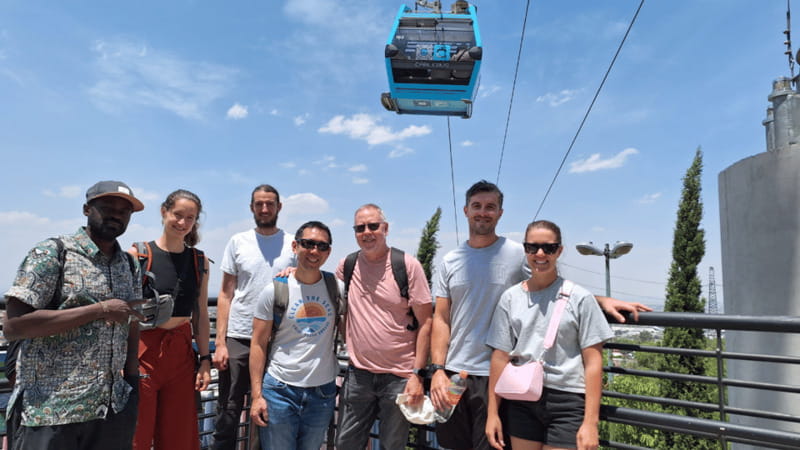
Once you arrive in Iztapalapa, you get a short guided walk-and-look session of about 20 minutes. It’s not about covering lots of ground. It’s about orientation—what you’re seeing, where the neighborhood fits in Mexico City’s story, and how growth shaped the streets around it.
Then you’ll get a 15-minute photo stop, which is where you can slow down and take in the details that don’t “fit” during motion. After that, there’s about 30 minutes of scenic views on the way, letting you enjoy the neighborhood like a landscape—without the usual tourist-bus rush.
This is also where your guide’s style matters. The tours seem to run with guides who are praised for clear explanations and good group care. Names you may hear in these tours include Eduardo, Benjamin, Oscar, Alexia, Gabrielle, Sam, and Tomas, and the consistent theme is that they help you make sense of what you’re seeing rather than just naming landmarks.
The park with volcanoes: a view break that feels like a reset button
At some point, you visit a local park where you can see volcanoes and the city in the distance. This kind of stop is underrated. When you spend hours moving through transit and looking down from above, your brain needs a wide open horizon to recalibrate.
It also helps you connect the physical geography to the human one. You start to understand why the city spreads the way it does and how the mountains sit around communities like a frame.
In my opinion, this pause is what keeps the tour from feeling like nonstop motion. You get to breathe, look far away, and then come back to the closer murals and street-level stories with fresh eyes.
Music lessons on the move: cumbia, sonidero, and urban rock
The tour doesn’t just hand you facts about buildings. It also shares the music rhythms that represent the area—specifically cumbia, sonidero, and urban rock.
Why this matters for you: music is one of the easiest ways to understand how people shape identity in a city. When your guide connects those styles to what you’re seeing below, you start to get a sense of energy and community life, not just architecture.
It’s also a practical kind of learning. You don’t need to know the music already. The guide gives you the context while you’re watching the neighborhood from above and alongside it.
Some content may be presented in the original language, so if you want to fully follow every detail, the English or Spanish tour language setting is worth paying attention to when you book.
Tortilla-making: why this included bite of culture is worth it
You’ll get a chance to join a tortilla-making activity during the tour. This is one of those included experiences that’s small on paper and big in meaning.
Tortillas aren’t a “food activity” here. They’re a core part of daily diet and Mexican food culture. The guide helps you understand why this matters and what’s behind the everyday rhythm of making and eating tortillas.
I like this part because it slows the day down just enough to balance all the high-view excitement. It gives you something hands-on and sensory—touch, smell, and the simple satisfaction of doing something basic well.
You’ll want cash if you want to buy extra snacks later. The tour notes that you may want cash for typical bites, and gorditas are mentioned separately as a small extra you can purchase (not included, listed at 15 pesos).
Food timing: what’s included, what’s not, and how to plan
Meals are not included, and drinks aren’t included either. That means you’ll want to think of the tour as: transport + guided learning + tortillas, with optional food buys on the side.
Some guides also stop by a local market area during the day, and you may have chances to try street food or market items there. The key point for you: bring a little cash so you can choose what you want. Don’t plan on getting a full lunch covered in the price.
If you’re the type who needs structure, set your expectations like this: eat lightly before the tour, then use the tortilla-making as your anchor meal moment, with additional snacks if you feel like it.
How long is it really, and how much walking?
The tour runs about 4 hours. Time is split between metro rides, cable car time, and short neighborhood stops, including the photo stop and scenic viewing segments.
That’s the real advantage: this is a tour “without walking,” or at least with minimal walking compared to most city neighborhood tours. You’ll still want comfortable shoes, but you’re not signing up for a long trek.
Two timing notes:
- You spend meaningful time on transit (metro both ways, plus cable car time), so this is better for people who prefer riding and looking than constant roaming.
- The group stays together, so you’re not constantly stopping to figure out what direction the guide went.
Who should book this and who should skip it
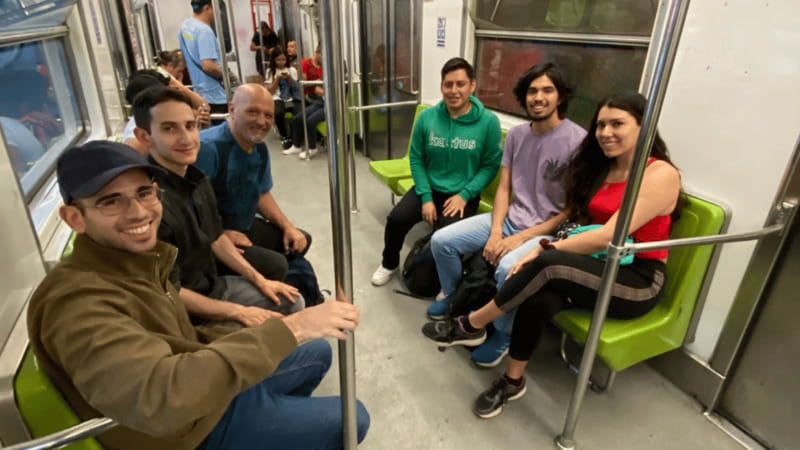
This one is a great fit if you want to see a side of Mexico City that most visitors miss—especially if you care about urban art, public transit, and learning how communities connect to the city.
It’s especially good for a first-time-to-the-city mindset. A major theme in the guide feedback is that learning the metro route here gives you confidence later. If the metro feels intimidating, this tour turns that fear into a usable skill fast.
But skip it if any of the health limits apply. It’s not suitable for children under 5, people with vertigo, altitude sickness concerns, respiratory issues, and anyone who’s prone to motion sickness. The tour also lists a weight limit over 220 lbs (100 kg), plus restrictions like no mobility scooters.
And because the rules for what you can wear and bring are strict for the vehicle and overall experience (no high heels, no sandals/flip-flops, no oversized bags), pack like you’re going to move through transit stations—not like you’re heading to a fancy restaurant.
Price and value: is $24 worth it?
At $24 per person, the value is strong for what you get in roughly four hours. Here’s why.
You’re paying for:
- Metro + Cablebús rides with guidance
- An expert guide plus educational resources
- Tortilla-making, which is a real included cultural activity
- Time built in for views, murals, and context rather than just transportation
Most “viewpoint tours” cost more and don’t include learning tied to the city’s everyday life. This one uses the transit system itself as the attraction.
Yes, meals and drinks aren’t included. You’ll still spend some extra money if you want market snacks. But compared with the cost of a typical guided excursion with transport plus food included, this price is still a pretty fair deal—especially with the small group size.
Practical tips before you go
Bring cash for optional snacks and market items. The tour also recommends discreet clothing and suggests avoiding sunglasses, hats, shorts, skirts, and sandals. If that sounds fussy, it’s because the experience has clear rules for the vehicle and for staying comfortable in crowded areas.
Bring motion sickness prevention if you’re even mildly sensitive. Also plan to leave a WhatsApp contact with the area code for quick communication with the operator if needed.
Finally, keep your luggage simple. Large bags and oversize luggage are not allowed, and the vehicle rules list a lot of items you probably wouldn’t bring anyway.
Should you book the Iztapalapa Cablebús + Urban Art tour?
Book it if you want:
- Elevated views plus street-level understanding through murals
- A low-walking, high-seeing day built around Mexico City transit
- A guided route that helps you feel confident with the metro system
- An included cultural food experience through tortilla-making
Consider skipping or choosing a different style if you:
- Have vertigo or motion sickness
- Need a full meal plan included in the price
- Want a classic “top sights” checklist day
If you’re trying to balance your Mexico City trip with something more human and less tourist-shaped, this is a smart use of your time.
FAQ
Where is the meeting point?
Meet at the Parisian entrance of the Bellas Artes subway, on the left side of the palace. The guide will have a green shirt and umbrella.
How long does the tour last?
The tour lasts about 4 hours.
What transport is included?
The tour includes metro and the Cablebús cable car ride, plus a public transport card.
Is tortilla-making included?
Yes. Tortillas are included, and you’ll have the chance to participate in tortilla-making.
Are meals included?
No. Meals are not included, though there may be opportunities to buy snacks or foods with cash.
Is the group size small?
Yes. It’s a small group limited to 9 participants.
What language is the tour offered in?
The live guide is available in English and Spanish.
What should I bring?
Bring comfortable shoes and cash. The tour also recommends motion sickness prevention.
Who should not take this tour?
It’s not suitable for children under 5 and it is not recommended for people with vertigo, motion sickness, altitude sickness, or certain respiratory issues. There is also a weight limit of 220 lbs / 100 kg.
What is the price?
The price is listed as $24 per person.
More Tour Reviews in Mexico City




Mexico City from the Cablebus




The Walls of Mexico City: More Mural Walks




Fresh from our Mexico City notebook


Murals & Street Art Tours, compared.
 ★ 4.4Xochimilco, Coyoacan, Frida Kahlo Museum & Murals TourFrom $893,025 reviews
 ★ 5.0Mexico City; ART NACO : Murals & Street Art Bike TourFrom $60284 reviews
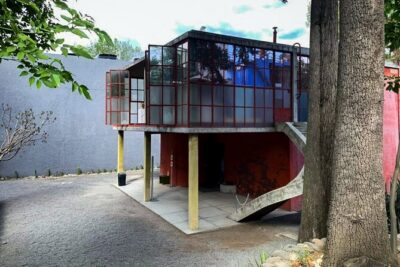 ★ 5.0EXCLUSIVE TOUR Casa Estudio Frida Kahlo-Diego Rivera Small GroupsFrom $50237 reviews
 ★ 5.0Walking Tour – Impressive murals in Historical Center of Mexico CityFrom $51224 reviews
 ★ 4.5La Catrina & Muralism: Diego Rivera’s Legacy & Frida KahloFrom $66197 reviews
 ★ 5.0Muralist Art Semi Private Walking Tour in Mexico City DowntownFrom $58188 reviews
★ 4.7Art Naco, murals & street art bike tourFrom $52166 reviews
★ 5.0Muralist Art Semi Private Walking Tour in Mexico City DowntownFrom $58188 reviews
★ 4.7Art Naco, murals & street art bike tourFrom $52166 reviews
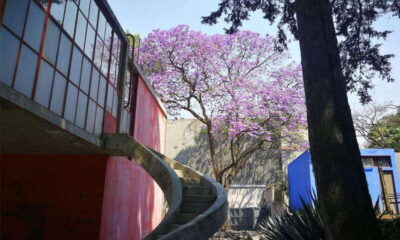 ★ 4.8Frida Kahlo-Diego Rivera Studio House TourFrom $4078 reviews
Browse the lists this tour appears in