
REVIEW · HISTORIC CENTER WALKING TOURS
Historic center walking tour through time and space
Mexico City history fits in one walk. This 3-hour route strings together ruins, churches, and landmark palaces so you understand how the city grew in layers of time and design.
What I like most is the way the guide turns architecture into a story you can actually follow. Names that come up often include Ricardo and Joss, both praised for clear, detailed explanations about history and culture while you’re moving through the sights.
One possible drawback: the stops are short, so if you want to linger in museums or read every plaque, you may feel rushed. You do get a free choice at the end if you want to continue into the last museum area.
In This Review
- Key highlights you’ll care about
- A historic center route built for time-travel
- Starting at Museo del Templo Mayor: 14th-century Tenochtitlan in front of you
- Catedral Metropolitana: massive cathedral, centuries of wear
- Zócalo: the square that keeps being the square
- El Atrio del Templo de San Francisco: the first-church feel
- House of Tiles: a 16th-century palace with Moorish-style decoration
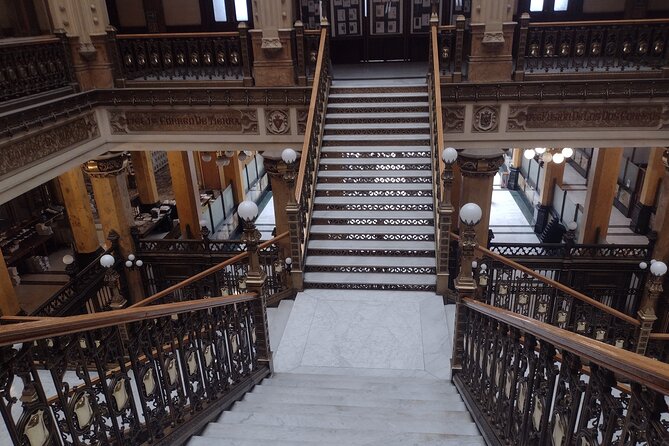
- Museo Nacional de Arte: the 20th-century building and what you see in the lobby
- Palacio de Minería: history in the exterior details
- Palacio Postal: the Instagrammable Fifth House of Post Office
- Palacio de Bellas Artes: outside views plus lobby context
- Alameda Central: park time for your feet and your brain
- Museo de Arte Popular: the entrance stop where the tour ends
- Price and value: what $39.45 buys you in the real world
- Who this tour suits best (and who might want a different plan)
- How to make the most of the walk
- Should you book this historic center walking tour?
- FAQ
- How much does the tour cost?
- How long is the tour?
- Is the tour offered in English?
- Are entrance tickets included?
- Where does the tour start and end?
- What’s included in the tour?
- Is it a private tour?
- What’s the cancellation policy?
Key highlights you’ll care about
- Tenochtitlan ruins to modern palaces: you’ll see the city’s big shifts without needing separate tickets or long transfers
- Architecture first, not just facts: the guide focuses on what the buildings look like and why that matters
- Free entry at most stops: you’ll spend less time worrying about admission and more time looking closely
- Private group feel: only your group participates, so the pacing can stay comfortable
- Ends at Museo de Arte Popular: the tour wraps in the same central zone, easy to keep exploring
More laps of the Zocalo and the old streets
- Historic Downtown Walking Tour
★ 5.0 · 1,289 reviews - Mexico City: Historic Downtown Walking Tour
★ 4.8 · 1,039 reviews - Walking Tour of the Historic Center of Mexico City
★ 5.0 · 870 reviews - Mexico City Historical Centre Food Tour with 7 Authentic Tastings
★ 5.0 · 723 reviews
A historic center route built for time-travel
If you’ve ever looked at Mexico City maps and thought, Okay, where do I start, this style of walking tour is a smart answer. You don’t bounce randomly. You walk through a concentrated slice of the Centro Histórico where different eras sit near each other like chapters.
The best part for me is the balance: you get iconic landmarks, but you also get practical context for how they connect. Even the name of the walk hints at it: it’s a “historic center” stroll that treats the city like a timeline you can walk through.
You’ll be out for about 3 hours at an easy walking pace, and most of the major stops are free to enter. That’s a big value point because it helps keep the total cost low and keeps you from losing time at ticket counters.
Starting at Museo del Templo Mayor: 14th-century Tenochtitlan in front of you
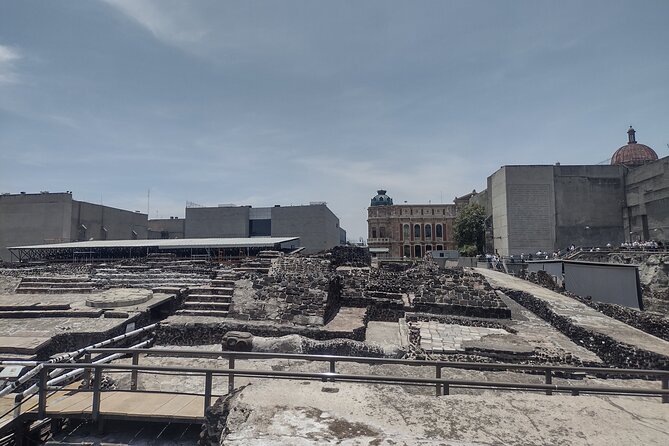
The tour begins at Museo del Templo Mayor, with an immediate hit of the city’s older core. This is where you set your mental baseline. You start in the world of Tenochtitlan, the Aztec capital, then you walk forward through the centuries to see how power and religion reshaped the same ground.
You’ll spend about 15 minutes here, focusing on the ruins tied to the “great Tenochtitlan.” Because the stop is relatively short, the goal isn’t to make you an expert in one museum visit. It’s to give you the key visual anchors so the next buildings actually make sense.
Why this stop matters for you: Mexico City’s modern landmarks can feel like they came from nowhere. Starting at Templo Mayor helps you understand that today’s city was built on top of earlier ones. When you hit the cathedral and other colonial-era sites later, the story lands faster.
Practical note: shoes matter. Even a “light” historic walk adds up on cobblestones and uneven sidewalks.
Catedral Metropolitana: massive cathedral, centuries of wear
Next you head to Catedral Metropolitana de la Ciudad de Mexico, often described as the greatest ecclesiastical construction in Mexico City. You’ll spend around 10 minutes, with a focus on architecture and the reality of damage over time.
That part is important. Cathedrals can look solid in photos. In person, you can see the evidence of weather, earthquakes, and history. With a guide, you’re not just staring at stone; you’re learning what changed and why it looks the way it does now.
What you’ll like here: it’s a quick stop that still feels meaningful because the guide ties the building to Mexico City’s long religious and political role.
Possible tradeoff: the time is brief. If you want to go inside for a full self-guided look, this tour format may not be enough on its own.
More of Mexico City taken slowly, on foot
- Frida Kahlo VIP [Museum Tickets Included] Walk, Markets & Churros★ 5.0 · 982 reviews
- Anthropology Museum Private Experience Walking Tour★ 5.0 · 355 reviews
- Walking Tour in Mexico City for Exploring their Cultural Heritage★ 5.0 · 245 reviews
- Walking Tour – Impressive murals in Historical Center of Mexico City★ 5.0 · 224 reviews
- Muralist Art Semi Private Walking Tour in Mexico City Downtown★ 5.0 · 188 reviews
Zócalo: the square that keeps being the square
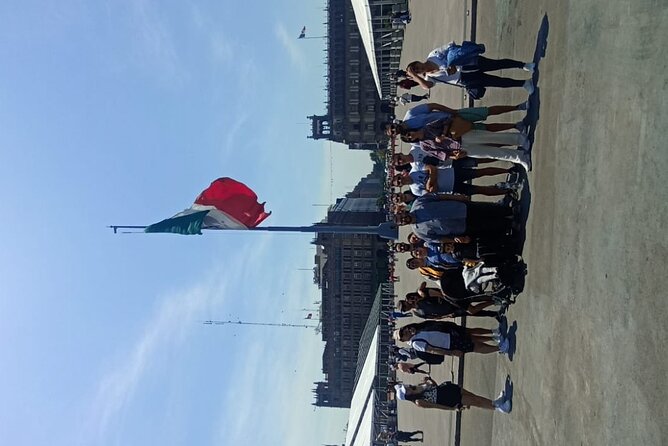
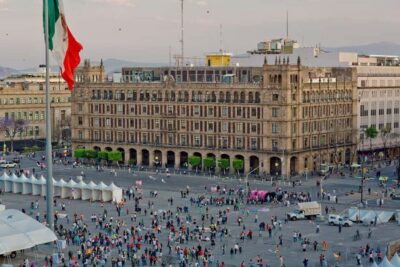
Then comes the Zócalo, the city’s central gathering space. You’ll get about 5 minutes here, which might sound short, but it works because Zócalo is more about orientation than deep study.
Think of it as your “reset point.” From this open plaza, you can picture how the city functions: where people meet, where important buildings cluster, and how the historic center organizes itself.
How it helps you later: once you’ve seen the cathedral nearby and the palaces farther along, the Zócalo helps you connect the dots spatially. It’s not just an attraction; it’s the organizing framework for everything around it.
El Atrio del Templo de San Francisco: the first-church feel
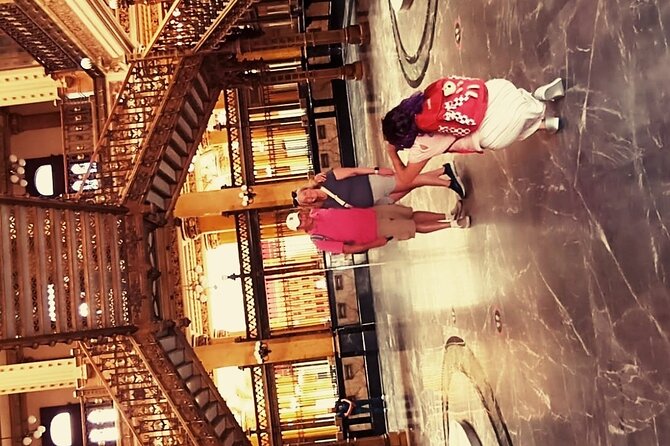
Next is El Atrio del Templo de San Francisco, where you visit the first church in Mexico City. You’ll spend about 15 minutes and focus on what the atrio (courtyard/forecourt) suggests about the early colonial period.
Atrios can feel strange at first if you’re expecting a typical interior church experience. But that open space is often where community life happened, where ceremonies played out, and where religious presence had to be seen and felt.
Why this stop works in the middle of the walk: it’s a bridge between the grand scale of the cathedral and the decorative, palace-style architecture you’ll see next.
House of Tiles: a 16th-century palace with Moorish-style decoration
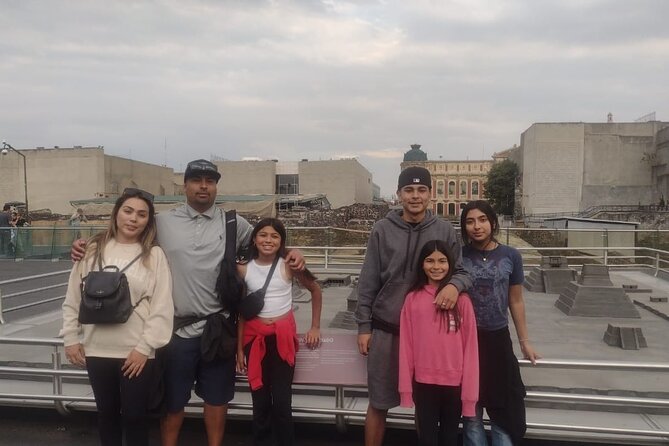
After San Francisco, you’ll head to the House of Tiles (Casa de los Azulejos), a 16th-century palace famous for its Moorish-inspired tilework.
You’ll have about 20 minutes here. This is one of those stops where the visual payoff is immediate. The decoration makes the building feel different from the more austere religious sites you just passed.
What I’d recommend you do during this stop: slow down. Don’t treat it like a quick photo stop. Look at how the tiles cover the surfaces and how the patterns interact with the building’s angles.
Small consideration: if you’re not into decorative architecture, you might find this one less satisfying than the big civic landmarks. But if you like art-on-walls, it’s a standout moment.
Museo Nacional de Arte: the 20th-century building and what you see in the lobby
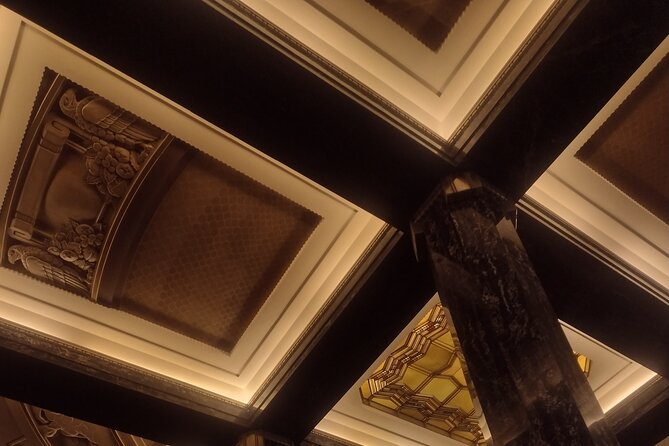
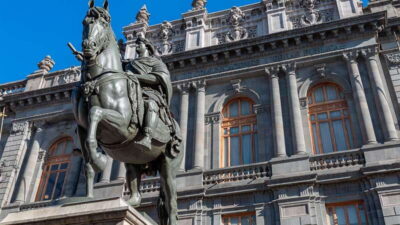
Then you shift into the Museo Nacional De Arte. Here, you’re not trying to see the whole museum collection. Instead, you focus on the building—especially its lobby—and learn the basics of its history.
You’ll get about 15 minutes. That makes this a good checkpoint: you’ll be thinking about earlier eras, and then the museum building reminds you that Mexico City keeps reinventing itself.
Why this matters: this stop prevents the tour from becoming only “old Mexico.” It shows that the center isn’t frozen in time. It’s a living stage where the 20th century also built major landmarks.
Palacio de Minería: history in the exterior details

Next up is Palacio de Minería. You’ll see the exterior and hear a lot of history tied to the building’s role.
It’s about 10 minutes. Short, yes, but the value is that you’re getting a guided explanation, not just a glance from the sidewalk.
What to pay attention to: facades carry meaning. Even without going inside, the style and the story behind it help you understand how wealth and industry shaped the city.
Palacio Postal: the Instagrammable Fifth House of Post Office
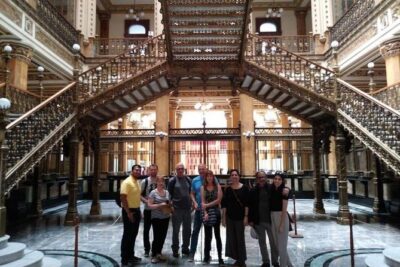
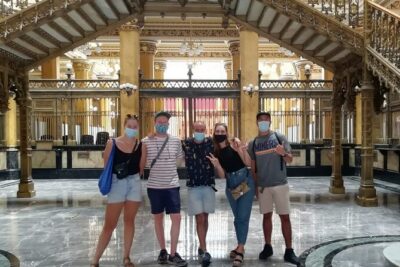
Now you reach Palacio Postal, the Palace of the Post Office, often described as the Fifth House of the Post Office. You’ll spend about 15 minutes.
This is one of the more photo-friendly stops on the route. Still, the key is that it’s not just for pictures. Postal buildings historically show how a city connects to itself and to the wider world. A post office is infrastructure with a civic face.
If you care about value: this is a good place to use your camera in a smart way. Get one wide shot for context and then one close shot that shows materials and details. You’ll remember the building better that way.
Palacio de Bellas Artes: outside views plus lobby context
Next comes Palacio de Bellas Artes, one of Mexico City’s headline arts buildings. You’ll spend around 25 minutes, which is longer than most stops, so you’ll actually have time to process what you’re seeing.
You’ll view it from the outside and then get a look at the lobby to learn about its history. The lobby time is useful because it’s where a lot of these grand buildings tell their story fast—through design choices, scale, and ornament.
Why this stop is a highlight: it shifts the tour into the world of culture and performance. If you’ve been focused on churches and palaces up to now, Bellas Artes feels like a new mood.
Alameda Central: park time for your feet and your brain
After the big buildings, you get a breather at Alameda Central, the largest park in the city center. You’ll spend about 15 minutes here.
Parks can feel like filler on some tours. This one doesn’t: the guide helps you hear the stories and legends tied to the space, which makes it feel connected to the city instead of just a place to sit.
Practical benefit: Alameda is where you can catch your breath, hydrate, and reset your energy before the final museum-area stop.
Museo de Arte Popular: the entrance stop where the tour ends
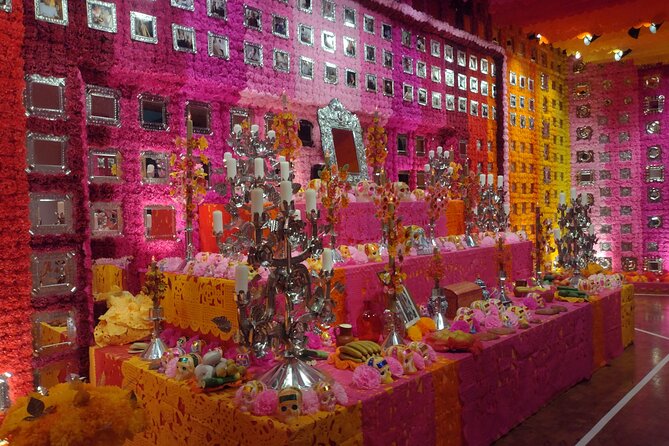
Finally, you reach Museo de Arte Popular. You’ll visit the entrance and appreciate its art deco architecture, plus get a peek at expressions of popular art.
This is about 15 minutes, and the tour ends here if you choose not to go inside. Importantly, the entrance into the museum itself is not included. That means you can decide based on your interest level.
Who should do more here: if popular art is your thing, this ending gives you a clean on-ramp. You can keep exploring on your own without re-entering the transport cycle.
Price and value: what $39.45 buys you in the real world
At $39.45 per person for about 3 hours, this tour competes well with the cost of a couple paid attractions in the center. The biggest value isn’t just the price—it’s the mix:
- Multiple major stops in a tight walking zone
- Admission ticket free for most of the route
- A guide who helps you read the buildings instead of just collecting stamps
The included extras are small but useful: you get a soda/pop water bottle. You’ll appreciate it during a walking-heavy afternoon, especially in warmer months.
It’s also scheduled for busy sightseeing time, and it’s commonly booked about 10 days in advance, so plan ahead if you want a specific day and avoid last-minute scramble.
Who this tour suits best (and who might want a different plan)
This is a great fit if you’re:
- Visiting Mexico City for the first time and want structure
- Interested in architecture and how it connects to politics and religion
- The type who likes walking outdoors but still wants a guide to “translate” what you’re seeing
It might not be the best match if you:
- Want lots of inside time in museums and galleries
- Prefer long, slow wandering with no set stops
- Have mobility challenges that make longer walking uncomfortable (the tour is described as available for most travelers, but the route still involves a historic-center walk)
If you like to linger, use the museum-ending option at Museo de Arte Popular as your way to extend without losing the tour’s core pacing.
How to make the most of the walk
A few practical moves can upgrade your experience fast.
Wear supportive shoes. Historic center streets can be uneven, and you’ll be on your feet for hours.
Use your phone strategically. For the decorative stops like the House of Tiles and for grand facades like Bellas Artes, take one “wide” photo early, then one detailed shot later. It keeps your memory anchored when the route moves on.
Plan for quick stops. Many locations here are short visits on purpose. Instead of trying to read everything, look for the guide’s big takeaway and match it to what you see in front of you.
Listen for the “why.” Stops like the cathedral and Templo Mayor are most rewarding when you treat them as cause-and-effect scenes: how a city’s priorities shift, and what that does to buildings.
Should you book this historic center walking tour?
I think it’s worth booking if you want an efficient, guide-led way to understand Mexico City’s historic core without paying for entrance fees every ten minutes. For the price, you get a clean sequence of major landmarks, most with free admission, plus explanations that focus on architecture and cultural meaning.
If you’re the type who loves stopping for details and staying in museums longer, pair this with a little extra independent time at the end—especially around Museo de Arte Popular where you can choose what you want to do next.
FAQ
How much does the tour cost?
The price is listed as $39.45 per person.
How long is the tour?
The duration is about 3 hours.
Is the tour offered in English?
Yes, it’s offered in English.
Are entrance tickets included?
Admission ticket is free for most stops on the route. The Museo de Arte Popular entrance is not included.
Where does the tour start and end?
It starts at Templo Mayor Museum, Seminario 8, Centro Histórico de la Cdad. de México, Centro, Cuauhtémoc, 06060 Ciudad de México, CDMX, Mexico and ends at Museo de Arte Popular, Revillagigedo 11, Colonia Centro, Centro, Cuauhtémoc, 06050 Ciudad de México, CDMX, Mexico.
What’s included in the tour?
You get a soda/pop water bottle.
Is it a private tour?
Yes. It’s described as a private tour/activity, so only your group participates.
What’s the cancellation policy?
Cancellation is free. You can cancel up to 24 hours in advance for a full refund.
More Tours in Mexico City




More Tour Reviews in Mexico City




The Centro Historico on Foot





Fresh from our Mexico City notebook

Historic Center Walking Tours, compared.
 ★ 5.0Historic Downtown Walking TourFrom $261,289 reviews
 ★ 5.0Historic Center Food Tour in Mexico CityFrom $1151,263 reviews
 ★ 4.8Historic Downtown Walking TourFrom $261,039 reviews
 ★ 5.0Walking Tour of the Historic Center of Mexico City870 reviews
 ★ 5.0Mexico City Historical Centre Food Tour with 7 Authentic TastingsFrom $65723 reviews
 ★ 4.9Authentic Downtown Food TourFrom $115260 reviews
 ★ 5.0Culinary Secrets of the Centro HistóricoFrom $140257 reviews
 ★ 5.0Walking Tour – Impressive murals in Historical Center of Mexico CityFrom $51224 reviews
Browse the lists this tour appears in