
REVIEW · TEOTIHUACAN PYRAMIDS TOURS
Guided Tour Zócalo to Palaces, Churches and Pyramids
Zócalo to palaces, all in one walk. This guided route threads together big-city architecture and the stories behind it, from reforms downtown to the shine inside major landmarks. I especially like the focus on free-to-enter sites and the way you get a guided explanation at each stop, not just a photo stop.
The second thing I like: the group is kept to a maximum of 15, so the pace stays human and your guide can actually answer your questions. One possible drawback to plan for is that this is a short, concentrated 2-hour circuit, so you’ll want to save extra time if you tend to linger inside buildings.
In This Review
- Key points at a glance
- Why this Zócalo-focused tour feels worth $53.46
- Hemiciclo a Juárez: how Mexico’s political shifts show up in buildings
- Palacio de Bellas Artes: marble, details, and why the doors matter
- Alameda Central: Greek gods in Mexico City’s oldest park vibe
- House of Tiles: an architectural puzzle you can walk through
- Palacio Postal and the national symbols stamped into art
- Museo Nacional de Artes: stepping into a neoclassical/Renaissance palace
- Francisco I. Madero Avenue: reading baroque and neoclassical like a street map
- Zócalo: the daily-life heart of the center
- Catedral Metropolitana: chapels, the tabernacle, and frescoes
- The guides: why José and Fernando’s style matters
- Logistics that help you enjoy it (instead of just survive it)
- Price and value: what you’re really paying for
- Who this tour suits best
- Should you book this Zócalo to palaces walk?
- FAQ
- How long is the guided tour?
- What does the tour cost?
- Is it offered in English?
- Do I need to buy entry tickets for the stops?
- Where does the tour start?
- Where does the tour end?
- How big is the group?
- Is cancellation free?
- Are tips included in the price?
Key points at a glance

- A 2-hour, small-group walk (max 15) that keeps you moving without feeling rushed
- Free-entry stops at multiple major landmarks, so you get more for your money
- Bilingual guides with strong commentary on architecture and the city’s changes over time
- Major center hits: Bellas Artes, House of Tiles, Palacio Postal, Zócalo, and Catedral Metropolitana
- Finishes near Templo Mayor so you can continue exploring right away
Other ways up the Pyramid of the Sun, compared
- Teotihuacan, Guadalupe Shrine & Tlatelolco Day Tour with Lunch
★ 5.0 · 11,603 reviews - Balloon flight + Breakfast in cave + Pyramids + Pick up CDMX.
★ 5.0 · 6,335 reviews - Teotihuacan pyramids morning or afternoon without tourist traps
★ 5.0 · 6,186 reviews - Teotihuacan Early Access Guided Tour with optional Lunch
★ 4.5 · 6,138 reviews
Why this Zócalo-focused tour feels worth $53.46
At about $53.46 per person for roughly 2 hours, the value comes from stacking iconic places into one route while the guide helps you read what you’re looking at. This is not the kind of tour where you spend half your time waiting at the curb. You’re walking through the historic center with a plan, hitting landmarks that most people only scratch the surface on.
Also, many stops here have free entry. That matters. Even if you’re only slightly interested in history, being able to step inside palaces and churches without extra ticket cost makes the whole experience feel more fair.
Hemiciclo a Juárez: how Mexico’s political shifts show up in buildings
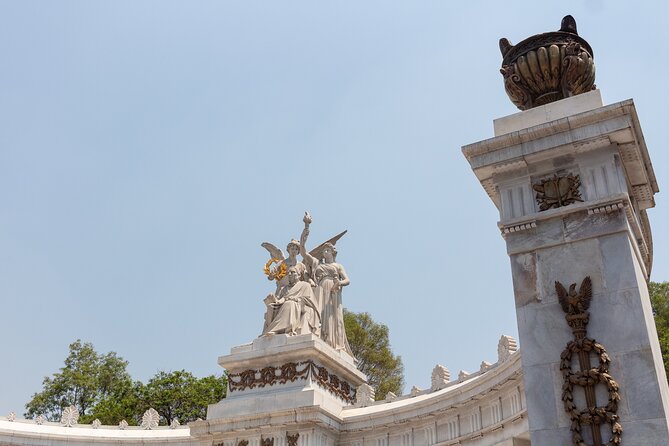
You start at the Hemiciclo a Juarez, a fitting first stop because it sets the tone: modern Mexico didn’t appear fully formed. Your guide talks about the Juárez reforms and the Porfiriato, and how those eras helped shape what you see around Mexico City today.
Even if you’re not the type who reads every plaque, this first stop helps you notice patterns. You start connecting the dots between governance, public monuments, and the architectural choices that followed. It’s also a good “warm-up” because it’s just long enough to get oriented before you step into more ornate interiors.
Palacio de Bellas Artes: marble, details, and why the doors matter
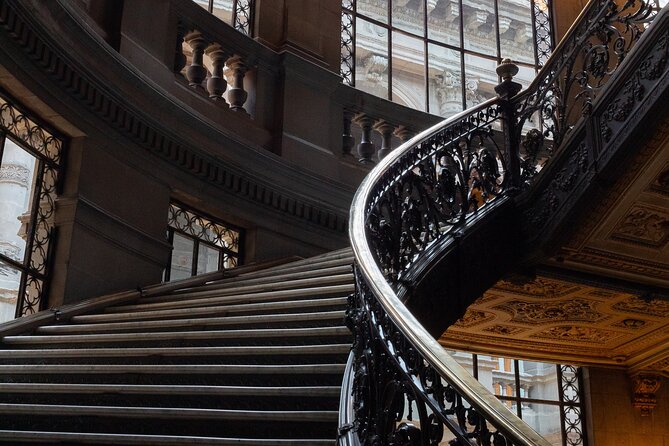
Next comes Palacio de Bellas Artes. You go inside the first floor to see the interiors up close—Mexican marble, plus pre-Hispanic details worked into elements like the doors and stair areas.
This is one of those places where a guide changes everything. Without context, you might just admire the space and move on. With context, you start noticing how different layers of Mexican identity show up in design choices. It’s also a great break in the walking because you’re standing, looking up, and letting the building do the talking.
More laps of the Zocalo and the old streets
- Historic Downtown Walking Tour★ 5.0 · 1,289 reviews
- Historic Center Food Tour in Mexico City★ 5.0 · 1,263 reviews
- Mexico City: Historic Downtown Walking Tour★ 4.8 · 1,039 reviews
- Walking Tour of the Historic Center of Mexico City★ 5.0 · 870 reviews
- Mexico City Historical Centre Food Tour with 7 Authentic Tastings★ 5.0 · 723 reviews
Alameda Central: Greek gods in Mexico City’s oldest park vibe
From there, you head to Alameda Central, one of the oldest parks in the Americas. You’ll see sculptures connected to Greek gods, and you get a quick history lesson on why this park became part of the city’s public life.
It’s a small stop in time, but it’s useful. Parks like this are where the city’s “everyday” culture happens alongside monuments. You’ll get a feel for how Mexico City uses public space: not only for big ceremonies, but also for normal strolling, gathering, and people-watching.
House of Tiles: an architectural puzzle you can walk through
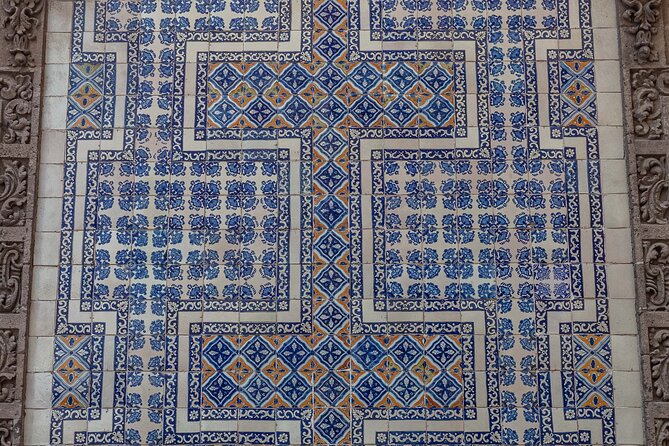
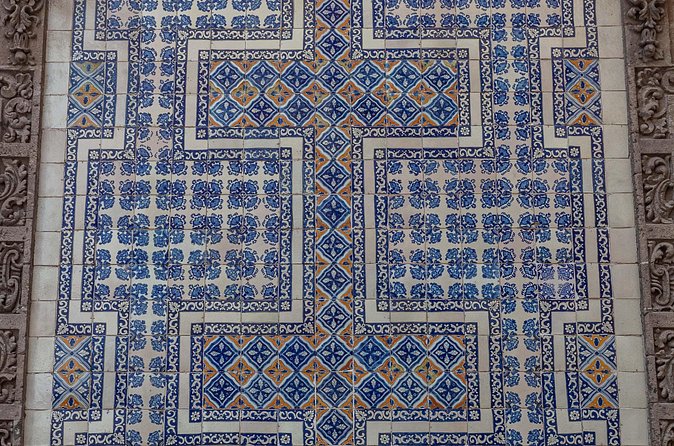
At the House of Tiles, the point is attention to detail. You learn what makes the architecture special on the inside, and you also see the mural by Clemente Orozco.
This stop is worth it even if you’re not an art expert. The building teaches you how craftsmanship works—how materials, patterns, and layout can communicate status and taste. Orozco’s mural adds a different kind of energy, so the stop feels like a shift from pure decoration to lived expression.
Palacio Postal and the national symbols stamped into art
Then you’re inside Palacio Postal, where the guide focuses on luxury architecture and the origin of the mail in Mexico. You also learn what the national coat of arms means, shown through an artwork made from stamps.
This is a clever stop because it links two things that are easy to treat as separate: everyday services and national identity. The guide helps you see that postal history isn’t just bureaucratic—it’s part of building a shared country.
If you enjoy when tours slow down for meaning, this is one of the better moments to pay attention rather than just take pictures and go.
Museo Nacional de Artes: stepping into a neoclassical/Renaissance palace
Your route continues at Museo Nacional de Artes, set in a neoclassical/Renaissance palace designed by Italian architect Silvio Contri. You visit the first floor, so you’re not expected to power through a huge museum. Instead, you’re getting the architectural payoff.
This stop works well for two kinds of people:
- If you like design, you’ll enjoy the shift in style and proportions.
- If you’re more into history, the building itself becomes part of the story of cultural exchange and elite taste.
Francisco I. Madero Avenue: reading baroque and neoclassical like a street map
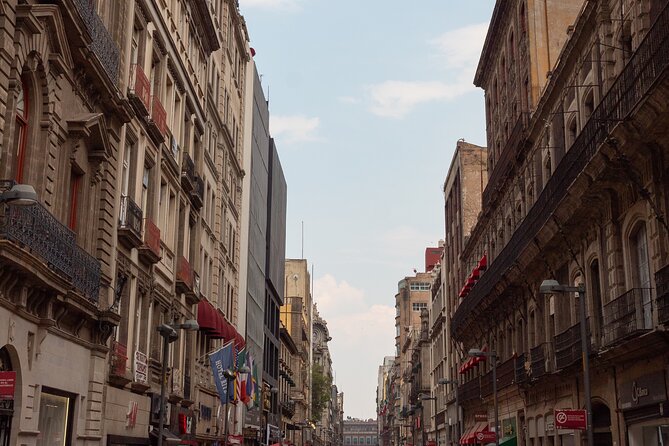
You spend time along Francisco I. Madero Avenue, one of the most visited streets in Mexico City. The guide points out baroque and neoclassical architecture of the historic center and spotlights popular palaces in the area.
This segment is less about entering a single building and more about training your eyes. By the time you reach the Zócalo, you’ll notice how streets and facades lead your attention to the places that matter most.
Zócalo: the daily-life heart of the center
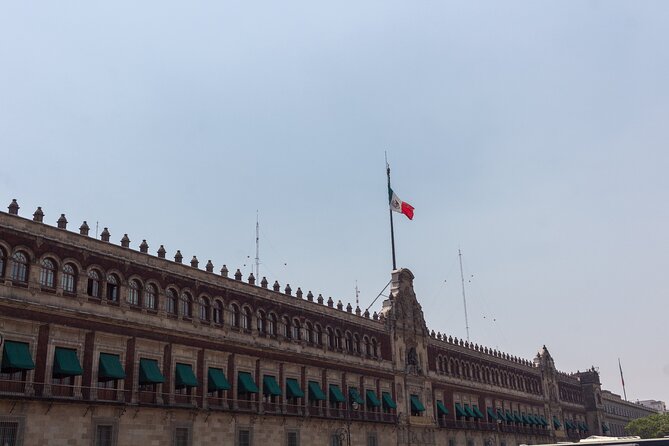
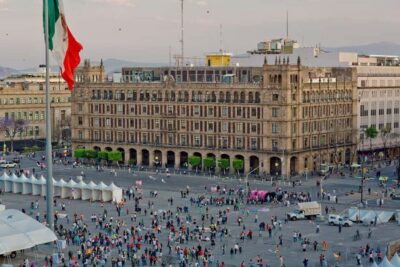
Then you arrive at the Zócalo, which is the city’s most important square. Here you’ll see 16th–17th century architecture, plus the government palace, the national flag, and the city’s coat of arms in Talavera.
The guide also helps you connect the monument side of the square to the daily-life side—families visiting, normal city rhythms, and the way the square functions as a social stage.
This is where the tour earns its name. It’s not only about landmark viewing. It’s about understanding why the square sits at the center of civic life.
Catedral Metropolitana: chapels, the tabernacle, and frescoes
The tour ends at Catedral Metropolitana de la Ciudad de Mexico. You learn details of chapels, the tabernacle, and an altar with frescoes of the Immaculate Virgin.
Catedral Metropolitana is big, but your guide keeps the focus tight. Instead of getting lost in size, you leave with a mental checklist of what to look for. That’s the kind of guidance that makes a short tour feel complete.
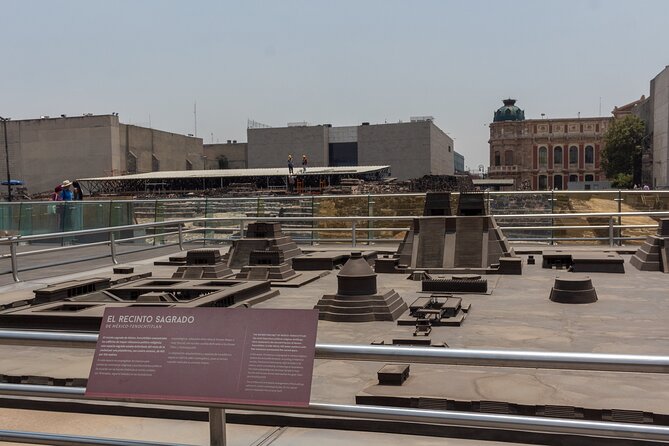
After this, the walk finishes outside the archaeological zone of Templo Mayor—close enough that you can keep going if you want more Aztec-era context.
The guides: why José and Fernando’s style matters
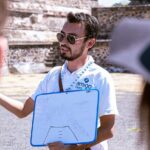
The best part of this kind of walking tour is the person doing the explaining. The route has been led by guides like José (including José Vicente) and Fernando Ramirez, and the common thread in the praised feedback is how engaging and personable the guides are.
They’re also described as strong on architecture, history, and Aztec society, and they tend to keep things at a comfortable pace while answering questions. That matters on a route with many stops in a short time. If your guide is too formal or too fast, you miss the point.
Logistics that help you enjoy it (instead of just survive it)
This experience is designed for people who want a guided taste of the historic center without committing an entire day. It lasts about 2 hours and includes a mobile ticket. It’s offered in English, with bilingual guidance included.
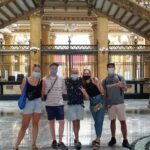
Group size is capped at 15, which is a big deal in Mexico City’s center streets—smaller groups move better and don’t bunch up as easily.
If you’re trying to fit multiple experiences together, this tour is also a useful anchor because it finishes near Templo Mayor, where you can continue exploring on your own.
Price and value: what you’re really paying for
You’re paying for three things: expert interpretation, a curated route, and the convenience of hitting multiple top landmarks quickly. Because many stops have free admission, the ticket price isn’t just covering entry fees—it’s covering the guidance.
For most people, $53.46 for a 2-hour walk that includes major stops like Bellas Artes, Palacio Postal, the Zócalo, and Catedral Metropolitana is a fair deal. If you were to visit just one or two places without a guide, you’d still likely spend similar time and run into the problem of not knowing what you’re looking at.
Who this tour suits best
This is a great fit if you:
- Want a concentrated overview of Mexico City’s center in a short time
- Like architecture and symbolism, not only museums
- Prefer walking with a guide instead of trying to self-navigate every detail
- Enjoy asking questions and getting answers on the spot
It may be less ideal if you want long interior stays. This route keeps things moving, so you’ll need separate time if you like to linger in buildings without the clock pressure.
Should you book this Zócalo to palaces walk?
If you want a practical, high-impact introduction to Mexico City’s historic core, I’d book it. The combination of free-entry stops, a route built around major landmarks, and guides who can explain what you’re seeing makes it a strong way to spend a couple of hours—especially on your first or second day.
If you already know you want to spend lots of time inside each site, plan for extra time afterward. But as a guided foundation that helps your independent exploration make more sense, this tour is an easy yes.
FAQ
How long is the guided tour?
It runs for about 2 hours (approximately).
What does the tour cost?
The price is $53.46 per person.
Is it offered in English?
Yes. The tour is offered in English.
Do I need to buy entry tickets for the stops?
The tour includes multiple stops where the admission ticket is free.
Where does the tour start?
The meeting point is Hemiciclo a Juarez, Av. Juarez 50, Colonia Centro, Centro, Cuauhtémoc, 06050 Ciudad de México, CDMX, Mexico.
Where does the tour end?
It ends outside the archaeological zone of the Templo Mayor Museum, Seminario 8, Centro Histórico de la Cdad. de México, Centro, Cuauhtémoc, 06060 Ciudad de México, CDMX, Mexico.
How big is the group?
The maximum group size is 15 travelers.
Is cancellation free?
Yes, you can cancel for a full refund up to 24 hours in advance.
Are tips included in the price?
No. Tips are not included.
More Tour Reviews in Mexico City




The Centro Historico on Foot





Back to Teotihuacan: More Pyramid Days

Fresh from our Mexico City notebook

Teotihuacan Pyramids Tours, compared.
 ★ 5.0Teotihuacan, Guadalupe Shrine & Tlatelolco Day Tour with LunchFrom $3911,603 reviews
 ★ 5.0Balloon flight + Breakfast in cave + Pyramids + Pick up CDMX.From $1726,335 reviews
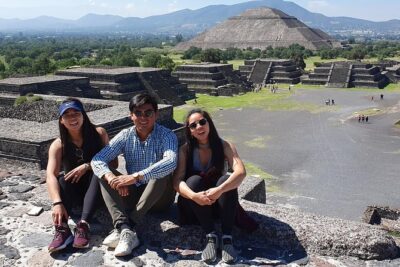 ★ 5.0Teotihuacan pyramids morning or afternoon without tourist trapsFrom $646,186 reviews
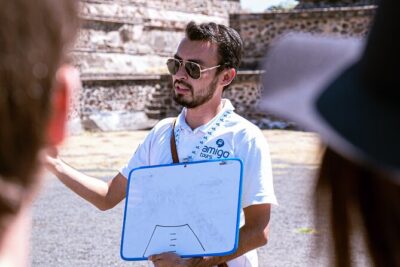 ★ 4.5Teotihuacan Early Access Guided Tour with optional LunchFrom $396,138 reviews
 ★ 5.0Balloon flight + pick up in CDMX + Breakfast in Cave + PyramidsFrom $1695,651 reviews
 ★ 5.0Balloon Flight + Cave Breakfast + Pick Up from CDMX or We FlyFrom $1664,410 reviews
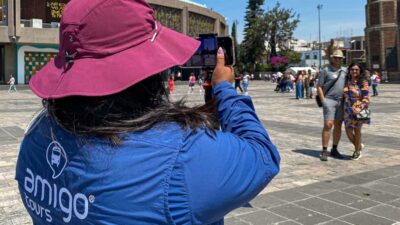 ★ 4.6Teotihuacan, Tlatelolco & Guadalupe Shrine TourFrom $493,773 reviews
 ★ 5.0Teotihuacan Hot Air Balloon Flight from Mexico City / VolareFrom $1553,262 reviews
Browse the lists this tour appears in