
REVIEW · HISTORICAL TOURS
Explore Mexico City: A Journey Through History, Art, and Cuisine!
Mexico City can feel huge at first, so this route gives you structure fast. You’ll move through the historic center from Aztec roots at Museo del Templo Mayor to major public landmarks like the Zócalo and the Catedral Metropolitana, then finish at Palacio de Bellas Artes. I love the tight two-hour pace that keeps you moving without turning every stop into a lecture, and I also like the mix of famous sights with everyday culture stops such as Dulceria de Celaya. One practical drawback to plan for: entry can involve your own tickets at museum sites, and Palacio de Bellas Artes may be tricky if you were hoping to buy online.
This is a small-group walk (up to 20 people) with a guide in English, starting at 9:30 am and ending at the Palace of Fine Arts. The guiding is described as free, and you can tip if you want at the end—just know that some guests prefer to decide the amount themselves. You’ll get a mobile ticket, and the meeting point is in easy-to-reach Centro Histórico.
If you want the kind of sightseeing where the streets themselves become the lesson, you’ll like this. Bring water, expect some walking, and wear shoes you can trust on uneven sidewalks. It’s also a smart way to get your bearings before you branch out on your own in Mexico City.
In This Review
- Key things you’ll notice on this Mexico City walking loop
- Getting your bearings on Centro Histórico (and why the route works)
- Museo del Templo Mayor: Aztec power, explained where it happened
- Zócalo: the main square’s name, its past, and the National Palace
- Catedral Metropolitana: what to notice in the city’s most important church
- Dulceria de Celaya: candy as cultural history
- House of Tiles: an architectural interior you can almost read
- Palacio Postal: where the mail office feels like a landmark
- Palacio de Bellas Artes: architecture, history, and a ticket reality check
- Diego Rivera murals at Secretaría de Educación Pública: art as a window into customs
- Price and what you’re really buying for $20
- Practical tips that make the day easier
- Should you book this Mexico City historic center tour?
- FAQ
- What is the duration of the Mexico City historic center tour?
- How much does the tour cost?
- What time does the tour start and where does it end?
- Is the tour offered in English?
- How many people are in the group?
- What tickets are included?
- What should I bring?
- Is tipping required?
- Can I bring a service animal?
- Is there a cancellation option?
Key things you’ll notice on this Mexico City walking loop
- Aztec-to-modern storytelling in one continuous walk, from Templo Mayor to Diego Rivera murals
- Iconic stops that actually connect (Zócalo, Catedral Metropolitana, Palacio Postal, Palacio de Bellas Artes)
- Cultural taste stops, including the oldest candy shop you’ll visit on this route
- Short, frequent stops (most segments are under 20 minutes), so you don’t lose the day to waiting
- Small-group feel with a cap of 20 travelers
- Bellas Artes ticket reality check, especially if you’re counting on online purchase
Wider loops around Mexico City
- Mexico City: Teotihuacan, Tlatelolco & Guadalupe Shrine Tour
★ 4.6 · 3,773 reviews - Teotihuacan Hot Air Balloon Flight from Mexico City / Volare
★ 5.0 · 3,262 reviews - Teotihuacan Private Tour from Mexico City
★ 5.0 · 1,890 reviews - Historic Center Food Tour in Mexico City
★ 5.0 · 1,263 reviews
Getting your bearings on Centro Histórico (and why the route works)
The tour starts at República de Guatemala 4 in the Centro Histórico area, then winds through the core landmarks and finishes at Palacio de Bellas Artes (Av. Juárez S/N, Centro Histórico). The timing is built around quick orientation: you arrive, learn what you’re looking at, then move on before the group loses momentum.
Because the total is about 2 hours, this isn’t the kind of tour where you’ll be stuck waiting in lines for an hour at a time. Instead, think of it as a guided “street map” for Mexico City’s most meaningful center blocks—ideal when you only have a day (or half a day) and you want the big-picture connections.
One more useful detail: the walk is near public transportation. So if you want to hop on and off, it’s easier than many deep-suburb tours. Still, the day-saving move is simple—start with comfortable shoes and a water bottle. The itinerary assumes walking between stops.
Museo del Templo Mayor: Aztec power, explained where it happened
Your first stop is Museo del Templo Mayor, tied to the major Aztec temple site. The guide’s goal here is clear: explain the Aztecs—how they lived, where they came from, and why they became so important in their era.
What I like about leading with this stop is that it changes how you see everything after it. When you understand the Aztec setting, the Zócalo and the colonial-era buildings aren’t just “old stuff.” They start to look like layers of power, rebuilding, and adaptation.
Practical note: even with the tour describing admission as free, some people have been told entry isn’t fully included and that they may need to purchase tickets themselves at museum sites. That matters because it can affect how much time you spend waiting or how early you need to arrive. If you’re the type who hates last-minute ticket hunting, arrive with a mindset that you might pay for entry here.
Zócalo: the main square’s name, its past, and the National Palace
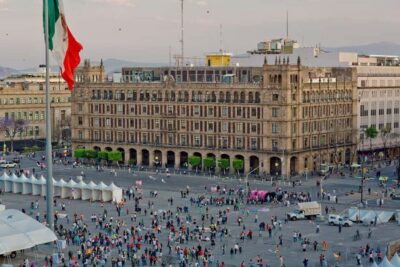
Next you’ll reach the Zócalo, the central public square of Mexico City. The focus isn’t only what you see, but why it’s called Zócalo and what the area was before the Spanish arrived. You’ll also look toward the National Palace from the square.
This stop works because it gives you a sense of the city’s political and social heart. Squares like this are rarely just empty space—they’re built for gatherings, ceremonies, and daily public life. When your guide explains what came before, the Zócalo becomes a living timeline instead of a photo backdrop.
The time here is short (about 10 minutes), so treat it as orientation. If you want deeper exploring—like sitting longer, people-watching, or reading nearby building details—use what you learn as your springboard.
More ways into the city long story
- Historic Downtown Walking Tour★ 5.0 · 1,289 reviews
- Historic Center Food Tour in Mexico City★ 5.0 · 1,263 reviews
- Mexico City: Historic Downtown Walking Tour★ 4.8 · 1,039 reviews
- Walking Tour of the Historic Center of Mexico City★ 5.0 · 870 reviews
- Mexico City Historical Centre Food Tour with 7 Authentic Tastings★ 5.0 · 723 reviews
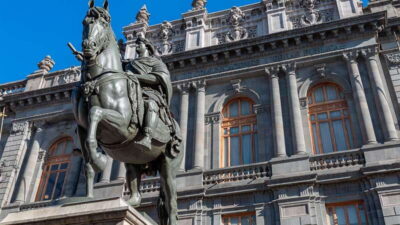
Catedral Metropolitana: what to notice in the city’s most important church
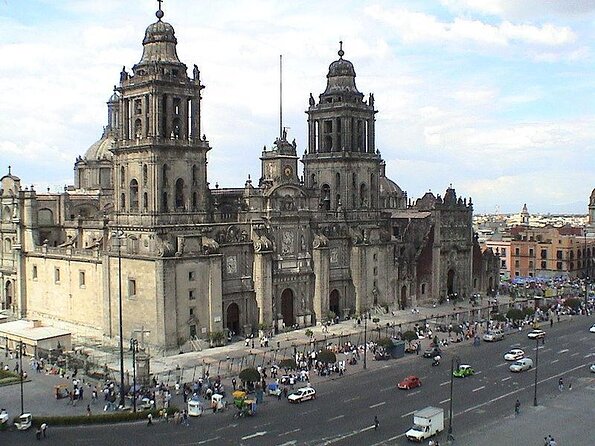
At the Catedral Metropolitana de la Ciudad de México, you’ll learn about architecture style and history. The goal is to help you read the building, not just walk past it.
Even if you aren’t a big church person, this stop is still valuable. Mexico City’s power structure is written into its major religious architecture—so understanding style and historical context gives you a sharper sense of the city’s evolution.
Because this segment is brief (about 8 minutes), it won’t feel like an architectural tour that takes hours. Instead, it’s more like: here’s the story, here’s what to look for, now keep moving. That’s perfect for a 2-hour route—just don’t expect a full interior visit.
Dulceria de Celaya: candy as cultural history
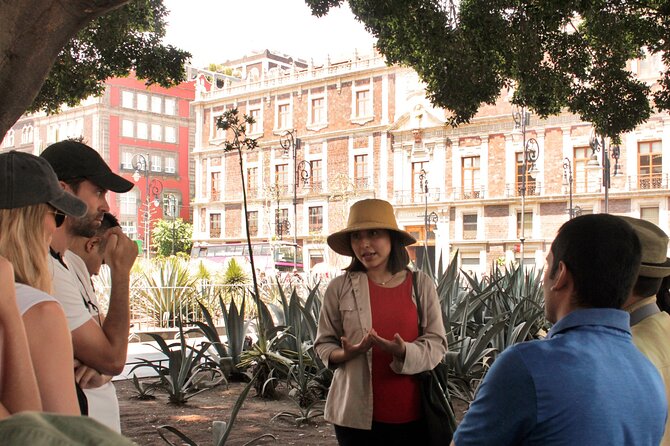
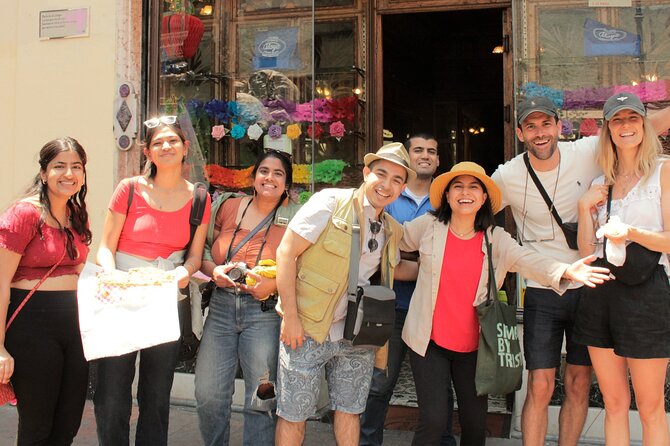
One of the most memorable stops is Dulceria de Celaya, billed as the oldest candy store in the city. Here you’ll learn what sweets they sell, which ones are traditional, how they’re prepared, and their origin.
This is the kind of stop that adds texture. Big sights like temples and palaces can feel heavy, but candy brings you back to daily life—ingredients, techniques, and tastes that have been passed down.
If you’re a foodie, this is a highlight. If you aren’t, it’s still a fun detour because you’ll hear the “why” behind the sweets, not just the name of the shop. Think of it as a small, portable lesson in how Mexican tradition survives through everyday commerce.
House of Tiles: an architectural interior you can almost read
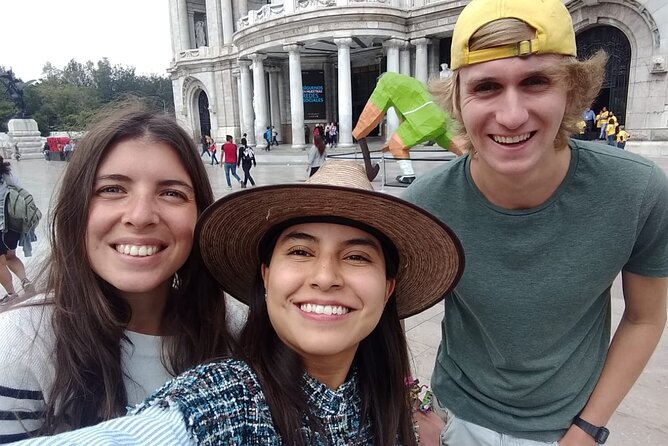
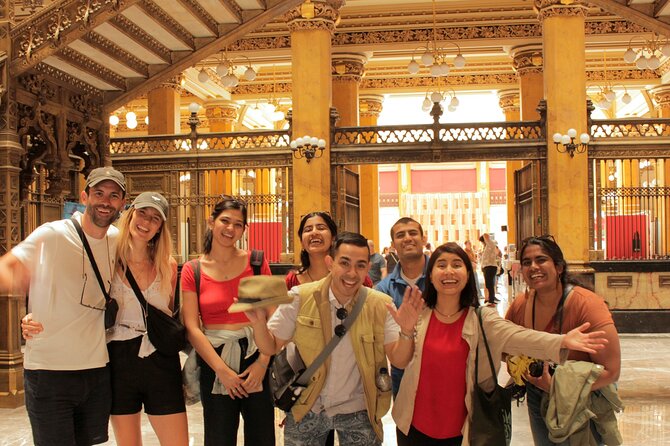
Next is the House of Tiles (Casa de los Azulejos), where you’ll enter and learn its history and the art it contains. This stop is about visual storytelling: the guide points out what makes the place emblematic and explains how the design relates to the city’s past.
This is also a nice pacing change. After outdoor landmarks (and the Zócalo’s open space), you get interior architecture and a chance to slow down.
Because the stop is around 15 minutes, you’ll want to keep your camera ready and listen for what the guide calls attention to. Even a quick interior visit can become “more than a pretty room” if you know what to look for.
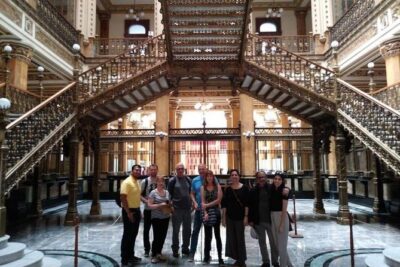
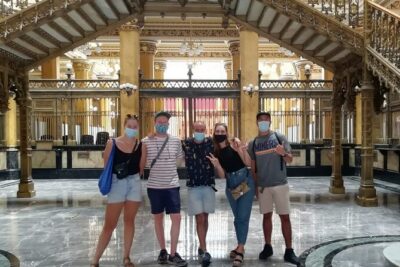
Palacio Postal: where the mail office feels like a landmark
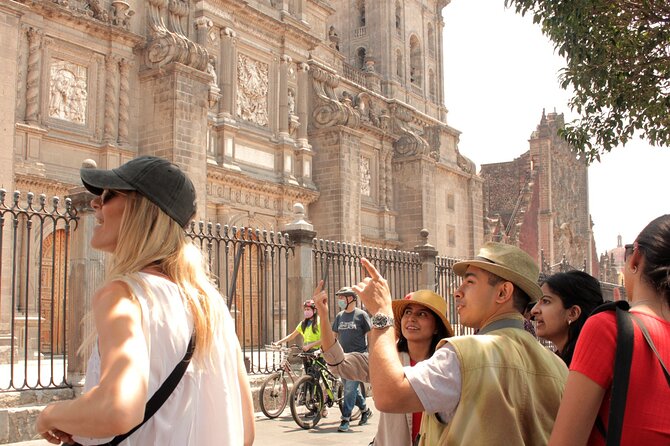
The route continues to Palacio Postal, the postal palace. You’ll hear what the building was before, how it still works today, and the story behind it.
This is a clever stop because postal buildings represent a different kind of power: communication. When you understand that, it’s easier to see the palace as more than ornament. It’s infrastructure—designed to move letters and people’s lives through time.
At about 15 minutes, you’re not doing a deep structural study. But you’ll leave knowing this place isn’t random. It fits into a broader theme of how Mexico City organizes public life and services in monumental ways.
Palacio de Bellas Artes: architecture, history, and a ticket reality check

Finally, you reach Palacio de Bellas Artes, where you’ll learn about architectural style, curious facts, history, and its billboard. The tour ends here, which is a practical win: you can linger afterward without scrambling to catch a connection.
One important planning point: some guests have flagged that Bellas Artes entry tickets may not be sold online, which can catch people off guard if they planned around an app or website purchase. If your schedule is tight, plan to handle tickets on-site—or at least keep a little flexibility in your plan.
Also, this stop is one of the reasons the tour is worth considering for first-timers. Bellas Artes sits at a crossroads of art and city identity. Even if you don’t attend a show, the building itself tells you why people call this area the cultural center of the city.
Diego Rivera murals at Secretaría de Educación Pública: art as a window into customs
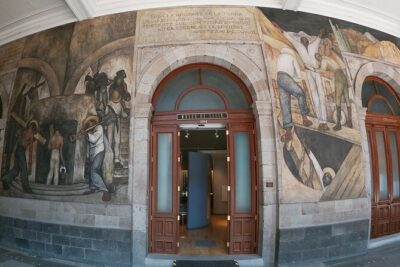
The last content stop on the route is the mural works of Diego Rivera at the Secretaría de Educación Pública (SEP). The guide helps you understand the murals and how they reflect Mexican traditions and customs.
This is a strong way to end because it connects what you’ve been seeing all day—empire, religion, politics, city life—to modern Mexican identity through art. Rivera’s murals are designed to be read like public storytelling, and the guide’s job is to help you follow the thread.
Time here is about 20 minutes, so you’ll have a chance to actually register what’s in front of you. This is the kind of finale that makes the whole tour feel like one coherent arc.
Price and what you’re really buying for $20
The price is $20.00 per person for a roughly 2-hour English walking experience. On paper, that might look like a lot for something described as a free walking tour. In practice, it makes sense when you think about what’s included: guided route structure, explanations at each site, and a curated walk through major landmarks plus culture stops.
You’re not paying for museum entry as part of a “bundle” in the way some paid sightseeing packages do. And that’s a key value question for you: if you’re expecting all admission to be handled automatically, you may feel surprised. Recent feedback points to entry tickets not being fully included for some museum sites, including Palacio de Bellas Artes.
What I like about the pricing setup is that it keeps the tour accessible. You can cover the guide and decide your own tipping at the end. Still, go in with the right expectations: this is a guiding experience, not an all-inclusive attraction pass.
Practical tips that make the day easier
Here’s how I’d set yourself up for success, based on what’s standard for this kind of Centro Histórico loop:
- Bring water. It’s a walking tour, and the route is in a hot city when the sun hits.
- Wear solid shoes. Historic center sidewalks can be uneven, and you’ll be moving between tight blocks.
- Keep a flexible ticket plan for museum stops, especially Bellas Artes. If online purchase is unreliable, you’ll want time to sort it out.
- Expect a small-group pace. With a maximum of 20, the guide should be able to keep things moving, but your speed matters too.
- Know you may choose your tip amount. Some guests have felt a suggested tip range can be pushy, so tip in a way that feels fair to you.
Also, the tour can be booked fairly far ahead (around 20 days on average), so if you’re traveling at peak times, booking early can help you lock in your preferred day.
Should you book this Mexico City historic center tour?
Book it if you want a smart first pass through Centro Histórico with clear explanations and a route that ties Aztec Mexico, colonial landmarks, and modern public art together. It’s especially worth it if you like variety—temples, squares, an interior tile-and-design stop, a real candy shop visit, and Rivera murals—without spending all day in museums.
Skip it (or look for another format) if you mainly want long museum stays or you hate managing entry tickets yourself. Also, if you’re sensitive to end-of-tour tipping guidance, go in ready to decide for yourself what feels right.
If you do book, I’d choose it as your morning anchor—start at 9:30, finish at Palacio de Bellas Artes, then continue on your own through the surrounding historic blocks. That way, you get the guided context first, and you stay free to explore at your own speed afterward.
FAQ
What is the duration of the Mexico City historic center tour?
The tour lasts about 2 hours.
How much does the tour cost?
It costs $20.00 per person.
What time does the tour start and where does it end?
The start time is 9:30 am. The tour starts at República de Guatemala 4 in Centro Histórico and ends at Palacio de Bellas Artes on Av. Juárez S/N in Centro Histórico.
Is the tour offered in English?
Yes, the tour is offered in English.
How many people are in the group?
The tour has a maximum of 20 travelers.
What tickets are included?
The tour includes the guided experience. Ticket admission for some stops may require you to buy tickets yourself, so plan for entry to be handled separately at certain sites.
What should I bring?
Bring water. The tour is walking and bottled water is not included.
Is tipping required?
Tipping is not required. At the end, you can pay a tip if you want.
Can I bring a service animal?
Yes, service animals are allowed.
Is there a cancellation option?
Yes. You can cancel for a full refund if you cancel at least 24 hours before the experience starts.
The Long Story of Mexico City





The City in a Single Day



More Tour Reviews in Mexico City




Fresh from our Mexico City notebook


Historical Tours, compared.
 ★ 5.0Historic Downtown Walking TourFrom $261,289 reviews
 ★ 5.0Historic Center Food Tour in Mexico CityFrom $1151,263 reviews
 ★ 4.8Historic Downtown Walking TourFrom $261,039 reviews
 ★ 5.0Walking Tour of the Historic Center of Mexico City870 reviews
 ★ 5.0Mexico City Historical Centre Food Tour with 7 Authentic TastingsFrom $65723 reviews
 ★ 5.0Walking Tour in Mexico City for Exploring their Cultural HeritageFrom $25245 reviews
 ★ 5.0Walking Tour – Impressive murals in Historical Center of Mexico CityFrom $51224 reviews
 ★ 4.5Guided walking tour through the most historic parts of the city.From $30172 reviews
Browse the lists this tour appears in