REVIEW · GUIDED
Discover Mexico City: 3-Day Private Guided Tour
Three days in Mexico City fly fast. I love how this private format strings together Teotihuacan’s Pyramids of the Sun and Moon with the Frida Kahlo Blue House so you get big-picture context in a short stay. One catch: the trip is non-refundable, so make sure your dates are solid before you book.
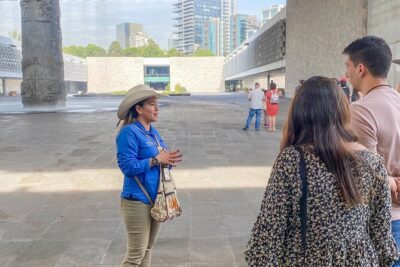
You’ll meet at 9:00 am near the Angel of Independence, and you’re in a private vehicle with guided access to major sights. I also picked up a clear theme from past experiences—guides like Alex and Carlos are known for staying flexible and keeping the pace comfortable (even for an elderly mom).
You’ll be moving a lot, but the good news is that the tour is built around included tickets, guided time inside top museums, and small extras like non-alcoholic drinks and snacks.
In This Review
- Key highlights
- Day 1: Teotihuacan Pyramids, Guadalupe Basilica, and Centro Histórico
- Day 2: Xochimilco trajineras, Anahuacalli, UNAM murals, and Coyoacán + Frida Kahlo
- Day 3: Chapultepec Castle on Reforma, then Anthropology Museum for the big picture
- What you gain from a private guide (and what you won’t)
- Tickets, snacks, and the practical stuff that really affects your day
- Price of $450 per person: when it feels like a deal
- Who this 3-day Mexico City tour fits best
- Should you book this private guided Mexico City tour?
- FAQ
- FAQ
- What does the tour cost and how long is it?
- Is the tour private and offered in English?
- Where do we meet, and does pick-up happen?
- What major places are included across the three days?
- Are entrance tickets included?
- What if I need to cancel?
- How far in advance is this tour usually booked?
Key highlights
- Private guiding with personalized pacing across three full days
- Teotihuacan exploration with time at the Pyramids and Temple of Quetzalpapalotl
- Historic Center walking focus on Zócalo, Templo Mayor remains, and Madero Avenue
- Xochimilco trajinera boat ride linked to pre-Hispanic canals and local culture
- Major museum cluster: Anahuacalli, UNAM Biblioteca murals, Frida Kahlo, and Chapultepec + Anthropology
More days handed to a good guide
- Teotihuacan Early Access Guided Tour with optional Lunch
★ 4.5 · 6,138 reviews - Anthropology Museum Guided Tour
★ 4.5 · 1,035 reviews - Mexico City: Anthropology Museum Guided Visit
★ 4.4 · 708 reviews - Mexico City: Frida Kahlo Museum Entry Ticket w/Digital Guide
★ 4.5 · 683 reviews
Day 1: Teotihuacan Pyramids, Guadalupe Basilica, and Centro Histórico
Day 1 is the kind of start that makes Mexico City feel like more than just a capital. It hits ancient power first, then a living religious tradition, then the layered city that grew on top of it.
Teotihuacan Pyramids (about 3 hours)
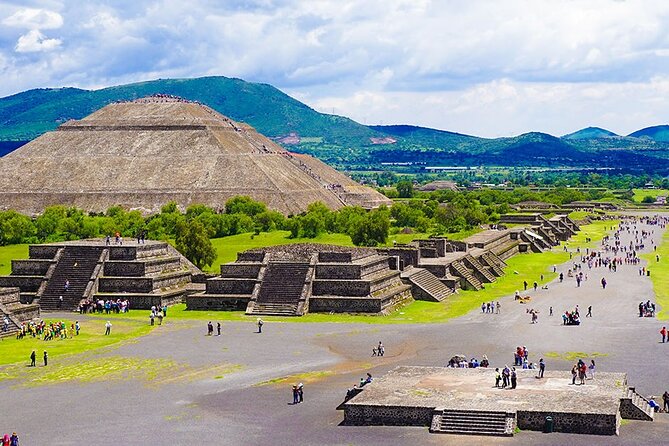
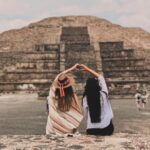
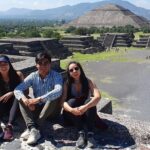
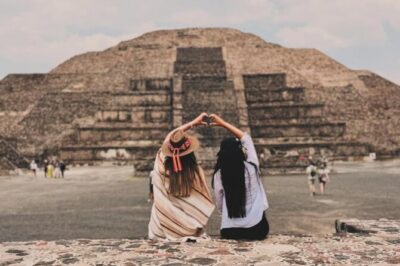
You’re picked up in the morning and driven out to the archaeological zone for a leisurely walk that’s long enough to actually notice patterns, not just “see big rocks.” You’ll spend time around the Pyramids of the Sun and the Moon, walk down the Avenue of the Dead, and visit the Temple of Quetzalpapalotl. The included admission ticket helps you start exploring quickly instead of losing time at check-in lines.
Why I like this stop: Teotihuacan is massive, and a guide matters because you’ll get a structure for what you’re looking at—axes, alignments, and how the site fits together spatially. That turns a first-time visit from photos into understanding.
One practical consideration: this is a long walking day right from the start. Wear shoes you trust.
Basilica de Santa Maria de Guadalupe (about 2 hours)
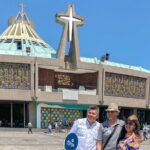
After Teotihuacan, the tour shifts gears to one of the world’s most visited religious sites. You’ll walk around the Basilica and learn the story tied to the Virgin of Guadalupe tradition, including the 1531 apparition account involving Juan Diego and the cloak that preserved the sacred image across centuries.
Even if you’re not planning to go “religious” in a strict way, this stop is culturally important. It’s where faith, art, and identity collide in a place that has shaped generations of Mexico City life.
Historic Center / Centro Histórico (about 3 hours)
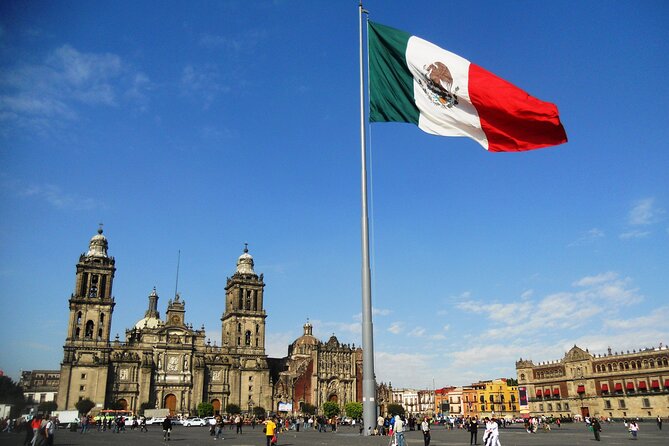
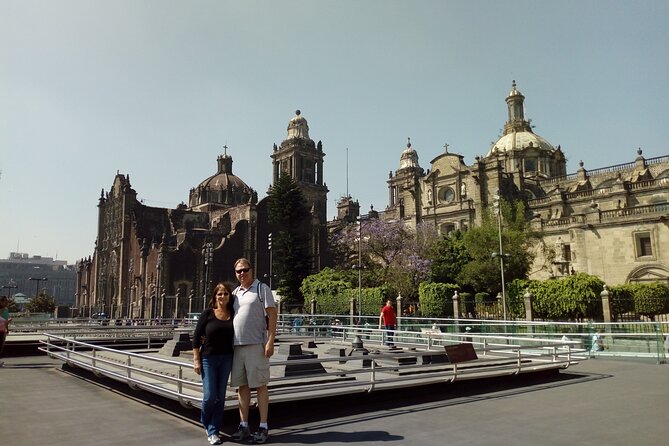
This final block of Day 1 is where you start to feel the city’s layers. You’ll visit the Zócalo (main square), see remains linked to Templo Mayor—what once was the largest pre-Hispanic temple—and walk along Madero Avenue. The Palace of Fine Arts is on the list too, and you’ll also pass by museums in the area.
This part of the day is especially valuable because it connects Aztec Tenochtitlan to the Spanish-era “city of palaces” idea, without requiring you to read a textbook on the sidewalk. The guide walk is built for orientation: you’ll learn what each area is for and how Mexico City’s core grew.
Day 2: Xochimilco trajineras, Anahuacalli, UNAM murals, and Coyoacán + Frida Kahlo
Day 2 feels more varied by design. You move from canals and folk culture to pre-Hispanic art housed by Diego Rivera to modern academic art at UNAM, then you settle into the neighborhood atmosphere of Coyoacán.
Xochimilco and its canals (about 2 hours)
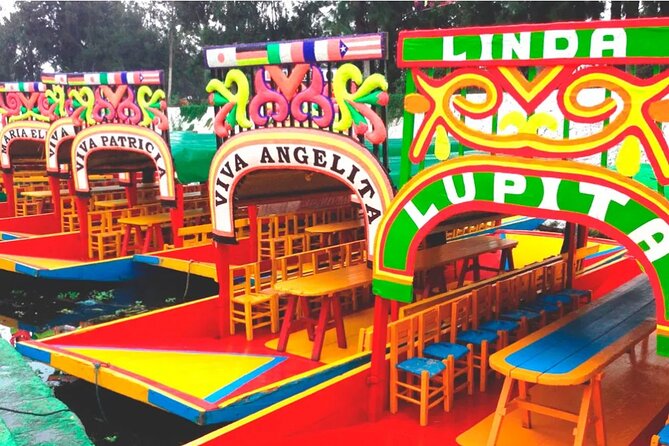
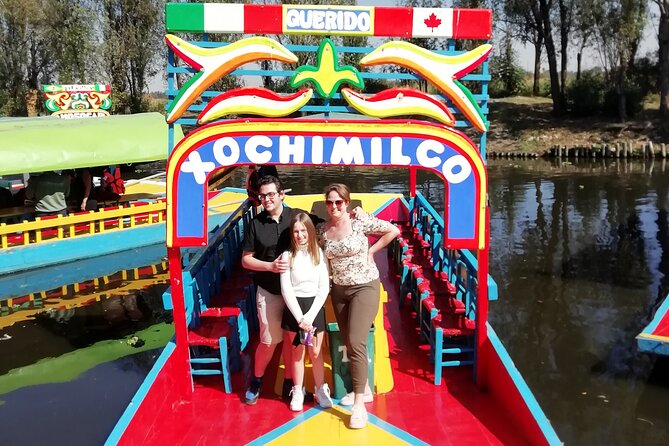
Xochimilco means field of flowers, and the tour focuses on the long-running pre-Hispanic canal system that exists in the area. The signature here is a trajinera boat ride around the canals, and the experience is paired with cultural elements like marimba and mariachis.
What you should expect: you’re not just sightseeing from a road. You’re out on the water, watching how the neighborhood and culture show up in real time. For many people, this is the most “Mexico” day because it combines nature, tradition, and a festive vibe without turning it into a theme park.
A consideration: you’ll want to dress for weather since the day depends on outdoor time and the boat segment.
Museo Diego Rivera Anahuacalli (about 1 hour)
This museum is a big reason Day 2 feels different from Day 1. Rivera designed Anahuacalli to house his collection of pre-Hispanic art, and the building itself uses volcanic rock from the El Pedregal area—famous for being formed by the Xitle volcano eruption. That connection between the art and the place matters.
If you’ve been enjoying the idea of “ancient to modern,” this stop is a satisfying bridge. You get pre-Hispanic objects framed through one of Mexico’s best-known artists, which helps explain why so many modern Mexican cultural identities lean so hard into ancient roots.
UNAM Biblioteca Central (about 30 minutes)
Then you’re at Ciudad Universitaria, visiting the main library at UNAM. It’s a UNESCO World Heritage site, and the facade is covered with murals designed by Juan O’Gorman. The stop is short, but it’s one of those places where you can get a big visual payoff quickly.
Coyoacán orientation walk (about 2 hours)
Coyoacán is where the trip slows down in a good way. You’ll do an orientation walk to get your bearings in the neighborhood, and you’ll hear about how it became a magnet for artists and artisans. The guide also points to its ties to major cultural figures who lived and worked there.
If you’ve got energy after the museums, this is a great place to absorb everyday Mexico City life at street level.
Museo Frida Kahlo (about 1 hour)
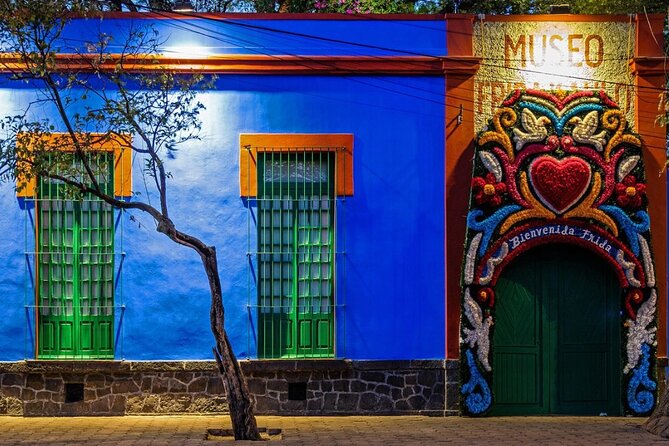
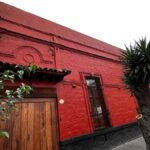
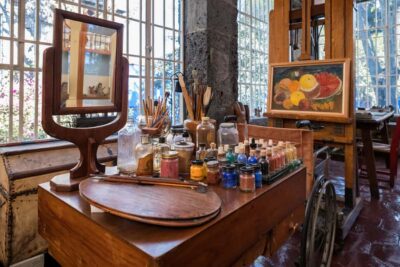
Day 2 ends with Frida Kahlo’s museum, also known as the Blue House. You’ll visit the home where she lived much of her life, including her time with Diego Rivera. After her death, Rivera donated the home and contents so it could become a museum in her honor. The collection includes artwork by Frida, Diego Rivera, and other artists, plus Mexican folk art and pre-Hispanic artifacts, arranged in rooms that remain much as they were in the 1950s.
This stop is popular for a reason: it’s not just a “Frida facts” visit. It’s the physical environment where you can make sense of the art. The pairing with Anahuacalli and UNAM earlier in the day is smart too, because it builds a theme of Mexican identity through art, place, and memory.
Day 3: Chapultepec Castle on Reforma, then Anthropology Museum for the big picture
Day 3 is the cleanest “finale.” You get a dramatic hilltop symbol of Mexico’s different rulers and eras, then you get the museum that puts ancient art into one coherent worldview.
Chapultepec Castle (visit included)
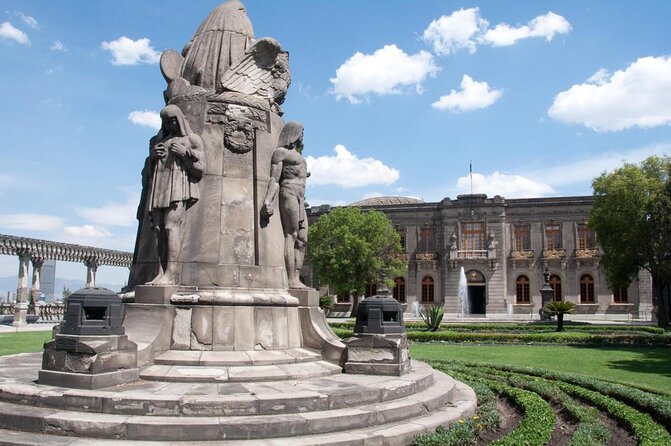
Your last day starts with a drive along Paseo de la Reforma, one of the city’s most famous avenues. From there, you head into Chapultepec Park and climb up the hill to visit Chapultepec Castle.
This castle is presented as a symbol that preserves heritage from multiple historical periods. You’ll learn that it served as the official residence of Viceroys, housed Emperor Maximilian of Habsburg at one point, and was also home to several Mexican presidents.
Why it works as a final day: it’s a visual anchor. After two days of walking through religious tradition, pre-Hispanic ruins, and museum collections, the castle gives you a “how power changed” storyline.
Museo Nacional de Antropologia (about 3 hours)
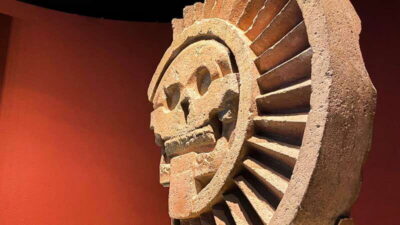
Then comes the heavy hitter: the National Museum of Anthropology. The tour includes guided time here, and it’s built around two floors of exhibits covering ancient Mexican art and ethnographic displays about present-day indigenous groups.
The museum’s scale is the selling point, but the guide focus is what keeps it from feeling overwhelming. You’ll be guided to standout exhibits like the Olmec “Group of Figures” and the Aztec “Sun Stone,” which weighs 22 tons and represents the history of the world.
If you want your Mexico City trip to leave you with real context—not just stamps in a passport—this is the museum stop that does it.
Wider loops around Mexico City
- Teotihuacan Hot Air Balloon Flight from Mexico City / Volare★ 5.0 · 3,262 reviews
- Teotihuacan Private Tour from Mexico City★ 5.0 · 1,890 reviews
- Historic Center Food Tour in Mexico City★ 5.0 · 1,263 reviews
- The best tour to Teotihuacán from Mexico City★ 5.0 · 1,236 reviews
- From Mexico City: Puebla, Cholula and Tonantzintla Day Trip★ 4.3 · 1,191 reviews
What you gain from a private guide (and what you won’t)
This tour is private, meaning it’s you and your group, not a big shared herd. That’s not just comfort. It changes the way the day feels.
A good guide can help you:
- connect what you see at one site to what you saw earlier
- adjust walking rhythm to your group
- make the museum time feel purposeful, not random
In past experiences connected to this provider, guides such as Alex and Carlos were praised for going above and beyond, including helping an elderly mom enjoy the day. That kind of attention matters when your schedule is packed.
Still, private guiding has a tradeoff. Your “best” experience depends on timing and your own energy level. With multiple major stops across three days, you won’t have much spare time to wander far away from the planned route.
Tickets, snacks, and the practical stuff that really affects your day
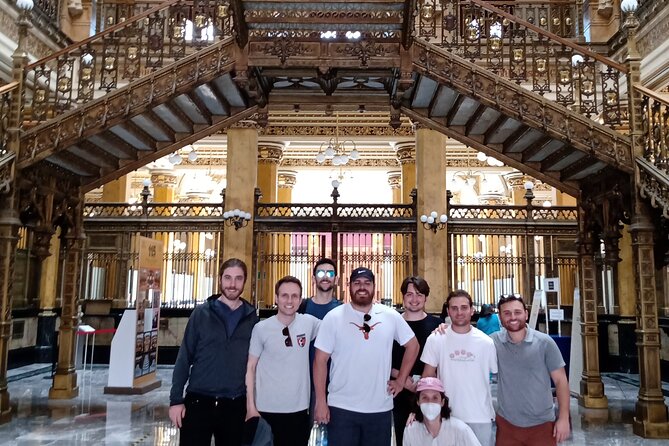
One of the easiest ways to judge value is to check what’s actually included. Here, a lot of the expensive friction is handled for you.
Included in the experience:
- guided visits and admission for Teotihuacan Archaeological Zone
- admission and orientation around the Basilica of Santa Maria de Guadalupe
- guided Historic Center walk with admission included
- trajinera boat ride at Xochimilco
- admission and guided visit for Museo Diego Rivera Anahuacalli
- UNAM Biblioteca Central orientation walk
- orientation walk in Coyoacán plus guided admission for Museo Frida Kahlo
- guided admission for Chapultepec Castle
- guided entry for the National Museum of Anthropology
You’ll also have non-alcoholic drinks and snacks during the tour, which is a small thing until you’re halfway through a long day.
Transportation is handled in a private vehicle, with pick-up and drop-off included in the private tour option. If you’re outside the listed pick-up areas, there could be an extra $10–40 fee, so it’s worth confirming your exact location.
Price of $450 per person: when it feels like a deal
At $450 per person for about three days, you’re paying for two things that are hard to replicate cheaply on your own: logistics and guided admission-heavy sightseeing.
Here’s why it can be good value:
- You’re getting a private local guide across multiple days, not just a single “highlights” morning.
- Transportation is included, which reduces the cost and hassle of moving between major districts (Teotihuacan, Coyoacán, Chapultepec, and the Anthropology Museum).
- Admission tickets are included for nearly every major stop.
- The tour also includes the trajinera boat ride and provides snacks and non-alcoholic drinks.
Where you should be honest with yourself: if you’re the type who wants free time to roam, eat wherever you feel like, and stretch days out at your own pace, a structured three-day plan may feel tight. Also, meals aren’t included, so you’ll need to budget for lunch and dinner on your own.
Who this 3-day Mexico City tour fits best
This tour is a strong match if you:
- want a first or early visit to Mexico City and want the major pillars covered fast
- like museums but also want pre-Hispanic sites and neighborhood culture
- prefer the reassurance of a private guide with English support
- want your time optimized, with tickets and key stops handled for you
It’s also a good option for groups who need pacing support. The feedback around Alex and Carlos highlights that guides here can adapt when someone in the group needs extra care.
Should you book this private guided Mexico City tour?
If you want a guided, high-value route that connects Teotihuacan, Guadalupe, the Historic Center, Xochimilco, Rivera + Frida, and the Anthropology Museum into one coherent story, I’d say yes—this is the kind of trip that turns first-time city confusion into real understanding.
Book it if your dates are firm and you’re okay with a full schedule packed with paid entry sites. Skip it (or adjust your plan) if you’re still deciding, because the experience is non-refundable. And since weather matters for outdoor parts like Xochimilco, plan with some flexibility in mind.
FAQ
FAQ
What does the tour cost and how long is it?
It costs $450.00 per person and runs for 3 days (approx.), starting at 9:00 am.
Is the tour private and offered in English?
Yes, it’s a private tour/activity where only your group participates, and it’s offered in English.
Where do we meet, and does pick-up happen?
You meet at the Angel of Independence at Av. P.º de la Reforma 342-Piso 27, Juárez, Cuauhtémoc, 06600 Mexico City. Pick-up and drop-off are included only in the private tour option, and there may be an extra fee ($10–40) if you’re outside the mentioned pick-up areas.
What major places are included across the three days?
Teotihuacan Pyramids, Basilica de Santa Maria de Guadalupe, Historic Center walking tour, Xochimilco trajinera boat ride, Museo Diego Rivera Anahuacalli, UNAM Biblioteca central, Coyoacán orientation plus Museo Frida Kahlo, Chapultepec Castle, and the National Museum of Anthropology.
Are entrance tickets included?
Yes. Entrance tickets and guided visits are included for the listed sites such as Teotihuacan, the Basilica of Guadalupe, the Historic Center areas, Anahuacalli, Frida Kahlo Museum, Chapultepec Castle, and the National Museum of Anthropology.
What if I need to cancel?
The experience is non-refundable and cannot be changed for any reason. If it’s canceled due to poor weather, you’ll be offered a different date or a full refund, and if the minimum number of travelers isn’t met, you’ll be offered a different experience/date or a full refund.
How far in advance is this tour usually booked?
On average, this tour is booked 90 days in advance.
Hand It to a Guide

More Tours in Mexico City


More Tour Reviews in Mexico City



Fresh from our Mexico City notebook

Guided, compared.
 ★ 4.5Teotihuacan Early Access Guided Tour with optional LunchFrom $396,138 reviews
 ★ 4.5Anthropology Museum Guided TourFrom $391,035 reviews
 ★ 4.4Anthropology Museum Guided VisitFrom $67708 reviews
 ★ 4.5Frida Kahlo Museum Entry Ticket w/Digital GuideFrom $34683 reviews
 ★ 5.0Guided Tour in Teotihuacan with Cave Breakfast and Transportation613 reviews
 ★ 5.0Teotihuacan Private Tour with Expert Guide & Cultural InsightsFrom $140577 reviews
 ★ 5.0Teotihuacan Early Morning Tour: Avoid Crowds, & Expert GuideFrom $80568 reviews
 ★ 4.7Guided Volcano Trek with LunchFrom $105242 reviews