
REVIEW · HISTORICAL TOURS
Architecture and History of Mexico City – Small Groups
Mexico City stacks centuries in front of you. This 3–3.5 hour small-group architecture and history walk connects the city’s layered past through real buildings, guided stories, and great viewpoints—led by Raul. I love how you get both the big picture and the close-up details, without feeling rushed. I also like that House of Tiles isn’t just a photo stop; the balcony views are built into the experience.
You’ll walk at a moderate pace and spend time standing in busy historic streets and looking up at facades and interiors, so a moderate fitness level helps. One other thing to consider: most entries are free, but Palacio de Bellas Artes has a ticket not included, so you may need to budget for that.
In This Review
- Key Things I’d Bet You’ll Notice on This Tour
- A Small-Group Walking Tour That Helps You Read Mexico City
- Starting at Torre Latinoamericana: Getting Your Bearings in One Corner
- El Atrio del Templo de San Francisco: Materials and History You Can Actually See
- House of Tiles: The Balcony View and the 300-Year Evolution Angle
- Palacio de Bellas Artes: Where Art, Politics, and Design Interlock
- Palacio Postal: A Carefully Timed Inside Look
- Plaza Tolsa: Charles IV and the Eclectic Mix Around the Statue
- Museo del Templo Mayor: Mexica Ruins Right in the City Center
- Zócalo Finish: Wrap-Up Stories and Practical Recommendations
- Value Check: What $83.59 Buys You (and Why It Adds Up)
- How to Make This Tour Feel Easier (Comfort Tips That Actually Matter)
- Guide Impact: Why Raul’s Storytelling Changes Everything
- Should You Book This Mexico City Architecture and History Walk?
- FAQ
- FAQ
- How long is the Architecture and History of Mexico City small-group tour?
- What does the tour cost?
- Is the tour in English?
- How big is the group?
- Are tickets included for the stops?
- Where does the tour start and end?
- Is there anything I should know about comfort and timing?
Key Things I’d Bet You’ll Notice on This Tour
- Small group size (up to 6) keeps the pace human and makes questions easy with Raul.
- Layered architecture stops mean you see Mexica-era space, colonial-era evolution, and later styles in one loop.
- Balcony moments are part of the plan, especially at House of Tiles, for multi-building street views.
- Free admission at most stops helps you feel good about value, with only one notable paid ticket not included.
- End at Zócalo so you finish with an easy place to regroup and get trip recommendations.
Wider loops around Mexico City
- Mexico City: Teotihuacan, Tlatelolco & Guadalupe Shrine Tour
★ 4.6 · 3,773 reviews - Teotihuacan Hot Air Balloon Flight from Mexico City / Volare
★ 5.0 · 3,262 reviews - Teotihuacan Private Tour from Mexico City
★ 5.0 · 1,890 reviews - Historic Center Food Tour in Mexico City
★ 5.0 · 1,263 reviews
A Small-Group Walking Tour That Helps You Read Mexico City
If you want to understand Mexico City fast, this kind of focused walking tour is one of the smartest ways to start. You’re not just passing landmarks. You’re learning how different eras used materials, design choices, and symbolism—and how all those choices sit together in the same downtown streets.
This tour runs about 3 to 3.5 hours, and the small group size (max 6 travelers) changes the feel. You’re more likely to get answers to your questions as you go. That matters in Mexico City’s Centro Histórico, where it’s easy to stare at facades and still wonder what you’re really looking at.
I also appreciate the practical setup: a mobile ticket and bottled water are included. And because it’s offered in English and designed for a group, you avoid the usual scramble of figuring out what to see next on your own.
Starting at Torre Latinoamericana: Getting Your Bearings in One Corner
Your walk begins at the Torre Latinoamericana area, a solid way to start because it sets the “layers” theme right away. The idea here is simple: this view corner shows how Mexico City has evolved through history, and it’s a great spot to see the city’s different architectural “eras” stacked across the same urban space.
What you gain from starting here is context. Instead of arriving at historic buildings like you’re hunting for facts, you get a mental map first—then the rest of the walk becomes a guided reading of what you’re seeing.
This stop is about 30 minutes, with free admission noted. With that much time, you’re not rushed. You can also use it to gauge the walking pace and decide if you need slower group spacing.
El Atrio del Templo de San Francisco: Materials and History You Can Actually See
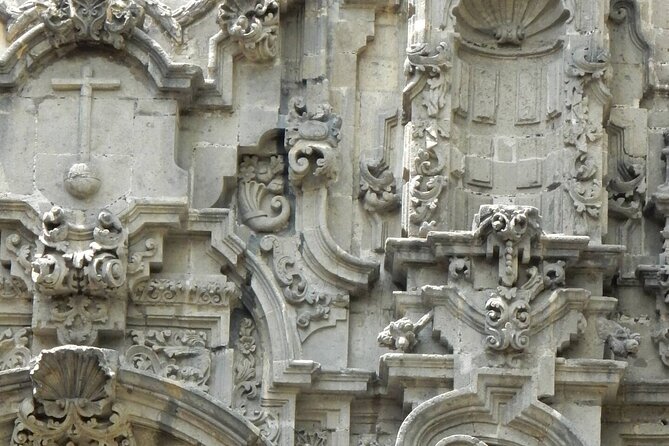
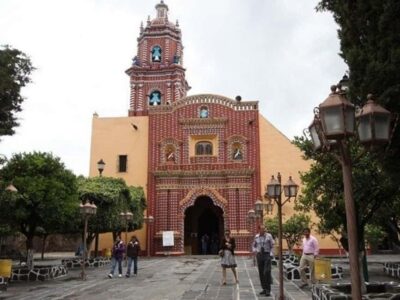
Next is the Atrium of the Templo de San Francisco. This is the type of stop that works well even if you’re not the biggest museum person. The focus isn’t only on the building’s surface. The emphasis is on the constructive materials of Mexico City and the historical processes that shaped what the city became.
The practical payoff: you start recognizing why buildings look the way they do. You begin connecting construction logic to historical events and everyday life. That’s the kind of knowledge that makes later museum visits feel more rewarding.
This segment is about 25 minutes, and entry is listed as free. If you’re the type who likes asking questions, this is a good moment to use that space and slow down long enough to get answers.
More ways into the city long story
- Historic Downtown Walking Tour★ 5.0 · 1,289 reviews
- Historic Center Food Tour in Mexico City★ 5.0 · 1,263 reviews
- Mexico City: Historic Downtown Walking Tour★ 4.8 · 1,039 reviews
- Walking Tour of the Historic Center of Mexico City★ 5.0 · 870 reviews
- Mexico City Historical Centre Food Tour with 7 Authentic Tastings★ 5.0 · 723 reviews
House of Tiles: The Balcony View and the 300-Year Evolution Angle
House of Tiles (Casa de los Azulejos) is one of those Mexico City places that people love for photos—so the smart trick is learning how to see it beyond the postcard. Here, the experience uses the building’s balconies to view other parts of downtown. That changes how you understand the place: you’re not only looking at tiles; you’re using the structure like a viewpoint.
The tour also frames the building’s evolution across almost 300 years. That long timeline is the key. It helps you understand that downtown isn’t frozen in one “style.” Buildings change around older frameworks, and that’s part of the story.
Expect around 25 minutes at this stop, also with free admission. If you’re sensitive to heights or uncomfortable looking over railings, just take your time at the balcony sections. But otherwise, it’s one of the most fun parts of the route because it’s hands-on: look up, then look out.
Palacio de Bellas Artes: Where Art, Politics, and Design Interlock
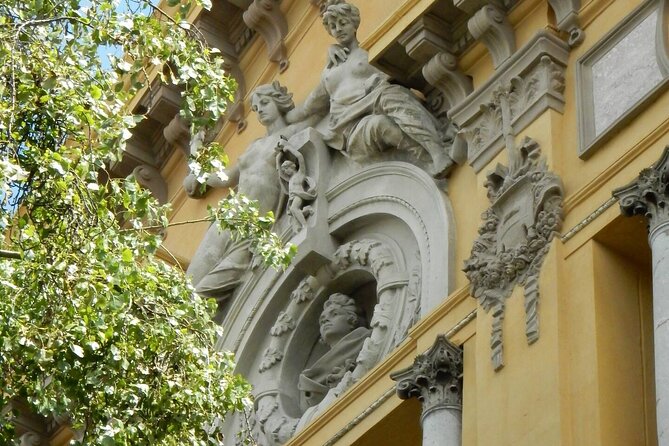
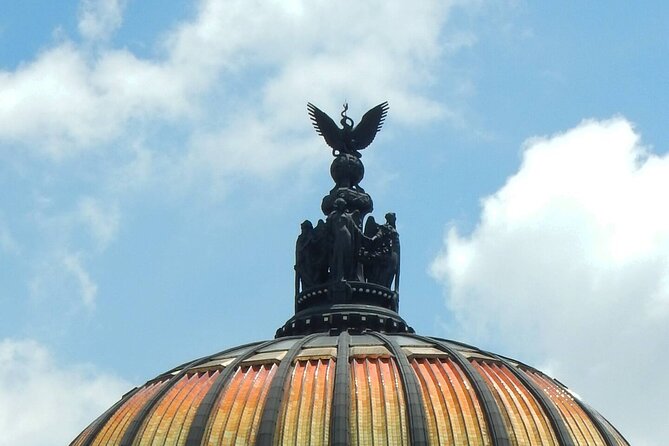
Palacio de Bellas Artes is where the tour shifts from architectural technique to cultural context. Instead of treating it like a pretty building, you’ll discuss the historical, political, and artistic context that shaped this structure and the area around it.
Even if you only catch the basics, this kind of framing makes a big difference. You start noticing that architecture can be a statement—about power, identity, and what a society wants to show the world.
Time here is about 20 minutes, and the note is clear: admission ticket not included. I’d plan for that cost if Bellas Artes is a must for you. If it isn’t, you can still enjoy the surrounding discussion, but the tour’s format suggests that you’re expected to budget for the interior entry when the ticket applies.
Palacio Postal: A Carefully Timed Inside Look
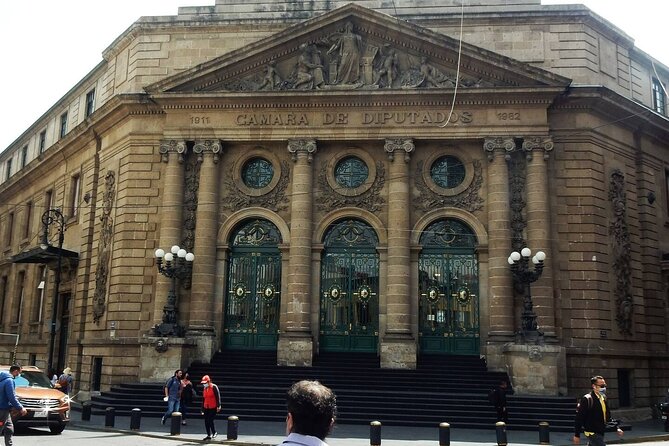
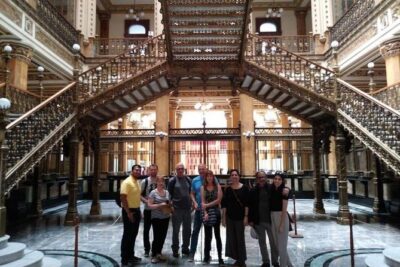
From big iconic monuments to a quieter kind of beauty, Palacio Postal is next. It’s described as a beautiful post office from the early 20th century, and the tour visits the inside depending on the time of day.
That “depending on time” detail is worth paying attention to. If you’re the kind of person who hates uncertainty, you might be slightly annoyed—until you realize it also prevents you from showing up expecting an interior experience at a time when it may not line up. In other words, the tour isn’t pretending everything is always identical; it adapts.
Expect about 20 minutes here with free admission listed. If the inside doors are open during your time slot, you’ll get that classic Mexico City contrast: formal civic spaces that feel ornate, designed for public life rather than private luxury.
Plaza Tolsa: Charles IV and the Eclectic Mix Around the Statue
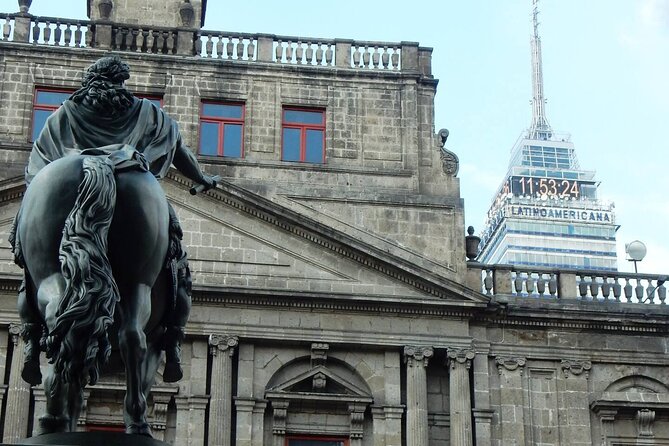
At Plaza Tolsa, the tour focuses on eclectic architecture—how different styles share the same square space. It ties this together with the statue of Charles IV of Spain, and then looks outward at the surrounding buildings.
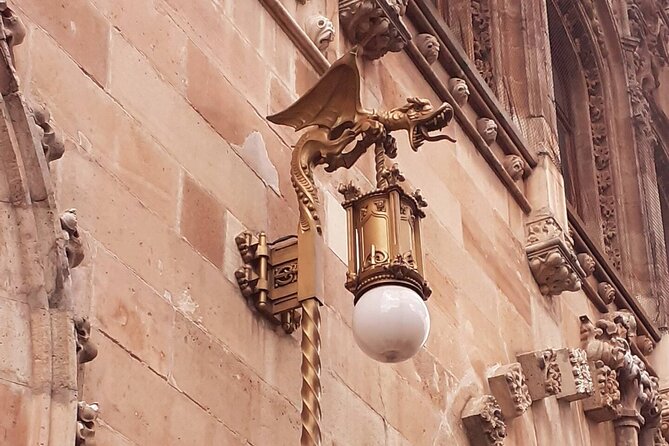
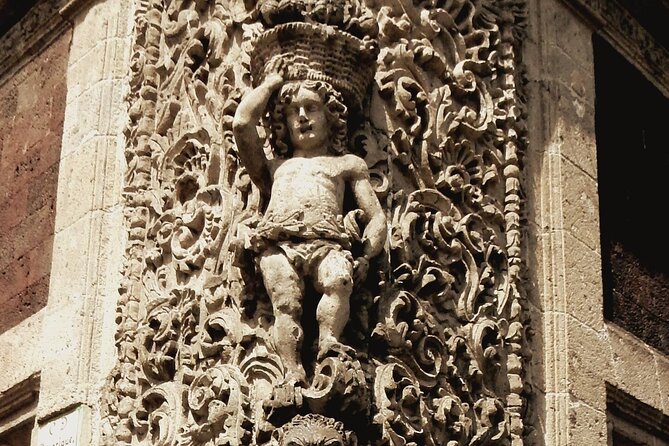
This is a good stop for people who like symbolism. The guide approach here isn’t just sightseeing; it’s about understanding how history shows up in urban design. In fact, the guide style on this tour leans into meaning. You may hear connections involving decoration and symbolism, including references to mythical creatures like griffins and mermaids, and how those motifs connect to later artistic movements.
Time is about 20 minutes, and entry is free. You’ll likely get the most out of it if you keep your eyes scanning—not just at the statue, but across facades in both directions.
Museo del Templo Mayor: Mexica Ruins Right in the City Center
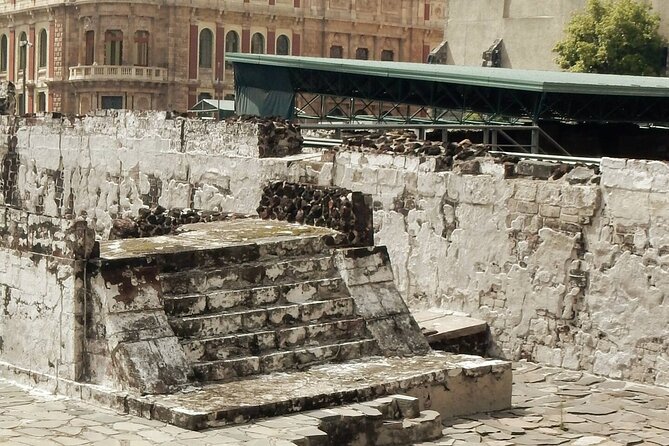
Before finishing, you visit an archaeological site: the Museo del Templo Mayor. This stop matters because it pulls you back toward the deep roots of Mexico City, literally placing Mexica history in the middle of downtown.
The value of this placement is emotional as much as educational. When you’ve just spent time on later architectural styles, it helps to end with an “older foundation” reality check. The tour uses the center of the city to show continuity and change instead of treating ancient history like it lives off to the side.
This is about 20 minutes, and free admission is listed.
Zócalo Finish: Wrap-Up Stories and Practical Recommendations
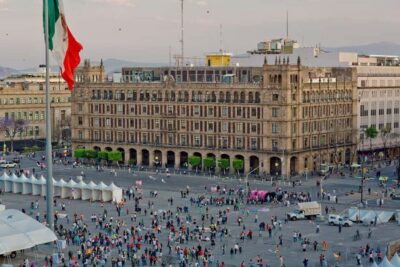
The tour ends at the Zócalo, Mexico City’s main square. You’ll get a wrap-up moment that’s designed to pull the themes together and answer questions.
I like this finish because Zócalo is the best kind of meeting point: it’s central, it has a lot going on, and it’s easy to transition from “guided learning” to “you decide what to do next.” The tour format even gives you a built-in chance to ask for recommendations for the rest of your trip, so you can plan your next day with better context.
The walk finishes around 20 minutes at Zócalo, with admission ticket included noted. Practically, this is also a smart way to end because you’re not stuck in an obscure alley. You’re in the middle of the action, with a clearer sense of what you’ve been seeing.
Value Check: What $83.59 Buys You (and Why It Adds Up)
At $83.59 per person, you’re paying for a guided walk that strings together multiple major sites in Centro Histórico in a tight time window. The cost feels more reasonable when you see how many stops are listed as free admission and how the visit is structured around explanation, viewpoints, and question time.
Where the price really earns its keep is in the “why.” Raul’s reviews highlight that the tour doesn’t just point at buildings; it links pre- and post-Spanish Mexico through architectural impact. That turns scattered landmarks into a coherent orientation, which is exactly what you want on a first day or anytime you’re trying to reduce confusion.
Also, the small group size (up to 6) adds value that doesn’t show up in the headline price. Fewer people means your guide can slow down to clarify what you’re seeing and keep the pace from turning into a rigid line.
The only financial wrinkle is Palacio de Bellas Artes where the ticket is not included. If you’re budgeting, treat that as the only “maybe extra” item. Everything else in the route is marked as free.
How to Make This Tour Feel Easier (Comfort Tips That Actually Matter)
This is a walking tour through a dense, historic area, so your comfort decisions affect the whole experience. The tour says moderate physical fitness is recommended. That doesn’t mean athletic. It does mean you should be ready for a steady walking pace and standing time inside and outside.
A few practical ways to set yourself up:
- Wear shoes that work well on city sidewalks, because you’ll be moving between stops.
- Bring layers if weather changes, since the route covers outdoor streets as well as interiors.
- If you’re easily distracted by crowds, you’ll still be fine with a small group, but you should expect some level of downtown foot traffic.
The itinerary also notes that allotted time for transportation/travel time is included in the total duration. That’s a good sign: you shouldn’t feel like you’re burning half your afternoon just getting between places.
Guide Impact: Why Raul’s Storytelling Changes Everything
This tour stands or falls on the guide. The reviews point hard to Raul for being warm, engaging, and thorough in connecting architecture to history. I’d especially take that seriously if you’re the type who likes to ask why a building looks the way it does, or how different periods influenced each other.
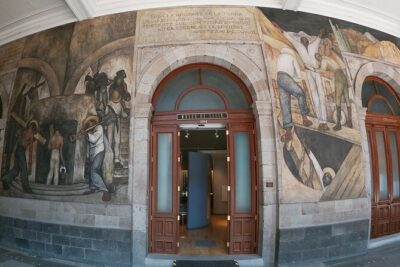
One thing that comes through is that the stories aren’t random. Raul links the city’s evolution from Mexica foundations to later forms, and he ties in art elements like muralist symbolism and decorative motifs. If you’ve ever visited a place and thought, I see it, but I don’t get it, that’s exactly the gap this tour tries to close.
If you want a guide who explains, then leaves you with enough context to enjoy museums later, this route is designed for that outcome.
Should You Book This Mexico City Architecture and History Walk?
Book it if:
- You want a high-quality orientation to Mexico City’s Centro Histórico, not just a list of sites.
- You like architecture explanations that connect materials and design to history.
- You’d rather be in a max of 6 people than a crowded bus tour.
- You’re starting early in your trip and want a foundation for what to explore next.
Skip or reconsider if:
- You hate walking and standing for long periods, or you struggle with moderate fitness demands.
- You specifically only want modern highlights; this tour is built around layered history and downtown architecture.
- You don’t want to pay any additional entrance fees, since Palacio de Bellas Artes doesn’t include the ticket.
FAQ
FAQ
How long is the Architecture and History of Mexico City small-group tour?
It runs about 3 hours to 3 hours 30 minutes.
What does the tour cost?
The price is listed as $83.59 per person.
Is the tour in English?
Yes. The experience is offered in English.
How big is the group?
The maximum group size is 6 travelers.
Are tickets included for the stops?
Most admissions are listed as free. The one exception noted is Palacio de Bellas Artes, where the admission ticket is not included. The Zócalo stop shows the admission ticket included.
Where does the tour start and end?
It starts at Torre Latinoamericana in the Centro Histórico area and ends at Constitution Plaza / Plaza de la Constitución in the Zócalo area.
Is there anything I should know about comfort and timing?
The tour says it’s best for travelers with moderate physical fitness, and the total duration includes time for transportation/travel between stops.
The Long Story of Mexico City






The City in a Single Day




More Tour Reviews in Mexico City





Fresh from our Mexico City notebook


Historical Tours, compared.
 ★ 5.0Historic Downtown Walking TourFrom $261,289 reviews
 ★ 5.0Historic Center Food Tour in Mexico CityFrom $1151,263 reviews
 ★ 4.8Historic Downtown Walking TourFrom $261,039 reviews
 ★ 5.0Walking Tour of the Historic Center of Mexico City870 reviews
 ★ 5.0Mexico City Historical Centre Food Tour with 7 Authentic TastingsFrom $65723 reviews
 ★ 5.0Walking Tour in Mexico City for Exploring their Cultural HeritageFrom $25245 reviews
 ★ 5.0Walking Tour – Impressive murals in Historical Center of Mexico CityFrom $51224 reviews
 ★ 4.5Guided walking tour through the most historic parts of the city.From $30172 reviews
Browse the lists this tour appears in