
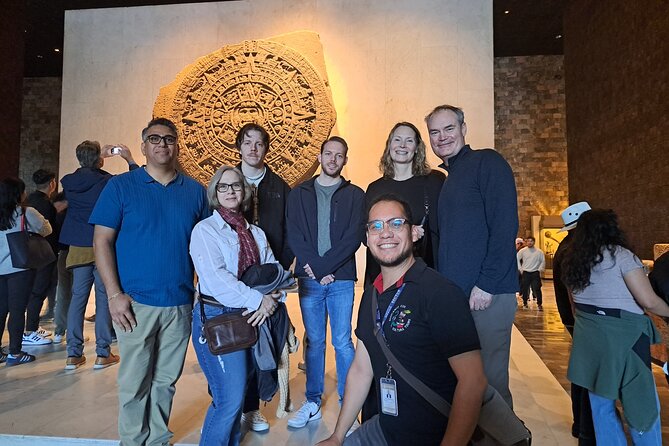
REVIEW · ANTHROPOLOGY MUSEUM TOURS
Tour Museum of Anthropology a trip to the past-Small groups
Most people see this museum as a maze. With a good guide, it becomes a timeline you can actually follow. This is a 3-hour way to get context fast, with VIP-style access and a focus on the pieces that explain centuries of Mesoamerican culture.
I like two things a lot: the chance to go in with less crowd pressure, and the way guides such as Jorge (and also Delta) connect artifacts into a clear story instead of letting you get lost in rooms and Spanish labels. One drawback to plan for: you only cover highlights, so if you want a long, self-paced museum day, this won’t replace doing time on your own.
In This Review
- Key highlights worth your attention
- Why This VIP Museum Tour Works in 3 Hours
- Meet at Polanco, Then Step Into the Museum’s Main Story
- VIP Access and Getting Past the Crowds
- The Museum Route: How You Turn Rooms Into a Timeline
- Sun Stone and Pakal Sarcophagus: The Artifacts That Explain More Than They Show
- Jorge and Delta: Storytelling That Makes Spanish-Heavy Labels Easier
- Interactive Museum Moments: Multimedia, Rituals, and Restoration
- Pace, Scope, and the Big Reality: You’ll See Highlights, Not Everything
- English-Friendly, Small-Group Comfort
- Price and Value: Is $98.57 Worth It?
- Who This Tour Fits Best
- Should You Book This Museum of Anthropology Tour?
- FAQ
- How long is the Museum of Anthropology trip?
- Is admission included in the price?
- Is the tour offered in English?
- What’s the group size like?
- Where does the tour start?
- Do I get any audio help during the tour?
- What if my plans change and I need to cancel?
Key highlights worth your attention
- Small group size (max 15) means you can ask questions instead of watching from the back row.
- VIP access and special times helps you avoid the worst lines and crowd crush inside.
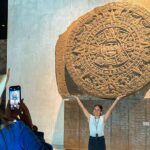
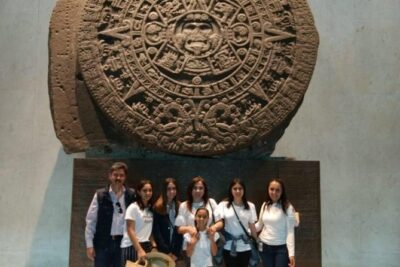
- Key stop artifacts include the Sun Stone and Pakal Sarcophagus, used as anchors for the bigger story.
- Interactive explanations use multimedia and talk through restoration and how objects are studied.
- English guidance with an earpiece helps when exhibit text is mostly Spanish.
More rooms to lose an afternoon in
- Chapultepec Castle & Anthropology Museum Tour
★ 4.5 · 1,348 reviews - Anthropology Museum Guided Tour
★ 4.5 · 1,035 reviews - Mexico City: Anthropology Museum Guided Visit
★ 4.4 · 708 reviews - Mexico City: Chapultepec Castle and Anthropology Museum Tour
★ 4.5 · 637 reviews
Why This VIP Museum Tour Works in 3 Hours
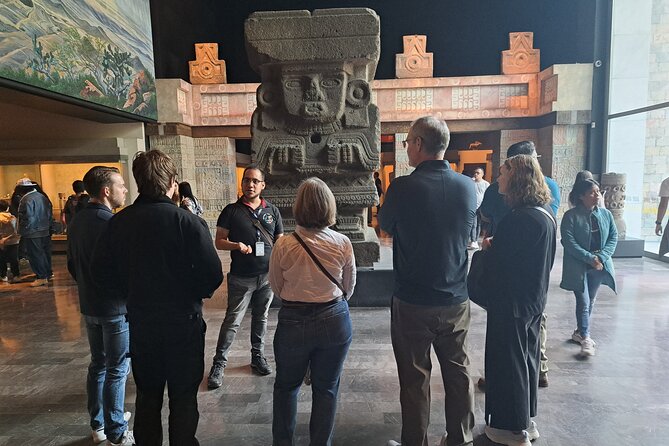
The Museo Nacional de Antropología is huge, and it can overwhelm you fast. A museum like this isn’t just about looking at objects. It’s about understanding what the objects meant, where they came from, and how archaeologists piece it together.
That’s the big value here: a guide gives you a path. You leave with a mental map of the eras and regions—so later, when you see something on your own, it clicks instead of feeling random. It also helps that you get tickets and a guide included in the price, so you aren’t doing guesswork at the door.
The other practical win is the small group setup, with a maximum of 15. In practice, some groups can be even smaller, which makes the tour feel more like a conversation than a lecture.
Meet at Polanco, Then Step Into the Museum’s Main Story
You meet at the Museo Nacional de Antropología in Polanco, at Av. P.º de la Reforma s/n. The tour ends back at the meeting point, so you’re not trying to coordinate a second plan after 3 hours. It’s also easy to reach by public transportation, which matters in Mexico City.
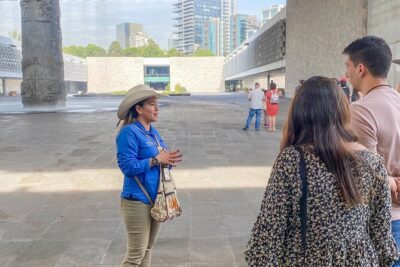
Once you’re inside, you’re not wandering room-to-room hoping you guessed right. You’re guided through the museum in a way designed to build understanding in sequence. That’s especially important here because the museum isn’t set up like an English-friendly walkthrough. Even with signage throughout, you’ll get more from a guide who can translate meaning, not just words.
VIP Access and Getting Past the Crowds
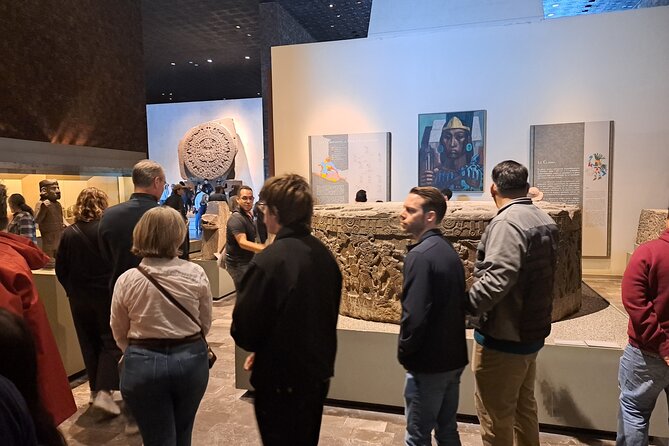
One of the most appreciated parts is the promise of VIP access. Translation: you spend less time fighting lines and more time actually learning. The tour’s timing is set up to help you see the museum away from the heaviest crowd moments.
In a museum this size, timing is everything. If you start late, you lose momentum and you end up scanning instead of noticing. With this tour, the goal is to keep the pace steady and your attention where it matters—on the artifacts and the logic behind them.
More galleries and rooftops worth the ticket
- CDMX: Xochimilco, Coyoacan, Frida Kahlo Museum & Murals Tour★ 4.4 · 3,025 reviews
- Frida Kahlo VIP [Museum Tickets Included] Bike, Markets & Churros★ 5.0 · 1,072 reviews
- Frida Kahlo VIP [Museum Tickets Included] Walk, Markets & Churros★ 5.0 · 982 reviews
- EXCLUSIVE TOUR Frida Kahlo Museum – SMALL GROUPS★ 5.0 · 901 reviews
- Mexico City: Frida Kahlo Museum Entry Ticket w/Digital Guide★ 4.5 · 683 reviews
The Museum Route: How You Turn Rooms Into a Timeline
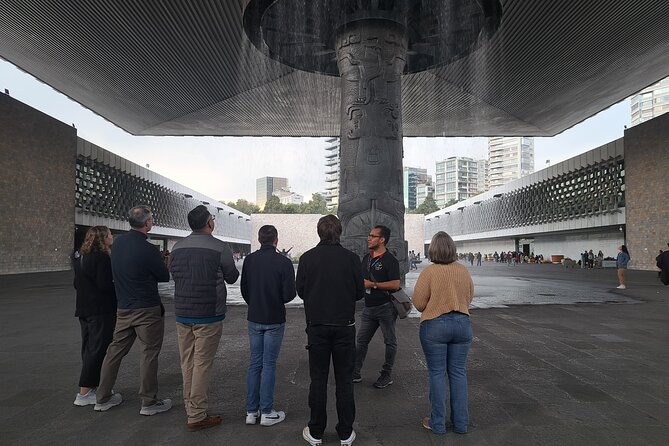
This tour is centered on a single main stop: the National Museum of Anthropology. But it isn’t only one room or one highlight wall. The guiding approach is meant to thread multiple eras together so you understand how the cultures relate.
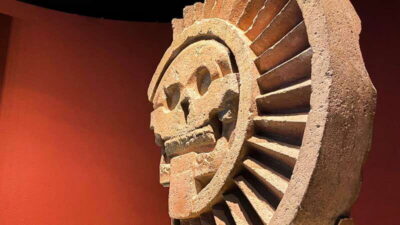
A common pattern you’ll experience is explanation by “anchors.” The guide starts with a major centerpiece (often the well-known pillar and symbol-heavy areas), then moves through related objects, and later returns to the anchor to show how the meanings connect. It’s a smart way to prevent the early exhibits from feeling like disconnected history.
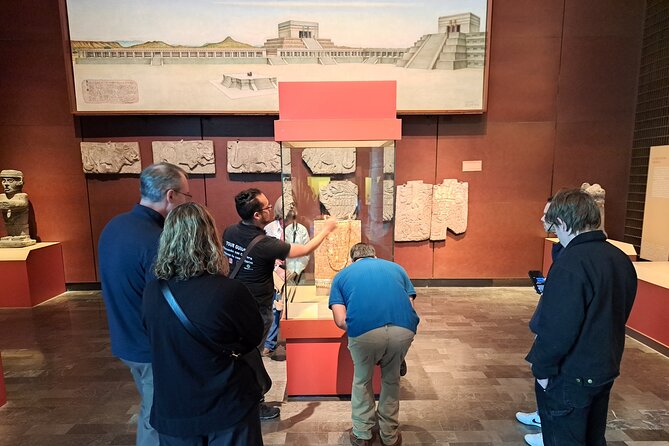
You’ll also see the museum’s logic for restoration and study. Instead of only pointing at what you can see, you’ll get talk about what’s behind the artifacts—how they’re researched, reconstructed, and presented. That’s where the tour becomes more than sightseeing.
Sun Stone and Pakal Sarcophagus: The Artifacts That Explain More Than They Show
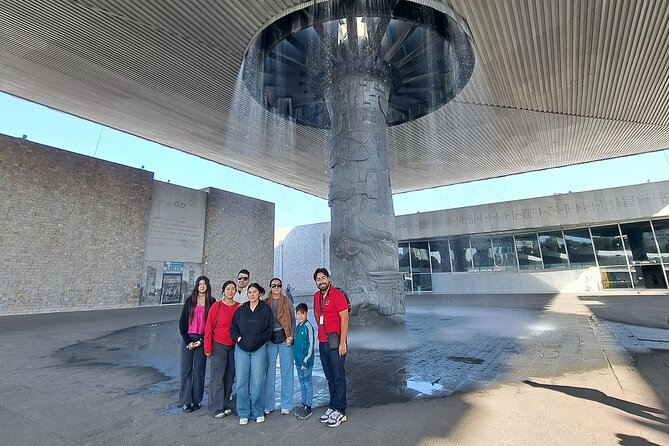
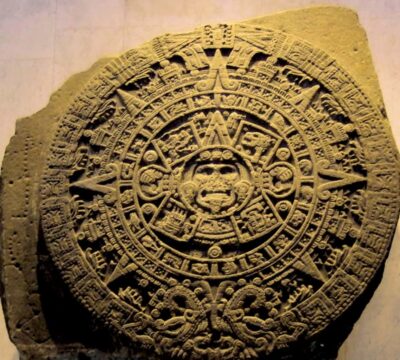
The tour’s highlight list is very specific for a reason. Two big “anchors” mentioned are the Sun Stone and the Pakal Sarcophagus.
Why these matter for your understanding:
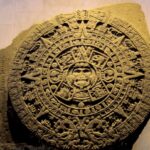
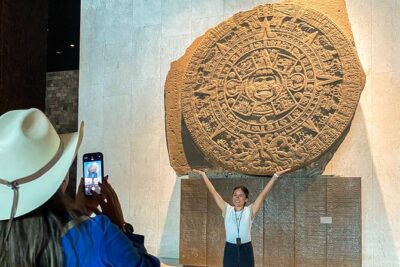
- The Sun Stone helps you grasp symbolism and how images can function like a map of time, belief, and order. It’s not just a cool sculpture; it’s a visual system.
- Pakal’s sarcophagus is a key example of elite Maya art and ritual representation, and it helps you connect the Maya world to broader Mesoamerican patterns.
What I like about using artifacts like these is that they give you something to hold onto. Without an anchor, it’s easy to walk past major pieces and only remember what they looked like. With an anchor, you remember what they meant.
Jorge and Delta: Storytelling That Makes Spanish-Heavy Labels Easier
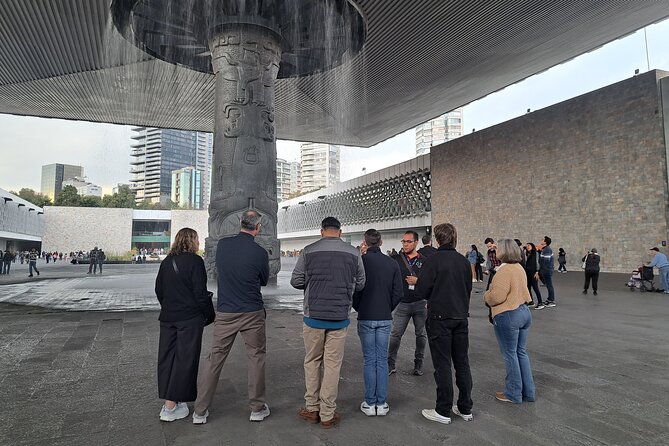
Here’s the honest truth: a lot of the museum’s text is in Spanish, and English translations can be limited. That doesn’t mean you can’t visit on your own. It does mean that a guided tour is a major advantage if you want clarity.
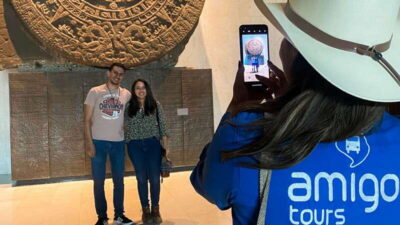
This is where guides such as Jorge and Delta earn their reputation. The style is not only factual. It’s structured, with storytelling that connects one artifact to the next. You’ll also get prompted questions as you walk, which keeps your brain active instead of passive.
You may also get audio support via an earpiece, which is worth it in a large hall. It keeps you from straining and helps you stay with the guide’s explanation even when the space is noisy or open.
Another small but important detail: guides are comfortable using the museum’s bigger maps, charts, and visual aids to give regional and timeline context. That’s the stuff that’s hard to piece together when you’re reading plaques and walking at the same time.
Interactive Museum Moments: Multimedia, Rituals, and Restoration
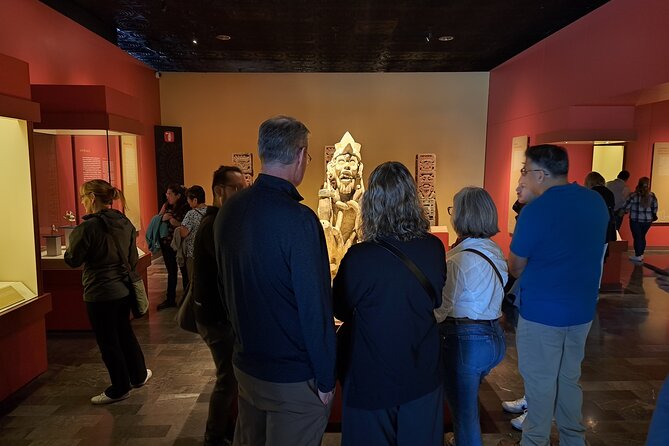
A plain museum visit can turn into a checklist: see artifact, read plaque, move on. This tour tries to break that pattern with interactive experiences.
You’ll encounter multimedia resources that bring ancient rituals into clearer focus. The point isn’t to turn the museum into a show. It’s to help you understand how the objects relate to belief and practice, not just art and craftsmanship.
The tour also talks about the work behind restoration. That matters because some artifacts look the way they do due to careful conservation and reconstruction choices. When you understand that, you interpret what you’re seeing more thoughtfully instead of assuming everything is exactly as it was when first made.
Pace, Scope, and the Big Reality: You’ll See Highlights, Not Everything
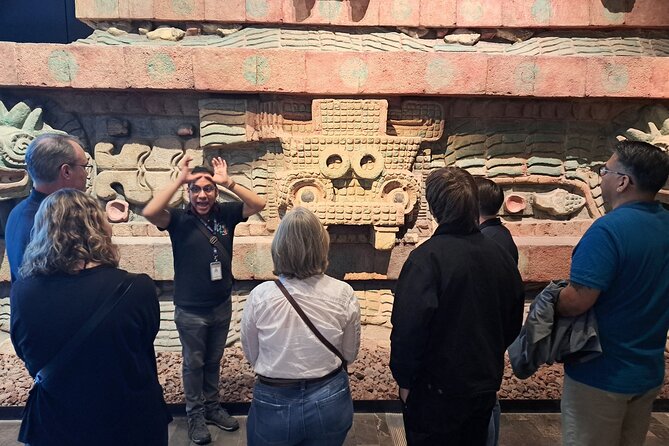
The tour runs about 3 hours, and it only covers a portion of the museum. That’s built into the format. The guide will focus on the pieces most useful for understanding the timeline and major developments.
So here’s the practical consideration: if you’re the kind of person who likes to linger at every display, you may feel you’re moving quickly. If your goal is understanding, that’s exactly where the tour shines.
Also consider museum closing time. If you’re doing the tour near the later end of the day, you may have limited time to explore on your own afterward. Plan your schedule so you don’t feel rushed. If you truly want a full museum day, keep this tour as the morning or early part of your visit, then add extra time after.
English-Friendly, Small-Group Comfort
This experience is offered in English, and it’s designed for small groups (maximum 15). That mix is key. English-speaking visitors benefit most when the tour can explain context and meaning, especially where translations are sparse.
The group size also changes the vibe. You get more flexibility for questions and the guide can adjust explanations if people look confused or curious. It makes a big museum feel less like homework and more like a guided conversation.
You’ll also get a mobile ticket, and service animals are allowed. If you’re planning around accessibility and logistics, those are helpful facts to know ahead of time.
Price and Value: Is $98.57 Worth It?
At $98.57 per person for about 3 hours, this isn’t a budget “quick stop.” But it also isn’t priced like a luxury private museum day. The value comes from what’s included and what you avoid.
What’s included:
- Tickets and guide
- An English-speaking guide experience
- VIP-style access timing
What you’re effectively paying for is time saved and meaning gained. In a museum this big, the cost of doing it alone isn’t only money—it’s the chance you’ll miss the connecting story and end up with a blur of objects. With the guide, you can walk away with an organized understanding of how the major cultures and time periods connect.
If you’re a first-time visitor and you want to understand the big points without spending days in research mode, this price makes sense. If you already know the Mesoamerican timeline and you love slow, self-guided wandering, you might not need the full structure. But for most people—especially non-Spanish readers—the guided value is strong.
Who This Tour Fits Best
I’d point this tour toward three types of travelers:
- First-timers to the National Museum of Anthropology who want the museum to make sense quickly.
- English-speaking visitors who prefer interpretation over reading every plaque.
- Couples, solo travelers, and families with teens who can handle 3 hours if the guide keeps the pace lively.
You’ll get the most out of it if you like asking questions, noticing symbols, and connecting art to history. If you want a strictly relaxed, wandering-style visit with no structure, you might prefer exploring independently. But even then, many people use this tour as the “training wheels” before doing a self-guided loop.
Should You Book This Museum of Anthropology Tour?
If your priority is understanding—fast—and you want a guided path through major artifacts, I’d book it. The combination of small group size, VIP access, and expert-style storytelling around the Sun Stone and Pakal sarcophagus makes it a high-value way to experience one of Mexico City’s most important museums.
Book it even if you’re curious but not an archaeology expert. The tour is built around clarity and connection, not jargon. Just go in knowing you’ll see highlights in 3 hours, so give yourself enough time in your overall day to absorb what you learned and (if you want) add a bit of self-exploration after.
FAQ
How long is the Museum of Anthropology trip?
It lasts about 3 hours.
Is admission included in the price?
Yes. Tickets and the guide are included.
Is the tour offered in English?
Yes, the experience is offered in English.
What’s the group size like?
The tour has a maximum of 15 travelers.
Where does the tour start?
The meeting point is Museo Nacional de Antropología, Av. P.º de la Reforma s/n, Polanco, Bosque de Chapultepec I Secc, Miguel Hidalgo, 11560 Ciudad de México, CDMX, Mexico.
Do I get any audio help during the tour?
The tour experience includes use of an earpiece, which helps you hear the guide.
What if my plans change and I need to cancel?
You can cancel for a full refund if you cancel up to 24 hours in advance. If you cancel less than 24 hours before the start time, the amount paid is not refunded.
More Tour Reviews in Mexico City




Behind the Ticket: More CDMX Museums




More Rooms at the Anthropology Museum
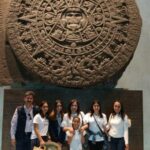
Fresh from our Mexico City notebook




Anthropology Museum Tours, compared.
 ★ 4.5Chapultepec Castle & Anthropology Museum TourFrom $791,348 reviews
 ★ 4.5Anthropology Museum Guided TourFrom $391,035 reviews
 ★ 4.4Anthropology Museum Guided VisitFrom $67708 reviews
 ★ 4.5Chapultepec Castle and Anthropology Museum TourFrom $47637 reviews
 ★ 4.4Anthropology Museum Skip-the-Line TicketFrom $15502 reviews
 ★ 5.0Anthropology Museum Private Experience Walking TourFrom $78355 reviews
 ★ 5.05 Hour Tour through Chapultepec, Anthropology Museum and CastleFrom $61239 reviews
 ★ 5.0PRIVATE Tour in Chapultepec Castle and Museum of AnthropologyFrom $113144 reviews
Browse the lists this tour appears in