
REVIEW · HISTORIC CENTER WALKING TOURS
The Best of Santa Maria de la Ribera
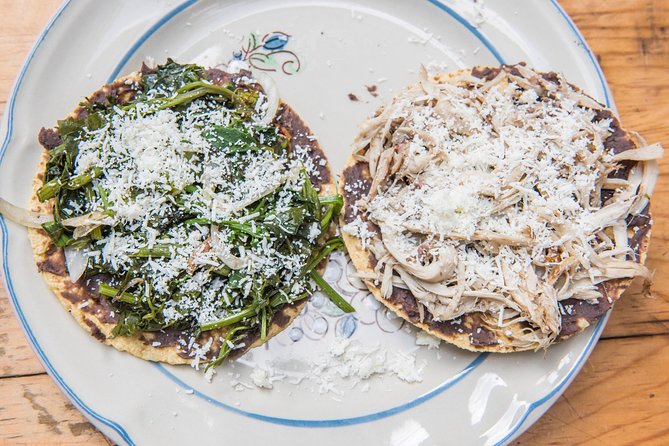
A food-focused walk through Santa María la Ribera beats the usual route. You’ll get a small-group experience (max 8) and a serious feast that covers breakfast-and-lunch amounts of traditional Mexican food, plus real cultural context from Nico Garcia. I also love how the tour sends you beyond the postcard spots into places like a working tamales factory and an old-school pulquería with swinging saloon doors.
One thing to plan for: this tour runs on a set schedule and depends on good weather, and you handle your own ride to and from the meeting and end points. If you’re the type who hates timing and crowds, you’ll want to build in a little extra buffer.
In This Review
- Key things I think you’ll care about
- Santa María la Ribera: the neighborhood food tour route you’ll actually remember
- Your guide Nico Garcia and the “eat + understand” approach
- Stop-by-stop: the herb salt garden moment
- Working tamales factory: over 20 varieties in one stop
- A quick market stroll that shows how Mexico City eats day to day
- Neighborhood cooking school and restaurant: food tied to livelihoods
- The hidden pulquería with swinging saloon doors and no sign
- Landmarks stop: a century-old geology museum moment
- Buñuelos: the crunchy sweet finish
- Ending at El Estanquillo El 32: keep the food story going
- Price and value: what $122.46 actually buys you here
- Group size: why max 8 changes the feel
- Who should book this tour (and who might not)
- Should you book The Best of Santa María de la Ribera?
- FAQ
- How long is the tour?
- What is the meeting location for the tour?
- Where does the tour end?
- What time does the tour start?
- Is the tour in English?
- How many people are in a group?
- What’s included in the price?
- What is not included?
- Is the tour affected by weather?
- What if I need to cancel?
Key things I think you’ll care about
- Herb-infused salt you make yourself in a local garden, then you taste how it changes everything
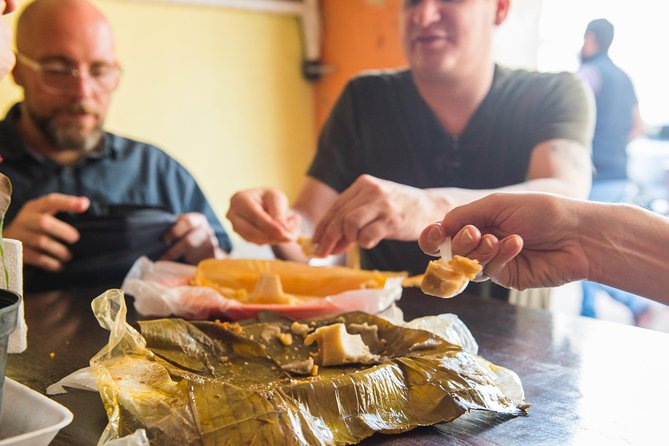
- Tamales factory stop with more than 20 varieties available daily
- A traditional market stroll that shows how a city market works day to day
- Pulque at a pulquería with no sign, drawing neighborhood regulars for over 100 years
- Buñuelos sweet finish: crunchy fried dough with sugar syrup
- Tour ends at El Estanquillo El 32, a family-run restaurant/store with craft beer, artisanal mezcal, coffee, honey, salsas, and more
More laps of the Zocalo and the old streets
- Historic Downtown Walking Tour
★ 5.0 · 1,289 reviews - Mexico City: Historic Downtown Walking Tour
★ 4.8 · 1,039 reviews - Walking Tour of the Historic Center of Mexico City
★ 5.0 · 870 reviews - Mexico City Historical Centre Food Tour with 7 Authentic Tastings
★ 5.0 · 723 reviews
Santa María la Ribera: the neighborhood food tour route you’ll actually remember
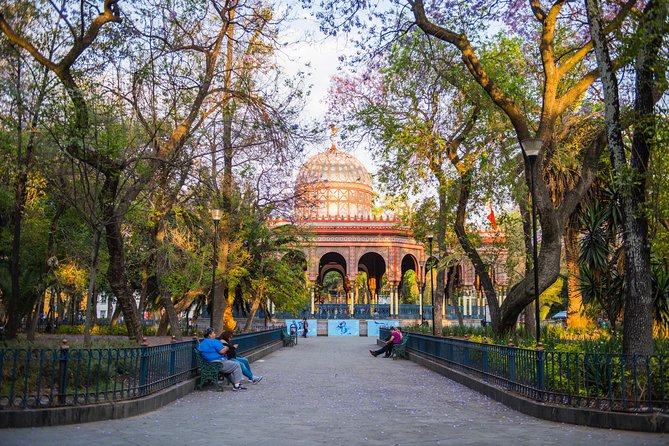
Santa María la Ribera is one of those Mexico City neighborhoods where you can still feel the turn-of-the-century character in the streets and storefronts. That matters on a food tour, because food in Mexico City isn’t just about what’s on the plate. It’s also about where the plate comes from, who serves it every day, and how the neighborhood keeps the tradition alive.
This tour is designed to show you a side of the city most visitors skip. You’ll walk through local spaces rather than only stopping at tourist-friendly food counters. The pacing also helps. It’s long enough to feel like a real meal-and-a-half experience, but not so long you’re stuck wandering when you’re hungry.
The small-group size is a big part of why this works. With up to 8 people, you get more back-and-forth with Nico Garcia and you can actually notice details in each stop, like how people order, how food is prepared, and what makes each place part of daily life.
Your guide Nico Garcia and the “eat + understand” approach
Nico Garcia’s role isn’t just to point at dishes. The tour is built around how food reflects local history, culture, and resilience—and how businesses survive and grow in the neighborhood economy.
That shows up in the stops you make. You’ll do hands-on learning (like making herb-infused Mexican salt), and you’ll also see food systems up close: a working tamales factory, a traditional market, and a cooking school tied to local job creation. Even the pulque stop has context built in, including how pulque traces back to prehispanic times.
If you’ve done food tours that feel like a checklist of bites, this one has a different vibe. It’s more like learning how the neighborhood feeds itself, one stop at a time.
Stop-by-stop: the herb salt garden moment
The first practical surprise is the garden stop. You’ll visit a neat local garden where you make herb-infused Mexican salt yourself. This is one of those small experiences that pays off later, because salt isn’t just salt in Mexican cooking. The herbs change the aroma, and it can turn a simple bite into something more flavorful and memorable.
It’s also a smart entry point for a food tour. You start with something you create, then you move into places where food is created for others—tamales, pulque, market meals. By the time you sit down to eat, you’re already switched on.
What to watch for: since this is hands-on, wear something comfortable for standing and walking. If you have a sensitive nose or get bothered by strong aromas, you might want to pace yourself—herb notes can be intense in small spaces.
- Teotihuacan, Guadalupe Shrine & Tlatelolco Day Tour with Lunch★ 5.0 · 11,603 reviews
- Xochimilco, Coyoacan and Frida Kahlo with Optional Lunch★ 4.5 · 7,320 reviews
- Balloon flight + Breakfast in cave + Pyramids + Pick up CDMX.★ 5.0 · 6,335 reviews
- Teotihuacan pyramids morning or afternoon without tourist traps★ 5.0 · 6,186 reviews
- Teotihuacan Early Access Guided Tour with optional Lunch★ 4.5 · 6,138 reviews
Working tamales factory: over 20 varieties in one stop
Next up is a working tamales factory. The key detail here is that it offers more than 20 varieties daily. That’s not a gimmick. It changes how you experience tamales, because you get options that go beyond the usual one-or-two kinds most places serve.
This is the kind of stop where you can ask the right questions and actually learn something useful: how tamales differ by filling, how daily variety works, and why the “best tamales in the city” reputation has a basis when you see the volume and consistency.
A practical note: tamales are filling. Since the tour is built to supply enough food for a large breakfast and lunch combined, you’ll want to keep your appetite steady. Try to taste widely early on, then adjust as you go so you’re not overwhelmed by the time the sweet course shows up.
A quick market stroll that shows how Mexico City eats day to day
Between bigger food moments, you’ll do a quick stroll through the local market. This part isn’t about eating one famous dish. It’s about understanding the shopping reality behind the food.
You’ll see what a traditional city market looks and feels like—how people browse, what gets prioritized, and the general rhythm of commerce. Even if you’re not buying anything, you’ll come away with context. It helps you understand why the dishes you’re tasting later make sense, both culturally and practically.
If you like photography, this is also a good moment for photos. Just keep in mind markets can get busy, so move slowly and be respectful around vendors.
Neighborhood cooking school and restaurant: food tied to livelihoods
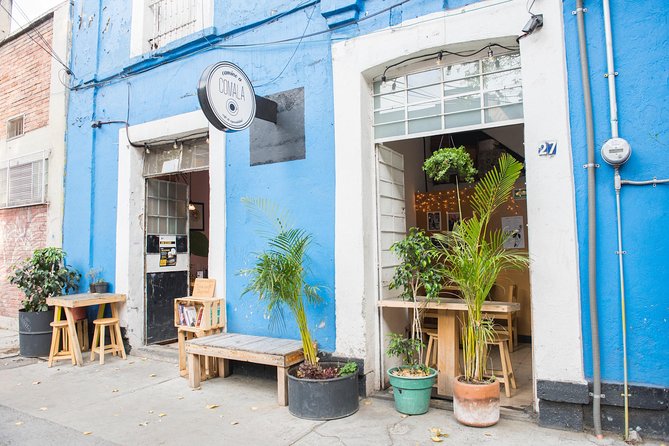
One of the more meaningful stops is a neighborhood cooking school and restaurant that helps locals who want to start their own food businesses. This is where the tour goes beyond food as a product and looks at food as a path.
You’re not just learning what to eat—you’re learning why local training and entrepreneurship matter. When a neighborhood supports people to learn cooking, run a business, and build a customer base, you keep traditions alive and create stability. It also means the tour isn’t only consuming culture. It’s pointing you toward the systems that sustain it.
It can feel different from a standard tasting room. Instead of rushing from one bite to the next, you get a moment to see how food businesses function at the community level.
The hidden pulquería with swinging saloon doors and no sign
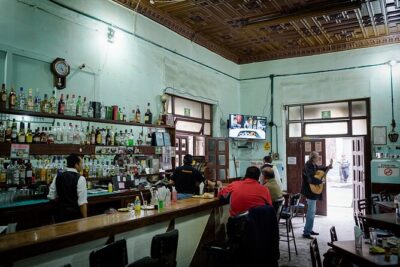
Now for the stop that tends to make people smile: a pulquería with no sign. You’ll find it with swinging saloon doors, and the place has drawn neighborhood residents for more than 100 years.
Pulque is fermented Mexican beverage with roots traced to prehispanic times. On this tour, you’ll also get a generous taste of traditional pulque, and you’ll get enough context to understand why this drink belongs in a neighborhood routine rather than a trendy detour.
If you’ve never tried pulque, this is a good first experience because it’s presented as something local and lived-in. It’s not treated like a novelty.
A practical consideration: pulque is a fermented drink, so flavor and aroma can be strong for some people. Take your time with the tasting portion, and if you’re sensitive to strong fermented notes, start slowly and pace yourself with the rest of the drinks later in the tour.
Landmarks stop: a century-old geology museum moment
You’ll also see landmarks that make Santa María la Ribera what it is, including a century-old geology museum. This isn’t a long museum visit, but it adds a layer to the walking tour that you rarely get on pure “eat-only” tours.
It helps you see the neighborhood as a place with institutions and stories, not just a backdrop for meals. If you like travel that gives you both flavor and place, this short landmark stop is a nice balance.
Buñuelos: the crunchy sweet finish
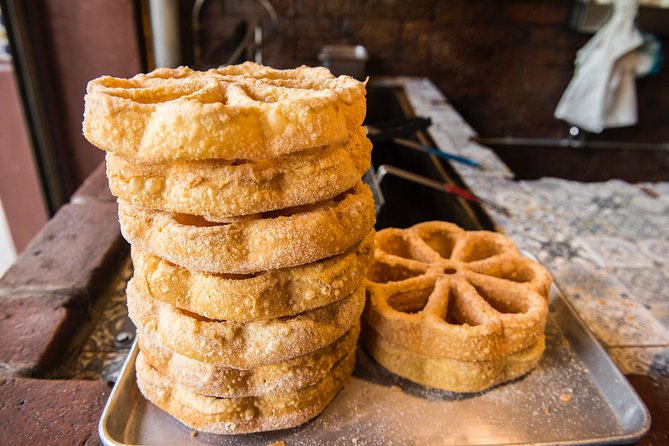
To wrap things up, you’ll try buñuelos, crunchy fried dough topped with sugar syrup. This is the kind of finish that feels right after salty and savory bites, and it gives you a classic Mexican sweetness without dragging things out.
Because the tour already includes plenty of savory food, buñuelos work best when you’re not racing. Take a moment, taste the crunch, and let the syrup settle. It’s a small ending, but it ties the whole tour together.
Ending at El Estanquillo El 32: keep the food story going
The tour ends at Restaurante El Estanquillo El 32, a family-run restaurant/store. It sells a mix of craft beer, artisanal mezcal, coffee, honey, salsas, and more.
There’s also a nice detail baked into the tour structure: you’ll already have one Mexican microbrew or mezcal included. Finishing here means you can either stick around to learn more about what you just tasted, or pick up a few items like coffee or salsa if that’s your style.
And since this is a store as well as a restaurant, it feels like the neighborhood has a continuing pulse after the walking part ends.
Price and value: what $122.46 actually buys you here
At $122.46 per person for about 3 hours 30 minutes, this isn’t a budget tasting. But it’s not just “a few bites” either.
What you get included is the big reason the price can make sense:
- As much food as you can eat, enough for a large breakfast and lunch combined
- One agua fresca and one coffee or tea at the end
- A generous taste of pulque
- One Mexican microbrew or mezcal
- A guide-led tour built around multiple local food stops, not just one main restaurant
You’re also paying for guidance and access: walking into a working tamales factory, a cooking school/restaurant, and a pulquería that doesn’t rely on tourist signage. Those experiences are hard to replicate solo without local knowledge.
One trade-off: transportation isn’t included. So your true cost depends on how you get to the meeting point at Alameda de Santa María (Calle Salvador Díaz Mirón) and how you get back from El Estanquillo El 32.
If you’re choosing between this and another food tour, the decision usually comes down to whether you want a meal-heavy, neighborhood-focused experience with cultural context. This one leans hard into that.
Group size: why max 8 changes the feel
A max of 8 travelers is a real factor. Smaller groups mean:
- you move more smoothly through stops
- your guide can answer questions without rushing
- you get better pacing around tastings
And the experience can get even smaller in practice. In at least one recent small group setup, the group size was about four people, which makes the whole thing feel more like a guided afternoon with a friend who knows the neighborhood.
If you dislike the big-bus tour feel, this is exactly the size range where that problem goes away.
Who should book this tour (and who might not)
This tour is a strong match if you:
- want traditional food across multiple local stops, not one restaurant that does everything
- like learning why dishes and drinks matter locally
- enjoy pulque and mezcal culture and want to try them in a real neighborhood setting
- prefer smaller groups and a guide-led walking format
It might not fit as well if you:
- hate weather-dependent plans and don’t want to deal with schedule changes
- need transportation included (because you’ll handle getting to and from the meeting and end points)
- want only light snacks rather than a meal-and-a-half worth of food
Also, this tour tends to book out ahead. If you’re traveling during a busy season, it’s smart to reserve early since it’s commonly booked about 28 days in advance.
Should you book The Best of Santa María de la Ribera?
Yes, if you want a food tour that feels like a neighborhood day rather than a tourist tasting route. The combination of hands-on herb salt, a working tamales factory with tons of variety, and pulque at a long-running pulquería gives you experiences you can’t easily recreate on your own.
I’d book it especially if you like your travel with context. Nico Garcia’s focus on how food connects to local culture and resilience makes the stops more than just eating. You’re leaving with a better sense of how Santa María la Ribera feeds itself.
FAQ
How long is the tour?
The tour is approximately 3 hours 30 minutes.
What is the meeting location for the tour?
The start point is at Alameda de Santa María, Calle Salvador Díaz Mirón, Sta María la Ribera, Cuauhtémoc, 06400 Ciudad de México, CDMX, Mexico.
Where does the tour end?
The tour ends at Restaurante El Estanquillo El 32, Dr. Enrique González Martínez 32, Sta María la Ribera, Cuauhtémoc, 06400 Ciudad de México, CDMX, Mexico.
What time does the tour start?
The start time is 1:00 pm.
Is the tour in English?
Yes, the tour is offered in English.
How many people are in a group?
This tour has a maximum of 8 travelers.
What’s included in the price?
Included are as much food as you can eat (enough for a large breakfast and lunch combined), one agua fresca and one coffee or tea at the end, a generous taste of traditional pulque, and one Mexican microbrew or Mezcal.
What is not included?
Transport to/from the meeting and end points, souvenirs, tip for your guide, and additional personal beverages outside what’s included are not included.
Is the tour affected by weather?
Yes. The experience requires good weather, and if it’s canceled due to poor weather, you’ll be offered a different date or a full refund.
What if I need to cancel?
You can cancel for a full refund up to 24 hours in advance of the experience start time. If you cancel less than 24 hours before, the amount paid will not be refunded.
More Tour Reviews in Mexico City



The Centro Historico on Foot

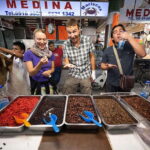
Fresh from our Mexico City notebook
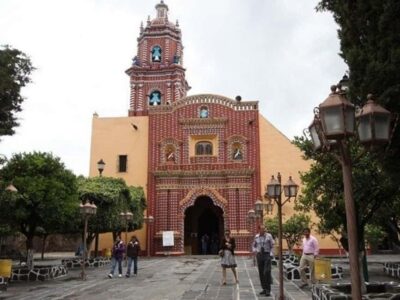
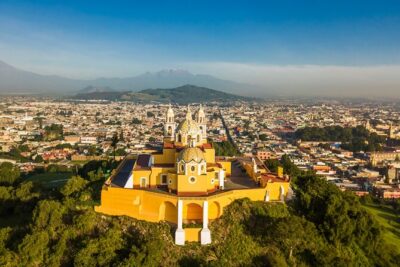
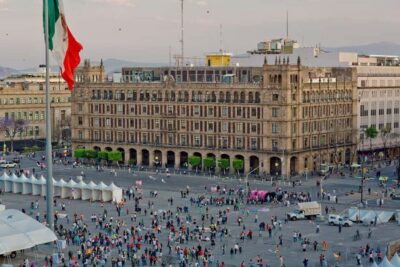
Historic Center Walking Tours, compared.
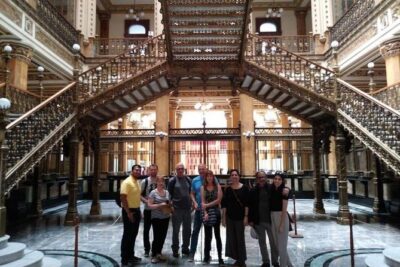 ★ 5.0Historic Downtown Walking TourFrom $261,289 reviews
 ★ 5.0Historic Center Food Tour in Mexico CityFrom $1151,263 reviews
 ★ 4.8Historic Downtown Walking TourFrom $261,039 reviews
 ★ 5.0Walking Tour of the Historic Center of Mexico City870 reviews
 ★ 5.0Mexico City Historical Centre Food Tour with 7 Authentic TastingsFrom $65723 reviews
 ★ 4.9Authentic Downtown Food TourFrom $115260 reviews
 ★ 5.0Culinary Secrets of the Centro HistóricoFrom $140257 reviews
 ★ 5.0Walking Tour – Impressive murals in Historical Center of Mexico CityFrom $51224 reviews
Browse the lists this tour appears in