
REVIEW · HISTORIC CENTER WALKING TOURS
The best and most complete PRIVATE CITY TOUR through the Historic Center
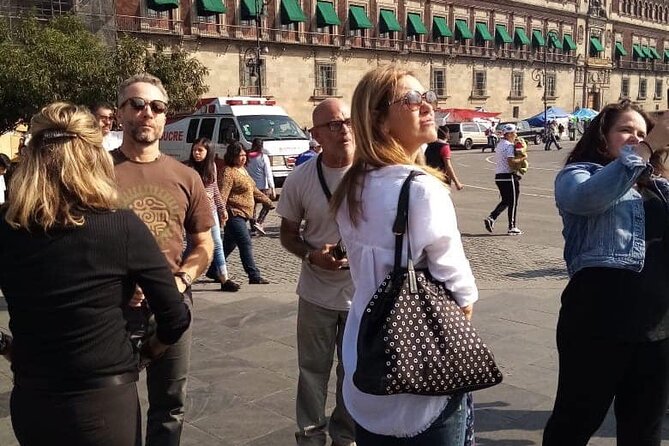
If you want Mexico City’s highlights fast, this works. In about three hours, Jorge guides you through the Historic Center with smart context, photo breaks, and a route that strings together monuments, churches, and palaces you’d otherwise bounce between. I like that it’s genuinely private (just your group), and I also like how Jorge connects architecture to politics and daily life—so the walk feels like a story, not a checklist.
One thing to consider: it’s a lot of walking and some stops are outdoors or short photo windows, so if you want long museum time, you may feel rushed.
In This Review
- The Private Walk That Starts at Revolution and Ends at the Cathedral
- Key Stops That Make This Tour Worth Your Time
- Stop-by-Stop Route: What You’ll See and Why It Matters
- Meeting at the Monument to the Revolution (and why it started as something else)
- Alameda Central Park and El Quemadero de la Inquisición
- A quick look at a beloved presidential figure
- Palacio de Bellas Artes: architecture and performance in one building
- Casa de Los Azulejos (House of Tiles): history plus a practical bathroom break
- Palacio Postal: a French-style interior you can actually enjoy
- Palacio de Minería: meteorites and the Little Horse by Manuel Tolsá
- Walking through Tacuba and Brazil: UNESCO-style architectural context
- Plaza de Santo Domingo and its Baroque church
- Zócalo overview: Government Palace plus the Plaza de la Constitución
- Centro Histórico and the Aztec Templo Mayor area
- Catedral Metropolitana de la Ciudad de México: exterior context and real interior time
- Price and Value: Why This Costs What It Costs
- How to Make This Tour Feel Easy (Not Tiring)
- Who Should Book This Private Historic Center Tour?
- Should You Book This Tour?
- FAQ
- Is this tour private or shared?
- How long is the tour?
- What language is the tour offered in?
- What does the price include?
- Are tickets included for all attractions?
- Where does the tour start and end?
- Will I have time for photos?
- Is there a place to use a restroom during the tour?
- Is the tour suitable for people with mobility problems?
- What if the weather is bad?
The Private Walk That Starts at Revolution and Ends at the Cathedral
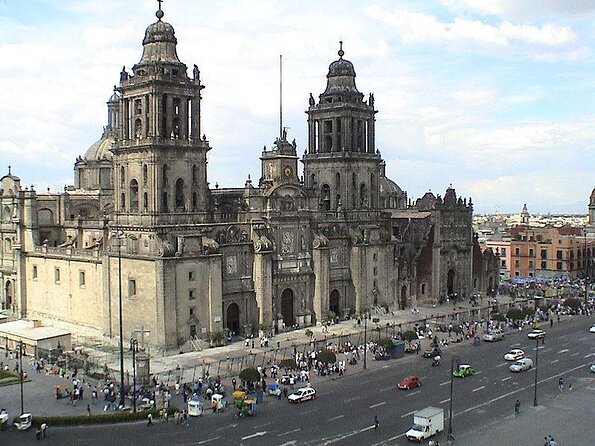
This is built for people who want a strong “first map” of Mexico City. You meet at the Monument to the Revolution (Plaza de la República, Tabacalera) and finish at the Metropolitan Cathedral on the Zócalo (Plaza de la Constitución). Because it’s a private tour in English, Jorge can pace it to your questions, and you get built-in photo time at each stop.
The tour is priced at $68.70 per person for roughly 3 hours and includes a water bottle. Most of the sights along the way are marked free, but two key stops are not included for admission: Monumento y Museo de la Revolución and Palacio de Bellas Artes. That matters, because it changes your total out-of-pocket if you want to go inside those specific places.
More laps of the Zocalo and the old streets
- Historic Downtown Walking Tour
★ 5.0 · 1,289 reviews - Mexico City: Historic Downtown Walking Tour
★ 4.8 · 1,039 reviews - Walking Tour of the Historic Center of Mexico City
★ 5.0 · 870 reviews - Mexico City Historical Centre Food Tour with 7 Authentic Tastings
★ 5.0 · 723 reviews
Key Stops That Make This Tour Worth Your Time
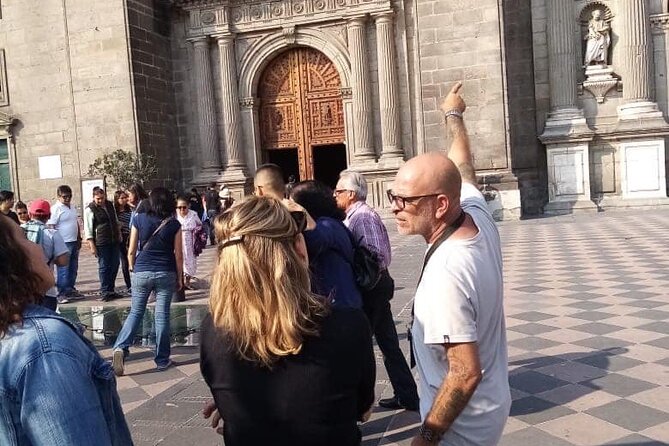
- Private group with Jorge, a former educator style of explaining that stays clear even in loud streets
- Short, purposeful photo windows so you’re not stuck standing in one spot
- El Quemadero de la Inquisición at Alameda Central, tied to customs and practices (not just a name on a plaque)
- Casa de Los Azulejos (House of Tiles) with a convenient, suggested bathroom stop
- Four meteorites at Palacio de Minería plus the famous Little Horse statue by Manuel Tolsá
- Zócalo + Templo Mayor area + Catedral Metropolitana as a strong end-of-tour arc
Stop-by-Stop Route: What You’ll See and Why It Matters
Meeting at the Monument to the Revolution (and why it started as something else)
You begin at Monumento y Museo de la Revolución, at Plaza de la República. This spot is an iconic Urban landmark, but here’s the twist Jorge explains: it was originally planned as the center of a Legislative Palace, and later it was turned into a mausoleum instead. That single change helps you read Mexico City differently—big architecture often comes from political decisions, not random design.
You get about 10 minutes here for explanations and photos. Admission isn’t included, so treat it as a landmark moment unless you’ve already planned to pay for museum access.
Why it’s a smart opener: you get oriented fast. From here, the Historic Center starts to make sense as layers of power, religion, and public space.
More private days with a local at the wheel
- Teotihuacan Private Tour from Mexico City★ 5.0 · 1,890 reviews
- Private Tour: Teotihuacan and Guadalupe Shrine★ 5.0 · 938 reviews
- Private City Tour in Frida Kahlo, Coyoacan, and Xochimilco★ 5.0 · 626 reviews
- Mexico City Custom Private Tour with a Local, Highlights & Hidden Gems★ 5.0 · 582 reviews
- Teotihuacan Private Tour with Expert Guide & Cultural Insights★ 5.0 · 577 reviews
Alameda Central Park and El Quemadero de la Inquisición
Next up is Alameda Central, one of Mexico City’s classic historic parks and a meeting point locals still use. Jorge uses this stop to ground the bigger themes: how public spaces become social stages across centuries.
You also visit El Quemadero de la Inquisición, with an explanation of the uses, customs, and methods tied to the Inquisition period. It’s not graphic in the itinerary text—expect historical interpretation and context you can carry when you’re walking around later.
Time here is about 20 minutes, and admission for this part is listed as free.
Possible drawback: it’s only one short stop. If you’re the type who wants to spend serious time on the darker parts of history, you’ll likely want to return later with more time and deeper reading.
A quick look at a beloved presidential figure
Between Alameda and the next grand art stop, there’s also a brief profile of an ex-president described as Meritorious of the Americas, tied to 19th-century marks on Mexico’s history. It’s short—about 5 minutes—but these “mini stops” help connect the monuments to the people who shaped the country.
It’s the kind of pacing that works in a 3-hour tour. You’re not stuck.
Palacio de Bellas Artes: architecture and performance in one building
Then you reach Palacio de Bellas Artes, one of Mexico City’s best-known cultural icons. Jorge points out how the architecture mixes Art Deco and Art Nouveau, giving the building a dramatic, almost theatrical presence even from the outside.
You’ll spend about 25 minutes here, with around 15 minutes focused on exterior explanation and photos. Admission is not included, so you’re mainly seeing the exterior and absorbing the building’s cultural role—think theaters, ballet, symphonies, opera, and murals.
Why it works: even without museum entry, Bellas Artes helps you understand why Mexico City invests so much public space into art and performance.
Casa de Los Azulejos (House of Tiles): history plus a practical bathroom break
After Bellas Artes, you head into the Historic Center area tied to the House of Tiles, also called La Casa de Los Azulejos, on Calle (Pasaje) Madero. Jorge explains its background and the people connected to it from the 16th century to the present day.
This stop is about 25 minutes total, with time for explanation, photos, and the suggested bathroom option. Admission is listed as free.
I really like stops like this because they solve real travel problems. In a fast walking tour, being able to use a clean indoor restroom on your schedule makes the whole day easier.
Palacio Postal: a French-style interior you can actually enjoy
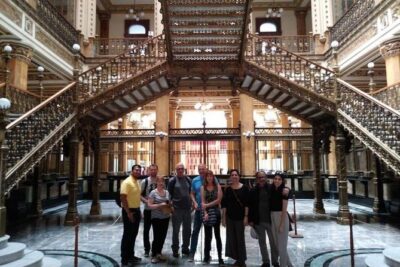
Next is Palacio Postal, the Post Office. The building is described as luxurious, with a French-style Neoclassical design from the early 20th century. Jorge takes you inside for a quick look at the fine finishes—marble, brass, and bronze—and explains what you’re seeing.
You’ll have about 15 minutes total, with time for photos. Admission is listed as free.
Why this stop is a high-payoff use of time: it’s a gorgeous interior moment in a tour that’s otherwise lots of outdoor views.
Palacio de Minería: meteorites and the Little Horse by Manuel Tolsá
Then you arrive at Palacio de Minería. The architecture is described as New Hispanic Classical and feels grand without needing a long museum commitment.
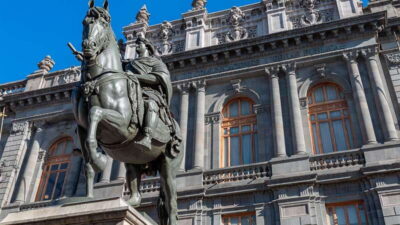
Inside, there’s an exhibition of four meteorites, with time for admiration and photos. Outside, the Plaza de Minería sits in front of the palace, including the statue of the Little Horse, created by the famed architect and sculptor Manuel Tolsá.
This stop is about 10 minutes and is listed as free.
Practical note: meteorites are the kind of thing people expect to be “one more thing.” Here, they’re a concrete, photo-friendly detail that changes the vibe of the tour from monuments-and-churches to something slightly scientific.
Walking through Tacuba and Brazil: UNESCO-style architectural context
Now the tour shifts into streets—Tacuba and Brazil—and Jorge uses the walking segments to talk architecture. You’ll get references to the styles of mansions, palaces, and churches from the 16th to the 19th centuries, and how those layers helped earn UNESCO designation for the Historic Center as Cultural Heritage.
Time here is about 25 minutes, and admission is listed as free.
What you get: instead of just naming buildings, you learn how to read street scale—how walls, facades, and church massing connect to the centuries around them.
Plaza de Santo Domingo and its Baroque church
After the street walk, you stop at Plaza de Santo Domingo. The centerpiece is the Baroque Church of Santo Domingo. Jorge explains what to notice, and you get free time for photos.
Total time is about 25 minutes, with 15 minutes marked as free. Admission is listed as free.
Why this feels different: Baroque churches give you details you can spot even when you’re just outside—layers, curves, and visual drama.
Zócalo overview: Government Palace plus the Plaza de la Constitución
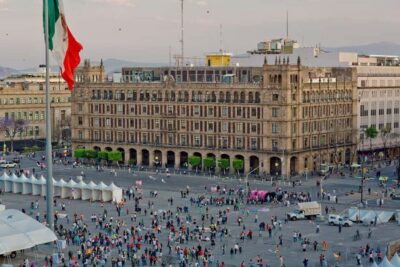
Next is Zócalo, Mexico City’s famous Plaza de la Constitución, with explanations of the space and the Government Palace.
This part is about 20 minutes and is listed as free.
Why the Zócalo stop matters: it ties the entire walk together. You see the civic center, then you understand why earlier stops weren’t random—they were part of the same power geography.
Centro Histórico and the Aztec Templo Mayor area
From the Zócalo area, the tour goes into a panoramic look and explanations around the Aztec Templo Mayor archaeological zone.
Time is about 20 minutes, and admission is listed as free.
If you only have a short time window in Mexico City, this is one of the best ways to ground the story in pre-Hispanic roots without turning your afternoon into a museum marathon.
Catedral Metropolitana de la Ciudad de México: exterior context and real interior time
The tour ends at the Metropolitan Cathedral of Mexico City. Jorge provides an exterior explanation with history and anecdotes, then you get free time to enjoy the interior.
The interior time is about 20 minutes, and admission is listed as free.
My tip: treat the cathedral interior like a slow pause. You won’t get museum-level time, but you will get enough for the scale, the details, and a mental reset before you continue on your own.
Price and Value: Why This Costs What It Costs
At $68.70 per person, you’re paying for a private, guided route through a heavy-hitter cluster of Historic Center sites in roughly 3 hours. That price makes more sense when you notice the admission pattern:
- Admission is not included for Monumento y Museo de la Revolución and Palacio de Bellas Artes.
- Many other stops are listed as free, including major architectural moments like Alameda Central, Casa de Los Azulejos, Palacio Postal, Palacio de Minería, and the Zócalo/cathedral segments.
So the money mostly buys you Jorge’s time and explanation style—his ability to connect buildings to Mexico City’s political and cultural timeline.
One more value point: Jorge provides a water bottle, and the itinerary includes a practical bathroom-friendly stop at Casa de Los Azulejos. Small things like that can quietly make a tour feel smoother than a longer, admission-heavy day.
How to Make This Tour Feel Easy (Not Tiring)
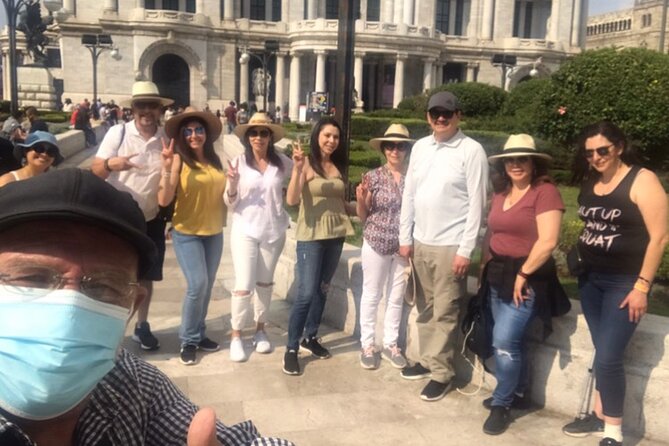
This is a walking-focused private tour. That’s not a complaint—it’s the correct format for how the Historic Center works.
Here’s what helps:
- Wear comfortable shoes. The tour hits many locations with short breaks.
- Bring sun protection (a hat and sunscreen help, especially on bright mornings that warm quickly).
- Plan for heat changes if you’re out early, since you might start cooler and end warmer.
- If you care about photos, remember the tour schedules real photo time at each stop, but you still need to move when Jorge signals.
Also, I’d keep an eye on street conditions. One guide-led experience I saw described flexibility when parts of the route were affected by barricades from protests. Historic Center days can shift, and a good guide adapts.
Who Should Book This Private Historic Center Tour?
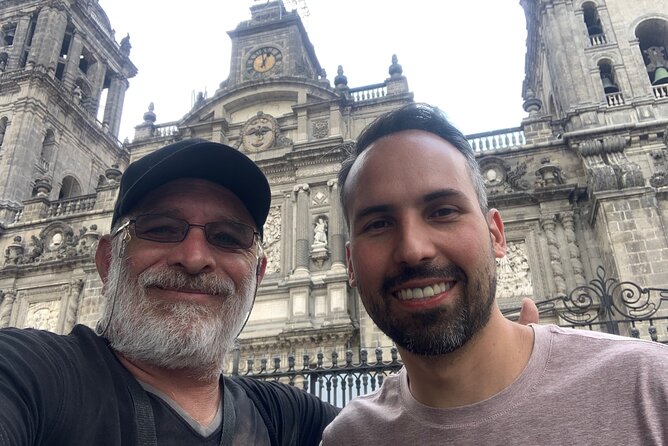
I’d book this if:
- You want a tight introduction to Mexico City’s core landmarks.
- You like history that links to architecture, politics, and public space.
- You have limited time and want a guided way to decide what to revisit later.
I’d think twice if:
- You need step-by-step mobility support. The tour isn’t recommended for people with mobility problems.
- You want long museum entry time. Two major indoor admission options are marked not included, and the tour is designed for short, high-impact stops.
It fits couples, solos, and small groups well because it’s private and you can ask questions in real time. It’s also a good choice if you like early-day orientation before you go back on your own later.
Should You Book This Tour?
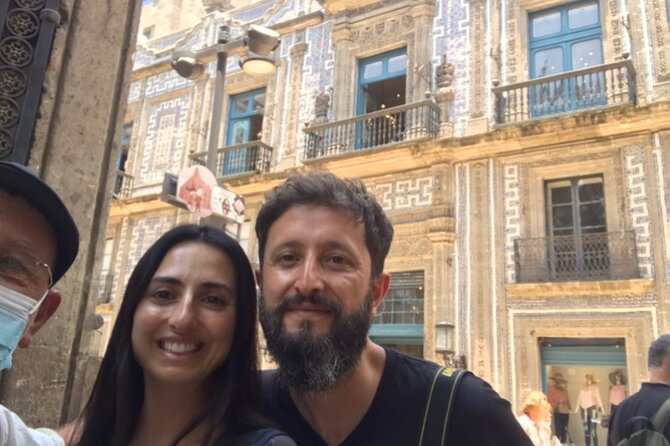
Yes—if your goal is high signal sightseeing in about three hours. This tour gives you the Historic Center’s biggest names plus smaller context that makes the route feel understandable, not random.
Book it especially if you:
- want a private guide instead of a large group,
- enjoy photo stops but still want explanations,
- are fine with short windows and plan to return later for deeper museum time.
Skip or adjust expectations if you want a slower pace, long indoor time at every major landmark, or you can’t handle moderate walking.
If you’re doing Mexico City for the first time, this is a strong way to get your bearings fast and leave with a list of exactly where you’ll want to spend more time next.
FAQ
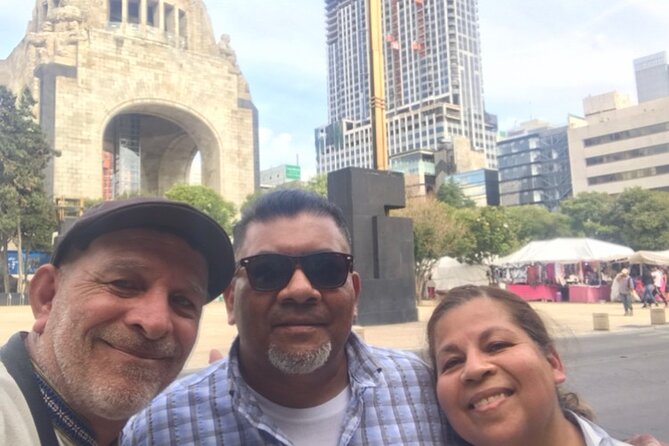
Is this tour private or shared?
This is a private tour/activity, so only your group will participate.
How long is the tour?
It lasts about 3 hours.
What language is the tour offered in?
It’s offered in English.
What does the price include?
The tour includes a water bottle.
Are tickets included for all attractions?
No. Admission is not included for the Monument to the Revolution (Monumento y Museo de la Revolucion) and for Palacio de Bellas Artes. Other listed stops are free.
Where does the tour start and end?
It starts at the Monument to the Revolution (Plaza de la República s/n, Tabacalera) and ends at the Mexico City Metropolitan Cathedral (Plaza de la Constitución S/N, Centro Histórico).
Will I have time for photos?
Yes. Each stop includes explanation time and time for photos, with specific photo time mentioned throughout the itinerary.
Is there a place to use a restroom during the tour?
Yes. Casa de Los Azulejos is mentioned as a suggested, clean place to use bathrooms during the stop.
Is the tour suitable for people with mobility problems?
It’s not recommended for people with mobility problems, though it lists moderate physical fitness as the general requirement.
What if the weather is bad?
The experience requires good weather. If it’s canceled due to poor weather, you’ll be offered a different date or a full refund.
More Tour Reviews in Mexico City



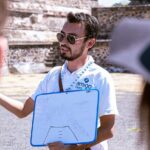

Just Your Group: Private CDMX Days





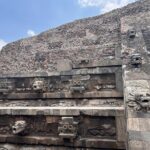
The Centro Historico on Foot



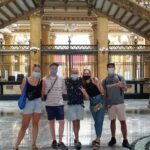


Fresh from our Mexico City notebook

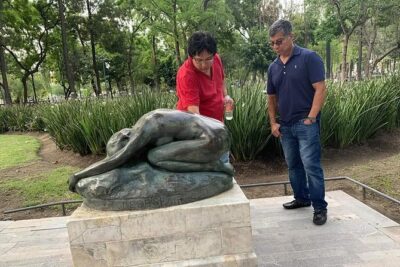

Historic Center Walking Tours, compared.
 ★ 5.0Historic Downtown Walking TourFrom $261,289 reviews
 ★ 5.0Historic Center Food Tour in Mexico CityFrom $1151,263 reviews
 ★ 4.8Historic Downtown Walking TourFrom $261,039 reviews
 ★ 5.0Walking Tour of the Historic Center of Mexico City870 reviews
 ★ 5.0Mexico City Historical Centre Food Tour with 7 Authentic TastingsFrom $65723 reviews
 ★ 4.9Authentic Downtown Food TourFrom $115260 reviews
 ★ 5.0Culinary Secrets of the Centro HistóricoFrom $140257 reviews
 ★ 5.0Walking Tour – Impressive murals in Historical Center of Mexico CityFrom $51224 reviews
Browse the lists this tour appears in