
One sentence hooked me: this museum feels big until you have a plan. This private tour with an archaeologist turns the National Anthropology Museum into a guided story of Mesoamerica, with context that goes way past what you’ll get from labels alone. I also like that David Huesca, known as Pakalito, frames the visit as more than just Maya and Aztecs—he shows how many cultures fit into one long timeline.
The second thing I like is the way the tour stays clear and fun while still being serious. David uses digital support and has shared images and activities on his iPad to help you understand politics, religion, symbolism, and architecture without getting lost in the sea of artifacts.
One possible drawback: the museum is huge, and 3 hours means you’ll focus on key galleries rather than trying to see everything. If you’re the type who wants to wander every hall on your own, this will feel like a guided path, not a free-for-all.
In This Review
- Key highlights to know before you go
- The National Museum of Anthropology, without the overwhelm
- Your archaeologist guide: David Huesca, aka Pakalito
- Stop 1: The museum’s main halls, guided through Mesoamerica’s timeline
- The iPad-based explanations: how symbols and timelines get clear
- Finding the right pace in a 3-hour museum visit
- English tour benefits in a museum full of details
- Price and value: $98 for a ticketed private archaeology tour
- Where to meet and what to expect around Chapultepec
- Who should book this tour—and who might not
- Should you book? My practical take
- FAQ
- FAQ
- How long is the National Anthropology Museum private tour?
- What does the $98 price include?
- Is this tour private or shared with other groups?
- What language is the tour offered in?
- Where do we meet for the tour?
- What are the operating days and hours?
- Do I need special physical abilities?
- Are service animals allowed?
- When will I receive confirmation, and what’s the cancellation policy?
Key highlights to know before you go
- Meet David Huesca (Pakalito), a young archaeologist who guides in English and connects artifacts to real cultural questions
- Digital support during the walk so symbols, timelines, and themes actually make sense
- Main exhibition halls, not random wandering with a clear route through the most important masterpieces
- Mesoamerica beyond the usual suspects—you’ll hear how many regions and cultures connect over time
- Private format for your group only, with the pace adjusted to your needs
- A strong family fit for mixed ages, with explanations that work for kids and adults
More rooms to lose an afternoon in
- Chapultepec Castle & Anthropology Museum Tour
★ 4.5 · 1,348 reviews - Anthropology Museum Guided Tour
★ 4.5 · 1,035 reviews - Mexico City: Anthropology Museum Guided Visit
★ 4.4 · 708 reviews - Mexico City: Chapultepec Castle and Anthropology Museum Tour
★ 4.5 · 637 reviews
The National Museum of Anthropology, without the overwhelm
The Museo Nacional de Antropología (in Chapultepec, near Polanco) can be intimidating in the best way. Even if you’re willing to read every sign, the sheer size of the collection can make everything blur together fast.
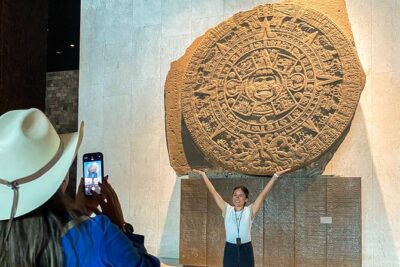
That’s exactly where this kind of private visit pays off. The tour is built around taking you to the main exhibition halls and guiding you through what the objects likely meant in their original world—religion, power, economics, building styles, and daily traditions. Instead of scanning placards hoping for a connection, you get a story line that helps you place what you’re seeing into the bigger Mesoamerican picture.
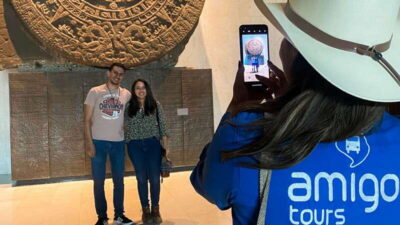
In practice, this means you leave the museum with more than photos. You start recognizing themes—patterns in iconography, shared ideas across regions, and why certain styles show up when they do. One repeat pattern in the experience is how much faster things click once the guide explains the “why” behind the “what.”
Your archaeologist guide: David Huesca, aka Pakalito
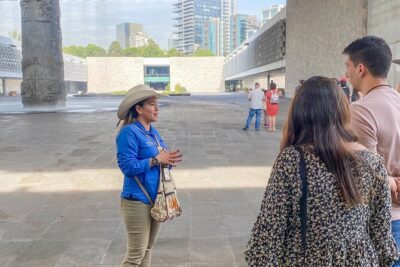
The centerpiece here is the guide. David Huesca, who goes by Pakalito, leads this private tour with an archaeologist’s framing and a storyteller’s pacing. You’re not just hearing facts; you’re getting interpretations—how different cultures organized society, how they expressed belief, and how architecture and art reflected those systems.
What makes this stand out is his ability to adjust the tone. The tour is described as clear for novices while still satisfying history buffs. If you have kids in your group, he’s also presented as interactive and patient, with explanations that keep them engaged rather than turning the visit into a lecture marathon.
Also, you’re told you’ll get detailed background on Mesoamerica’s cultures and regions, not only the most famous civilizations. That matters in this museum because it can be easy to default to the loudest names you’ve heard before. Pakalito’s approach pushes you to notice the full range of peoples and how cultures change over time.
Stop 1: The museum’s main halls, guided through Mesoamerica’s timeline
This tour focuses on one big stop: the Museo Nacional de Antropología. It’s about seeing the museum in a way that supports understanding, not just collecting sights. You’ll move through the main exhibition halls with an organized plan that connects cultures, eras, and ideas.
The core promise is “pre-Hispanic history beyond just the Maya and Aztecs.” That doesn’t mean the famous civilizations disappear. It means you’ll get the wider context that usually gets squeezed out when people try to do the museum on their own.
Here’s what that looks like inside:
- You’ll get cultural context before you judge an object. Rather than treating a carving or a vessel as a standalone art piece, you’ll hear how it may connect to belief systems, political power, or social roles.
- You’ll learn the big themes across regions. The goal is to help you understand the variety of cultures and how processes unfolded over time—not just isolated highlights.
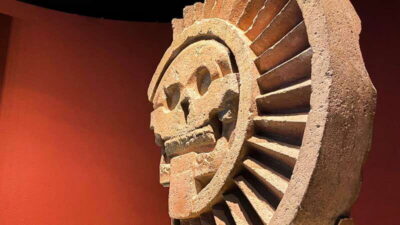
- You’ll get help reading symbols. One of the most praised parts is the guide’s explanations of symbolism, which is hard to do well with only signage.
The museum itself can feel like sensory overload. A private guide gives you an anchor: where to look, what to notice, and how to interpret what you’re seeing without slowing everything down.
More galleries and rooftops worth the ticket
- CDMX: Xochimilco, Coyoacan, Frida Kahlo Museum & Murals Tour★ 4.4 · 3,025 reviews
- Frida Kahlo VIP [Museum Tickets Included] Bike, Markets & Churros★ 5.0 · 1,072 reviews
- Frida Kahlo VIP [Museum Tickets Included] Walk, Markets & Churros★ 5.0 · 982 reviews
- EXCLUSIVE TOUR Frida Kahlo Museum – SMALL GROUPS★ 5.0 · 901 reviews
- Mexico City: Frida Kahlo Museum Entry Ticket w/Digital Guide★ 4.5 · 683 reviews
The iPad-based explanations: how symbols and timelines get clear
One of the most practical advantages of booking a guided archaeology visit is that many museum details only become obvious after someone explains the patterns.
David uses digital support during the tour. In the feedback you’ll see repeated mentions of images and activities delivered via his iPad. That’s not just “bonus tech.” It’s a way to connect what you’re seeing in the gallery to visuals that show relationships—like how iconography works, how timelines link to art styles, or how a theme shifts from one culture to another.
If you’ve ever walked around a museum with great curiosity but felt like you were constantly one sentence away from understanding, this is the solution. The guide helps you turn museum objects into meaningful ideas. You can stand in front of an artifact and know what to look for next.
And because it’s private, you can ask questions when you actually have them, not after you’ve left the room.
Finding the right pace in a 3-hour museum visit
Three hours sounds short until you realize how fast a museum can swallow your energy. This is one of the reasons a route matters.
The best version of this tour is balanced: enough time to focus on key galleries, plus pauses to keep you from feeling rushed. In the feedback, the guide is described as giving breaks when needed and keeping the experience moving without dragging.
That pace also helps you see the museum efficiently. The museum’s collection is vast, and without guidance it’s easy to spend a lot of time in the wrong places for your interests. With Pakalito, you’re guided through what he considers the museum’s most important areas, with the explanations designed to help you remember what matters.
A good practical tip: if you have strong interests—say Maya-era art, Aztec/Mexica symbolism, or architecture—message the guide beforehand so he can tailor your emphasis. The tour is already designed for multiple levels, but a heads-up can make it even more personally relevant.
English tour benefits in a museum full of details
The tour is offered in English, which is a real advantage at the Museo Nacional de Antropología. The museum has a lot going on, and visitors often find that the text and explanations can be hard to follow quickly if you’re relying only on what’s written.
With a guided format, you don’t have to choose between reading everything and actually looking at the objects. You can focus on the artifacts while the guide translates the bigger meaning out loud.
And because you’re private, the guide can match your pace. If you want the essentials first and deeper explanation after, that’s the kind of interaction this format supports.
Price and value: $98 for a ticketed private archaeology tour
At $98 per person for about 3 hours, the price is easiest to evaluate when you look at what’s included.
You get:
- a professional archaeologist tour guide (David Huesca)
- a private tour (only your group)
- the entrance fee
- digital support material
For a museum visit, the value is less about “access” and more about “meaning per minute.” If you’re paying for a ticket anyway, the key question becomes: will you get more understanding from a guided route than you would on your own?
Given how often this museum can feel overwhelming, and how much more you can learn when someone explains symbolism and context, many visitors find this tour is a high-impact spend—especially if it’s your first time in the museum or you want to return home with a clearer mental map.
If you love museums but hate feeling lost, this is the kind of tour that turns your ticket into real understanding.
Where to meet and what to expect around Chapultepec
You’ll meet at the Museo Nacional de Antropología in Chapultepec (Av. P.º de la Reforma s/n, Polanco, Bosque de Chapultepec I Secc, Miguel Hidalgo, 11560 Ciudad de México, CDMX). The tour ends back at the same meeting point.
The activity runs Tuesday through Saturday, 9:00 AM to 3:00 PM, and it requires good weather. Since the meeting area is in a well-known part of Mexico City, it’s also described as near public transportation.
One small practical note: the tour asks for a moderate physical fitness level. That doesn’t mean it’s athletic, but plan on walking through galleries and moving at a museum pace.
Also, service animals are allowed, which can be an important factor for planning.
Who should book this tour—and who might not
This tour is a strong match if:
- you want to understand Mesoamerica in context, not just see famous objects
- you prefer a guided route through a huge museum
- you’re traveling with mixed ages and want explanations that can handle both kids and adults
- you care about symbolism, timelines, and why things look the way they do
It may be less ideal if:
- you want to spend your whole visit wandering without structure
- you’re trying to check off every single gallery in one go
- you prefer audio-guide style learning over a live back-and-forth conversation
If you’re on the fence, think about your goal. Are you trying to leave with memories only, or do you want understanding that changes how you look at the artifacts?
Should you book? My practical take
If you’re going to the Museo Nacional de Antropología and you’d like your time there to feel organized, personal, and meaningful, this is a very solid choice. The standout strength is the guide’s ability to connect artifacts to cultural ideas—and to do it in a way that stays accessible in English.
My advice: book this early in your Mexico City trip if you can, because a guided “big picture” tour helps you make sense of what you’ll see later. And if your interests are specific, message David ahead so your route can lean a little more toward what you want.
One more real-world check: it depends on weather since the experience requires good conditions. If you plan around a flexible schedule and choose a time window that works for you, you’ll likely get the most out of the 3 hours.
FAQ
FAQ
How long is the National Anthropology Museum private tour?
It’s approximately 3 hours.
What does the $98 price include?
The price includes the archaeologist/professional guide, a private tour, the entrance fee, and digital support material.
Is this tour private or shared with other groups?
It’s a private tour, so only your group participates.
What language is the tour offered in?
The tour is offered in English.
Where do we meet for the tour?
You meet at Museo Nacional de Antropología, Av. P.º de la Reforma s/n, Polanco, Bosque de Chapultepec I Secc, Miguel Hidalgo, 11560 Ciudad de México, CDMX, Mexico. The tour ends back at the meeting point.
What are the operating days and hours?
It operates Tuesday through Saturday from 9:00 AM to 3:00 PM.
Do I need special physical abilities?
The tour is listed as needing a moderate physical fitness level.
Are service animals allowed?
Yes, service animals are allowed.
When will I receive confirmation, and what’s the cancellation policy?
Confirmation is received within 48 hours of booking, subject to availability. You can cancel for a full refund up to 24 hours in advance of the experience start time, and the experience requires good weather.
Just Your Group: Private CDMX Days





Behind the Ticket: More CDMX Museums





More Rooms at the Anthropology Museum
Fresh from our Mexico City notebook




Anthropology Museum Tours, compared.
 ★ 4.5Chapultepec Castle & Anthropology Museum TourFrom $791,348 reviews
 ★ 4.5Anthropology Museum Guided TourFrom $391,035 reviews
 ★ 4.4Anthropology Museum Guided VisitFrom $67708 reviews
 ★ 4.5Chapultepec Castle and Anthropology Museum TourFrom $47637 reviews
 ★ 4.4Anthropology Museum Skip-the-Line TicketFrom $15502 reviews
 ★ 5.0Anthropology Museum Private Experience Walking TourFrom $78355 reviews
 ★ 5.05 Hour Tour through Chapultepec, Anthropology Museum and CastleFrom $61239 reviews
 ★ 5.0PRIVATE Tour in Chapultepec Castle and Museum of AnthropologyFrom $113144 reviews
Browse the lists this tour appears in