
REVIEW · EVENING EXPERIENCES
Night Tour of Mexico City Panoramic Ride on a Double-Decker Bus
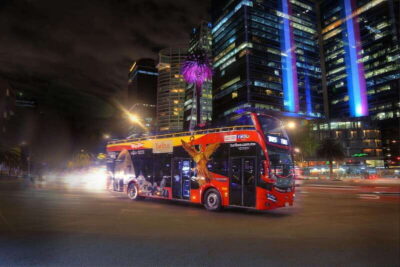
The lights on Reforma are a fast education. This short Mexico City night bus tour strings together key sights in one loop, with onboard audio delivered through headphones. It starts right in the Historic Center area and keeps things simple when you only have one night to get your bearings.
I especially like the value: it is just $10 for a bundled city overview. I also like that you get a multi-language audio guide setup (English, Spanish, French), so you can follow along without needing to read every sign outside.
The big thing to consider is sound reliability. Multiple riders report that the Spanish narration from the bus speakers can overpower English audio through earphones, and headphone outlets can fail, so it helps to arrive ready to troubleshoot politely.
In This Review
- Key things you’ll notice on this Turibus night ride
- Mexico City at Night from a Double-Decker: A Quick Way to Get Oriented
- The Meeting Point and Start Time: Go Early, Especially on Busy Nights
- Zócalo After Dark: The Historic Center’s Big Mood
- Paseo de la Reforma at Night: Where the City Shows Its Style
- The Three-Tower Modern Complex: A Different Side of CDMX
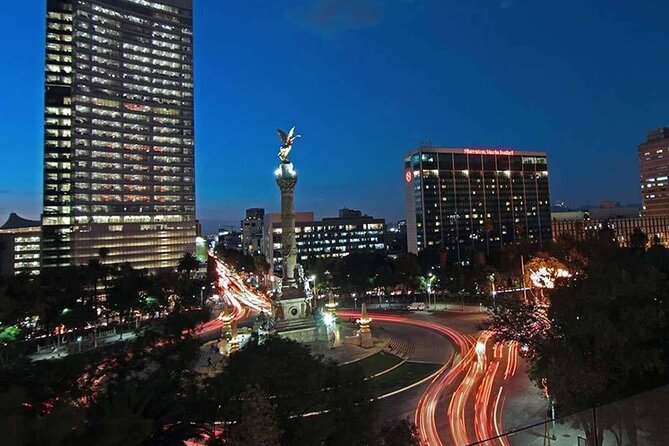
- Independence Monument (Inaugurated in 1910): The Icon That Glows
- The Benito Juárez Monument: 12 Doric Columns in Night Light
- Audio and Headphones: The Difference Between a Great Ride and a Frustrating One
- Timing, Traffic, and Why the 45 Minutes Can Feel Longer
- What You’re Paying for: Value at $10 and the Limits of a Bus Loop
- Who This Turibus Night Tour Is Best For
- Should You Book This Night Tour?
- FAQ
- How long is the Night Tour of Mexico City?
- What time does the tour start?
- Where is the meeting point?
- Does this tour include round-trip transportation from my hotel?
- Is the tour offered in English?
- Are earphones included?
- Is this a hop-on hop-off tour?
- How many people are on the tour?
- Is free cancellation available?
Key things you’ll notice on this Turibus night ride
- Double-decker views that make photos easier because the bus moves slowly
- English audio is available, but you’ll rely on working headphones, not just loudspeakers
- Historic Center to Reforma in one go, so you cover more ground in less time
- A short loop that can feel tight if traffic slows everything down
- Open-air comfort matters since it can get chilly, especially after rain
- Group size stays small-ish with a maximum of 30 travelers
Wider loops around Mexico City
- Mexico City: Teotihuacan, Tlatelolco & Guadalupe Shrine Tour
★ 4.6 · 3,773 reviews - Teotihuacan Hot Air Balloon Flight from Mexico City / Volare
★ 5.0 · 3,262 reviews - Teotihuacan Private Tour from Mexico City
★ 5.0 · 1,890 reviews - Historic Center Food Tour in Mexico City
★ 5.0 · 1,263 reviews
Mexico City at Night from a Double-Decker: A Quick Way to Get Oriented
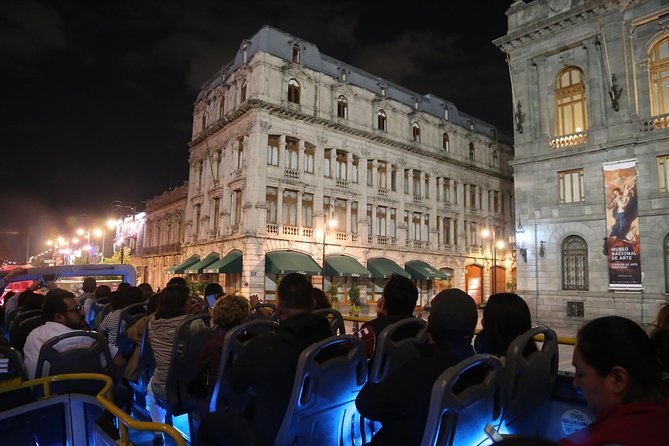
A night ride is one of the fastest ways to understand Mexico City’s “shape.” From the upper level of the bus, the city stretches out in bright bands: Historic Center glow, major avenues lighting up, and big monuments marking major moments.
This is also a practical tour when you do not want to coordinate trains, taxis, and walking routes after dark. The itinerary is built around major landmarks that most first-time visitors want, and the 45-minute timing keeps it from becoming a whole evening project.
I like how the tour is structured like a checklist you can actually finish. You do not need to guess where to go first, and the audio helps you connect what you are seeing to why it matters.
The Meeting Point and Start Time: Go Early, Especially on Busy Nights
The tour meets at Turibus Tours in the Centro Histórico area (C. de Monte de Piedad, 06000). It starts at 7:30 pm and ends back at the meeting point, so you get a clear “in, ride, out” rhythm.
Two practical tips. First, try to arrive with a few extra minutes. Night traffic can be unpredictable in Mexico City, and it is easier to settle your headphones and find your level before boarding.
Second, know what this is not. This ride is not hop-on hop-off, so you cannot treat it like a flexible sightseeing hop. Plan your time as a single loop.
Zócalo After Dark: The Historic Center’s Big Mood
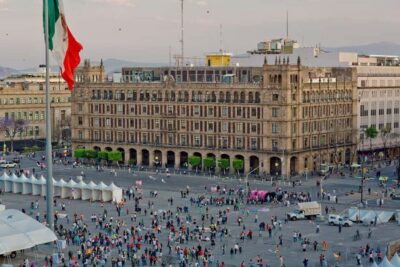
The tour begins at the heart of the Historic Center: Zócalo (also called Plaza de la Constitución). At night, it is not just a large open square; it is a political and cultural center wrapped around major civic landmarks.
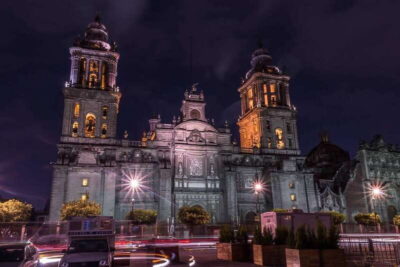
You will see it with a view that includes the Metropolitan Cathedral nearby and the grand civic buildings that define the square’s edges. The description also highlights a huge Mexican flag in the middle of the plaza, which adds a clear sense of national pride when the lights are on.
What I like here is how the Zócalo works as a visual anchor. Even if you only catch a portion of it from the bus window, you understand instantly why this area is considered the center of gravity for the city.
One drawback to plan around: the bus route can be affected by crowds and street activity around the Historic Center. If you get caught behind slower traffic, you may spend more time waiting at intersections than staring at specific details.
Worth a look right beside this Mexico City pick:
- Lucha Libre Tickets & Tacos & Beer & Mezcal – BEST NIGHT EVER!★ 5.0 · 1,077 reviews
- Mexico City: Double Decker Bus Night Tour★ 3.8 · 373 reviews
- A Night of Tacos and Mezcal in Mexico City★ 5.0 · 262 reviews
- Mexico City: Night City Tour in a Double Decker Bus★ 4.2 · 235 reviews
- Narvarte At Night: Tacos, Chelas & Mezcal★ 5.0 · 216 reviews
Paseo de la Reforma at Night: Where the City Shows Its Style
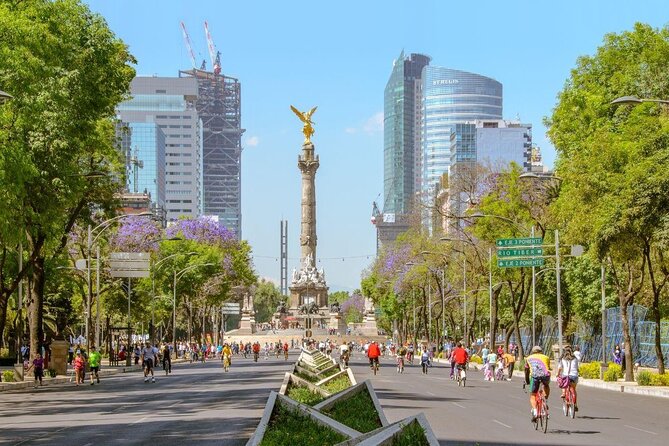
Next comes Paseo de la Reforma, Mexico City’s most important and emblematic avenue. This is one of those streets where the architecture, street life, and civic history all collide.
From the bus, Reforma reads like a timeline. The tour’s audio frames it as a place where historic moments have happened, from civic events to marches and protests. At night, those layers matter because you see both the grand avenue and the people moving along it.
This stop is the core payoff for many people because Reforma is where the city’s lights feel most organized. You get a clean path of illumination with landmarks visible at intervals, instead of a stop-start walking route.
Practical note: you’ll likely hear the audio best when the bus is moving smoothly. If it slows down in traffic, you still get the sights, but the pacing feels different.
The Three-Tower Modern Complex: A Different Side of CDMX
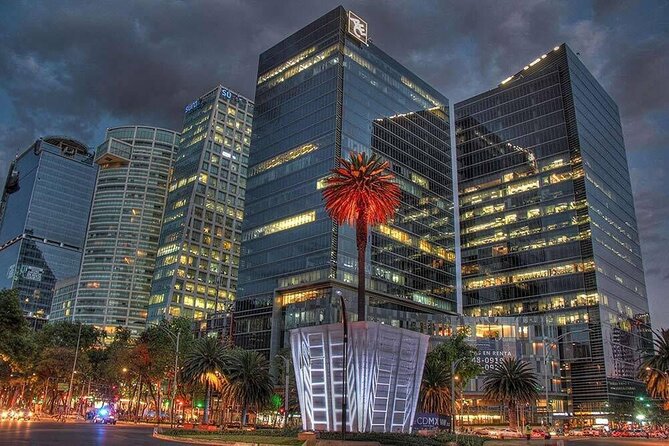
You will also pass the modern skyline area defined by a three-tower complex. The tour description notes that these towers changed the city’s view and are recognized for a modern architectural style.
What I find useful about including this is balance. After the older civic center and monumental spaces, it is helpful to see what Mexico City looks like when it turns toward contemporary design, offices, and entertainment.
The description also points out that the complex has a shopping center and movie theaters. Even if you do not stop in, it signals that this part of the city is not only for looking—it is for doing.
If you are hoping for close-up views from the bus, keep expectations realistic. You are riding past, not parking. Still, the skyline perspective can help you understand where modern CDMX sits in relation to the Historic Center.
Independence Monument (Inaugurated in 1910): The Icon That Glows
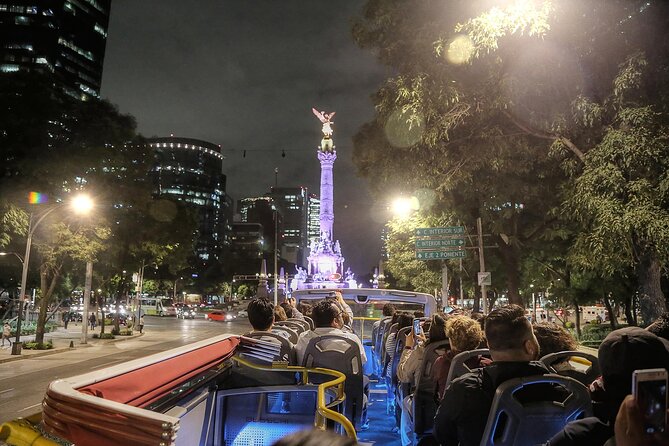
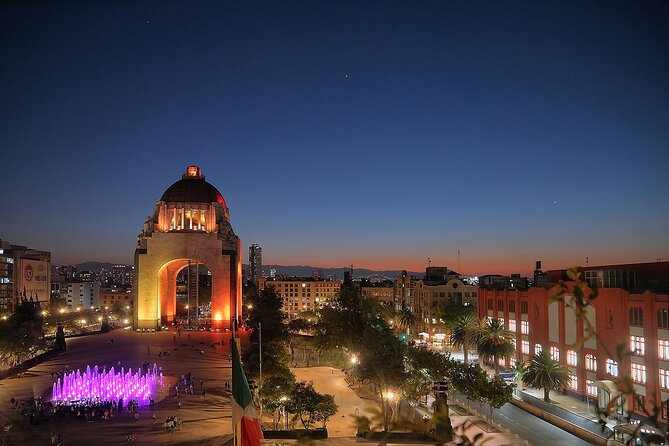
The tour includes a major independence-era symbol: the monument inaugurated in 1910 to commemorate the 100th anniversary of Mexico’s Independence. The description explains it as a mausoleum for the heroes who lost their lives during the war.
This is one of those places that makes night rides feel worth it. Daytime sightseeing is great, but monuments like this often look more dramatic when illuminated, and the audio frames it as a cultural icon and a symbol of freedom.
I also like that the tour gives you the context for what you are seeing. Instead of a random stop, it becomes a story point: independence, sacrifice, and national identity, all shown in a single view.
Just note: time spent in traffic is not fixed. If your bus gets stuck, you might not linger on the monument long enough for perfect photos, especially if you want low-glare angles.
The Benito Juárez Monument: 12 Doric Columns in Night Light
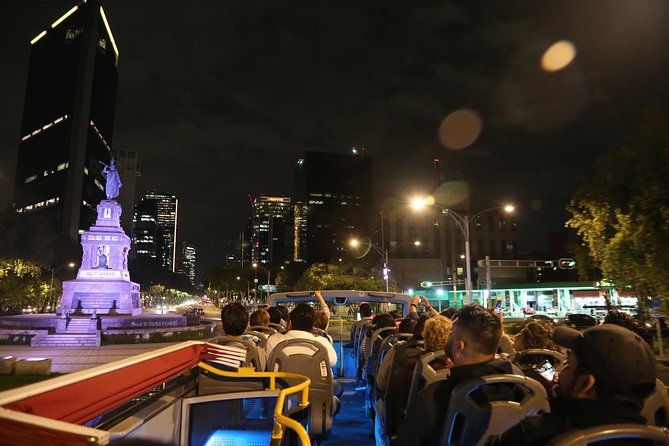
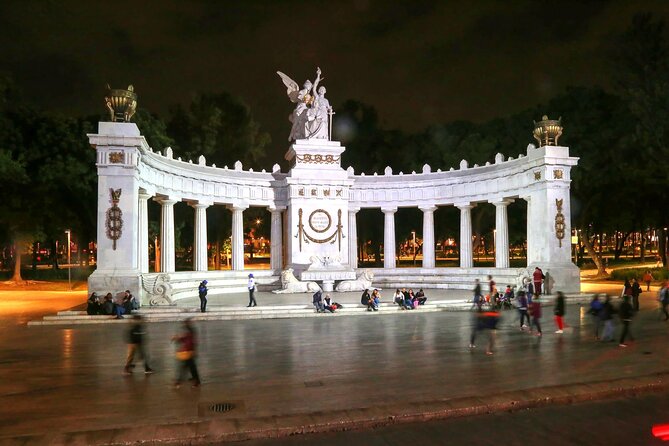
Another highlight is the monument honoring Benito Juárez, presented in the neoclassical style with 12 Doric columns made of marble. The tour description specifically calls out how stunning it looks when illuminated at night.
This is a classic “light hits architecture” moment. Juárez is a major figure in Mexico’s political history, and seeing his monument lit up helps you connect the name to a physical landmark instead of just a fact from a textbook.
From the bus, you may not get a street-level walk-up experience, but the structure is built for viewing. The columns and symmetry tend to photograph well from an angle, especially from the upper deck.
If you have a phone camera, aim for steady shots when the bus slows at traffic lights. That is often when you get the cleanest view.
Audio and Headphones: The Difference Between a Great Ride and a Frustrating One
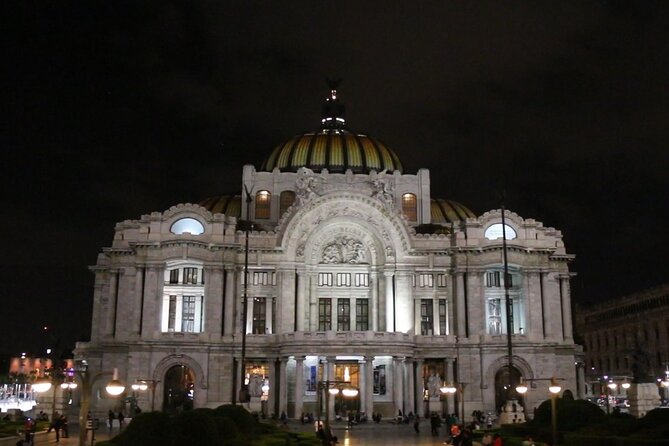
Here is the deal-breaker topic on this tour: audio behavior. The tour info says an English audio guide is available, and the included earphones are part of how you listen.
However, multiple reported issues point to two practical problems. First, the bus speakers can broadcast Spanish narration loudly, which can drown out the headphone audio. Second, headphone outlet problems can happen, leaving you with limited sound or no sound at all.
So what should you do? When you board, plug in immediately and test volume. If you hear Spanish booming over everything, ask for help right away. If an outlet is dead, ask for another set of earphones or a different connection point, and do it while the bus is still in the loading phase.
Also, dress smart for night listening. Some riders note it can get chilly on an open-air upper deck, and your hands end up busy with jackets, hats, and gloves. If you want better audio focus, keep your phone put away and manage the headphones first.
If audio works as intended, this tour becomes a smooth, low-effort introduction to Mexico City’s main sights.
Timing, Traffic, and Why the 45 Minutes Can Feel Longer
The tour is listed as about 45 minutes. In real life, Mexico City traffic can stretch or compress your experience, even when the planned route stays the same.
That matters because this ride is short. When traffic is heavy, you might spend more time crawling than viewing, which can make the loop feel less complete than the schedule suggests.
You also need to be aware that major celebrations or street activity can change traffic patterns and how quickly the bus moves through the city. That is why arriving early and having patience is the real “secret skill” for this kind of tour.
If you get rain, plan for it. Some riders described rainy conditions and the need for ponchos, and because this is a double-decker ride, you will likely notice weather more than on a fully enclosed tour.
What You’re Paying for: Value at $10 and the Limits of a Bus Loop
At $10 per person, this is priced for people who want quick orientation. You are paying for access to a route that hits major landmarks in one evening, plus audio that adds context without requiring planning or ticketing beyond this.
This value is strongest when you treat it as a first-night overview. If you already plan to walk specific areas tomorrow or later, this bus ride helps you decide what to prioritize. You get a mental map of where things are: Zócalo’s civic center, Reforma’s long corridor, and the iconic monuments.
The limit is that you are not stepping off and exploring deeply. This is not hop-on hop-off, and it is not set up like a guided walking tour where you stop to go inside or linger in plazas.
So the best match is a quick-hit experience. If you want long stops, interactive guide Q&A, or deep cultural immersion, you will likely feel the short loop.
Who This Turibus Night Tour Is Best For
This is a good fit if you want to do the “big sights” with minimal effort. It is especially handy for first-time visitors who feel unsure about routes after dark, or anyone trying to see a lot without burning daylight.
I’d also recommend it for people who enjoy city atmosphere. Night streets, illuminated monuments, and the feeling of Mexico City moving all around you is part of the appeal.
It may be less ideal if you are very audio-sensitive or if you expect perfect headphone performance. If English audio is essential, arrive early, test the headphones, and be ready to ask for help if the sound is off.
Should You Book This Night Tour?
Book it if you want a low-cost, fast introduction to Mexico City’s key neighborhoods and monuments, and you are comfortable with a short ride where traffic can affect pacing. At $10, it is hard to beat for a first-night orientation, as long as your audio setup works.
Skip it or be cautious if you need guaranteed English audio clarity through headphones at all times, or if you dislike tours that do not allow you to get off and explore. This tour is built for viewing from the bus, not for long, flexible sightseeing.
If you do book, do one small thing that makes a big difference: test your headphones immediately and ask questions early if anything sounds wrong.
FAQ
How long is the Night Tour of Mexico City?
The tour is listed at about 45 minutes.
What time does the tour start?
The start time is 7:30 pm.
Where is the meeting point?
The meeting point is Turibus Tours on C. de Monte de Piedad, Centro Histórico de la Cdad. de México, Centro, 06000 Ciudad de México, CDMX, Mexico.
Does this tour include round-trip transportation from my hotel?
No. Round-trip transportation to and from your hotel is not included.
Is the tour offered in English?
Yes. The audio guide is available in English, as well as Spanish and French.
Are earphones included?
Yes. Earphones are included.
Is this a hop-on hop-off tour?
No. This tour is not a hop-on hop-off tour.
How many people are on the tour?
It has a maximum of 30 travelers.
Is free cancellation available?
Yes. You can cancel up to 24 hours in advance for a full refund. If you cancel within 24 hours, it is not refundable.
The City in a Single Day




More Tours in Mexico City

More Tour Reviews in Mexico City



Fresh from our Mexico City notebook


Evening Experiences, compared.
 ★ 5.0Lucha Libre Tickets & Tacos & Beer & Mezcal – BEST NIGHT EVER!From $841,077 reviews
 ★ 3.8Double Decker Bus Night TourFrom $10373 reviews
 ★ 5.0A Night of Tacos and Mezcal in Mexico CityFrom $135262 reviews
 ★ 4.2Night City Tour in a Double Decker BusFrom $10235 reviews
 ★ 5.0Narvarte At Night: Tacos, Chelas & MezcalFrom $143216 reviews
 ★ 5.03-Hour Night Tacos and Mezcal Crawl in Mexico with GuideFrom $95195 reviews
 ★ 3.0Hop-on Hop-off or Night Tour Tourist Bus in Mexico City127 reviews
 ★ 5.0Tacos & Mezcal Night Food TourFrom $135100 reviews
Browse the lists this tour appears in