

REVIEW · HOP-ON HOP-OFF BUS TOURS
Hop-on Hop-off or Night Tour Tourist Bus in Mexico City
You can cover big highlights fast on this hop-on hop-off ride. I like the open-top double-decker views over major avenues and I like having English audio commentary that helps the sights make sense. The main trade-off is that each stop window is short, so you’ll want to pick what you truly want to see up close.
This bus is a practical way to get your bearings in Mexico City without cramming your day into tight transfers. You get a 24-hour valid ticket, so you’re not locked into one rushed loop. Still, with street traffic and quick time limits at popular places, you’ll need a plan if you’re also trying to fit in museums or shopping.
The route ties together classic areas like the Centro Histórico and Reforma corridor, then pushes into Polanco and the Chapultepec zone. If you want a simple day that combines big landmarks with flexibility, this fits well. Just know you’re touring the city’s highlights more than you’re doing deep, slow sightseeing.
In This Review
- Key highlights worth your attention
- Why a hop-on hop-off bus is smart for Mexico City orientation
- Timing and the route rhythm (what the schedule means for you)
- The open-top double-decker experience: great views, real-world trade-offs
- English audio commentary: your built-in guide for quick learning
- Stop-by-stop: what each landmark offers (and what you might skip)
- Monumento a la Independencia, El Ángel (meeting the Reforma-Centro powerhouse)
- Bosque de Chapultepec: the big park with deep archaeological roots
- Plaza Carso in Nuevo Polanco: museums and modern architecture in one zone
- Crossing Avenida Moliere: a quick taste of what Polanco looks like
- Lincoln Park (Polanco): a park with “colony-era” roots
- Auditorio Nacional: a top-tier performance venue you’ll recognize from the road
- Fountain of Diana the Huntress: Artemis/Diana in stone and stars
- Cibeles fountain: a Mexico City replica with Spain–Mexico symbolism
- Where to shop and snack: Santa Fe and the Reforma corridor
- Getting value from a 24-hour ticket: how to use your hops smartly
- Small group size: what up to 45 travelers changes
- Who should book this bus?
- Price and overall value (without guessing at costs)
- Should you book this Mexico City hop-on hop-off bus?
- FAQ
- FAQ
- How long is the Mexico City hop-on hop-off bus tour?
- Is the ticket valid for more than one day?
- Is the tour available in English?
- What are the daily operating hours?
- Where do I meet the bus?
- Does the tour include onboard commentary?
- How many people are allowed on the tour?
- Can I cancel for a full refund?
- Is the tour easy to join?
Key highlights worth your attention
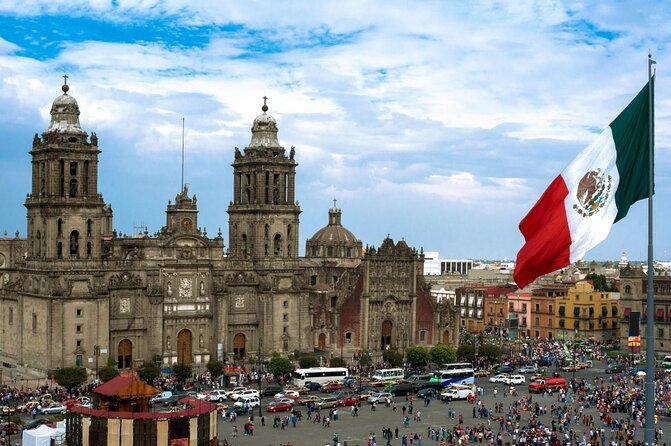
- Open-top double-decker sightlines for photos and wide views as you roll past landmarks
- English audio commentary that turns what you see into a quick, useful story
- 24-hour ticket flexibility to hop off, wander, then re-board later
- Major stop clusters across Centro, Reforma, Polanco, and Bosque de Chapultepec
- Quick stop pacing (often about 15 minutes) that’s ideal for orientation and photos
- Small group size up to 45 travelers, which can make it feel less chaotic
More of the city from the top deck
- Mexico City: Hop-on Hop-off Bus Tour
★ 4.0 · 1,043 reviews - Mexico City: Double Decker Bus Night Tour
★ 3.8 · 373 reviews - Turibus Hop On Hop Off Mexico City Tour
★ 3.0 · 347 reviews - Mexico City: Night City Tour in a Double Decker Bus
★ 4.2 · 235 reviews
Why a hop-on hop-off bus is smart for Mexico City orientation
Mexico City is huge, and first-time days often suffer from one problem: you spend more time commuting than sightseeing. This bus tour solves that by stringing together a set of famous areas in one continuous route. It’s a simple deal—ride, look, hop off, and repeat—without the mental load of figuring out every transfer.
I also like that the bus uses onboard audio commentary in English. Even when you’re just passing by, the commentary helps you understand what you’re looking at: which landmark matters, why it exists, and what you should pay attention to once you get off. For many visitors, that turns “I recognize this name” into “I actually get it.”
There’s a second benefit that’s easy to overlook: the double-decker height. From up top (and out in the open air), you can often spot the layout of neighborhoods and major streets more easily than if you’re stuck inside a car. That makes it easier to decide where you want to return later, on foot.
Timing and the route rhythm (what the schedule means for you)

The tour runs daily 9:15 AM to 8:00 PM, and your ticket is valid for 24 hours. That matters because you can do a longer sightseeing day without forcing every visit into one set itinerary. If you start in the morning, you can ride once for orientation, then come back for a second pass when your energy and interests are clearer.
The overall duration is listed as 1 to 11 hours (approx.), which tells you how flexible it is. Some people use it like a quick orientation loop. Others hop off more often, snack, browse, and spend time in just one or two bigger areas.
One practical point: the tour notes that buses leave regularly. In a city like Mexico City, that can reduce the “wait time penalty” that happens when you’re relying on a single bus line or a tight connection.
The open-top double-decker experience: great views, real-world trade-offs
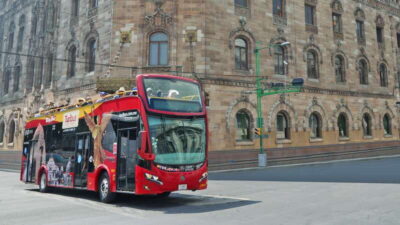
You’re getting the classic open-top, double-decker setup, which is made for Mexico City’s wide streets and landmark corridors. From that height, you get better sightlines for places along Paseo de la Reforma and the big civic monuments in Centro.
But there’s a trade-off. Open-top means less shelter. If the sun is strong, you’ll feel it. If it’s breezy, you’ll want to keep a firm grip on hats, sunglasses, and anything that likes to escape. In other words: it’s fantastic for photos, but you’ll want to dress for the weather, not for comfort inside.
Wider loops around Mexico City
- Teotihuacan Hot Air Balloon Flight from Mexico City / Volare★ 5.0 · 3,262 reviews
- Teotihuacan Private Tour from Mexico City★ 5.0 · 1,890 reviews
- Historic Center Food Tour in Mexico City★ 5.0 · 1,263 reviews
- The best tour to Teotihuacán from Mexico City★ 5.0 · 1,236 reviews
- From Mexico City: Puebla, Cholula and Tonantzintla Day Trip★ 4.3 · 1,191 reviews
English audio commentary: your built-in guide for quick learning
The onboard audio is where this tour earns its keep. Instead of relying on signage you might miss while moving, you get an organized run through the highlights. As you approach key stops, the audio helps you know what you’re looking at before you get off.
A smart way to use it: listen on the approach, then decide on your feet whether you want to spend your limited stop time taking photos, doing a short walk, or heading straight toward a museum or viewpoint. With short hop-off windows, having context is what makes your time count.
Stop-by-stop: what each landmark offers (and what you might skip)

Most stops are designed for quick exploration, often around 15 minutes. That’s enough for a photo, a short walk, and a look around—but not enough for a full museum visit. Use these stops as “checkpoint time.” If you find a place you love, you can return later using your own schedule within that 24-hour window.
Monumento a la Independencia, El Ángel (meeting the Reforma-Centro powerhouse)
This honorary column, commonly called El Ángel, sits in the traffic circle where Paseo de la Reforma meets Río Tíber and nearby streets. It was inaugurated in 1910 to commemorate the centennial beginning of the Mexican War of Independence.
Why it’s worth the stop: El Ángel is one of those landmarks that anchors the city’s identity. Even if you don’t go inside anything, the scale and the location give you an immediate sense of Mexico City’s major urban axes.
What to do in your short window: if you want a clean photo, give yourself a moment to step off in a safe spot and scan for an angle where the monument is framed against the boulevard.
Bosque de Chapultepec: the big park with deep archaeological roots
Bosque de Chapultepec is the largest urban park in the Western Hemisphere. It’s a major reason people come to this part of town, and it connects nature with national-level cultural sites, including the National Museum of Anthropology.
This forest was declared an archaeological zone. The information provided highlights that nearly 4,000 archaeological objects were found there, which adds another layer beyond the “walk in a park” idea.
Practical reality: with a short stop window and free access noted, you’ll likely use it for an overview—maybe a quick stroll, a view of the grounds, or a chance to decide if you want to dedicate a longer visit later. If your priority is the museum itself, plan to do that with your own time, not with the hop-off window alone.
Plaza Carso in Nuevo Polanco: museums and modern architecture in one zone
Plaza Carso is a major mixed-use development in Nuevo Polanco. It’s described as the largest mixed-use complex in Latin America and includes well-known cultural venues like the Museo Soumaya, Museo Jumex, and Teatro Telcel.
This stop is a good fit if you like architecture and if you want to get oriented in Polanco/Nuevo Polanco. Even if you don’t go inside during your short visit, you can get a feel for the area’s scale and layout.
Possible limitation: if your goal is only museum-going, 15 minutes may feel tight. In that case, hop off, look, then plan your deeper museum time separately.
Crossing Avenida Moliere: a quick taste of what Polanco looks like
The route notes you’ll cross Avenida Moliere and see important sites along the way. The value here is less about one single monument and more about reading the neighborhood style from the bus window: the wide streets, the modern streetscapes, and the way Polanco pulls together institutions, offices, and cultural spaces.
If your time is limited, I’d use this stretch to prepare mentally for the next bigger stop, rather than trying to do something elaborate.
Lincoln Park (Polanco): a park with “colony-era” roots
Lincoln Park is located in southern Polanco. The details provided say it was the first park designed for the colony, with a second similar park later located on Horacio Avenue in front of San Agustín Parish. Around the park you’ll find early mansions and apartments built in the area, plus modern office and apartment buildings.
Why this matters: this stop is a contrast moment. It helps you see Polanco not just as sleek streets, but as a place with older city layers. Parks like this are also practical for a quick break from walking.
In a short hop-off window, you can usually manage: a quick loop around the green space, a few photos, and a reset before the more monument-heavy stops.
Auditorio Nacional: a top-tier performance venue you’ll recognize from the road
Auditorio Nacional is described as Mexico’s main presentation venue and one of the most important in the world, with importance tied to artistic quality, attendance, performances, ticket sales, and its audiovisual infrastructure.
Even if you don’t attend a show that day, it’s worth seeing because it’s a signature piece of Mexico City’s modern cultural infrastructure. Also, it sits along the kind of routes where it’s easy to spot from a distance, so you can understand why it’s a landmark.
In 15 minutes, your goal is straightforward: get the photo and move on, or use it as a landmark to plan your next separate activity.
Fountain of Diana the Huntress: Artemis/Diana in stone and stars
The Fountain of the Diana the Huntress sits on Paseo de la Reforma Avenue. The sculpture, originally called The Arrow of the North Stars, represents the Greek goddess Artemis (or the Roman equivalent Diana).
This is a classic “stop for a quick reason” landmark. It’s not just decoration; it’s a named mythological reference that ties the fountain’s look to a story. If you like learning what a figure represents, this is a satisfying pause.
Cibeles fountain: a Mexico City replica with Spain–Mexico symbolism
The Cibeles fountain is described as a replica of the fountain in Plaza de Cibeles, Madrid. In Mexico City, it sits at the intersection of Oaxaca, Durango, Medellín, and El Oro, about two blocks from the Insurgentes roundabout in the Cuauhtémoc area.
Two key details make this stop more interesting than it might sound at first glance: it’s presented as a symbol of brotherhood between Spanish and Mexican communities (dated to 1980) and it was remodeled in 2011 as part of the city government’s maintenance program.
If you’re doing photo stops, this is one. If you’re learning symbolism, it’s also one.
Where to shop and snack: Santa Fe and the Reforma corridor

The tour highlights give you two flexible “break points” for food and souvenirs: Santa Fe shopping mall and Paseo de la Reforma. If you want a low-stress meal without hunting for the perfect place, these are useful spots.
Santa Fe is especially helpful if your priorities are shopping and a predictable setup for finding something to eat. Reforma is helpful if you want to keep sightseeing momentum while still browsing and grabbing a bite.
Tip for your own planning: because hop-off windows can be short, decide whether you want food in a mall-style setting (Santa Fe) or on the go near the landmark corridor (Reforma).
Getting value from a 24-hour ticket: how to use your hops smartly

A 24-hour ticket is where this tour becomes more than a single-day ride. Instead of forcing everything into one tight schedule, you can do an “orientation ride” first. Then, later, focus only on the stops that genuinely hold your attention.
Here’s a strategy that works well in big cities:
- Use your first pass for photos + orientation at the main checkpoints.
- Then pick one area to return to for a longer wander, like the Chapultepec zone or a Polanco museum cluster.
The fact that several stops note admission ticket free (at least for those listed stops) also affects value. It’s not just transportation—you’re getting access to certain landmarks and park areas without buying extra entry tickets right at the stop time.
Small group size: what up to 45 travelers changes
The tour lists a maximum of 45 travelers. That’s not a private tour, but it can help the ride feel calmer than massive buses. It also makes it easier to locate your stop points and keep track of where you are along the route.
If you’re the kind of traveler who hates feeling lost in crowds, that matters.
Who should book this bus?
This tour is a great match if:
- you want an easy way to see major landmarks without planning every route transfer
- you like open-top views and photo-friendly movement along big streets
- you want English commentary to connect names to places
- you’re trying to cover more in a first trip day and then choose deeper follow-ups later
It may be less ideal if:
- you want to spend long stretches inside museums during each stop
- you hate short time windows and prefer slow, deep visits
- you’re expecting a fully night-focused itinerary (the listed operating hours run from morning into the evening)
Price and overall value (without guessing at costs)
No price is listed here, so I can’t judge cost directly. But the value logic is clear from what’s included: you pay for one pass of transportation that stays useful for 24 hours, plus English audio, plus the chance to hop on and off at several major zones. Several listed stops note free admission for the hop-off activity, which reduces friction.
The real “value test” is whether you’ll actually use the flexibility. If you treat it like one ride and then forget it, you may not get the best return. If you ride once to orient, then return for your favorites, it tends to feel like a smarter buy.
Also, the listed rating is 3 based on 127 reviews. That tells me to be realistic: this is a straightforward sightseeing tool, not a high-touch guided experience.
Should you book this Mexico City hop-on hop-off bus?
I’d book it if you’re trying to cover a lot of ground efficiently and you want a clean way to connect the city’s biggest landmarks—especially along Centro, Reforma, Polanco, and Chapultepec. The combination of open-top views, English audio, and a 24-hour ticket is exactly the kind of setup that helps you plan your next steps on your own.
I wouldn’t book it as your only plan if you’re aiming for long museum time. The stop windows are built for quick looks. Use it as the organizer for your day, then let your favorites earn the longer visit.
FAQ
FAQ
How long is the Mexico City hop-on hop-off bus tour?
The duration is listed as about 1 to 11 hours (approx.), depending on how many times you hop off and how long you spend at stops.
Is the ticket valid for more than one day?
Yes. The ticket is valid for 24 hours, so you can ride again within that window.
Is the tour available in English?
Yes. The tour is offered in English.
What are the daily operating hours?
The listed opening hours are Monday through Sunday, 9:15 AM to 8:00 PM.
Where do I meet the bus?
The meeting point is Parada Capital Bus Zócalo, C. de Monte de Piedad, Centro Histórico de la Cdad. de México, Centro, Cuauhtémoc, 06000 Ciudad de México, CDMX, Mexico.
Does the tour include onboard commentary?
Yes. The bus includes onboard audio commentary.
How many people are allowed on the tour?
The tour lists a maximum of 45 travelers.
Can I cancel for a full refund?
Yes. Free cancellation is available, and you can cancel up to 24 hours in advance for a full refund.
Is the tour easy to join?
The info says most travelers can participate.
More Tours in Mexico City




More Tour Reviews in Mexico City




The Whole City from the Top Deck





Fresh from our Mexico City notebook




Hop-On Hop-Off Bus Tours, compared.
 ★ 4.0Hop-on Hop-off Bus TourFrom $211,043 reviews
 ★ 4.1Hop-on Hop-off City Tour by Turibus 1-Day PassFrom $20691 reviews
 ★ 3.8Double Decker Bus Night TourFrom $10373 reviews
 ★ 3.0Turibus Hop On Hop Off Mexico City Tour347 reviews
 ★ 4.2Night City Tour in a Double Decker BusFrom $10235 reviews
 ★ 3.9Hop-On Hop-Off Bus City TourFrom $20183 reviews
 ★ 3.4Night Bus TourFrom $1133 reviews
 ★ 3.9Hop-on Hop-off City Tour with AttractionsFrom $2329 reviews
Browse the lists this tour appears in