
REVIEW · MEXICO CITY PRIVATE CITY TOURS
Mexico City Private Guided Tour – Best Rated
Mexico City can feel big, but this route gets you oriented fast. I love how the walk links major landmarks with real context, so the buildings stop being random photos and start making sense. I also like the private-group format paired with admission-tickets at several key stops, which keeps you moving. One thing to consider: there’s no private transportation, so you’ll rely on walking and nearby public transit.
For a price like $39 per person, you’re buying more than sightseeing. You’re getting a guide who can explain what you’re looking at, from earthquake-toughened towers to an Aztec ruin in the middle of the city. I’d say it works especially well if you want the highlights in about two hours without turning it into a race.
If your group is very limited on walking time or you want long interior visits at each building, this one might feel a bit tight. The stops are timed, and some locations are more about exterior views and quick inside moments than lingering.
In This Review
- Key highlights at a glance
- How the 2-hour route fits your day
- Starting at Palacio de Bellas Artes: your orientation moment
- Torre Latino viewpoint and the story of surviving earthquakes
- Palacio Postal and Plaza Tolsa: art you can see in two minutes
- Palacio de Minería and the mining-school story
- House of Tiles: blue-and-white facade plus real interior art
- Pastelería Ideal: history plus a tasting you can actually enjoy
- Templo Mayor ruins and the Zócalo: from Aztec roots to the civic heart
- Metropolitan Cathedral: a big finale with lots of stories
- What the $39 price gets you in real terms
- Tips for a smoother walk through the historic center
- Who this tour is best for
- Booking call: should you book this?
- FAQ
- How long is the Mexico City private guided tour?
- What is the tour price per person?
- Is the tour in English?
- Where does the tour start and end?
- Are admission tickets included?
- Does the tour include a professional guide?
- Is private transportation included?
- Can I contact the tour before and during the experience?
- What is the cancellation policy?
- Is this tour private?
Key highlights at a glance
- Palacio de Bellas Artes start: a great first stop that sets the cultural tone for the entire historic center
- Torre Latino after the earthquakes: you’ll see how survival and rebuilding shape the modern skyline
- Palacio Postal and its Italian marble-and-gold look: a working post office that you can appreciate on the spot
- House of Tiles and its blue-and-white facade: exterior beauty plus interior murals, frescoes, and sculptures
- Pastelería Ideal with tasting included: learn about Mexican baking history and sample what you came for
- Templo Mayor ruins to Zócalo to the cathedral: one compact arc from Aztec Mexico to today
More private days with a local at the wheel
- Teotihuacan Private Tour from Mexico City
★ 5.0 · 1,890 reviews - Private Tour: Teotihuacan and Guadalupe Shrine
★ 5.0 · 938 reviews - Private City Tour in Frida Kahlo, Coyoacan, and Xochimilco
★ 5.0 · 626 reviews - Mexico City Custom Private Tour with a Local, Highlights & Hidden Gems
★ 5.0 · 582 reviews
How the 2-hour route fits your day
This tour is built for people who want momentum. At roughly two hours, you cover a concentrated slice of Mexico City’s historic core—palaces, a landmark tower viewpoint area, a working post office, and major religious and civic sites. You’ll walk between stops at a comfortable pace for a highlights tour, with timed windows for brief interior looks and photo pauses.
Because it’s private and only your group participates, it feels less like “follow the crowd” and more like you’re doing a guided walk with a friend who knows the city’s stories. The group format also makes it easier to adapt if your pace is slower or if someone in your group wants a bit more time at a specific photo spot.
The schedule also has a built-in rhythm: quick orientation stops first, then a strong art-and-architecture cluster, and then the big “center of the center” moments at Zócalo and the Metropolitan Cathedral. If you’re visiting for a short stay, this sequencing helps you understand the geography before you explore further on your own.
One practical point: since private transportation isn’t included, your experience depends on walking routes and getting to the meeting area at Palacio de Bellas Artes. Luckily, the tour starts where it’s easy to connect to the rest of the city.
Starting at Palacio de Bellas Artes: your orientation moment
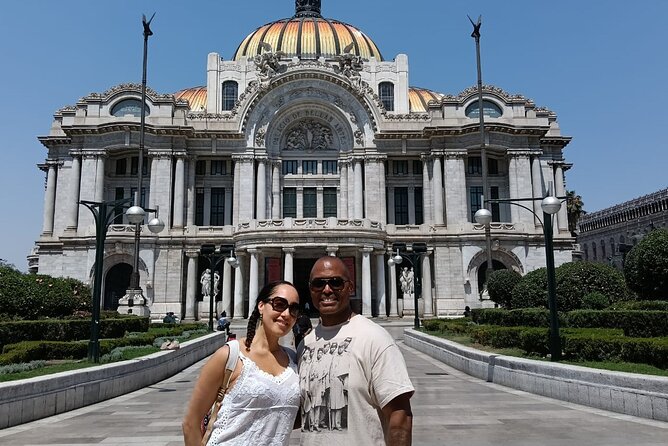
You meet at Palacio de Bellas Artes on Av. Juárez (Centro Histórico). It’s a smart choice because it’s instantly visual. Even if you only have limited time, this palace gives you the tone: Mexico City values art, public culture, and grand public spaces.
In the first stop, your guide sets up the tour with an intro to the city and the palace itself. The admission window is free, so you can focus on the story instead of managing ticket steps. If you enjoy “first bearings” moments—where the guide explains what you’re seeing and why it matters—this is one of the best ways to start.
A Bellas Artes opening also helps your eyes adjust. As you move onward, you’ll notice details more easily: what’s meant to impress, what’s meant to symbolize, and how the city layers artistic styles over time. It makes later stops like the postal palace and the House of Tiles feel connected instead of random.
Torre Latino viewpoint and the story of surviving earthquakes
Next comes Mirador Torre Latino. This stop is all about perspective—literally and historically. The tower is described as the tallest building in Latin America at one point, and the big story is that it survived three major earthquakes.
That detail matters because it changes how you look at the skyline. You’re not just checking height; you’re seeing resilience in concrete and steel. Your guide uses the tower to explain how Mexico City’s built environment has had to adapt, and why history still shows up in modern landmarks.
Admission is free at this stop, so you can spend your time absorbing the viewpoint and the guide’s framing. It’s also a good mental reset between the palaces and the next cluster of classic architecture stops.
If your group doesn’t love high viewpoints, you can still enjoy it as a story stop—how a single building can represent a city’s ability to endure.
More days handed to a good guide
- Anthropology Museum Guided Tour★ 4.5 · 1,035 reviews
- Mexico City: Anthropology Museum Guided Visit★ 4.4 · 708 reviews
- Mexico City: Frida Kahlo Museum Entry Ticket w/Digital Guide★ 4.5 · 683 reviews
- Guided Tour in Teotihuacan with Cave Breakfast and Transportation★ 5.0 · 613 reviews
- Teotihuacan Private Tour with Expert Guide & Cultural Insights★ 5.0 · 577 reviews
Palacio Postal and Plaza Tolsa: art you can see in two minutes
After the tower, you hit Palacio Postal, described as the most beautiful post office in the world, made with Italian marble and gold decorations—and it’s still working today. Admission is free, and you get a short window (about 15 minutes), which is exactly right for this kind of place.
This is one of those stops where time matters. You don’t need hours to appreciate the design, but you do need a guided pointer on what to look for. Your guide can steer your attention toward the materials and decorative elements so you notice the craftsmanship instead of just walking past a pretty facade.
Then comes Plaza Tolsa, tied to the National Art Museum area and anchored by the statue of El Caballito, Charles IV. This stop is a great pause in the route because it gives you a wide open feel compared to the enclosed palace interiors.
The El Caballito statue overlooking the city is a natural photo magnet. But the real value here is context: the guide helps connect the square’s identity to the broader historic center. It’s less about the monument alone and more about how the plaza functions as a social and cultural hub.
If you’re someone who likes quick, high-impact stops, this two-stop block is a strong payoff for the time you spend.
Palacio de Minería and the mining-school story
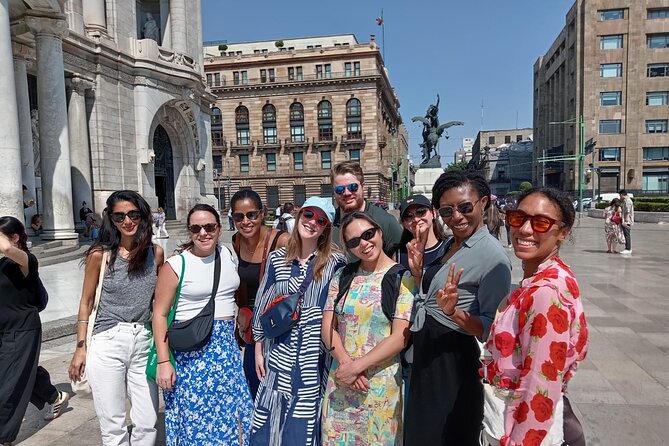
At Palacio de Minería, you get a short but meaningful stop (about five minutes). The building dates to 1797 and is one of the oldest in Mexico City, originally built as a mining school. That single fact changes the way you read the architecture: it’s not just old, it’s tied directly to the industry and education that shaped the city.
Admission is included here, so you’ll have access without worrying about ticket logistics. The timing is tight, but that’s okay because this kind of historic building rewards quick observation: look at the scale, notice the period style, and let your guide connect the building to Mexico City’s larger development.
This stop is also a useful “bridge” between the art-heavy palaces and the more ceremonial sites ahead. It gives you a sense of how practical training and wealth from mining fed into the city’s growth—then you step back into the cultural landmarks.
House of Tiles: blue-and-white facade plus real interior art
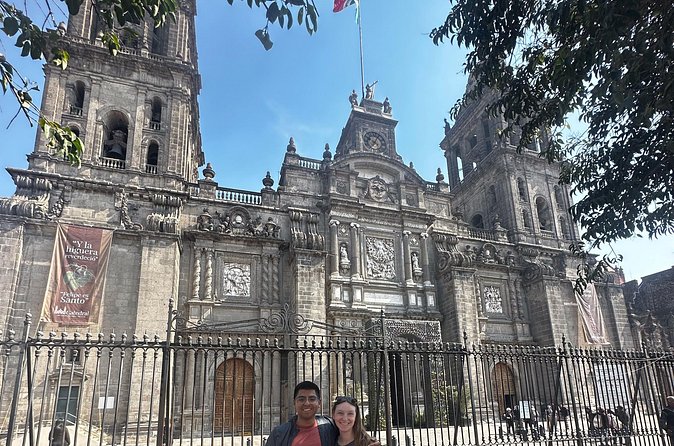
Now for one of the most visually memorable moments: House of Tiles. The building’s exterior is famous for being covered in blue and white tiles, and the interior goes further with murals, frescoes, and sculptures.
Admission is included, and you’ll get about 15 minutes. That’s enough time to do two things well: see the facade details from outside, then get a guided sense of what’s inside. Without context, frescoes and sculptures can blur together. With a guide, you start to understand how the imagery fits the building’s identity.
This stop is also ideal if you love architectural craft. You can see how tilework isn’t only decorative—it’s also a statement. Your guide’s interpretation helps you notice patterns, design choices, and the way the building uses visual rhythm to pull you in.
For many people, this is the moment the tour feels most like “architecture as storytelling.” It’s one of the clearest examples of why timed stops work: you leave with images and explanations, not just a vague sense that you saw something pretty.
Pastelería Ideal: history plus a tasting you can actually enjoy
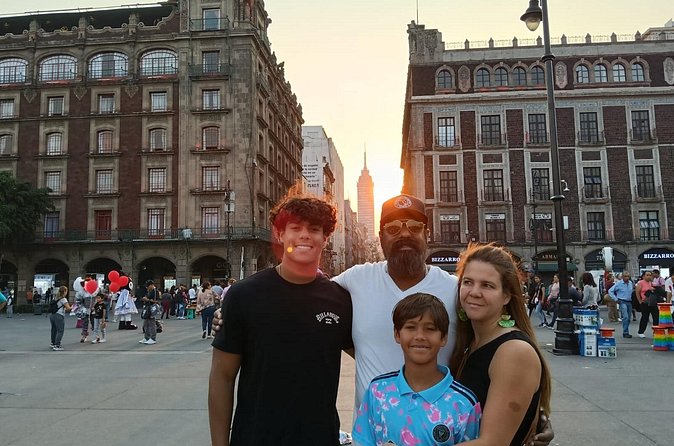
At Pastelería Ideal, you switch gears from art and stone to food and tradition. It’s described as a historical pastry shop where you learn about the history of Mexican baking goods and then get to try them yourself.
Admission is included, and the stop runs about 10 minutes. That’s a good duration for a tasting because you can participate without dragging the whole tour. The best tours know when to give you the payoff quickly.
This is also a strong choice if your group includes someone who gets tired of “another cathedral” energy. Even if you’re not a big dessert person, it’s a window into everyday history: ingredients, recipes, and food culture that locals carried forward.
If you want a souvenir you’ll actually use, a tasting stop has an advantage. You experience flavors now and can decide later if you want to buy more on your own.
Templo Mayor ruins and the Zócalo: from Aztec roots to the civic heart
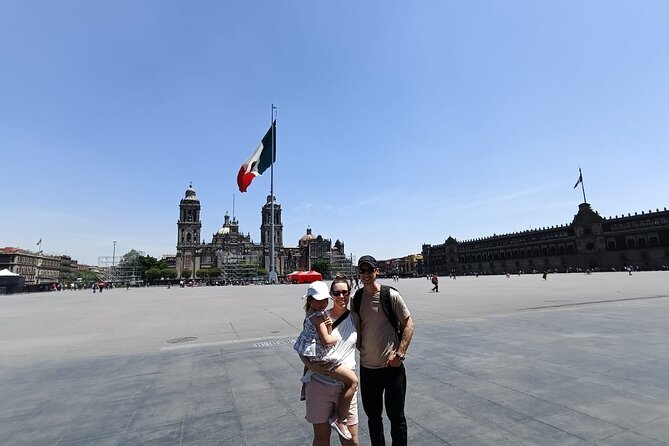
Then you move to Museo del Templo Mayor, where you’ll see a real Aztec ruin in the middle of the city. This stop is brief (about five minutes) and admission is free, but the value is huge because it places the city’s story in deeper time.
It’s a reminder that Mexico City didn’t start with colonial palaces and modern plazas. The guide uses this location to talk about ancient civilizations of Mexico, helping you understand that today’s historic center sits on layers of older cultural life.
After that, you arrive at Zócalo, described as the biggest square in this hemisphere and the second biggest in the world, and also the center of the center of Mexico. Admission is free, and you get about 20 minutes here. That longer window is perfect because Zócalo isn’t a “look once” stop. It’s a space you need a minute to feel—then a minute to read.
The guide’s context turns the square from an open space into a landmark with meaning. You’ll understand what makes the area central, and you’ll likely notice details more clearly: how the square organizes movement and how people use it as a gathering place.
Metropolitan Cathedral: a big finale with lots of stories
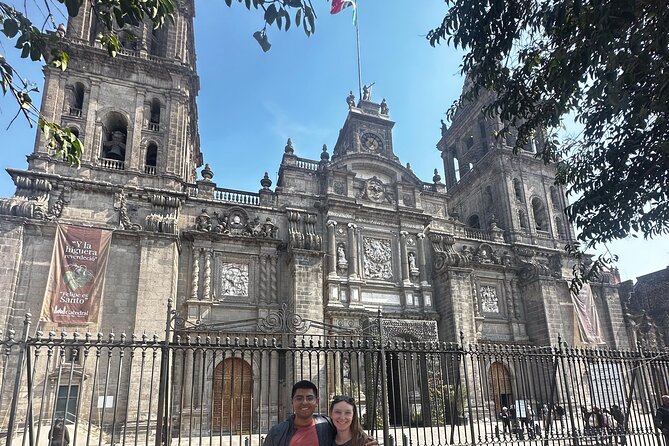
The final major stop is the Mexico City Metropolitan Cathedral, described as the most important church in the country with tons of stories to tell. Admission is free and the window is about 20 minutes.
This is the kind of site where a guide can make or break the visit. Without interpretation, you might admire the exterior and step inside briefly. With context, you understand why it’s important and what stories are tied to its role in the city.
The cathedral is a strong ending point because it wraps the tour’s theme. You’ve moved from art palaces and resilient architecture to Aztec roots, then into Mexico’s civic center and religious centerpiece. In two hours, you get a compact timeline that helps you explore the rest of the city with better context.
If you’re the type who likes to keep walking after tours, you’ll also be well-placed here because the historic center is easy to continue from.
What the $39 price gets you in real terms
At $39 per person for about two hours, you’re paying for three things: a professional guide, admission for certain stops, and a tight route that makes sense geographically.
What I like most about the value: several of the sites are free to enter on the day of the tour, which means the money mainly covers your guide time and the stops where admission is included. That tends to keep the experience from feeling nickel-and-dimed.
You also get support via WhatsApp from the moment you book. That matters more than it sounds. A quick message can clarify meeting timing and reduce stress when you’re in a new city. The tour also offers a mobile ticket, which helps you avoid scrambling for paperwork.
One more practical note: the company is showing demand by being booked about 24 days in advance on average. If you’re traveling during busy weeks, don’t wait until the last day.
Tips for a smoother walk through the historic center
This is a walking-heavy highlights tour, even though there’s no private transportation. To enjoy it without getting cranky:
- Wear comfortable shoes you can walk in for short stretches between stops.
- Expect that some locations are more about quick interior looks or exterior detail viewing than long museum time.
- Bring a camera, but also leave room in your brain for your guide’s explanations; that’s where the real value comes from.
If you’re traveling with kids, it can work well because the stops change often: palace, tower viewpoint, post office beauty, tilework interior, then the pastry tasting. That variety can keep attention from fading.
If anyone in your group has limited mobility, consider this: the tour is designed around walking between nearby attractions in the historic center. The data doesn’t specify accessibility details beyond service animals being allowed, so if mobility is a big issue, it’s worth thinking carefully before booking.
Who this tour is best for
This fits best if you want a guided overview that feels structured but not stiff. I’d point you here if:
- You’re short on time and want major historic center landmarks in one loop.
- You appreciate context more than long museum hours.
- You want a private experience with your own group, not a larger shared tour.
- You like a mix of architecture, cultural history, and a food tasting.
It may be less ideal if your priority is deep museum study or long, unhurried time inside every building. This is a highlights tour by design, with timed stops that favor breadth.
Booking call: should you book this?
My answer: yes, if you want a compact, high-coverage historic center walk with a real guide. The combination of major stops, some included admissions, and a tasting at Pastelería Ideal makes it feel like more than just a checklist.
I’d say book it sooner rather than later if your dates are flexible but you’re traveling in a busy season. The tour’s popularity (booked around three-plus weeks in advance on average) suggests it’s not the kind of thing you always find slots for last minute.
If you hate walking or you want long interior time, you might look for a slower format. But if you’re okay with a brisk, well-placed route, this is a strong value at $39 and a good way to understand Mexico City fast without losing the human, story-driven feel.
FAQ
How long is the Mexico City private guided tour?
It runs for about 2 hours.
What is the tour price per person?
The price is $39.00 per person.
Is the tour in English?
Yes, English is offered.
Where does the tour start and end?
It starts at Palacio de Bellas Artes on Av. Juarez S/N in the Centro Histórico area and ends back at the meeting point.
Are admission tickets included?
Some stops are free and some include admission. Admission is included at Palacio de Minería, House of Tiles, and Pastelería Ideal; other listed stops are free.
Does the tour include a professional guide?
Yes, it includes a professional tour guide.
Is private transportation included?
No, private transportation is not included.
Can I contact the tour before and during the experience?
Yes. There is WhatsApp support from the moment of booking.
What is the cancellation policy?
Free cancellation is available if you cancel up to 24 hours in advance for a full refund.
Is this tour private?
Yes. It’s a private tour/activity, and only your group will participate.
More Tours in Mexico City


More Tour Reviews in Mexico City




Just Your Group: Private CDMX Days



Fresh from our Mexico City notebook

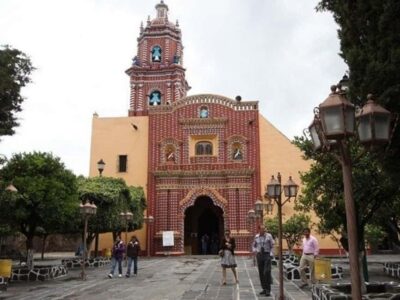

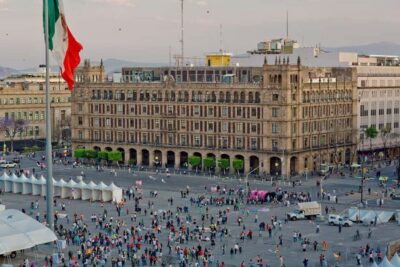
Mexico City Private City Tours, compared.
 ★ 5.0Teotihuacan Private Tour from Mexico CityFrom $1401,890 reviews
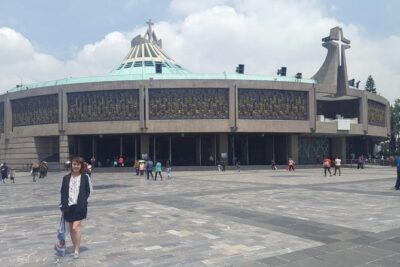 ★ 5.0Private Tour: Teotihuacan and Guadalupe ShrineFrom $189938 reviews
 ★ 5.0Private City Tour in Frida Kahlo, Coyoacan, and XochimilcoFrom $195626 reviews
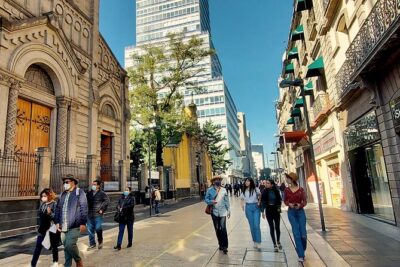 ★ 5.0Mexico City Custom Private Tour with a Local, Highlights & Hidden GemsFrom $77582 reviews
 ★ 5.0Teotihuacan Private Tour with Expert Guide & Cultural InsightsFrom $140577 reviews
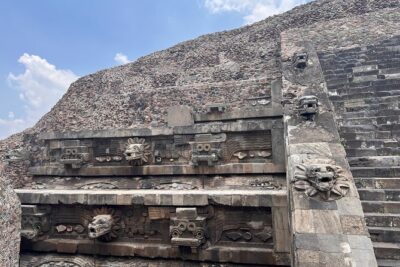 ★ 5.0100% Private Tour in Teotihuacán Pyramids from Mexico CityFrom $120449 reviews
 ★ 5.0Private City Tour Mexico City – Best RatedFrom $35402 reviews
 ★ 5.0Private Tour: Xochimilco, Coyoacan and Frida Kahlo MuseumFrom $269350 reviews
Browse the lists this tour appears in