
REVIEW · CITY TOURS
Mexico City Poetry Tour
Poetry in Mexico City feels surprisingly close. This 2-hour walk ties famous lines to real places in Centro Histórico, where the city’s identity shows up in stone, light, and voices. You move site to site, listening as your guide connects poems to loneliness, faith, and indigenous memory.
I especially like two things: first, you get free admission for each reading stop, so your money goes to the guide and the experience, not extra entry fees. Second, José (your bilingual guide) keeps the discussion human—why these poets matter, and how the words map onto the city you’re standing in.
One possible drawback: the timing is tight at each stop, so you’ll want to stay focused and ready to move. If you prefer lingering in museums or taking slow, solo wandering breaks, this tour’s pace may feel a bit fast.
In This Review
- Key highlights at a glance
- Why a poetry tour works in Mexico City’s Centro Histórico
- Price and what you actually get for $53.74
- Meeting at Casa de los Azulejos: a tile-filled start
- House of Tiles readings: Figueroa, Octavio Paz, and Jaime Sabines
- San Francisco church stop: Sor Juana Inés de la Cruz and syncretism
- Zócalo in front of the government palace: The Anonymous of Tlatelolco
- Museum del Templo Mayor surroundings: Nezahualcoyotl beyond conquest
- How the bilingual guide turns lines into street-level meaning
- Pacing and practical tips for this 2-hour loop
- Should you book the Mexico City Poetry Tour?
- FAQ
- How long is the Mexico City Poetry Tour?
- What language is the tour offered in?
- How much does the tour cost?
- Where does the tour start and end?
- Is admission included for the stops?
- How big is the group?
- Do I need a paper ticket?
- Is cancellation free?
- Are snacks included?
Key highlights at a glance
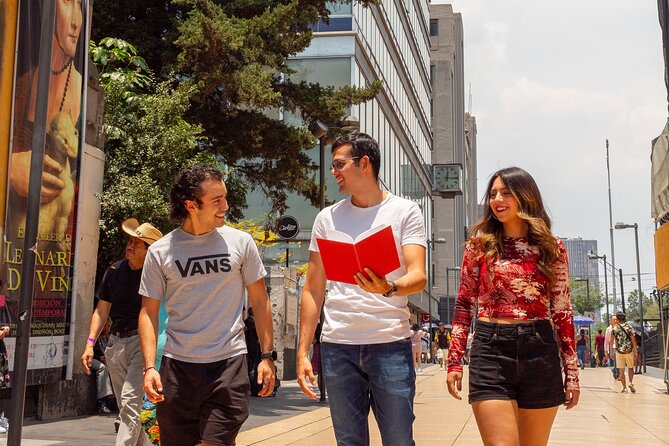
- Bilingual guide: English-friendly, with conversation that actually connects poems to place
- Free admission at every stop mentioned in the route
- Centro Histórico route: House of Tiles, San Francisco area, Zócalo, and Templo Mayor surroundings
- Major poets covered: José Vicente Figueroa, Octavio Paz, Jaime Sabines, Sor Juana Inés de la Cruz, Nezahualcoyotl
- Small group (up to 15): better Q&A and less lost time
Wider loops around Mexico City
- Mexico City: Teotihuacan, Tlatelolco & Guadalupe Shrine Tour
★ 4.6 · 3,773 reviews - Teotihuacan Hot Air Balloon Flight from Mexico City / Volare
★ 5.0 · 3,262 reviews - Teotihuacan Private Tour from Mexico City
★ 5.0 · 1,890 reviews - Historic Center Food Tour in Mexico City
★ 5.0 · 1,263 reviews
Why a poetry tour works in Mexico City’s Centro Histórico
Some tours show you landmarks. This one shows you meaning. In Centro Histórico, the streets are layered: Spanish-era power, Catholic symbolism, and deep indigenous presence all overlap in the same blocks. Poetry is a smart way to “read” that overlap without needing a long lecture.
The format helps. Instead of a full museum day, you get short, focused readings tied to what you can see around you right now. That makes the lines easier to grasp, because they’re not floating in space—they’re hanging in the air near the actual sites people associate with those stories, beliefs, and histories.
Also, this tour is built for conversation. The stops are chosen for themes as much as architecture: loneliness and communion at the start, syncretism at the church area, indigenous testimony at Zócalo, and pre-conquest poetic culture near the Templo Mayor zone. You’ll come away with a clearer sense of how Mexican identity is often described: not as one straight line, but as a set of shared contradictions.
Price and what you actually get for $53.74
At $53.74 per person for about 2 hours, the best value angle here is what’s bundled. You’re paying for a bilingual guide plus a route where the reading stops have admission ticket free noted for each site. That matters in a city where entry fees can add up fast, especially if you’re stacking multiple experiences in a day.
You also get a mobile ticket, which is convenient when you’re moving through busy streets and don’t want to hunt for paperwork. And with a maximum group size of 15, you’re less likely to spend the whole time straining to hear.
Snacks are not included, and the tour doesn’t pretend that a quick poetic walk replaces a real meal. If you’re doing this midday or later afternoon, plan to grab something after—especially if you’ve got the kind of attention span that wants a little energy backup.
One more practical note: the tour is commonly booked about 9 days in advance on average. That’s a sign it fills at least some of the time, so I’d book ahead rather than gambling on last-minute luck.
Meeting at Casa de los Azulejos: a tile-filled start
You begin at Casa de los Azulejos, on Avenida Francisco I. Madero 4 in Centro Histórico. The address matters because this area is busy, and dropping the group at an easy-to-find landmark reduces stress.
This is also a good place to start emotionally. The stop is tied to the House of Tiles—historic, visually striking, and now connected to a restaurant setting. That shift from palace space to modern use gives you a subtle theme before the first poem even begins: how buildings change roles, while stories and identities keep echoing.
From a logistics standpoint, starting near a major thoroughfare also helps. The tour notes it’s near public transportation, so you can reach the meeting point without needing a car or taxi. After the opening reading, you’ll transition through central blocks toward the heart of the city.
If you want to make the most of the morning or afternoon, arrive a few minutes early and get your bearings on the street. Even if you’re not a “standing and looking” person, two minutes of orientation can make it easier to follow the route and hear the guide when the group starts moving.
- Teotihuacan, Guadalupe Shrine & Tlatelolco Day Tour with Lunch★ 5.0 · 11,603 reviews
- Xochimilco, Coyoacan and Frida Kahlo with Optional Lunch★ 4.5 · 7,320 reviews
- Balloon flight + Breakfast in cave + Pyramids + Pick up CDMX.★ 5.0 · 6,335 reviews
- Teotihuacan pyramids morning or afternoon without tourist traps★ 5.0 · 6,186 reviews
- Teotihuacan Early Access Guided Tour with optional Lunch★ 4.5 · 6,138 reviews
House of Tiles readings: Figueroa, Octavio Paz, and Jaime Sabines
The first stop runs for about 1 hour, making it the longest moment of the tour. That’s deliberate: it’s where the tour sets its emotional framework. You’ll read the poets José Vicente Figueroa, Octavio Paz, and Jaime Sabines, and the guide centers ideas tied to Mexican identity—especially loneliness and communion.
This is the part that tends to hook people who think poetry sounds too academic. The guide discussion keeps the themes practical. Loneliness isn’t treated as a vague mood; it’s discussed as something people live with socially and personally. Communion isn’t just religious—it’s also about shared experience, the ways people connect even when life feels complicated.
Because the House of Tiles stop is longer, you’ll have time to actually absorb what’s being said, rather than rushing through a quick quote-and-go moment. The setting also helps: you’re in a recognizable historic space, and that visual weight gives the words more gravity.
A small tip: because you may not be able to linger after the reading begins, keep your phone ready for the mobile ticket, but also be ready to put it away during the discussion. Your best “payoff” comes from listening fully for a single stretch at the start.
San Francisco church stop: Sor Juana Inés de la Cruz and syncretism

Next you head to the El Atrio del Templo de San Francisco area. This stop is about 20 minutes, so think of it as a concentrated burst rather than a slow wandering visit.
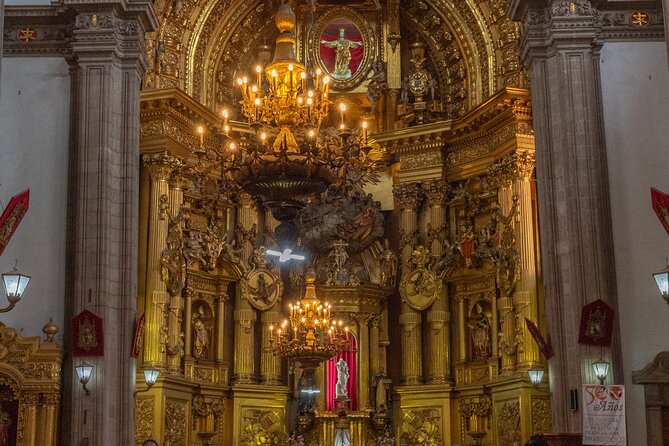
Here, you read Sor Juana Inés de la Cruz. In this context, the guide also focuses on religious and mythical dynamics of Mexican syncretism—how different belief systems coexist, blend, and reshape what people call sacred. If you’ve ever felt that Mexico can feel spiritual in a layered way, this part gives you a language for it.
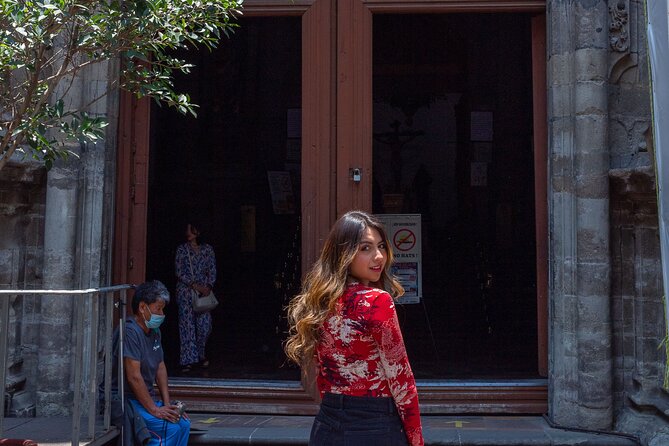
Practically, the church setting also means you’ll want to be mindful of behavior. Keep voices down, follow the group’s pace, and dress appropriately for a religious space if your plans let you. The tour is short, so you’ll want to make the most of the time by listening rather than trying to cover every visual detail.
One more consideration: because it’s only 20 minutes, you may not get the chance to ask a lot of follow-up questions here. If you have a question about Sor Juana or syncretism, jot it down mentally and ask the guide when you have a better moment later.
Zócalo in front of the government palace: The Anonymous of Tlatelolco
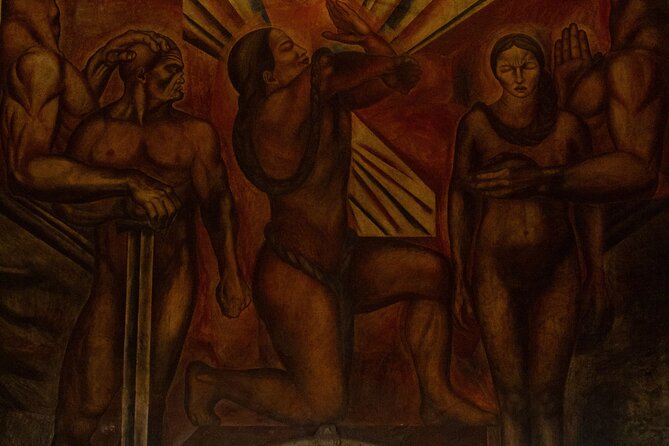
Then you move to the Zócalo, right in front of the government palace area. This stop also runs around 20 minutes. The big shift here is the tone: from identity and syncretism to testimony.
You’ll read The Anonymous of Tlatelolco, tied to an indigenous testimony against the conquest of Mexico. The guide connects the poem to the idea that indigenous memory isn’t just background—it’s evidence, voice, and resistance.
Zócalo is visually powerful, and that’s exactly why this reading works. You’re standing in the symbolic center of modern governance, yet the text being discussed pulls you toward older truths: survival, documentation, and the struggle to be heard.
Do expect crowds and movement. This isn’t a quiet corner. Your advantage is that the guide’s timing keeps you anchored—so you’re not spending your 20 minutes trying to locate where the group is while also trying to read the room.
If you’re doing this tour in warm weather, bring water. If you’re doing it near the cooler part of the day, a light layer helps, because open plazas can feel windier than narrow streets.
Museum del Templo Mayor surroundings: Nezahualcoyotl beyond conquest
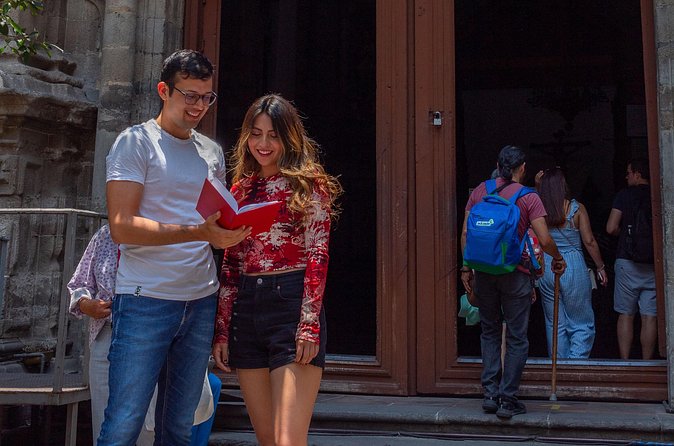
The last major reading stop is at the Museo del Templo Mayor area, focusing on the archaeological windows of the main temple from the outside. It’s about 20 minutes, and the poem focus shifts again.
Here, you read Nezahualcoyotl, noted in the tour framing as an emperor of Texcoco and also an engineer. That combo matters. It helps you see pre-conquest culture not only as myth and poetry, but as thinking, building, and governing. It’s poetry with structure behind it.
The phrase that comes through is mythical poetry prior to the vicissitudes of Spanish conquest. In other words: the story isn’t only about disruption; it’s about what existed before disruption. That framing is one of the tour’s best balancing acts. It doesn’t treat indigenous culture as something that just reacts to conquest. It shows it as producing ideas on its own terms.
Because this is an outside viewpoint, you’ll likely have less control over lighting and sightlines than in an indoor museum. Plan for that. Stand where the group indicates, listen closely for cues from the guide, and use the surrounding visual prompts as a map for what you’re hearing.
How the bilingual guide turns lines into street-level meaning
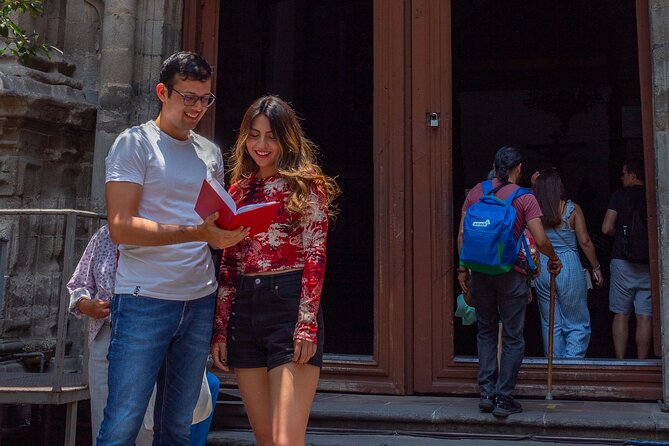
José, the bilingual guide, is a big reason the tour gets high marks. The standout pattern is the way the guide doesn’t just recite; he talks. He pulls themes like loneliness and communion and uses them to explain how poems can act like mirrors for lived experience.
That matters because poetry can feel distant if you only encounter it on paper. Here, you get a shortcut: the guide highlights key ideas connected to each location, then invites you to hold those ideas while you look around.
It also helps that the tour recommends other places beyond the route. One review specifically praises José for suggesting additional sites not on the plan, sites you might otherwise miss in a first-time list. If you like planning your own follow-up day, this is a smart part of the experience: ask for two extra stops that match your interests before you leave Zócalo.
Don’t be shy about asking at the end, either. The group is small enough that you can usually get a quick response without the guide rushing off.
Pacing and practical tips for this 2-hour loop
This is not a sit-and-stare tour. It’s a short walk with fast switches between themes and settings. With stop times like 1 hour at the House of Tiles and around 20 minutes at each of the other sites, you’ll be moving through the center with just enough time to listen and look, then transition.
Here’s how to make it feel worth every minute:
- Keep a listening mindset at each stop. Don’t try to multitask.
- Put your questions in your head for the guide. Saves you from losing track mid-reading.
- Wear comfortable shoes. You’re covering central streets and may need to reposition for better sightlines.
- Plan for weather. Open plazas like Zócalo can be exposed.
Also, because it ends at Zócalo, you’ll likely be able to connect easily to other activities right after. That’s convenient: poetry finishes, and city life continues.
Should you book the Mexico City Poetry Tour?
Book it if you want a literature-forward way to understand Centro Histórico without spending a whole day in museums. The tour shines for people who like history tied to emotion—ideas like loneliness, faith, and indigenous testimony—grounded in actual places.
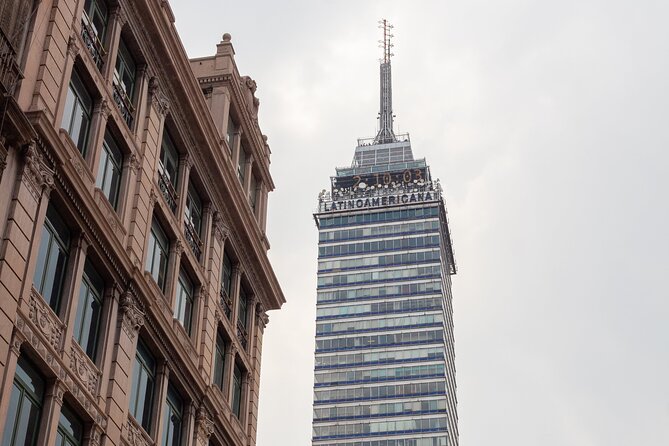
It’s also a strong pick if you’re short on time but still want something thoughtful and slightly off the standard checklist. In two hours, you see multiple high-impact areas: Casa de los Azulejos, the San Francisco church area, Zócalo, and the Templo Mayor surroundings.
Skip it or consider another format if you want long, slow exploration at each site. The stops are brief, and the value comes from listening and discussion, not from deep independent roaming.
If you’re deciding between this and a general city walk, I’d choose this one when your interests include major poets like Octavio Paz, Sor Juana Inés de la Cruz, and Nezahualcoyotl—and when you like the idea of turning famous lines into a walk you can actually remember.
FAQ
How long is the Mexico City Poetry Tour?
It lasts about 2 hours.
What language is the tour offered in?
The tour is offered in English, and you’ll have a bilingual guide.
How much does the tour cost?
The price is $53.74 per person.
Where does the tour start and end?
It starts at Casa de los Azulejos on Avenida Francisco I. Madero 4 (Centro Histórico de la Cdad. de México) and ends at Zócalo, Plaza de la Constitución.
Is admission included for the stops?
Admission tickets are listed as free for the tour’s reading stops.
How big is the group?
The tour has a maximum of 15 travelers.
Do I need a paper ticket?
You’ll use a mobile ticket.
Is cancellation free?
Yes. You can cancel for a full refund up to 24 hours in advance of the experience start time.
Are snacks included?
No. Snacks are not included, and their value is variable at the restaurant.
The City in a Single Day



More Tours in Mexico City

More Tour Reviews in Mexico City



Fresh from our Mexico City notebook

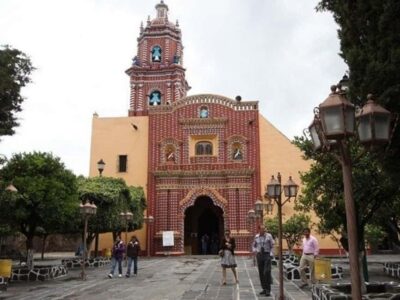


City Tours, compared.
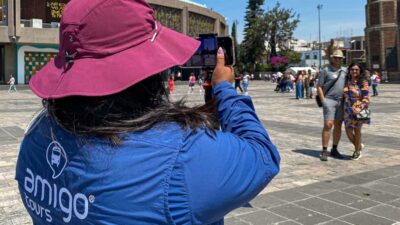 ★ 4.6Teotihuacan, Tlatelolco & Guadalupe Shrine TourFrom $493,773 reviews
 ★ 5.0Teotihuacan Hot Air Balloon Flight from Mexico City / VolareFrom $1553,262 reviews
 ★ 5.0Teotihuacan Private Tour from Mexico CityFrom $1401,890 reviews
 ★ 5.0Historic Center Food Tour in Mexico CityFrom $1151,263 reviews
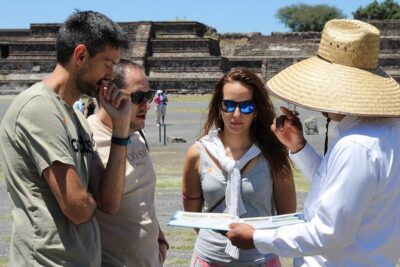 ★ 5.0The best tour to Teotihuacán from Mexico CityFrom $501,236 reviews
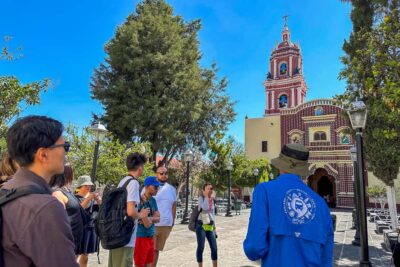 ★ 4.3From Mexico City: Puebla, Cholula and Tonantzintla Day TripFrom $891,191 reviews
 ★ 4.0Hop-on Hop-off Bus TourFrom $211,043 reviews
 ★ 4.8Historic Downtown Walking TourFrom $261,039 reviews