
REVIEW · MEXICO CITY MUSEUMS & GALLERIES
Mexico City: Jewish Presence
Jews have been part of Mexico City longer than you think. This 3.5-hour, English-led walk connects Jewish arrivals with real places you can see—right by the Great Aztec Temple and the big church complex around it—while you trace persecution, migration, and change.
Two things I really like: the pacing that moves from Inquisition-era fear to modern community life, and the guide-led visits that take you into major sites instead of stopping at a street corner. Carlos also has a reputation for answering questions clearly and sticking to proven details, which matters when the subject is heavy.
One drawback to plan for: this tour is not suitable for wheelchair users or people with mobility impairments, and it’s aimed at adults—plus, like any walking tour, a no-show can spoil your day if you don’t build in a little buffer.
In This Review
- Key Points You’ll Care About
- Why This Walk Ties Jewish History to Real Mexico City Corners
- Getting Oriented at República de Argentina and the Aztec Temple Bridge Area
- Patio Norte and the Cathedral Block: How Empire and Religion Shared Space
- Former College of San Ildefonso: The Tour’s Bridge From Colonial Institutions to Change
- Inside the Jewish Synagogue Visit: Loreto Park and a Community That Kept Rebuilding
- The Antiguo Palacio de la Santa Inquisición: Persecution, Trade, and Hidden Messages
- WWII Rescue and the 1970s Shift: Why Synagogues Didn’t Stay the Same
- Price and Logistics: Is $89 Worth 3.5 Hours?
- Practical Checklist: What to Bring (and What Will Slow You Down)
- Who Should Book This Tour (and Who Should Skip It)
- Should You Book Mexico City: Jewish Presence?
- FAQ
- How long is the tour?
- Is the tour available in English?
- Where exactly is the meeting point?
- What’s the finish location?
- What should I bring?
- What shouldn’t I bring or do?
- Is it suitable for kids?
- Is it accessible for wheelchair users?
Key Points You’ll Care About

- See how power worked in the street-level center, from colonial institutions to persecution tied to trade
- Get guided access at the stops that actually matter, including a synagogue visit
- Follow three waves of arrivals, including Eastern Europe and people who didn’t make it through Ellis Island
- Understand the shift toward secular Mexico, plus resistance to anti-Semitic policy
- Learn how Jewish capital shaped finance, including the move from sewing work to textiles and jewelry
More galleries and rooftops worth the ticket
- CDMX: Xochimilco, Coyoacan, Frida Kahlo Museum & Murals Tour
★ 4.4 · 3,025 reviews - Chapultepec Castle & Anthropology Museum Tour
★ 4.5 · 1,348 reviews - Frida Kahlo VIP [Museum Tickets Included] Bike, Markets & Churros
★ 5.0 · 1,072 reviews - Anthropology Museum Guided Tour
★ 4.5 · 1,035 reviews
Why This Walk Ties Jewish History to Real Mexico City Corners
The best way to understand Jewish Mexico City is not through a single museum moment. You understand it by seeing how the story squeezes through the same narrow streets and landmark buildings where other powers rose: empire, church authority, commerce, and later modern secular life.
Here, the tour is built around visibility. You stand near the Great Aztec Temple area, then link that ground to early Spanish rule and the Institutions that followed. That physical overlap makes the history feel less like a timeline and more like a force that shaped daily life.
And yes, the guide matters. Carlos is repeatedly described as a walking fact-check: humble, direct, and serious about sticking to what’s known. When the subject is persecution and survival, that’s not a small detail—it keeps the conversation grounded.
Getting Oriented at República de Argentina and the Aztec Temple Bridge Area
Your tour starts at República de Argentina 15, outside a white building across Justo Sierra Street from the northern entrance to the Great Aztec Temple Bridge. Meet under the main door marked #15, with the sign above reading Librería Porrúa.
From the first minutes, you get a sitting-down orientation while you look over the Great Aztec Temple area. This matters because the tour jumps between Jewish community stories and the wider political control around them. If you start without that map in your head, you might miss how the same place could host a church view, an older sacred landscape, and later Jewish institutions.
It’s also a good moment to get your bearings fast: you learn how the founding of Mexico (roughly 700 years ago) sits underneath Spanish colonial rule, which then sets the stage for what comes next.
Patio Norte and the Cathedral Block: How Empire and Religion Shared Space
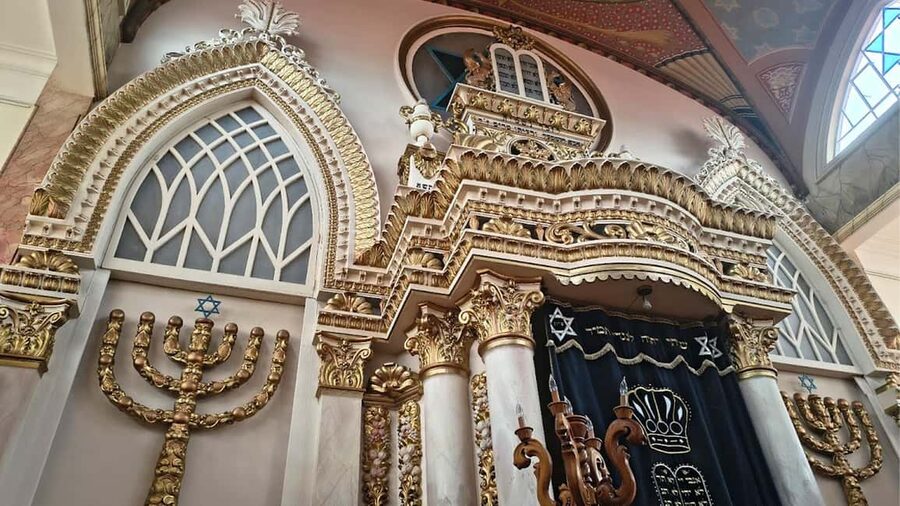
The next stop, Patio Norte, is your context builder. You’re not just looking at pretty stone—you’re connecting the dots between the center of Spanish administration and the pressure that fell on Jews and conversos later on.
Then comes the Catedral Metropolitana de México area. Expect the tour to use the surrounding power symbols to explain why persecution wasn’t random. In many places, the church and Spanish governance reinforced each other. In this story, you’ll see how legal and social forces could turn people’s jobs and networks into targets.
If you’re the type who likes to understand a city’s “who ran what” layers, this block delivers. You get the sense that Mexico City’s core wasn’t only a stage for art and religion—it was also a machine for enforcing order.
Wider loops around Mexico City
- Teotihuacan Hot Air Balloon Flight from Mexico City / Volare★ 5.0 · 3,262 reviews
- Teotihuacan Private Tour from Mexico City★ 5.0 · 1,890 reviews
- Historic Center Food Tour in Mexico City★ 5.0 · 1,263 reviews
- The best tour to Teotihuacán from Mexico City★ 5.0 · 1,236 reviews
- From Mexico City: Puebla, Cholula and Tonantzintla Day Trip★ 4.3 · 1,191 reviews
Former College of San Ildefonso: The Tour’s Bridge From Colonial Institutions to Change
At the Former College of San Ildefonso, you get a transition point. The tour uses it to connect the educational and institutional world—who was trained, who had access, and what kinds of authority shaped society—to the later political reforms that changed the rules of entry, belonging, and public life.
This stop helps because the story doesn’t only move forward with immigration. It also changes through law and civil conflict. The tour sets you up to understand how Mexico shifted toward a secular state, creating space for new immigrants while also triggering backlash and resistance.
Even if you’ve read general history before, this is the part that makes the timeline feel personal: you start to see how policy and conflict altered what communities could do next.
Inside the Jewish Synagogue Visit: Loreto Park and a Community That Kept Rebuilding
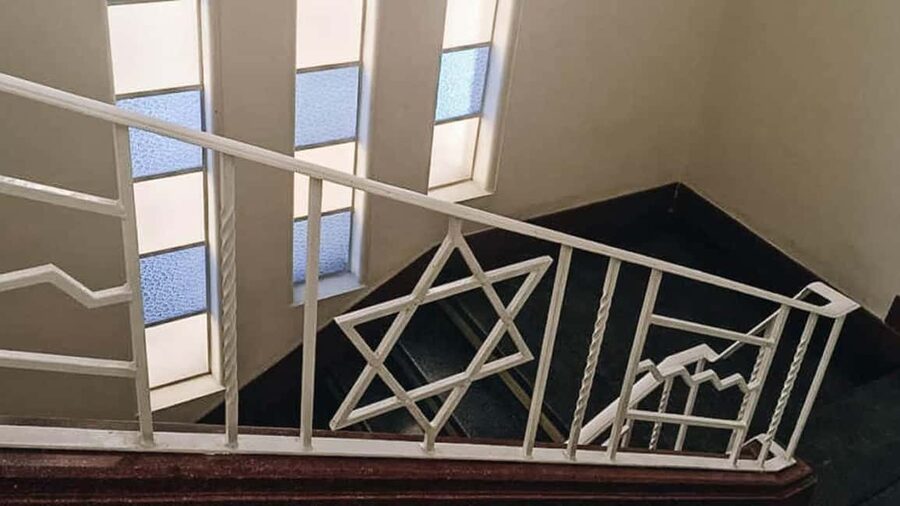
The synagogue portion takes place around Loreto Park, where the second wave of Jewish immigrants settled in the late 19th century. This is where the tour turns from “what happened to people” into “how people built institutions.”
You’ll see two of the oldest synagogues in the area and tour one of them. The tour frames the community’s growth by connecting arrival sources: Eastern Europe, the Ottoman Empire, and people who weren’t accepted at Ellis Island. That mix helps you understand why Jewish life in Mexico City didn’t grow in one uniform direction.
Inside the guided visit, the focus is on how the synagogue functioned as a community anchor—places where identity survived, where practice continued, and where the community could look outward without losing itself. You’ll also hear how, across the 20th century, Jewish families moved up through work and business, especially in textiles and jewelry, helped by Jewish capital and the shift from tailors and seamstresses into larger financial roles.
This part is likely to stick with you if you like stories where migration leads to real institutions—not just nostalgia.
The Antiguo Palacio de la Santa Inquisición: Persecution, Trade, and Hidden Messages
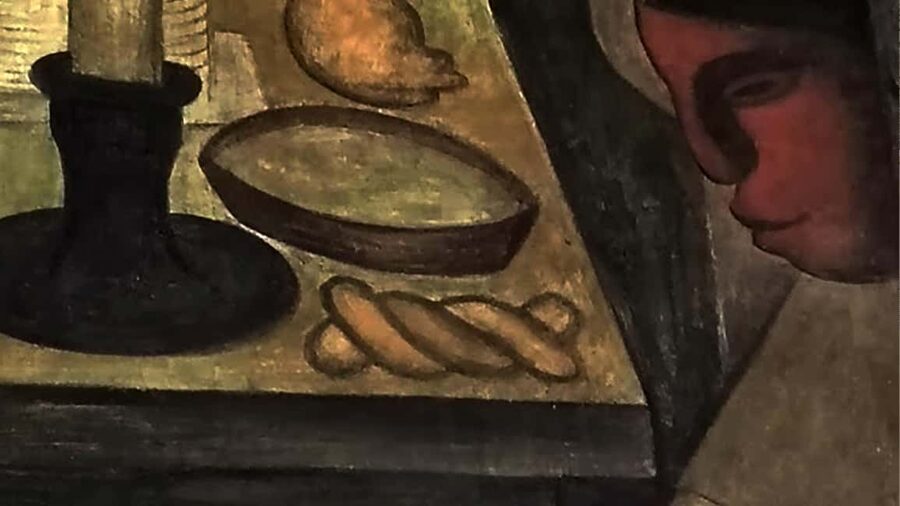
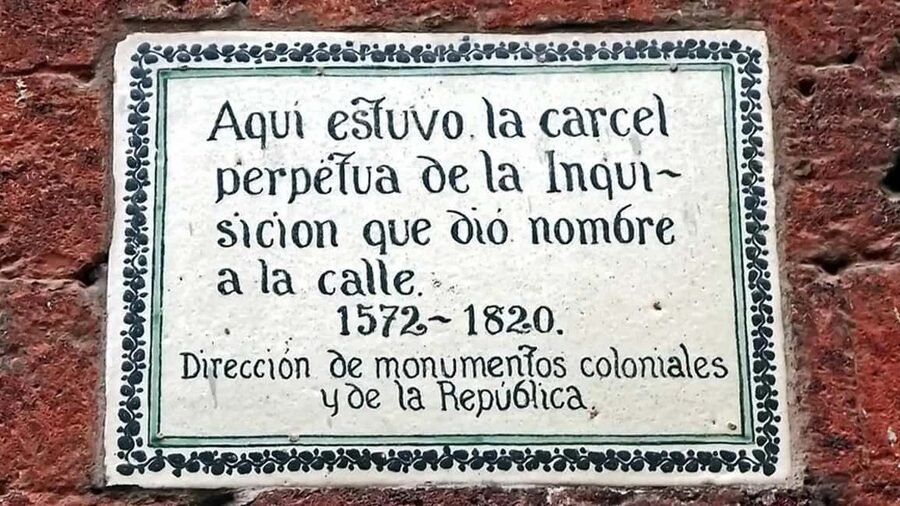
One of the most dramatic stops is the Antiguo Palacio de la Santa Inquisición. This is where the tour starts talking about the Spanish Inquisition in a more specific way: not as an abstract label, but as a system that targeted people through records, enforcement, and messaging.
You’ll connect what happened after early Jewish arrival (in the tour’s timeline, Jews arrive in 1519 C.E.) with what follows under the Inquisition—survival through fear, and tragedy through public punishment, including persecution so severe it included being executed. The tour also explains that the persecution often struck trading Jews especially, which makes commerce itself feel dangerous.
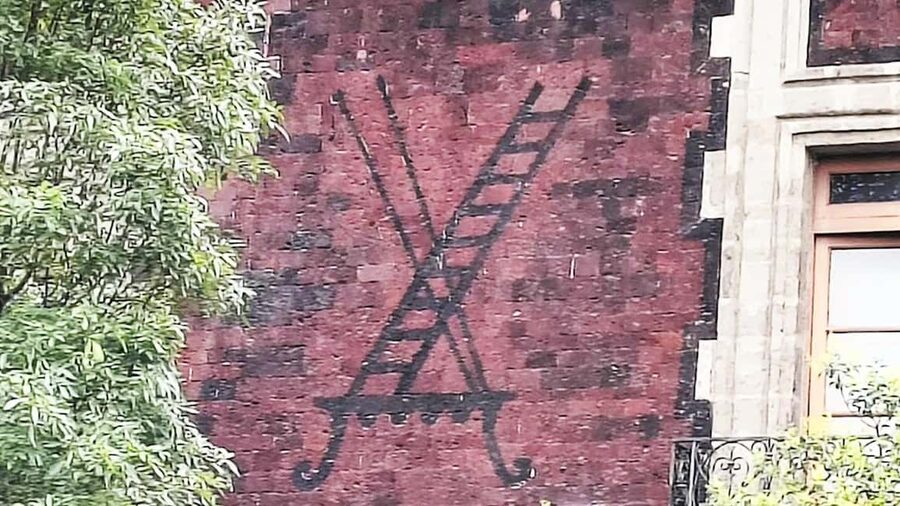
The most eye-opening element here is the idea of hidden messages linked to persecution. You’re guided to look at the building not only as architecture, but as communication—how authorities left traces that still shape how we read the past today.
If you care about “how could this happen here,” this stop gives you the physical answer: power leaves marks.
WWII Rescue and the 1970s Shift: Why Synagogues Didn’t Stay the Same
The tour wraps up the story by bringing it closer to modern life. You’ll learn about Mexico’s rescue of Jews during World War II, a reminder that survival didn’t only mean waiting out persecution. It could also mean escape routes and government actions that mattered.
Then the conversation moves to the 1970s, when synagogues were effectively abandoned as Jewish families migrated to more affluent parts of the city. That detail is important. It shows that history doesn’t freeze. Even strong institutions can thin out when people’s neighborhoods change, when opportunities move, and when a city’s economics shift.
By the time you finish at Justo Sierra 71, you’re left with a bigger takeaway than names and dates. You understand how Jewish presence in Mexico City has been shaped by laws, war, work, and where families could live safely and profitably.
Price and Logistics: Is $89 Worth 3.5 Hours?
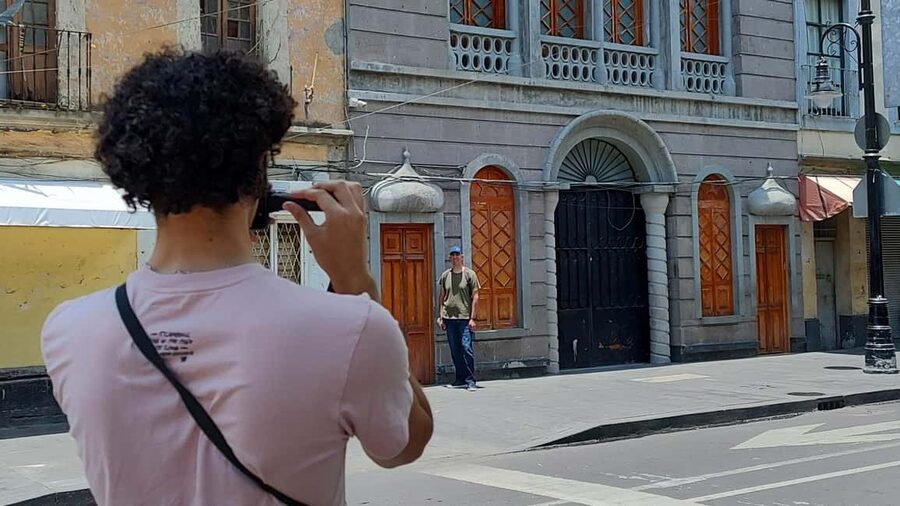
For $89 per person and about 3.5 hours, you’re paying for two things: expert guidance and entrance to the sites that are available without special reservations. The value is strongest when a tour includes access, not just explanation.
You get guided entry at key public and open locations along the route, plus a synagogue visit that’s built into the pacing rather than treated like an optional detour. And the guide’s role is huge here. When the topic is Jewish survival, Inquisition persecution, and later migration, a good guide doesn’t just inform. They help you keep the story straight.
If you’re visiting Mexico City for the first time and want one focused experience that links Jewish life directly to the city center, this price looks fair. If you already plan to visit multiple museums and don’t want walking, you might choose to spend your time elsewhere.
Practical Checklist: What to Bring (and What Will Slow You Down)
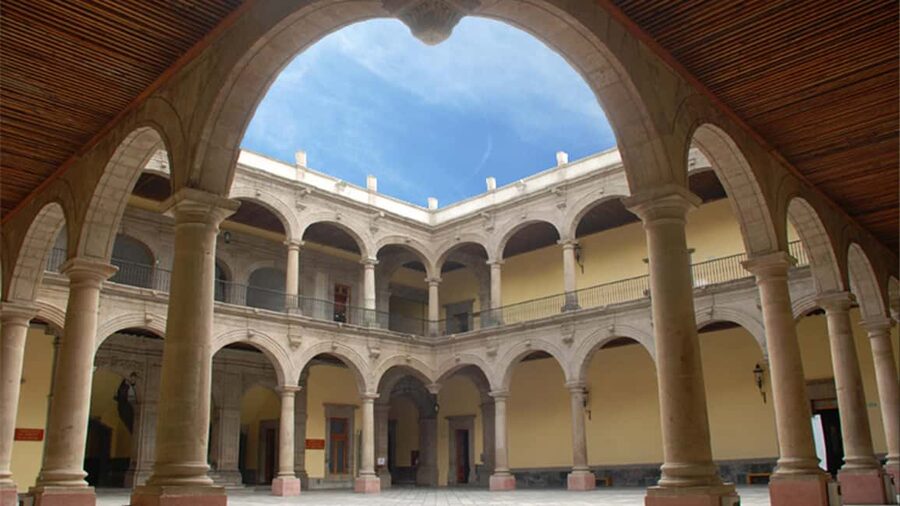
Wear comfortable shoes. You’ll be on your feet through central streets and indoor/outdoor site changes. Skip sandals or flip-flops; the tour rules also prohibit things that could be a safety problem in crowded areas.
Bring a sun hat and sunscreen, since you’ll start and move around in outdoor city sections before you finish.
The experience also restricts the basics of casual travel: no food and drinks, no flash photography, no drones, no bikes or scooters, and no pets (assistance dogs are allowed). Also, no vaping. If you use your phone camera for quick shots, keep it non-flash.
One small “don’t get stressed” tip: confirm the meeting point in advance. The instructions are specific—outside the white building, door marked #15, under the main door with the Librería Porrúa sign.
Who Should Book This Tour (and Who Should Skip It)
This is a strong choice for adults who enjoy history tied to walking and architecture, especially if you want a clear narrative from the 1500s through WWII and into modern decades. If you like learning how migration connects to jobs, laws, and institutions, you’ll probably feel satisfied.
It’s not suitable for children under 18, and it’s not suitable for people with mobility impairments or wheelchair users. If stairs and uneven surfaces are an issue for you, plan on skipping this one.
Language is English, and the tour is guided by a live English-speaking expert.
Should You Book Mexico City: Jewish Presence?
If you want one guided walk that connects persecution, survival, community building, and later migration to a set of specific locations in Mexico City’s center, I’d book it. The best argument is the guide quality: Carlos is repeatedly praised for the amount of factual detail, his willingness to answer questions, and his habit of sticking to what’s known.
But if mobility is a concern, or if you’re traveling with teens under 18, pass. And if you’re the type who hates last-minute uncertainty, build in a little buffer on timing—because, even with a good operator, a walking tour day needs you to be at the exact meeting spot when the group starts.
FAQ
How long is the tour?
It lasts about 3.5 hours.
Is the tour available in English?
Yes, the live tour guide speaks English.
Where exactly is the meeting point?
You meet outside the white building across Justo Sierra Street from the northern entrance to the Aztec Great Temple Bridge, under the main door marked #15. The sign above the door says Librería Porrúa.
What’s the finish location?
The tour finishes at Justo Sierra 71.
What should I bring?
Bring comfortable shoes, a sun hat, and sunscreen.
What shouldn’t I bring or do?
You can’t bring weapons or sharp objects, food and drinks, drones, pets (assistance dogs allowed), mobility scooters, bikes, and you can’t vape. Flash photography is also not allowed.
Is it suitable for kids?
No. It’s not suitable for children under 18.
Is it accessible for wheelchair users?
No. It’s not suitable for people with mobility impairments or wheelchair users.
The City in a Single Day



More Tour Reviews in Mexico City



Behind the Ticket: More CDMX Museums


Fresh from our Mexico City notebook

Mexico City Museums & Galleries, compared.
 ★ 4.4Xochimilco, Coyoacan, Frida Kahlo Museum & Murals TourFrom $893,025 reviews
 ★ 4.5Chapultepec Castle & Anthropology Museum TourFrom $791,348 reviews
 ★ 5.0Frida Kahlo VIP [Museum Tickets Included] Bike, Markets & ChurrosFrom $831,072 reviews
 ★ 4.5Anthropology Museum Guided TourFrom $391,035 reviews
 ★ 5.0Frida Kahlo VIP [Museum Tickets Included] Walk, Markets & ChurrosFrom $83982 reviews
 ★ 5.0EXCLUSIVE TOUR Frida Kahlo Museum – SMALL GROUPSFrom $86901 reviews
 ★ 4.4Anthropology Museum Guided VisitFrom $67708 reviews
 ★ 4.5Frida Kahlo Museum Entry Ticket w/Digital GuideFrom $34683 reviews
Browse the lists this tour appears in