

REVIEW · HISTORIC CENTER WALKING TOURS
Historical Center of the CDMX on foot
One walk can feel like a time machine. You’ll connect the big sights of Mexico City’s center—El Zócalo, the National Palace area, classic streets of the Historic Center, and Palacio de Bellas Artes—with a guide in English over about 4 to 5 hours.
I like how tightly packed the stops are, so you get a serious dose of architecture and city stories without long transfers. I also like that you’ll start and end where it’s easy to orient yourself: Constitution Plaza.
What I really appreciate is the value: Zócalo and the National Palace area are admission-free, and the tour includes bottled water plus all fees and taxes. That means you can spend your attention on what’s in front of you instead of hunting down logistics.
One thing to plan for: Palacio de Bellas Artes entry isn’t included (and MUNAL tickets aren’t included either), so you’ll need to budget separately for those.
In This Review
- Quick highlights
- Starting at El Zócalo: Mexico City’s Constitution Square
- National Palace Area: power next to centuries of design
- Historic Center streets: Tacuba Street and the feel of old Mexico City
- Manuel Tolsá Square, Postal Palace, and the weirdly perfect Venice nod
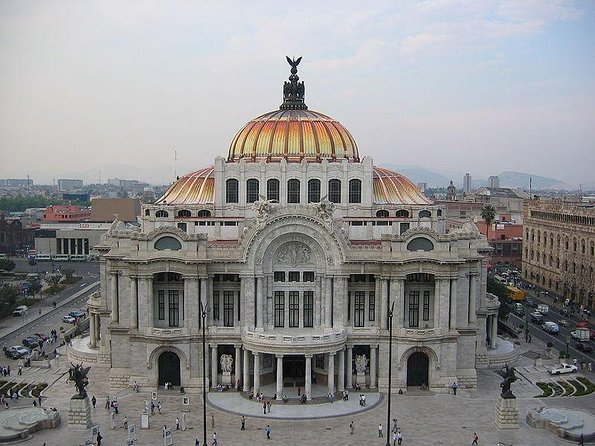
- Palacio de Bellas Artes: Art Nouveau outside, Art Deco inside
- How the 4–5 hour walk stays manageable (and who it fits)
- What’s included (and where the extra ticket cost comes in)
- Guides can make or break the vibe: plan for a smoother day
- Should you book this Historic Center on foot?
- FAQ
- How long is the walking tour?
- Is the tour private?
- What language is the tour offered in?
- Where does the tour start?
- Are tickets included for everything on the route?
- What happens if the weather is bad?
Quick highlights
- Walkable route through the center: major landmarks in a compact radius
- Most stops are free: Zócalo and the National Palace area have free admission
- Stop-by-stop guidance in English: tailored explanations, not just sightseeing
- Architecture nerd heaven: Art Nouveau outside and Art Deco inside at Bellas Artes
- Historic streets with real textures: Talavera mosaics, old civic buildings, and book-fair vibes
- Private group experience: only your group joins, so your pace can work better
More laps of the Zocalo and the old streets
- Historic Downtown Walking Tour
★ 5.0 · 1,289 reviews - Mexico City: Historic Downtown Walking Tour
★ 4.8 · 1,039 reviews - Walking Tour of the Historic Center of Mexico City
★ 5.0 · 870 reviews - Mexico City Historical Centre Food Tour with 7 Authentic Tastings
★ 5.0 · 723 reviews
Starting at El Zócalo: Mexico City’s Constitution Square
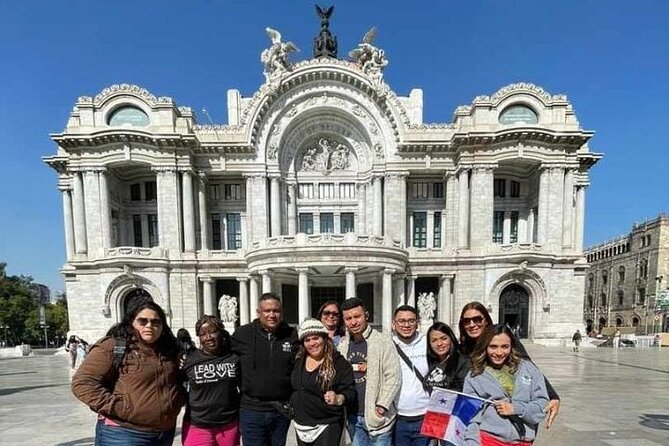
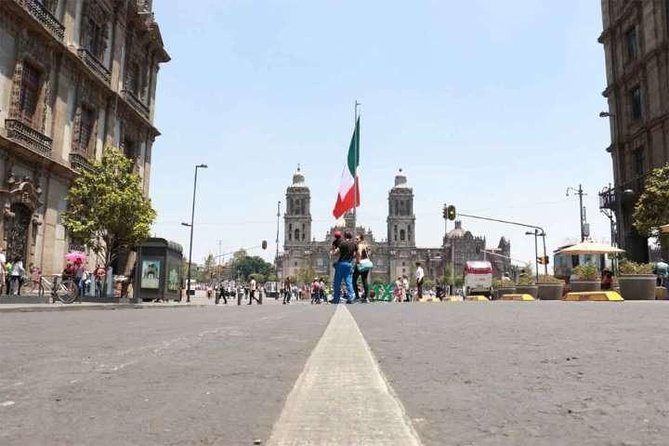
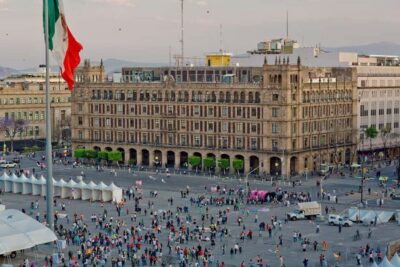
You begin at Constitution Plaza (Plaza de la Constitución, S/N, Centro Histórico). Even if you’ve seen photos, El Zócalo works better in person because it’s not just a landmark—it’s the anchor for understanding how Mexico City grew. It’s the Plaza de la Constitución, informally known as El Zócalo, named for the Constitution of Cádiz (1812). It’s also the second-largest square in the world, and the first among Spanish-speaking countries by size.
Here’s what I love about starting here: you get your bearings fast. The square gives you a visual map for the rest of the walk—where power, religion, government, and culture show up in the same tight area. If you arrive early, you’ll notice the flow of people around you: locals crossing paths, street life in the edges, and the sense that this is still a working public space.
A practical tip: bring a bottle of water (and yes, you’re getting bottled water on this tour), because El Zócalo and the surrounding streets can make you feel like you’re walking longer than you planned—shade can be hit-or-miss, depending on the day.
National Palace Area: power next to centuries of design
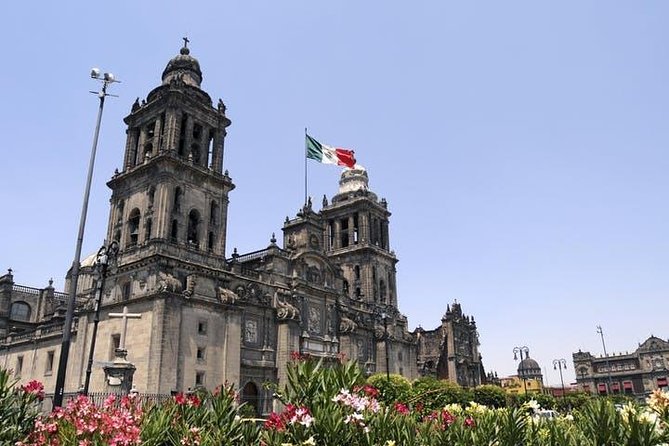
From El Zócalo, you move to the National Palace zone, where the energy shifts from open square space to layered monuments. This stop centers on two linked giants: the Metropolitan Cathedral (built over three centuries, blending styles) and the National Palace itself.
The National Palace matters because it’s the seat of Mexican Executive Power. And nearby, you’ll also be in the neighborhood of older civic buildings, including the Old City Hall Palace and the Government Building (both serving as current Mexico City government headquarters), plus the Merchants Portal. Even if you don’t study every façade detail, the value is that you see how one area holds multiple “jobs” for the city—religious, political, administrative, and ceremonial—without needing to travel across town.
What I like about spending about two hours in this general area is the pacing. You’re not rushing from door to door every ten minutes. You can slow down enough to notice how architectural styles evolve in the same space and how the buildings relate to each other.
Potential drawback to keep in mind: this is a concentrated area with lots of foot traffic. If you’re sensitive to crowds, you’ll want to keep your patience level steady and let the guide steer you to the best angles and moments.
Historic Center streets: Tacuba Street and the feel of old Mexico City
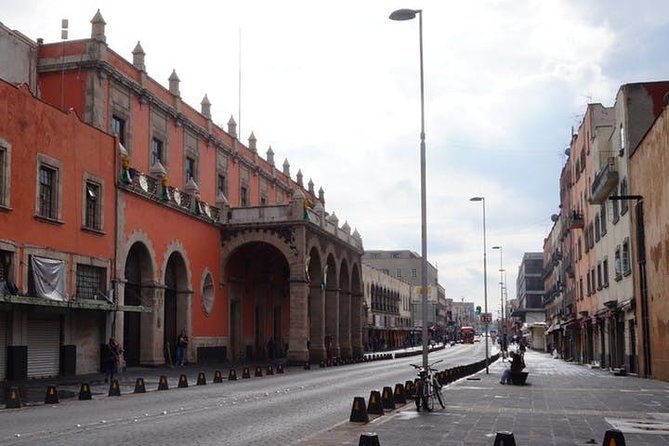
Next you get into the kind of Mexico City you can’t really replace with a car tour: streets you can walk, where old routes turned into today’s city rhythms. You’ll be guided along the Historic Center area, including Tacuba Street—a former version of the Mexico–Tacuba Road.
This is where the tour turns from “big monument” to “texture and details.” You’ll pass places that feel lived-in, like Café Tacuba, which is known for its Mexican flavor and decor elements such as Talavera mosaics. Even if you don’t stop for a sit-down meal, seeing it on the route helps you understand how everyday culture sits right beside official history.
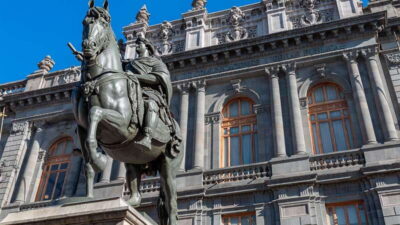
You’ll also hear about Manuel Tolsá Square, a spot with a strong architectural harmony. Nearby are landmarks that make the walk feel purposeful: the National Museum of Art (MUNAL) and the Mining Palace, described as austere and neoclassical in tone. If you like a city that keeps using old spaces, the Mining Palace is worth noting because it hosts the Mining Palace Book Fair, one of the busiest events in the city.
If you do like to stop and look longer than planned, this is the area where you can quietly adjust your pace. The route is designed so you can spend time on what grabs your eye, without losing the whole plan.
More ways into the city long story
- Historic Downtown Walking Tour★ 5.0 · 1,289 reviews
- Historic Center Food Tour in Mexico City★ 5.0 · 1,263 reviews
- Mexico City: Historic Downtown Walking Tour★ 4.8 · 1,039 reviews
- Walking Tour of the Historic Center of Mexico City★ 5.0 · 870 reviews
- Mexico City Historical Centre Food Tour with 7 Authentic Tastings★ 5.0 · 723 reviews
Manuel Tolsá Square, Postal Palace, and the weirdly perfect Venice nod
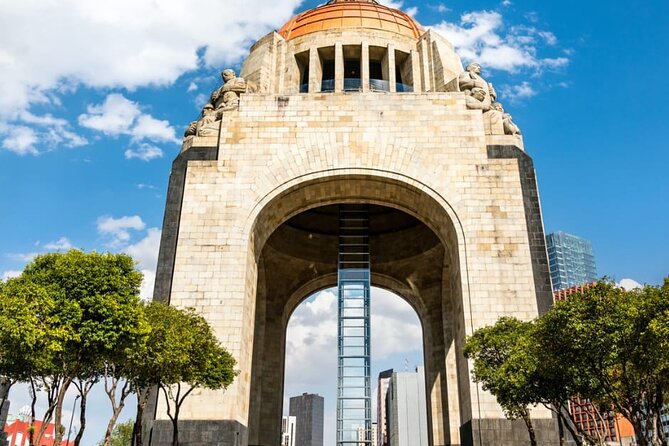
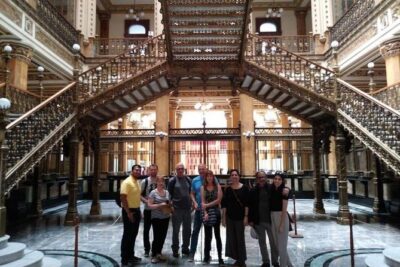
Right around Manuel Tolsá Square, the tour continues to another standout: the Postal Palace, next to the Mining Palace. The key detail here is the inspiration—it’s said to be inspired by Venice. That’s the kind of architectural cross-wiring that keeps the Historic Center interesting, because Mexico City’s central streets don’t just preserve local styles; they also absorb influences in ways you can actually spot with your eyes.
This stop doesn’t just add a building to your photos. It gives you a working lesson in how cities borrow ideas. Even a postal building—something you might not think of as a “must-see”—becomes a marker of ambition and design.
A small consideration: since you’re moving on foot, your ability to linger depends on your group’s pace. If your group has people who want long photo stops, it helps to keep a mental timer so you don’t feel rushed later at Bellas Artes.
Palacio de Bellas Artes: Art Nouveau outside, Art Deco inside
You finish at Palacio de Bellas Artes, one of the best-known concert halls in the world. The building is a masterclass in contrast: the exterior features impressive sculpture work in an Art Nouveau style, while the interior leans into Art Deco with geometric elements and pre-Hispanic motifs.
This is the stop you’ll feel in your bones. Even if your interests are more history-and-architecture than performances, the building still delivers because it’s designed like a showpiece. The interior details matter, too: the geometry and mixed visual influences are part of the point of visiting.
Here’s your money note: tickets for Palacio de Bellas Artes are not included, and MUNAL tickets are not included either. That doesn’t ruin the tour—it just means you’ll want to decide ahead of time whether you’ll add both, or prioritize one based on your interests.
If you’re flexible, I’d suggest making your decision based on what you care about most:
- If you want performance-style grandeur plus architectural contrast, prioritize Bellas Artes.
- If you’re museum-focused, MUNAL may be more your lane.
Either way, this final stop is where the day’s themes come together: government-era design energy, Historic Center street life, and the cultural statement of one of Mexico City’s iconic venues.
How the 4–5 hour walk stays manageable (and who it fits)
A 4 to 5 hour walking tour can sound intense—until you realize the stops are close enough that you’re mostly in “seeing mode,” not “travel mode.” You also get a built-in structure: Zócalo first, then the National Palace zone, then Historic Center streets, then Bellas Artes.
This pacing tends to work well if you’re:
- short on time but want real context
- the type who likes architecture details, not just photos
- comfortable walking through busy central areas for a few hours
It may be less ideal if you have mobility limits or you hate crowds. The route is designed for a standard walking pace and the center can be busy, so comfort matters.
For group experience: it’s a private tour, so only your group participates. That usually makes the pace smoother than bigger group tours, because you can respond to what your group wants—within the tour’s time window.
What’s included (and where the extra ticket cost comes in)
On the practical side, this tour includes:
- bottled water
- all fees and taxes
- a mobile ticket
- an English-speaking guide
What’s not included:
- Palacio de Bellas Artes admission
- MUNAL tickets
So the “value” question isn’t just about what’s included—it’s about the mix. With two major core areas being free to visit (Zócalo and the National Palace area), you’re not paying to get started. The only extra-ticket chunk tends to be the cultural finale, where you’ll likely want to decide based on your personal interests.
If you want maximum bang-for-your-buck, treat Bellas Artes as the optional spend and let the free stops do most of your “wow” work.
Guides can make or break the vibe: plan for a smoother day
The tone of this tour depends heavily on your guide’s style. Names you might see include Alejandro and Leonardo. Alejandro is described as historically knowledgeable and good at keeping topics interesting as you move stop to stop. Leonardo is described as very informative and the whole experience as well organized.
Either way, you can do one smart thing to improve your day: tell your guide what you’re most interested in before you start walking. That simple step can turn a solid tour into one that feels tailored—especially in a place with so many visual details that you’d otherwise need to choose what to notice.
Also, keep your expectations realistic: the center is huge, and sometimes schedules can be adjusted for big public events. If your day is time-tight, it’s worth communicating your must-sees early so the guide can prioritize without making you feel like you’re constantly asking questions.
Should you book this Historic Center on foot?
I’d book this tour if you want a structured, walkable way to understand Mexico City’s heart without bouncing around town. The biggest draw is the combination: free iconic stops, plus a final cultural landmark where architecture is the headline.
Skip it or double-check your priorities if you only want museum interiors and you’re not interested in architecture or street-level context—because Bellas Artes (and MUNAL) are ticketed separately. Also, be ready for central-area crowd levels.
If you like history with clear, practical context and you want to spend your time looking at buildings rather than navigating, this is a strong fit. Just decide ahead of time how much you want to spend on those final-entry tickets, and you’ll feel like you got a full, satisfying day out of it.
FAQ
How long is the walking tour?
It runs about 4 to 5 hours.
Is the tour private?
Yes. It’s a private tour/activity, so only your group participates.
What language is the tour offered in?
It’s offered in English.
Where does the tour start?
The meeting point is Constitution Plaza (Plaza de la Constitución S/N, Centro Histórico de la Cdad. de México, Centro, Cuauhtémoc, 06010 Ciudad de México, CDMX, Mexico).
Are tickets included for everything on the route?
Tickets are free for Zócalo and for the National Palace area, and other included stops are admission-free as well. However, tickets for Palacio de Bellas Artes and MUNAL are not included.
What happens if the weather is bad?
The experience requires good weather. If it’s canceled due to poor weather, you’ll be offered a different date or a full refund.
The Long Story of Mexico City




More Tour Reviews in Mexico City




The Centro Historico on Foot

Fresh from our Mexico City notebook

Historic Center Walking Tours, compared.
 ★ 5.0Historic Downtown Walking TourFrom $261,289 reviews
 ★ 5.0Historic Center Food Tour in Mexico CityFrom $1151,263 reviews
 ★ 4.8Historic Downtown Walking TourFrom $261,039 reviews
 ★ 5.0Walking Tour of the Historic Center of Mexico City870 reviews
 ★ 5.0Mexico City Historical Centre Food Tour with 7 Authentic TastingsFrom $65723 reviews
 ★ 4.9Authentic Downtown Food TourFrom $115260 reviews
 ★ 5.0Culinary Secrets of the Centro HistóricoFrom $140257 reviews
 ★ 5.0Walking Tour – Impressive murals in Historical Center of Mexico CityFrom $51224 reviews
Browse the lists this tour appears in