
REVIEW · ANTHROPOLOGY MUSEUM TOURS
Anthropology Museum Tour: Discover Pre-Hispanic Treasures
A museum tour can make or break your first Mexico City day. Here, you’re set up to understand pre-Hispanic art fast at the National Museum of Anthropology, from the big names to the smaller stories. I like that the guide helps you connect themes across rooms and not just point at objects. The big draw is the guided context, especially around the Group of Figures and the Sun Stone.
Two things I really like: first, you get admission included and a guide for about 3 hours, so you’re not stuck reading labels alone. Second, the pace works well if you want to hit the most famous pieces without losing the thread. The one real drawback to keep in mind is that this is not a kids-first tour, and one guest found the explanation could feel close to academic.
In This Review
- Key highlights to look for
- National Museum of Anthropology: the fastest way to get oriented
- Two floors in about three hours: what to expect inside
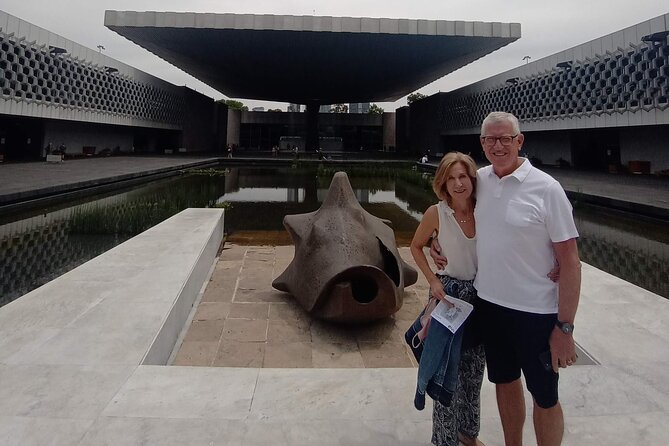
- Olmec Group of Figures: the piece you’ll keep thinking about
- The Sun Stone (22 tons): why this Aztec giant matters
- Seeing human remains with context, not just shock
- Ethnography section: connecting ancient Mexico to what’s living today
- Guide quality: what the best moments usually depend on
- Price and time: is $50 worth it for 3 hours?
- Logistics that actually matter on the ground
- Should you book this Anthropology Museum tour?
- FAQ
- Is the museum admission included?
- How long is the tour?
- What language is the tour offered in?
- Where do I meet for the tour?
- What’s not included in the tour price?
- Is the tour affected by weather?
Key highlights to look for
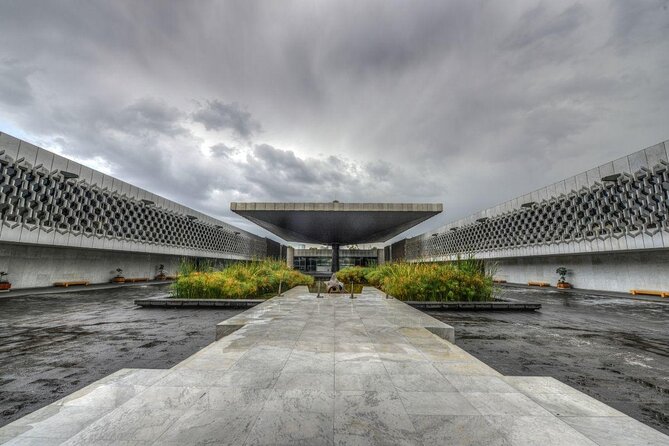
- National Museum of Anthropology, with focus on pre-Hispanic treasures in a way that’s easy to follow
- English-guided visit (small-group) with a bilingual guide
- Olmec Group of Figures, one of the museum’s most memorable highlights
- Aztec Sun Stone, including what it means in world history
- Two-floor layout, so you’ll see both famous artifacts and human remains with guidance
- Bonus ethnography that bridges ancient cultures to Mexico’s indigenous communities today
More rooms to lose an afternoon in
- Chapultepec Castle & Anthropology Museum Tour
★ 4.5 · 1,348 reviews - Anthropology Museum Guided Tour
★ 4.5 · 1,035 reviews - Mexico City: Anthropology Museum Guided Visit
★ 4.4 · 708 reviews - Mexico City: Chapultepec Castle and Anthropology Museum Tour
★ 4.5 · 637 reviews
National Museum of Anthropology: the fastest way to get oriented
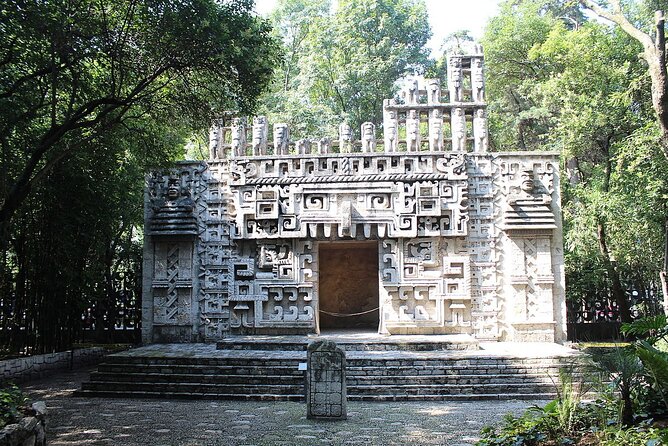
The National Museum of Anthropology is one of those places where you can either feel inspired or lost. Left to your own devices, it’s easy to bounce from room to room and miss what connects the objects. With a guided visit, you get a cleaner storyline—what you’re looking at, why it mattered, and how different eras and peoples relate to each other.
I especially like the structure of this tour because it doesn’t pretend you can see everything in 3 hours. Instead, you focus on the museum’s strongest “anchor points.” That matters here because this is a museum with a lot going on. Even when the building itself is gorgeous, the real value is in the guide’s ability to help you read the collection like a timeline.
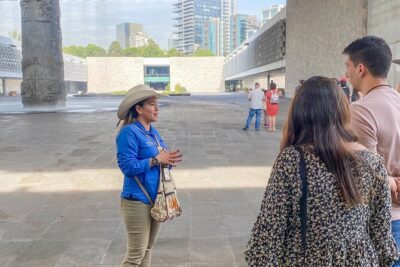
There’s also an honest practical advantage: you start at a clear meeting point at Museo Nacional de Antropología on Av. P.º de la Reforma in Polanco, near Bosque de Chapultepec. If you plan your day well, you can turn this into your first-stop museum and let the rest of Mexico City feel easier.
Two floors in about three hours: what to expect inside
You’ll spend your visit inside the museum, walking through two spacious floors. That layout is a big deal. The museum’s collection isn’t just “ancient objects,” it’s a lot of different material culture, and a guide helps you avoid the common trap: treating each room like a separate planet.
Your guided path is designed to bring you to the standout exhibits, but you’ll also be exposed to the museum’s more intense displays, including human remains. That can be emotionally heavy for some visitors, even if you’ve chosen the right museum. A guide is useful here because you’re not guessing what you’re seeing or why it’s presented.
One theme you can expect the guide to emphasize is the bridge between time periods. Mexico’s pre-Hispanic past is not one single story. You’ll hear about different cultures and how their art, beliefs, and historical role changed over time. If you came to Mexico City hoping to understand more than just “cool artifacts,” this kind of storytelling is where the tour earns its keep.
Olmec Group of Figures: the piece you’ll keep thinking about
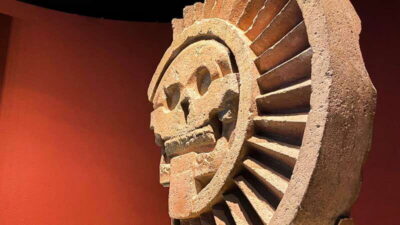
The Olmec Group of Figures is the kind of exhibit that makes you slow down. Olmec art often feels “modern” in its shapes—stylized, expressive, and full of personality. The museum’s version stands out because it’s memorable at a glance, but the meaning becomes clearer once someone explains what makes it significant.
This is also a good example of why a guided tour can be worth it. You can look at the figures and admire them. But the guide’s job is to connect them to the bigger question: what this culture valued, how it communicated identity or belief, and why it’s important in the story of Mesoamerica.
If you’re the type who likes a single highlight that acts like a key turning in a lock, you’ll probably appreciate this stop. It’s not just a photo op. It’s a “pause and think” moment, and the tour format helps you do it without wasting your whole day.
Deeper into Aztec Tenochtitlan
- Taxco, Cuernavaca & Pre-Hispanic Mine optional visit★ 4.5 · 597 reviews
- Mexico City: Taxco & Cuernavaca Tour with Pre-Hispanic Mine★ 4.6 · 271 reviews
- Xochimilco, Coyoacan, Aztec Stadium & UNAM★ 4.0 · 232 reviews
- Teotihuacan & Anthropology Museum, Templo Mayor & City Tour★ 4.5 · 109 reviews
- Mexico City: Templo Mayor Skip-the-Line Entry Ticket★ 4.2 · 96 reviews
The Sun Stone (22 tons): why this Aztec giant matters
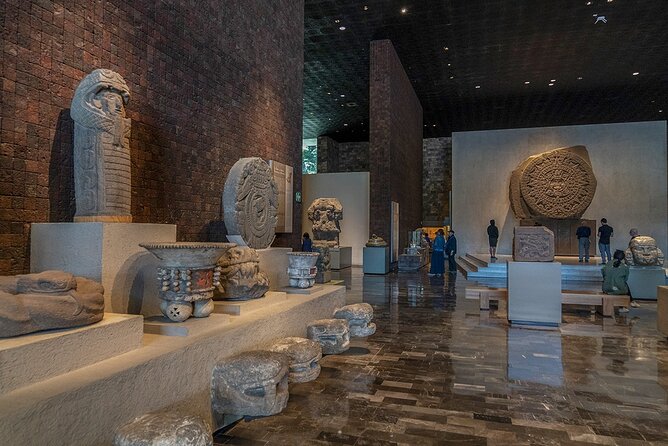
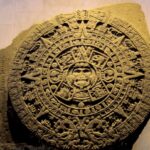
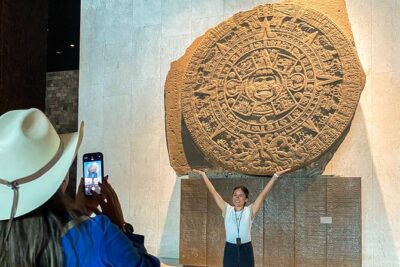
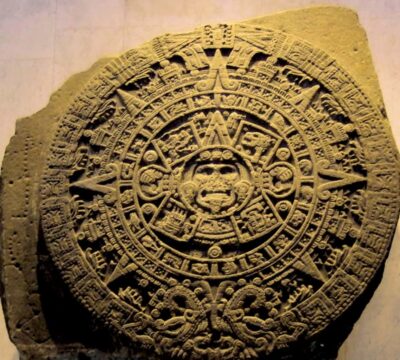
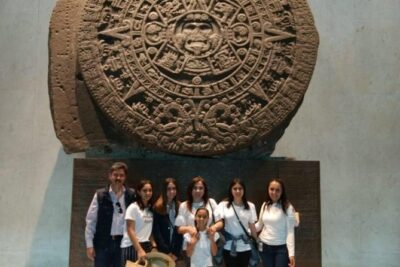
Then comes the exhibit people plan their entire museum day around: the Aztec Sun Stone. This stone is famous worldwide, and in person it can feel unreal. At 22 tons, it’s hard to imagine the physical effort and planning that went into its creation.
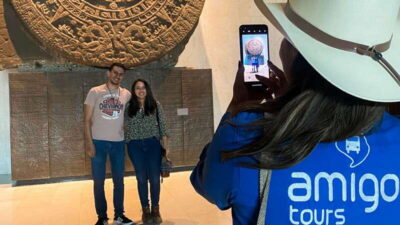
What you’ll gain from this tour isn’t just the fact that it’s important. The guide is there to explain what the Sun Stone means in world history—and why it’s more than a cool ancient disk. The museum treats it as a major cultural statement, and the tour helps you interpret it as part of a larger system of beliefs, timekeeping, and symbolism.
A practical note: the museum is large, and major exhibits can be far apart. One of the advantages of this guided visit is that it steers your time toward the pieces that most strongly represent what the museum is trying to teach. That way, you don’t end up spending 2 hours circling the building, hoping the next room will be the one you were supposed to see.
Seeing human remains with context, not just shock
It’s worth saying plainly: this is a museum where you’ll see human remains. Whether you’re okay with that depends on your comfort level, but you should know it’s part of what makes the National Museum of Anthropology such a powerful place.
A guided experience can help because it frames the display with respect and explanation. Without that context, the same objects can feel random or unsettling in a way that doesn’t lead to understanding. With a guide, you’re more likely to connect what you’re seeing to cultural and historical explanations—why these materials are shown, and how they fit into what the museum is communicating.
If you tend to get overwhelmed by human remains in museum settings, I’d keep that in mind before booking. You’ll still have to decide for yourself. But at least with a guided tour, you’re not left to interpret everything alone.
Ethnography section: connecting ancient Mexico to what’s living today
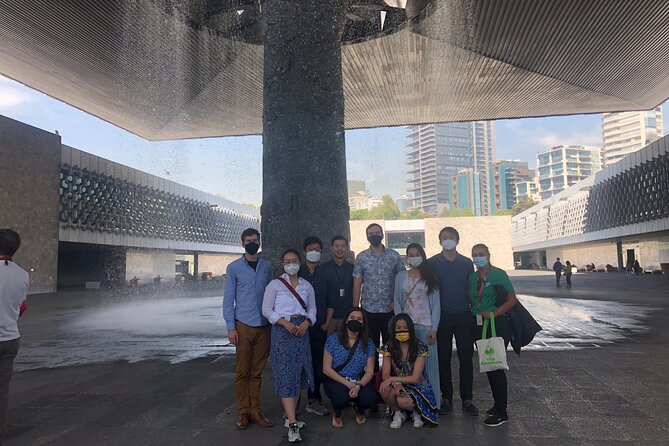
One of the most useful parts of the tour is that it doesn’t end with the distant past. Alongside the pre-Hispanic focus, you’ll also see ethnographic exhibits showing Mexico’s contemporary indigenous communities.
This isn’t a random add-on. It changes how you view the ancient objects. If you’ve ever wondered whether pre-Hispanic cultures were “gone,” this kind of context is the correction. It helps you see continuity—how identity, tradition, and community knowledge still matter today.
I like tours that make this connection because it keeps the museum from turning into only a history lesson. You leave with the feeling that these cultures are not just artifacts sealed behind glass. Even if the way people live has changed, cultural knowledge and traditions have endurance.
Guide quality: what the best moments usually depend on
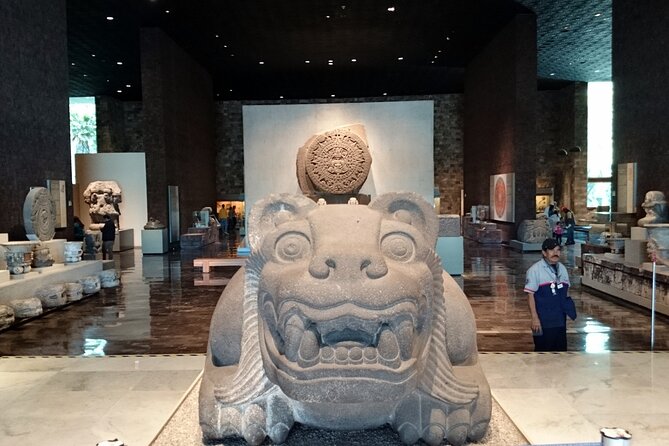
A tour like this lives or dies on the guide’s ability to turn information into a story. The good news is that the reviews you provided point to some standout guides who made the explanations feel engaging and human.
For example, Diana is mentioned for making history come to life, especially when the tour sets a broad tone from pre-Hispanic eras through later periods. Maida is praised for being well informed and tailoring the tour to the group’s needs. Silvia gets credit for being an expert historian and sharing knowledge in a charming, relatable way. Clara is described as courteous and approachable, with deep knowledge of pre-Columbian Mesoamerica.
Then there’s Ivan, who many guests found extremely knowledgeable and able to cover the best areas. One review also noted that this tour felt more suited to adults than kids, and that the tone was close to professorial rather than kid-friendly.
So here’s the practical takeaway: if you care about narration and context, you’re in the right place. If you’re bringing young kids and want hands-on excitement, you might want to compare options first.
Price and time: is $50 worth it for 3 hours?
At $50 per person for about 3 hours, this sits in the middle of the “pay for convenience” range. You’re not only paying for a guide. Admission is included, and you’re getting a structured guided visit through the museum’s main highlights.
That’s the value equation: time saved plus interpretation gained. If you tried to do this museum on your own, you’d still need to spend hours getting oriented and deciding what to prioritize. The guide essentially does that triage for you and adds meaning to the objects you would otherwise just glance at.
Two price-related reality checks:
- The museum experience can’t be fully “bypass.” You should expect it will take your attention. Even guided, it’s a lot of content in a short window.
- This tour does not mention fast line access, and it relies on normal entry flow. If your schedule is tight, build in a little buffer.
Also, this is a small-group option (up to 12) or a private tour. Private can be easier if you want flexibility or a pace that fits your style.
Logistics that actually matter on the ground
This is a straightforward museum tour, but a few details affect how smoothly your morning goes.
You’re starting at the museum on Av. P.º de la Reforma in Polanco, and the meeting point is designed to be easy to reach, since it’s near public transportation. You’ll also be dealing with Mexico City sun at times on the walk from transit or while regrouping. Bring a hat, sunscreen, and sunglasses, even for “just a museum day.”
The tour includes a mobile ticket and an English option (bilingual guides for small groups). You’ll want your personal ID with you, and the tour also asks that you have good travel habits ready: comfortable shoes matter because you’ll walk a lot inside.
One small-but-important note: the guide may need your phone number with an international prefix, and they say they may need it for pickup and contact. If you forget this step, don’t assume last-minute fixes will be easy.
Should you book this Anthropology Museum tour?
If you want a first pass through Mexico’s pre-Hispanic art and symbolism—and you want it explained, not just displayed—this is a solid choice. The best match is for adults and curious travelers who want to see the museum’s key exhibits like the Olmec Group of Figures and the Aztec Sun Stone without spending your day guessing what matters most.
I’d be a bit cautious if:
- You’re traveling with kids and want a clearly kid-focused tone. One review described the tour as not really kid oriented.
- You’re extremely schedule-sensitive and hate any possibility of a day being disrupted. There was a rare, negative story about a guide not showing up and plans getting derailed. It ended in a refund, but it still cost that traveler museum time.
If you’re flexible, bring patience, and let the guide tell the story, you should get a strong payoff for your 3 hours—and you’ll likely leave with a better sense of how Mexico’s ancient cultures still echo in the present.
FAQ
Is the museum admission included?
Yes. Your ticket and guided entry to the National Anthropology Museum are included in the tour price.
How long is the tour?
It’s about 3 hours.
What language is the tour offered in?
The small-group option is offered in English (and Spanish). Private tours are led by local bilingual guides.
Where do I meet for the tour?
The meeting point is at Museo Nacional de Antropología, Av. P.º de la Reforma s/n, Polanco, Bosque de Chapultepec I Secc, Miguel Hidalgo, 11560 Ciudad de México, CDMX, Mexico.
What’s not included in the tour price?
Transportation, travel insurance, other inclusions not mentioned, and personal expenses and tips are not included.
Is the tour affected by weather?
Yes. The experience requires good weather, and if it’s canceled due to poor weather, you’ll be offered a different date or a full refund.
Behind the Ticket: More CDMX Museums





The Aztec City, Toured Properly




More Rooms at the Anthropology Museum

Fresh from our Mexico City notebook




Anthropology Museum Tours, compared.
 ★ 4.5Chapultepec Castle & Anthropology Museum TourFrom $791,348 reviews
 ★ 4.5Anthropology Museum Guided TourFrom $391,035 reviews
 ★ 4.4Anthropology Museum Guided VisitFrom $67708 reviews
 ★ 4.5Chapultepec Castle and Anthropology Museum TourFrom $47637 reviews
 ★ 4.4Anthropology Museum Skip-the-Line TicketFrom $15502 reviews
 ★ 5.0Anthropology Museum Private Experience Walking TourFrom $78355 reviews
 ★ 5.05 Hour Tour through Chapultepec, Anthropology Museum and CastleFrom $61239 reviews
 ★ 5.0PRIVATE Tour in Chapultepec Castle and Museum of AnthropologyFrom $113144 reviews
Browse the lists this tour appears in