
REVIEW · HISTORIC CENTER WALKING TOURS
10 wonders of the Historic Center of Mexico City food and music
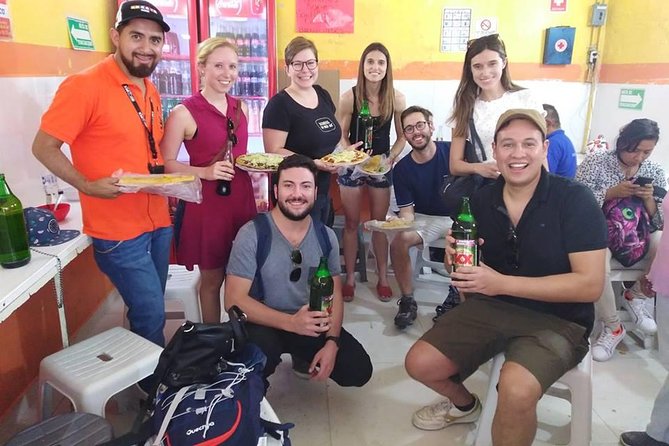
Ten stops, one great morning of Mexico City tastes. This is a small-group walk that pairs Centro Historico icons with real food moments, and it works because the route is paced like a story, not a checklist. I especially liked the food stops, from Ideal Bakery bread to a lunch quesadilla with huitlacoche. I also loved the tight architecture sweep, from the Palace of Fine Arts and the Postal Palace to the Gran Hotel’s Tiffany-style glass and the Temple Mayor ruins. The main drawback is simple: you cover a lot on foot in about three hours, so comfy shoes matter.
The value is strong for the price point. For $49, you get a guided experience with entry tickets and a guided meal that includes a quesadilla, plus extra tastings along the way. Booking tends to fill earlier than you might expect (about 16 days in advance on average), so picking a time early is smart.
One more practical note: lunch comes later, so a light snack beforehand can save you from hangry regret. If streets are crowded, your guide (I’ve seen guides like Rodrigo, Balaam/Balam, and Miguel handle it with calm reroutes) tends to keep the group moving and still hit the core stops.
In This Review
- Key highlights worth your attention
- Why this 10-wonders walk is a smart Mexico City intro
- Diego Rivera Mural Museum: start with art that frames the day
- Alameda Central: Mexico City’s oldest park, with built-in breaks
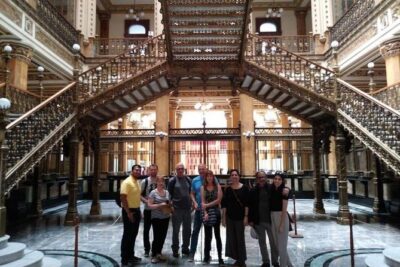
- Palace of Fine Arts and the route to the Postal Palace
- House of Tiles and Ideal Bakery: when architecture turns into snack time
- Lunch quesadilla: the included meal is the payoff
- Dulceria de Celaya and Mexican sweets: the sweet stop with meaning
- Gran Hotel’s stained glass ceiling: a quick dose of glamour
- Metropolitan Cathedral and Temple Mayor: from skyline to what’s beneath your feet
- Food-and-music energy: how the guide keeps the day moving
- Walking pace, shoes, and handling city interruptions
- Price and value: what $49 buys you (and why it’s not just a “cheap tour”)
- Who this tour suits best
- Should you book this 10 wonders food-and-music walk?
- FAQ
- What’s included in the price?
- How long does the tour take?
- Is the tour offered in English?
- How big is the group?
- Where does the tour start and end?
- Is free cancellation available?
Key highlights worth your attention
- A compact route that hits the big Centro sites fast without feeling like a bus tour
- Food stops that feel local, not staged: bread, savory bites, and sweet treats
- Guides with strong storytelling voices like Rodrigo, Balaam/Balam, Miguel, and even Cedrela or Jesus
- Temple Mayor ruins with an explanation of what’s beneath your feet and a photo-friendly view
- Gran Hotel’s famous stained glass ceiling as a quick, striking payoff
- A walking pace built for momentum, often around 9,000 steps
More laps of the Zocalo and the old streets
- Historic Downtown Walking Tour
★ 5.0 · 1,289 reviews - Mexico City: Historic Downtown Walking Tour
★ 4.8 · 1,039 reviews - Walking Tour of the Historic Center of Mexico City
★ 5.0 · 870 reviews - Mexico City Historical Centre Food Tour with 7 Authentic Tastings
★ 5.0 · 723 reviews
Why this 10-wonders walk is a smart Mexico City intro
If you’re short on time, Mexico City’s Historic Center can feel like sensory overload. This tour helps because it chooses landmarks people actually come to see, then adds food stops and context so you understand what you’re looking at.
I like tours where you don’t have to “figure it out.” Here, you get a guided line through the city’s key layers: art and civic pride around Alameda Central, grand early-20th-century architecture near the Palace of Fine Arts, and then the Cathedral and Temple Mayor where colonial and Aztec threads meet.
You also get a small-group setup (max 15). That matters. Smaller groups stay easier to manage on crowded sidewalks, and it’s simpler to ask questions or adjust if you need a short pause.
Diego Rivera Mural Museum: start with art that frames the day
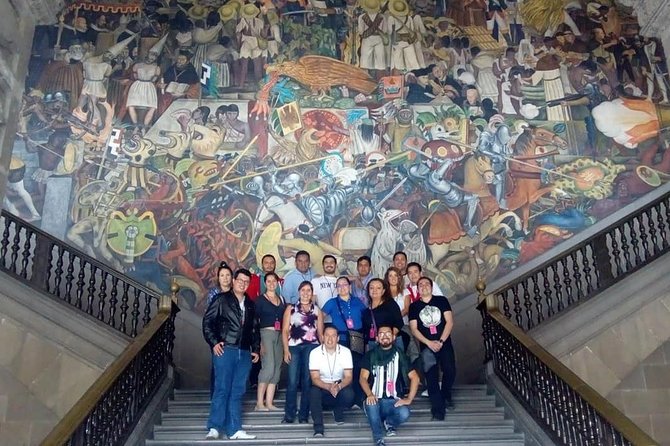
The walk begins at the Diego Rivera Mural Museum. This is a good first move because Rivera’s mural world is both political and everyday, and it sets the tone for how your guide will connect buildings to people.
You’ll specifically admire the mural Dream of a Sunday Afternoon in the Alameda Central. That choice is clever: it ties the tour to the park you’ll visit next, and it gives you a way to look at the area beyond pretty scenery. When you’re standing in the Historic Center later, you’ll have a mental anchor for how art reflects public life.
A practical tip: arrive a few minutes early. The meeting point is busy, and it’s easy to lose track of your exact start door if you’re scanning the street.
Alameda Central: Mexico City’s oldest park, with built-in breaks
Next comes Alameda Central, the oldest park in the Americas. This stop is more than a pretty plaza break. It gives you breathing room in the middle of a walking day, and it’s the kind of place where you can feel the city’s rhythm.
I like this park stop because it’s the calm moment right before architectural grandeur. You go from art to the open air, then you’re ready to appreciate the scale and styling of what comes next.
If you’re doing this on a day when the city feels extra busy, Alameda Central also helps your navigation. It’s a central reference point, so after this, the rest of the Historic Center feels more coherent.
More plates worth crossing Mexico City for
- Colonia Roma Food Tour★ 5.0 · 838 reviews
- Mexico City Historical Centre Food Tour with 7 Authentic Tastings★ 5.0 · 723 reviews
- Mexico City Boat Tour Food and Unlimited Drinks Priority Boarding★ 5.0 · 653 reviews
- Lucha Libre Tour and Mezcal Tasting in Mexico City★ 5.0 · 519 reviews
- Mexican Cooking Class with Food Market Visit in Mexico City★ 5.0 · 506 reviews
Palace of Fine Arts and the route to the Postal Palace
Your route continues toward the Palace of Fine Arts (Palacio de Bellas Artes). Even if you’ve only seen photos, it hits differently in person. The big value here isn’t just the building itself; it’s how your guide connects it to what Mexico City valued as it grew.
A short step-by-step flow like this is why the tour works. You’re not walking across random streets trying to guess what’s next. You’re moving through planned sight lines where each stop supports the next.
From there, you head to the Palacio Postal (Postal Palace), another architectural highlight. This is the kind of place you could rush through on your own. With a guide, you’re more likely to notice the details that explain the building’s personality and purpose.
House of Tiles and Ideal Bakery: when architecture turns into snack time
At some point, your day needs edible fuel, and this tour does that on purpose. You’ll visit the House of Tiles (Casa de los Azulejos), famous for its patterned exterior. It’s one of those facades you can look at for a long time because it’s designed to be noticed.
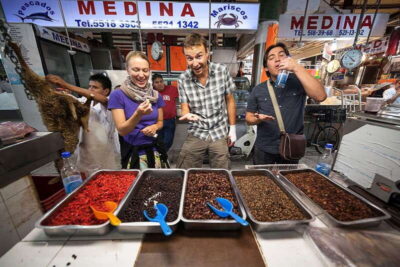
Then you hit Ideal Bakery (La Ideal). This is one of the most praised stops in the experience, and for good reason. You’ll sample traditional bread, including options like conchas (sweet, shell-like tops) and other styles. The tour’s sample menu also points to both soft interiors and crisp tops—so you’re tasting the texture, not just the concept.
If you’re thinking, I can just grab bread anywhere, here’s why I’d still do it on the tour: you’re learning the local bread logic. Your guide can help you pick what matches the day’s other flavors, and the timing matters because the park and cathedral area can make it harder to find a reliable, traditional stop quickly.
Lunch quesadilla: the included meal is the payoff
Lunch is included, and it’s not a random filler. You’ll get a quesadilla made with corn or blue corn tortillas, lightly toasted and folded. The filling includes melted cheese and huitlacoche (Mexican corn truffle), plus crispy pork or meat, finished with red or green salsa.
That’s a big deal for value. Many food tours charge extra just for one main tasting. Here, the included lunch anchors the entire experience: it’s the meal you remember, not just a snack you forget two hours later.
One small but important timing note: lunch is at the end of the tour. If you’re the type who waits until you’re hungry, you’ll probably start to feel it mid-walk. I’d take that seriously and either eat a light breakfast or plan a small pre-lunch bite before you meet your guide.
Dulceria de Celaya and Mexican sweets: the sweet stop with meaning
You’ll also stop at a sweets-focused spot (Temple of Mexican sweets / Dulceria de Celaya). This is where the tour shifts from savory to something slow and fragrant.
Sweet stops are more than sugar breaks on a guided walk like this. They help you see how the city’s food culture works across seasons, ingredients, and traditions. You’re tasting what locals reach for, and it makes the afternoon landmarks feel less like museum objects and more like living places.
If you have a habit of skipping desserts because you’re worried about calories, don’t. This isn’t a heavy buffet. It’s small, targeted tastings that let you sample without turning the rest of the walk into a food coma.
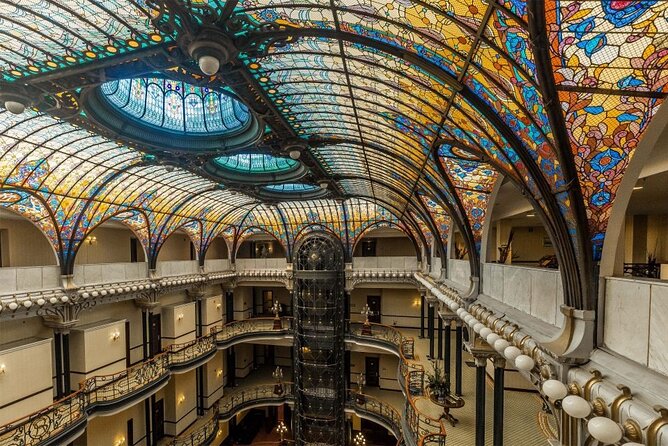
Gran Hotel’s stained glass ceiling: a quick dose of glamour
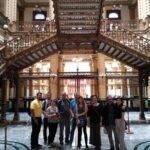
One of the most dramatic visual moments is the Gran Hotel Ciudad de México. The highlight here is the impressive Tiffany stained glass ceiling.
This is the type of stop that gives you instant “wow” without needing a long entrance ticket plan. It’s also a good contrast point: you’ve been looking at stone and civic scale, and now you get light and color.
In the real world, sometimes entry access can vary based on conditions. The good thing is that the experience is flexible enough to keep the day on track, even if a specific interior moment isn’t possible. The guide’s job is to keep you seeing the planned wonders, and substitutions nearby can happen.
Metropolitan Cathedral and Temple Mayor: from skyline to what’s beneath your feet
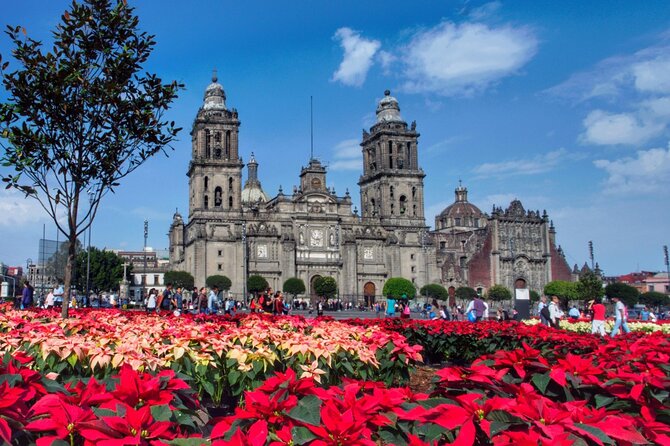
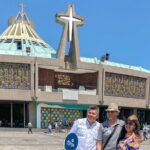
The tour then reaches the Metropolitan Cathedral area, including the Catedral Metropolitana de la Ciudad de México. This is one of the largest churches in Latin America, and the scale lands even if you’ve walked past cathedrals before.
What I find useful is the sequencing. You see the grandeur of the Cathedral area, then you move toward Temple Mayor ruins. That shift turns your understanding from “look at a famous building” to “understand how this city sits on layers.”
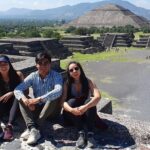
Temple Mayor is the emotional center of the day. You’ll enjoy traditional Mexican food with a panoramic view that’s great for photos, and you’ll hear narration about Aztec remains beneath your feet. The payoff is that you stop treating the ground as background. Here, the ground is part of the story.
If you’re a person who likes history but hates lectures, this stop still works. It’s explained while you’re standing in the place, not just reading about it later.
Food-and-music energy: how the guide keeps the day moving
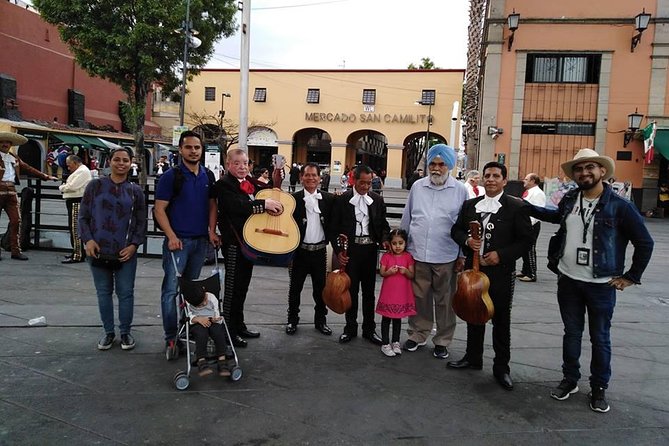
The tour’s theme is food and music, but the practical part you feel on the ground is pacing. The day has rhythm: art, park, architecture, bread, sweets, then the Cathedral and ruins. Your guide ties the story together as you go, which makes it easier to remember facts later.
Guides also matter. I’ve seen names like Rodrigo and Balaam/Balam praised for story-telling style and for staying patient when groups get a bit disorganized on crowded sidewalks. Miguel, too, gets credit for mixing history and architecture in a way that doesn’t slow the group down.
If you want a tour where you can ask questions and not feel rushed, this is the kind that tends to work well because the group stays small.
Walking pace, shoes, and handling city interruptions
This is a walking tour, so treat it like one. The tour runs about three hours, but it can run longer depending on conditions, and you should plan for a solid walking distance. In one account, it was around 9,000 steps.
Here’s the practical strategy:
- Wear comfortable shoes with good grip. Sidewalks can be slick or uneven.
- Carry a small water bottle. You’ll be outside through multiple landmarks.
- If there’s a street demonstration or heavy foot traffic, expect the guide to reorganize and reroute to keep you on schedule.
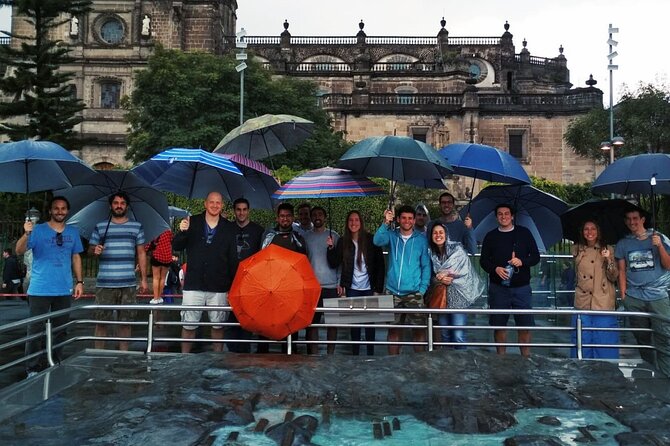
Rain can also happen. The route has enough flexibility that even when weather changes, the experience can still deliver its main highlights.
Price and value: what $49 buys you (and why it’s not just a “cheap tour”)
At $49 per person, this tour isn’t trying to compete with the absolute budget end of walking tours. It earns its value in three ways:
- You’re paying for an organized route through the Historic Center’s major sites instead of spending your time hunting down entrances and lineups.
- Entry tickets are included, which can add up in this part of town.
- Food is built in: tastings plus a lunch quesadilla with huitlacoche, tortillas, salsa, and cheese.
If you’ve ever paid separately for a few entry spots and then spent the day buying random snacks, this structure is usually the better deal. You’re buying time, access, and context together.
Also, it’s offered in English, so you’re not paying extra for interpretation. For many first-timers, that’s where guided value really shows.
Who this tour suits best
I think this tour fits best if:
- You’re short on time and want a concentrated Historic Center introduction
- You want a food-first way to experience landmark Mexico City
- You prefer a guided pace over spending hours deciding what’s worth your time
It’s also a good fit for couples and solo visitors who like meeting a small group. The maximum group size of 15 keeps the experience more personal than large-bus sightseeing.
If you hate walking or you need long indoor breaks, this might feel like too much in one day. The itinerary is designed for momentum.
Should you book this 10 wonders food-and-music walk?
Yes, if you want a fast, friendly way to connect Mexico City’s biggest landmarks with actual local tastes. For me, the strongest reasons to book are the bread and food stops (including the huitlacoche quesadilla lunch) and the way the day ends at Temple Mayor, where the history feels tangible under your feet.
I’d skip it if you already know you want a slow, independent museum day, or if you’re sensitive to lots of walking in a short window. But if you’re planning a first visit, this is the kind of tour that helps you get your bearings fast—and then gives you a framework for what to explore next.
FAQ
What’s included in the price?
The tour includes the guide, all fees and taxes, entry tickets, and lunch. Lunch is a quesadilla made with corn or blue corn tortillas, filled with melted cheese, huitlacoche, and crispy pork or meat, finished with red or green salsa. You also get additional tastings during the route.
How long does the tour take?
It runs about 3 hours.
Is the tour offered in English?
Yes, the tour is offered in English.
How big is the group?
The tour has a maximum of 15 travelers.
Where does the tour start and end?
It starts at the Diego Rivera Mural Museum at Calle Colón Balderas s/n, Colonia Centro, Centro, Cuauhtémoc, 06040 Ciudad de México, CDMX, Mexico, and it ends back at the meeting point.
Is free cancellation available?
Yes. You can cancel up to 24 hours in advance for a full refund.
Eat and Drink Across Mexico City






More Tour Reviews in Mexico City



The Centro Historico on Foot

Fresh from our Mexico City notebook

Historic Center Walking Tours, compared.
 ★ 5.0Historic Downtown Walking TourFrom $261,289 reviews
 ★ 5.0Historic Center Food Tour in Mexico CityFrom $1151,263 reviews
 ★ 4.8Historic Downtown Walking TourFrom $261,039 reviews
 ★ 5.0Walking Tour of the Historic Center of Mexico City870 reviews
 ★ 5.0Mexico City Historical Centre Food Tour with 7 Authentic TastingsFrom $65723 reviews
 ★ 4.9Authentic Downtown Food TourFrom $115260 reviews
 ★ 5.0Culinary Secrets of the Centro HistóricoFrom $140257 reviews
 ★ 5.0Walking Tour – Impressive murals in Historical Center of Mexico CityFrom $51224 reviews
Browse the lists this tour appears in