
REVIEW · TEOTIHUACAN PYRAMIDS TOURS
Unlock Teotihuacan Pyramids: Private Tour & Delicious Local Lunch
Teotihuacán feels unreal until you walk its stone streets. This private day trip pairs Teotihuacán’s pyramids with a home-cooked lunch and real public-transport travel out of Mexico City.
I love how the guide turns the ruins into something you can picture, including the big idea that Teotihuacán became a kind of City of the Gods in later Aztec storytelling. I also like the practical flow of the day: you ride local transit with an English-speaking guide so you’re not stuck guessing the route or the timing, which is exactly why people named guides like Roy and Rodrigo tend to get such strong marks.
One possible drawback: this is a long, active day—expect around 6 km of walking and steep stairs. Plus, the operator notes that climbing the pyramids isn’t allowed, so if you’re hoping for a full summit scramble, plan for viewpoint access instead.
In This Review
- Key highlights worth your attention
- Mexico City to Teotihuacán: the day plan that actually works
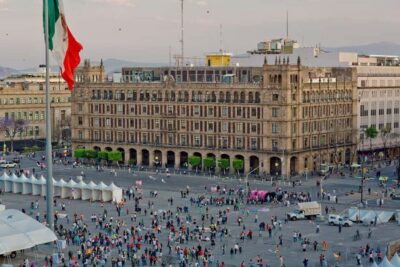
- Meeting at Casa de los Azulejos and ending near Bellas Artes
- Riding public transit to San Martín de las Pirámides (fare included)
- The on-site museum stop: how to make the ruins make sense
- Calzada de los Muertos and the Sun Pyramid climb-up decision
- Moon Pyramid history and the City of the Gods framing
- Quetzalcoatl Pyramid views: the moment your phone feels too small
- Lunch with a local family: cactus symbolism and everyday conversation
- The “between stops” experience: obsidian, pulque/tequila, and shop time
- Walking distance, heat, and what to pack for comfort
- Price and value: why $220 may feel fair for this format
- Who should book this Teotihuacán day trip?
- Should you book it?
- FAQ
- How long is the Teotihuacán private tour from Mexico City?
- What does the tour cost?
- Is this tour private, and how many people are in a group?
- What language is the tour in?
- How do we travel from Mexico City to Teotihuacán?
- How much walking is involved, and is it strenuous?
- Can you climb the pyramids?
- What’s included for food, and can I request dietary options?
- Where do I meet the guide and where does the tour end?
- What is the cancellation policy?
Key highlights worth your attention
- Private feel, small max group of 12: easier questions, slower pacing, and more guide attention.
- Public transportation included: you’ll use metro/buses like locals, with fare covered.
- Museum first, ruins second: the on-site museum helps you recognize what you’re seeing.
- Calzada de los Muertos to the Sun Pyramid: a guided walk that makes the layout easier to understand.
- Lunch with a local family: a real “what daily life looks like” moment, not a quick restaurant stop.
- Cactus culture on the plate: you’ll learn why cactus matters and taste items like cactus candy.
Other ways up the Pyramid of the Sun, compared
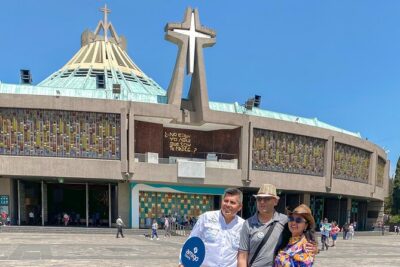
- Teotihuacan, Guadalupe Shrine & Tlatelolco Day Tour with Lunch
★ 5.0 · 11,603 reviews - Balloon flight + Breakfast in cave + Pyramids + Pick up CDMX.
★ 5.0 · 6,335 reviews - Teotihuacan pyramids morning or afternoon without tourist traps
★ 5.0 · 6,186 reviews - Teotihuacan Early Access Guided Tour with optional Lunch
★ 4.5 · 6,138 reviews
Mexico City to Teotihuacán: the day plan that actually works
This tour is built for people who want more than a checklist of ruins. You start in central Mexico City, then head out to Teotihuacán early enough to beat the worst crowds and heat. The pacing is designed around walking the main ceremonial spine, getting key context from a guide, and then ending with lunch in a local home—so the day has a clean arc: orientation, wonder, then normal life.
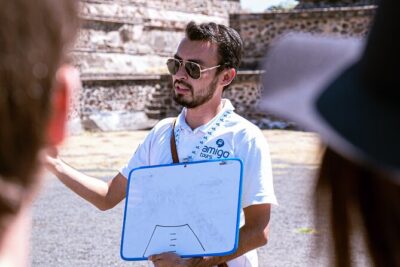
You also get a guide who stays with your group from start to finish. In past tours, guides such as Roy, Rodrigo, Nathan, Leon, and Cesar have been specifically praised for English skills and for keeping the day moving smoothly. That matters because Teotihuacán can feel confusing if you’re trying to piece it together on your own.
Meeting at Casa de los Azulejos and ending near Bellas Artes
You meet at Casa de los Azulejos (Av Francisco I. Madero 4, Centro Histórico). The start time is 8:30 am, and you’ll finish near Palacio de Bellas Artes (Av. Juarez S/N, Centro Histórico).
This matters because you’re not doing the classic “pickup in a hotel zone, then drop somewhere inconvenient.” Casa de los Azulejos is a central, easy-to-find meeting point. And ending near Bellas Artes puts you back in one of the best areas for dinner plans afterward.
You should also plan on the day feeling long in one continuous block. There’s no hotel return during the middle of the tour—once you leave Mexico City, you’re committing to the full route and the full walk.
Riding public transit to San Martín de las Pirámides (fare included)
Instead of a private car door-to-door, you travel out using local transit. The day typically involves a transfer via bus and then the longer countryside ride to the Teotihuacán area (San Martín de las Pirámides). The important part for you is that the fare is included, so you’re not doing little cash calculations while you’re tired.
A couple of real-world notes from how the day runs:
- Some groups expect metro-style travel, but if group size logistics call for it, you might use a smaller vehicle for part of the ride.
- Either way, the guide keeps things organized, which is the big win if you don’t speak Spanish well.
If you like the idea of seeing how Mexico City works day-to-day, this transport choice is one of the strongest value points. You’re not just traveling from point A to point B—you’re watching the city’s rhythm on the way out and back.
More private days with a local at the wheel
- Teotihuacan Private Tour from Mexico City★ 5.0 · 1,890 reviews
- Private Tour: Teotihuacan and Guadalupe Shrine★ 5.0 · 938 reviews
- Private City Tour in Frida Kahlo, Coyoacan, and Xochimilco★ 5.0 · 626 reviews
- Mexico City Custom Private Tour with a Local, Highlights & Hidden Gems★ 5.0 · 582 reviews
- Teotihuacan Private Tour with Expert Guide & Cultural Insights★ 5.0 · 577 reviews
The on-site museum stop: how to make the ruins make sense
Once you’re at Teotihuacán, you don’t rush straight into the biggest monuments. You start at the on-site museum, where your guide points out reconstructions of local houses and references relics found in the archaeological zone.
For many people, Teotihuacán’s layout can look like a bunch of major structures scattered over a plain. This museum stop fixes that. It gives you mental anchors: what homes might have looked like, what kinds of objects mattered, and how the site’s story fits together. When you later walk the ceremonial avenues, you’ll notice connections instead of just taking photos.
Practical tip: treat the museum as your warm-up brain. Even if you’re not a museum person, this is the part that makes the walking tour feel coherent.
Calzada de los Muertos and the Sun Pyramid climb-up decision
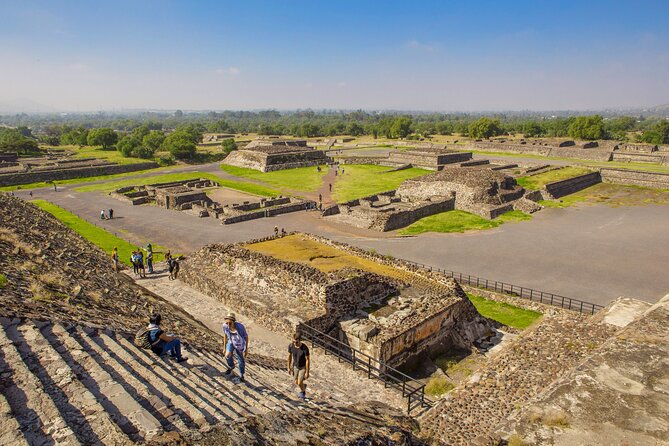
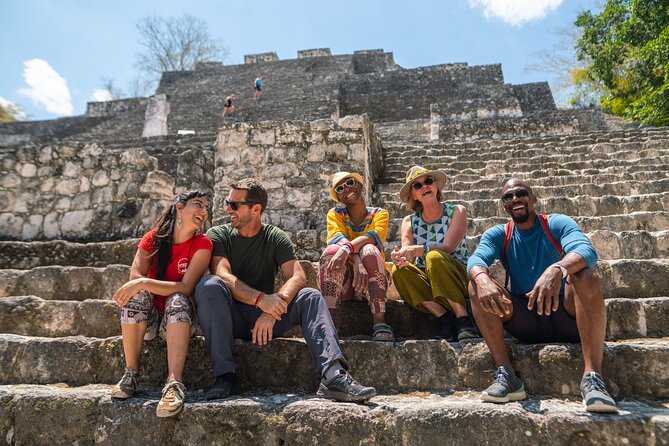
After the museum orientation, you enter the archaeological zone and head along Calzada de los Muertos (Pass of the Dead). This is where the day shifts from learning to walking. Your guide explains the route and key structures as you go, so you understand why you’re stopping where you stop.
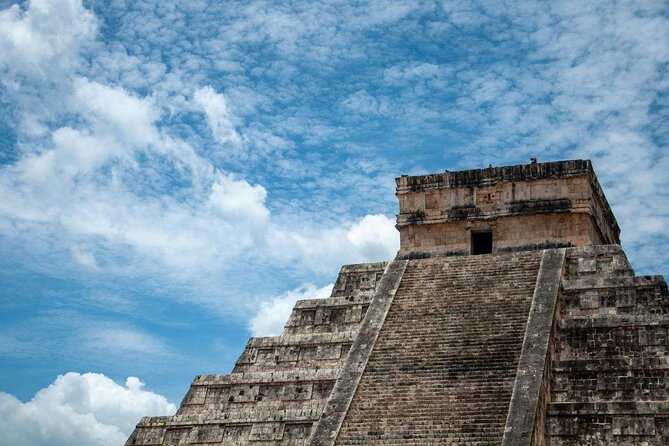
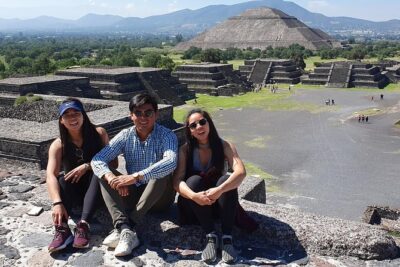
The Sun Pyramid is the star for scale. It reaches about 206 feet (63 meters), and the tour includes the chance to see major views from the top area. Reviews consistently mention the sweeping panorama—and also the reality check: it’s hot, steps are steep, and the wind at the top can be strong.
Important note: the operator states that climbing the pyramids isn’t allowed. So think of this as guided access to the main viewpoint areas with stairs where the site permits. If you’re planning for an unrestricted scramble, adjust your expectations.
Also, at the site you’ll find clean, modern restroom facilities. That’s not glamorous, but it matters on a full-day outing.
Moon Pyramid history and the City of the Gods framing
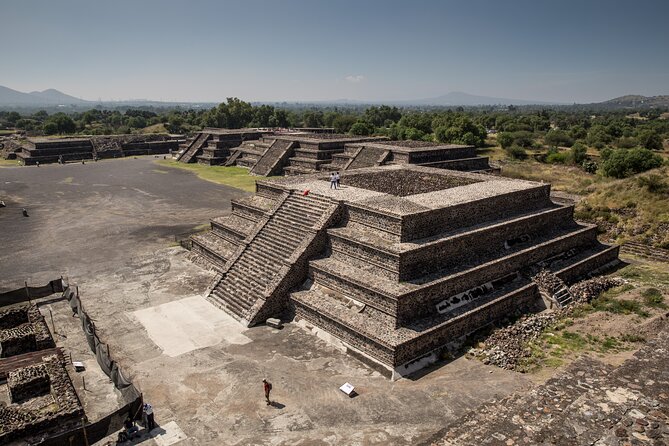
The Moon Pyramid gets its own focused stop, with guidance on history and architecture. Your guide also shares why later Aztec accounts described Teotihuacán as the City of the Gods. That storytelling layer isn’t the same as “proof,” but it’s useful context for how different cultures later interpreted what they saw.
This part of the day is ideal if you enjoy meaning: how people built these structures, what purposes they served, and how legends grew around them. It’s also a good pacing break—Moon Pyramid time gives you a chance to reset before the Sun Pyramid leg and the lunch portion.
Quetzalcoatl Pyramid views: the moment your phone feels too small
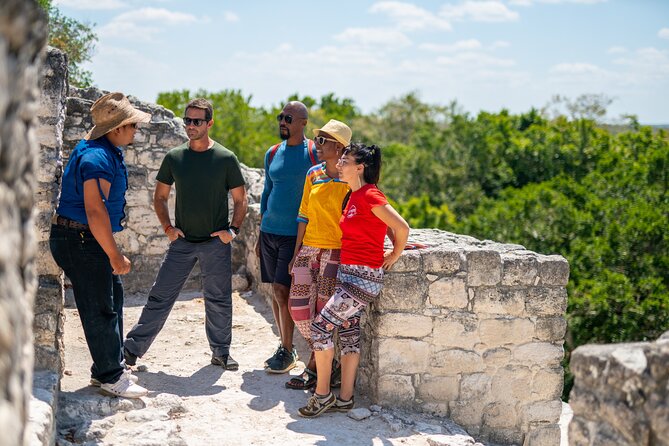
The day includes a stop connected with the Quetzalcoatl Pyramid, described as a chance to recharge and take in dramatic views. Even without trying to force it into a dramatic photo moment, the geometry of Teotihuacán is what gets you—wide sight lines, strong angles, and the sense that you’re standing inside an ancient master plan.
What makes this stop valuable is the way it changes your perspective. From the ceremonial walk, you’re mostly moving along the site. From higher viewpoints, you start to understand the layout in a more “big picture” way.
Bring layers if you’re going cooler-season travel. Several people mention it gets windy up high, even when the day starts mild.
Lunch with a local family: cactus symbolism and everyday conversation
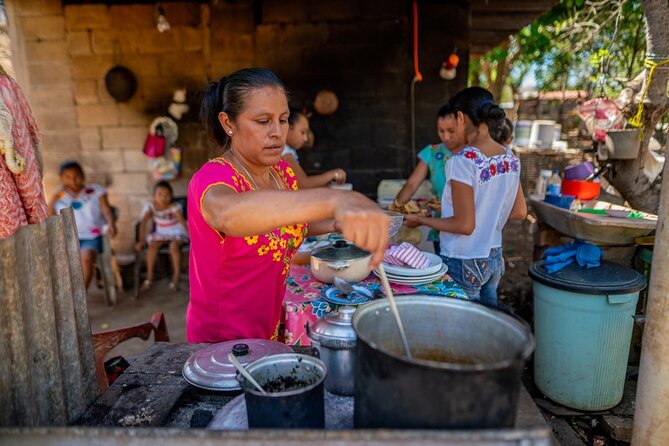
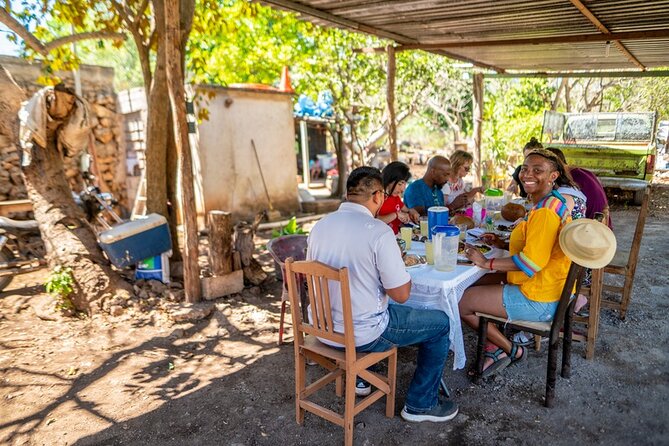
This tour ends with what most “big ruins” tours skip: eating with real people in a real house. You visit a local family for a homemade lunch, with time for conversation and a look at daily life outside Mexico City.
Two details to know:
- Cactus is presented as a cultural and historical symbol.
- Cactus also shows up in food, and the tour mentions tasting treats like cactus candy.
In real meals, you might see dishes featuring nopales (cactus pads), and reviews mention plates such as pozole blanco and other home-cooked options. Vegetarian and vegan options are available if you tell the operator in advance; gluten-free can also be arranged with advance notice.
The social side is the point. You’re not just eating, you’re asking questions at a table. That’s often where the day feels less like tourism and more like meeting the place you’re visiting.
The “between stops” experience: obsidian, pulque/tequila, and shop time
In addition to the pyramids and lunch, the day includes two family-run businesses and local tastings. Based on past tour experiences, one common stop is an obsidian craft visit. People also mention tastings like pulque and tequila or mezcal, depending on the day’s plan.
A balanced reality check: some of these artisan stops can include a sales presentation. It’s usually part of how these families earn a living, but it can feel like “buy-or-move-on” if you’re not in that mindset. If you want souvenirs, bring some cash and set a spending limit before you sit down. If you don’t want to buy, you’ll still get value from seeing how products are made and why people care about them.
Walking distance, heat, and what to pack for comfort
This tour covers about 6 km of walking and can be strenuous if you’re not used to steady walking. You’ll also deal with steep stair sections inside the site (even when climbing is not allowed).
From practical notes people repeatedly mention:
- Wear comfortable shoes with good grip.
- Bring a hat or cap for sun exposure.
- Pack layers—sun and wind can swing quickly, especially near higher viewpoints.
- A sweater or light jacket can help when it gets windy at the top area.
If you’re short on stamina, this can still be doable with a slower pace and frequent water/comfort breaks. But if stairs and long walks wear you out fast, consider other Teotihuacán options with less ground coverage.
Price and value: why $220 may feel fair for this format
At $220 per person, you’re paying for a bundle that isn’t just “a guide and a ticket.” The value stack here looks like:
- Private tour format with a max of 12 people
- English-speaking guidance throughout
- Public transportation fares included
- Museum time plus guided site experience at Teotihuacán
- A homemade lunch with a local family
- Local tastings and artisan stops (like cactus treats and obsidian-related visits)
If you’ve done cheaper group day trips before, the difference is that the home lunch is hard to replicate on your own unless you’re connected to a local contact. Also, traveling by public transit with a guide saves time and stress. You’re buying that ease.
The only “watch this” item is how much time you spend at tastings and shops. If you hate sales presentations, that can slightly sour the mood. If you’re open to it, even just watching how artisans work, it adds texture to the day.
Who should book this Teotihuacán day trip?
This fits best if you:
- Want Teotihuacán context, not just monuments
- Like the idea of riding transit like locals
- Enjoy a meal that feels like part of the itinerary, not an afterthought
- Are comfortable with moderate walking and stairs
It’s not a great match if you:
- Have limited mobility or can’t handle a full day of walking
- Expect unrestricted pyramid climbing
- Want zero time in artisan/tasting stops
There’s also a minimum age of 6, which suggests it can work for families with kids who can handle the walking pace.
Should you book it?
Yes, you should book it if your goal is a full Teotihuacán day that connects ancient structures to present-day life. The combination of museum orientation, guided walks around Calzada de los Muertos, viewpoint time at major pyramids, and then a real family lunch is a strong match for people who want meaning—not just photos.
If you do book, go in with a small plan: comfortable shoes, hat, layers, and a clear idea of whether you want souvenirs. That way, the artisan stops feel like cultural stops instead of interruptions.
And if your plans shift, there’s free cancellation up to 24 hours before the start time, so you can book with less stress.
FAQ
How long is the Teotihuacán private tour from Mexico City?
It runs for about 8 hours (approx.), starting at 8:30 am.
What does the tour cost?
The price is $220.00 per person.
Is this tour private, and how many people are in a group?
It’s a private tour experience with a maximum of 12 travelers.
What language is the tour in?
The tour is offered in English.
How do we travel from Mexico City to Teotihuacán?
You travel using public transportation during the day, and the fare is included.
How much walking is involved, and is it strenuous?
You’ll walk about 6 km, and the operator says it can be quite strenuous if you’re not used to walking. A medium level of fitness is recommended.
Can you climb the pyramids?
The operator states that it is not allowed to climb the pyramids.
What’s included for food, and can I request dietary options?
You get a delicious homemade lunch at a local family’s home. Vegetarian, vegan, or gluten-free options are available if you let the operator know in advance. Drinks and additional food are not included.
Where do I meet the guide and where does the tour end?
You meet at Casa de los Azulejos in Centro Histórico de la Ciudad de México, and you end near Palacio de Bellas Artes in the same central area.
What is the cancellation policy?
You can cancel for a full refund as long as you cancel at least 24 hours in advance of the experience start time.
More Tour Reviews in Mexico City



Just Your Group: Private CDMX Days





Back to Teotihuacan: More Pyramid Days

Fresh from our Mexico City notebook

Teotihuacan Pyramids Tours, compared.
 ★ 5.0Teotihuacan, Guadalupe Shrine & Tlatelolco Day Tour with LunchFrom $3911,603 reviews
 ★ 5.0Balloon flight + Breakfast in cave + Pyramids + Pick up CDMX.From $1726,335 reviews
 ★ 5.0Teotihuacan pyramids morning or afternoon without tourist trapsFrom $646,186 reviews
 ★ 4.5Teotihuacan Early Access Guided Tour with optional LunchFrom $396,138 reviews
 ★ 5.0Balloon flight + pick up in CDMX + Breakfast in Cave + PyramidsFrom $1695,651 reviews
 ★ 5.0Balloon Flight + Cave Breakfast + Pick Up from CDMX or We FlyFrom $1664,410 reviews
 ★ 4.6Teotihuacan, Tlatelolco & Guadalupe Shrine TourFrom $493,773 reviews
 ★ 5.0Teotihuacan Hot Air Balloon Flight from Mexico City / VolareFrom $1553,262 reviews
Browse the lists this tour appears in