
REVIEW · MEXICO CITY STREET FOOD TOURS
Tortilla Class and Workshop in Mexico
Corn turns out to be political. This Mexico City tortilla class connects heirloom corn with the real-life science behind nixtamal, then turns it into food you make yourself. You’ll hear why corn matters, and why traditional methods still change flavor and nutrition.
I like two things a lot: grinding heirloom corn on a metate (volcanic rock) with your own hands, and then cooking fresh tortillas on a comal. I also really appreciate how the class ends with a quesadilla plus salsa made using a molcajete, so you’re not just watching.
One thing to consider: it’s only about 1 hour 30 minutes, so it’s a focused snack-and-skill session, not a full meal. Also, with a maximum of 8 travelers, the pace moves quickly once everyone gets rolling.
In This Review
- Key highlights you’ll feel in your hands
- Why Nixtamal Still Matters in Mexico City
- Meeting at Catita Pan y Café: The easiest start you can manage
- Grinding Heirloom Corn on a Metate (and why it changes everything)
- From Nixtamal to Dough: what you’ll focus on
- Cooking Tortillas on the Comal: timing, smell, and feel
- Quesadilla time: Oaxaca cheese plus your own salsa
- Taste comparisons that make you question packaged tortillas
- The guides: Clara and Ariane set the tone
- Price and value: $95.31 for 1.5 hours of real skill
- Who should book this tortilla workshop, and who might skip it
- Should you book Tortilla Class and Workshop in Mexico City?
- FAQ
- How long is the tortilla class?
- Is the workshop offered in English?
- What will I make during the class?
- What’s included in the price?
- What’s not included?
- Where do I meet, and does it end nearby?
- Can I cancel and get a full refund?
Key highlights you’ll feel in your hands
- Nixtamal basics, explained simply: why corn is treated before it becomes tortilla dough
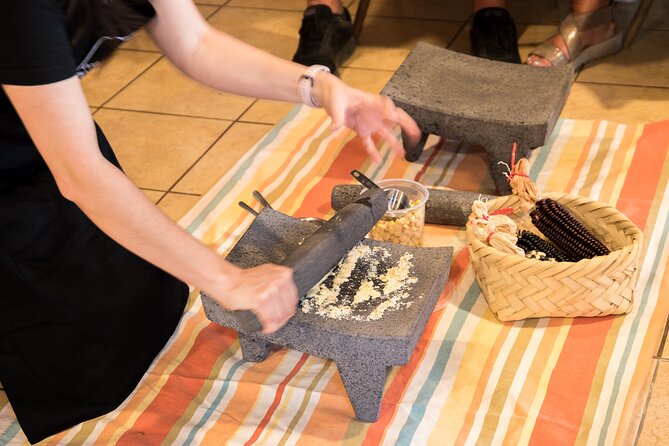
- Metate grinding on volcanic stone, slow and satisfying
- Comal cooking: learn the feel of timing for fresh tortillas
- Molcajete salsa: you make it, not just taste it
- Real taste comparisons: some sessions include tasting tortillas from different masa sources
Still hungry? More taco crawls across town
- Historic Center Food Tour in Mexico City
★ 5.0 · 1,263 reviews - Xochimilco Barco Fiesta Tentacion 18+ with Open Bar and Tacos
★ 5.0 · 1,209 reviews - Lucha Libre Tickets & Tacos & Beer & Mezcal – BEST NIGHT EVER!
★ 5.0 · 1,077 reviews - Polanco Food Tour: The Bestselling Food Adventure in Mexico City
★ 5.0 · 881 reviews
Why Nixtamal Still Matters in Mexico City
If you’ve only had tortillas from a plastic bag, this class gives you the missing context. Mexican corn is not a throwaway ingredient. It’s a foundation.
The workshop starts with a short, engaging lecture on why Mexican corn matters and how heirloom corn strains are disappearing. That sets the tone: you’re not just learning a recipe. You’re learning why the process matters.
Then you get the key idea behind nixtamal—the essential step of transforming corn into tortilla-ready dough. It’s the kind of knowledge that sounds technical until you’re standing there with dough, heat, and timing in front of you. Suddenly it clicks. You’ll start to understand why tortillas can taste sweet, earthy, or flat depending on what’s been done to the corn first.
Meeting at Catita Pan y Café: The easiest start you can manage
The session meets at Catita Pan y Café, C. Dr. José María Vértiz 997, Narvarte Poniente, Benito Juárez, 03020 Ciudad de México. It starts at 5:00 pm, and the activity ends back at the meeting point.
This matters more than it sounds. A late-afternoon 5 pm start slots neatly into a normal Mexico City day when you want something hands-on without turning it into your whole evening. And since you return to the same spot, you’re not stuck planning a second transit step after you’re done cooking and eating.
It’s also near public transportation, which helps if you’re juggling museum time, street food stops, or a dinner plan later.
Grinding Heirloom Corn on a Metate (and why it changes everything)
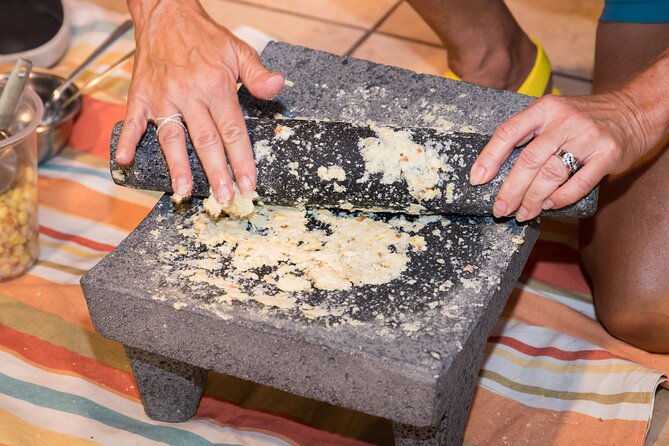
Here’s where the workshop becomes more than a food stop: you grind your own heirloom corn on the metate. This is a volcanic-rock grinding stone that’s been used for generations. It’s heavy, tactile, and slow by design.
I love this part because it turns a kitchen step into a lived experience. You feel resistance. You notice how the texture changes as the corn breaks down. And you start to understand why tortillas made this way carry a different character than ones made from generic, industrial shortcuts.
It also teaches you something practical: tortillas aren’t only about ingredients. They’re about preparation and consistency. The grinding step affects the dough texture you’ll work with next. You’ll see how small differences in texture can affect how the dough behaves on the comal.
If you’re coming with kids, this is the natural hook. Grinding draws attention fast, and it gives everyone a job. One family-friendly bonus: people don’t just watch from the side. They do.
More hands-on hours to book
- Mexican Cooking Class with Food Market Visit in Mexico City★ 5.0 · 506 reviews
- Essence of Mexico: Authentic Mexican Cooking Class & Market Tour★ 5.0 · 289 reviews
- Mexican Cooking Class & Cocktails in Mexico City★ 5.0 · 134 reviews
- Private Mexican Cooking Class with Gastronomic Historian, Lucia★ 5.0 · 110 reviews
- Mexican Churros Master Class★ 5.0 · 91 reviews
From Nixtamal to Dough: what you’ll focus on
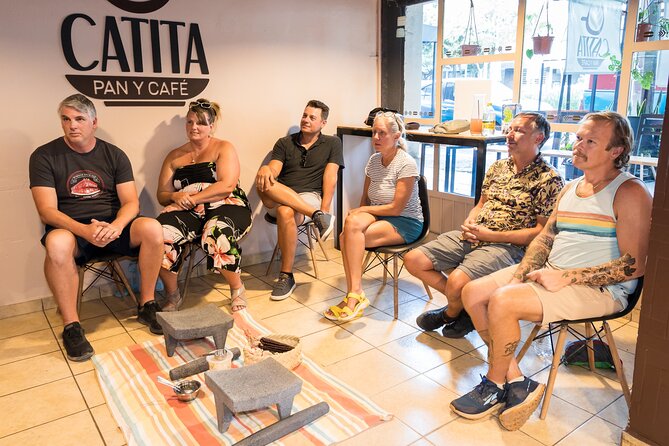
After the nixtamal talk, the session moves into turning that concept into a hands-on workflow. You’ll learn how corn becomes tortilla masa, and then you’ll move into actual tortilla shaping and cooking.
Even if you’re not a home cook, you’ll pick up a few takeaways you can use later:
- Corn needs treatment first, not just cooking
- Texture matters more than fancy equipment
- The steps have a rhythm: mix, shape, cook, then eat immediately
This is why the class is worth doing in person. At home, it’s easy to think you can copy tortillas with a bag of flour or a quick shortcut. Here, you see how the process builds toward dough that cooks right.
And yes, you’ll be making food you can actually eat right away. The “why” and the “how” happen in the same window.
Cooking Tortillas on the Comal: timing, smell, and feel
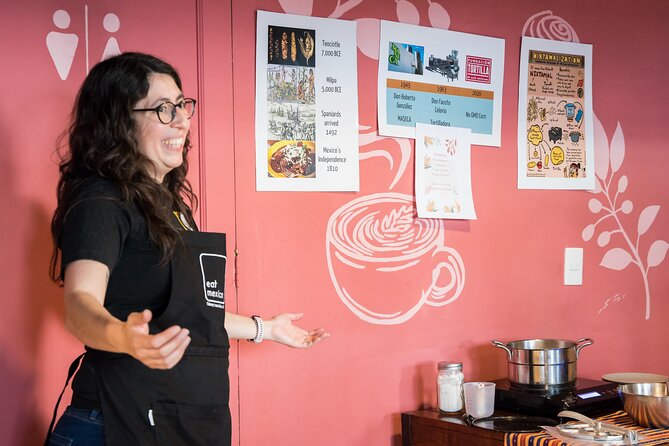
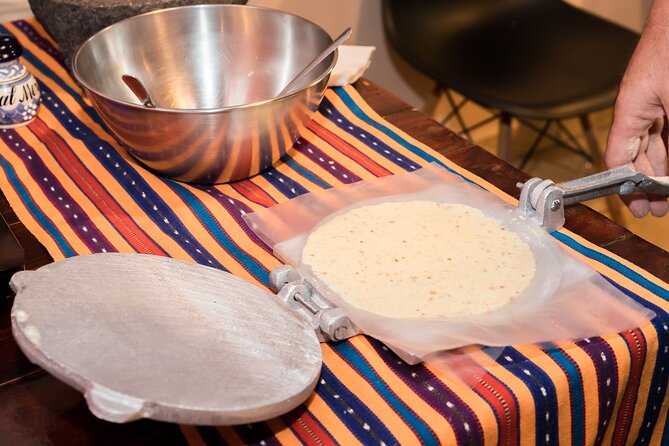
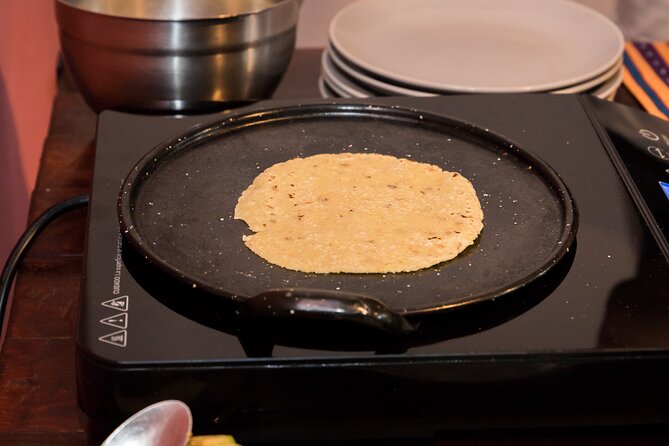
Now comes the heat step: you cook your tortilla fresh on the comal. A comal is a flat cooking surface, and the class gives you the skill of reading what’s happening. You’re not relying on a timer alone. You’re learning how the tortilla looks and behaves as it cooks.
I like this because it’s the moment where theory disappears and your hands take over. The tortilla changes in front of you: spots appear, edges set, and then it’s ready. That feedback loop is instant, which makes the learning stick.
If you’ve had tortillas that were stiff, rubbery, or dull, you’ll understand why fresh cooking changes everything. Fresh tortillas have a different smell, a different softness, and a different bite. And when you cook them yourself, you stop guessing. You know.
Quesadilla time: Oaxaca cheese plus your own salsa
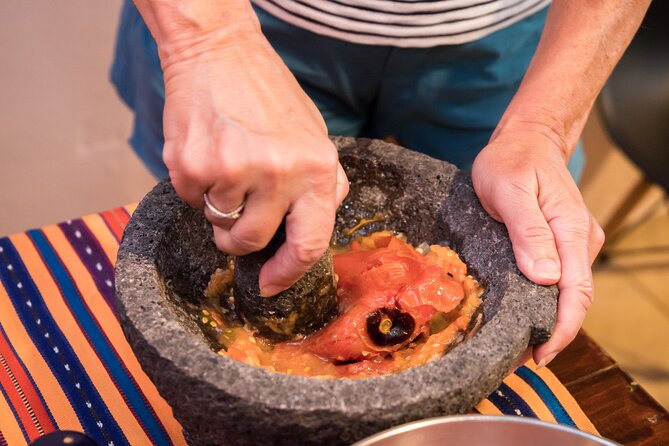
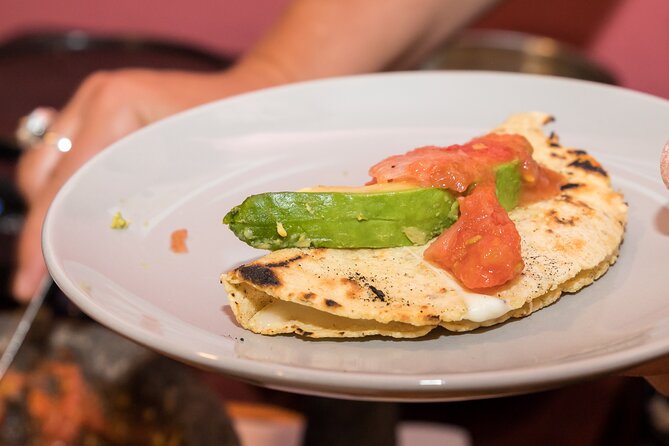
After tortillas, the food part gets deliciously real. You’ll make a quesadilla using fresh Oaxaca cheese and the salsa you made with a molcajete.
This is a smart structure for a workshop. You build skills step by step—grind corn, make tortillas, cook tortillas—then you get rewarded with a finished dish that’s hard to mess up. And salsa is where flavor “lives,” so making it yourself locks the lesson into taste.
The salsa is made in a molcajete, which is the stone mortar used for grinding ingredients into a paste. The motion slows you down just enough to notice texture changes as you crush and mix.
One of the best outcomes is what happens after your first bite: you start thinking about tortillas differently. Instead of generic bread-like rounds, they become a nuanced food that depends on process.
Taste comparisons that make you question packaged tortillas
One standout detail from the experience is how some sessions include tasting tortillas made using different masa sources—your metate-ground tortillas first, then tortillas prepared from masa from a mill, and finally tortillas using Maseca harina. The goal is comparison, not judgement.
And the difference is obvious for many people. When you grind and cook your own, you can taste the change in freshness and character. When you try industrial shortcuts afterward, you get a direct, practical benchmark.
If you care about home cooking, this is valuable. You’re not just learning “what to do.” You’re learning what you gain by doing it that way.
The guides: Clara and Ariane set the tone
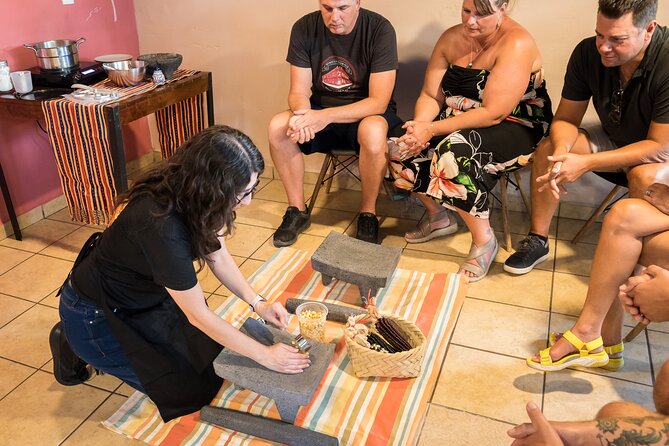
This class is led by a culinary expert local guide, and the experience has a knack for pairing warm hospitality with clear explanations. Clara is mentioned as engaging and passionate about sharing the history and significance of corn. Ariane is also named as leading a great class.
What matters for you: the teaching style fits the activity. It’s not a lecture that delays the food. It’s a guided flow that keeps you moving from explanation to action.
A good sign: the guides handle questions as they come up—so if you’re curious about nixtamal or why certain flavors show up, you’re not stuck waiting until the end.
Price and value: $95.31 for 1.5 hours of real skill
At $95.31 per person for about 1 hour 30 minutes, this isn’t a budget snack. But it’s also not just a tasting event.
You’re paying for:
- A small group setup (maximum 8 travelers)
- Hands-on instruction with key traditional tools (metate, comal, molcajete)
- Ingredients and the food you make (quesadilla as the included snack)
- An expert local guide who connects the process to why it matters
If you’ve ever done cooking classes that give you a basic demo and then hand you a plate, this feels different because the core steps are hands-on. For people who want to bring tortilla-making competence home (or at least stop buying the lowest-quality tortillas), this can feel like a useful investment.
Plan your expectations: it’s not private transportation, and alcoholic beverages aren’t included. If you want drinks, you’ll need to arrange that separately. And since it’s a snack-based class, you may still want dinner after.
Who should book this tortilla workshop, and who might skip it
This is a great fit if you:
- Want hands-on Mexican cooking, not just a guided walk-and-eat
- Care about corn, ingredients, and why food tastes the way it does
- Have kids who like tactile tasks like grinding and cooking
You might consider skipping if you’re only looking for a quick food stop. This is a learning-and-making experience with a real process behind it. The payoff is in the skills and the comparison. If your goal is purely to eat a lot, you’ll likely want an additional dinner plan.
Also, if your Spanish is limited, it’s fine because it’s offered in English. The tools and food also help you understand even if you zone out for a moment.
Should you book Tortilla Class and Workshop in Mexico City?
If you want an authentic Mexico City food experience that teaches you something you can actually use, I’d book it. The metate + comal + molcajete combo is the heart of the session, and the class design makes the lessons land through action and taste.
Do it if you’re the type who notices quality in simple things: corn, heat, texture, freshness. And if you’ve ever wondered why tortillas taste so different from one place to another, this gives you the practical reasons.
Just go in knowing it’s about making tortillas and salsa and eating a quesadilla snack—not an all-you-can-eat dinner. If that matches your vibe, you’ll leave with both a full belly and a better tortilla sense.
FAQ
How long is the tortilla class?
The experience lasts about 1 hour 30 minutes.
Is the workshop offered in English?
Yes, it’s offered in English.
What will I make during the class?
You’ll learn the nixtamal process, grind heirloom corn on a metate, make your own tortilla and cook it on a comal, then make a quesadilla and prepare salsa using a molcajete.
What’s included in the price?
The included items are the snack (the quesadilla you make) and a culinary expert local guide.
What’s not included?
Private transportation and alcoholic beverages are not included.
Where do I meet, and does it end nearby?
You start at Catita Pan y Café, C. Dr. José María Vértiz 997, Narvarte Poniente, Benito Juárez, 03020 Ciudad de México, CDMX, Mexico, and the activity ends back at the meeting point.
Can I cancel and get a full refund?
Yes. You can cancel for free up to 24 hours in advance for a full refund.
Make One to Take Home



More Tour Reviews in Mexico City



Keep Eating: More Mexico City Taco Runs




Fresh from our Mexico City notebook


Mexico City Street Food Tours, compared.
 ★ 5.0Historic Center Food Tour in Mexico CityFrom $1151,263 reviews
 ★ 5.0Xochimilco Barco Fiesta Tentacion 18+ with Open Bar and TacosFrom $591,209 reviews
 ★ 5.0Lucha Libre Tickets & Tacos & Beer & Mezcal – BEST NIGHT EVER!From $841,077 reviews
 ★ 5.0Polanco Food Tour: The Bestselling Food Adventure in Mexico CityFrom $109881 reviews
 ★ 5.0Colonia Roma Food TourFrom $110838 reviews
 ★ 5.0Mexico City Historical Centre Food Tour with 7 Authentic TastingsFrom $65723 reviews
 ★ 5.0Local Foodie Adventure in Mexico: +10 dishes with Sherpa ToursFrom $85338 reviews
 ★ 5.0Street Food Tour with Friends326 reviews
Browse the lists this tour appears in