
REVIEW · VOLCANO HIKES & NEVADO DE TOLUCA
Mountaineering Iztaccihuatl (5220m)
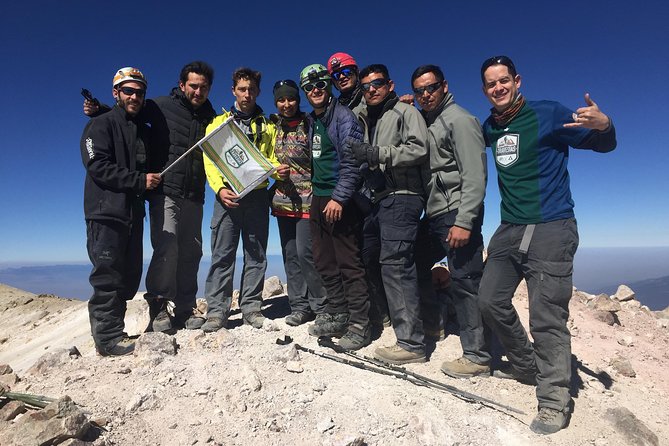
Iztaccihuatl hits hard, even in two days. This climb takes you up to 5,220 m on Mexico’s third-highest peak, with big payoff views of Popocatépetl. What I like most is that the trip is run with real mountaineering safety gear included, and the summit perspective is the kind you remember for years. The main drawback to keep in mind is the early-morning grind on summit day and the fact you need strong fitness for altitude and steep, cold conditions.
You start from Mexico City, get private transportation, and go with a small group (max 10). You’ll be with an English-speaking operation, and you finish the second day with a traditional regional meal in Amecameca. If you’re looking for a serious mountain challenge that still feels organized and human-scale, this one fits.
In This Review
- Key highlights at a glance
- Iztaccihuatl’s 5,220 m summit: why this climb feels iconic
- Day 2 summit push: 2:00 am wake-up to an around-noon top
- Day 1 at Paso de Cortes and the Altzomoni refuge: acclimatize toward the first gate
- Safety gear that’s actually useful at altitude
- What makes the views special: Iztaccihuatl and Popocatépetl National Park
- From Mexico City to the mountain: meeting point and the “private transportation” advantage
- Price and value: what $579.45 covers on this 2-day climb
- Who this climb suits best (and who should skip it)
- Practical expectations: pace, cold, and weather reality
- Should you book México Travesías’ Iztaccihuatl climb?
- FAQ
- How many days is the Iztaccihuatl climb?
- What time do you start the summit day?
- What safety gear is included?
- Where is the meeting point in Mexico City?
- Is this tour suitable for children?
- What happens if weather is poor or you need to cancel?
Key highlights at a glance
- 5,220 m summit with the satisfaction of a real altitude goal
- Popocatépetl views from the top inside Iztaccihuatl and Popocatépetl National Park
- Early start on day 2 (wake-up at 2:00 am, summit around 12:00 pm)
- Included gear: helmet, lamp, crampons, ice ax for icy, technical footing
- Small group size (max 10) for smoother pacing and support
- Traditional meal in Amecameca to close the trip on a local note
More thin-air climbs above the valley
- Nevado De Toluca: Reach the Summit with Professionals
★ 4.8 · 250 reviews - Iztaccihuatl Volcano Hike with an Alpinist
★ 4.0 · 244 reviews - Mexico City: Guided Volcano Trek with Lunch
★ 4.7 · 242 reviews - From Mexico City: Hike Iztaccihuatl Volcano with an Alpinist
★ 4.3 · 155 reviews
Iztaccihuatl’s 5,220 m summit: why this climb feels iconic
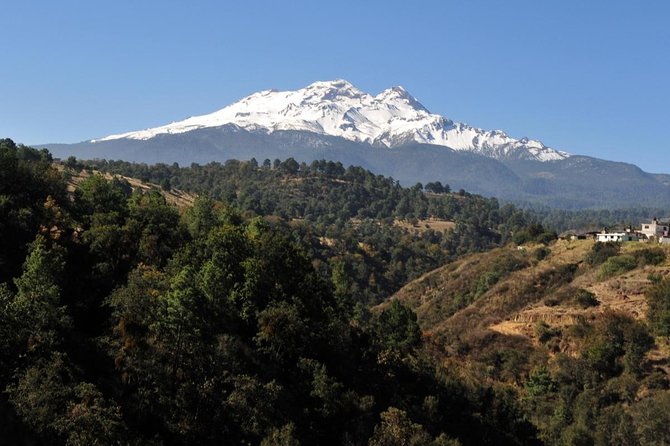
Iztaccihuatl is often called Mexico’s sleeping woman, and when you’re aiming for the top, you understand why people chase it. This tour is built around a true high-altitude objective: reaching the summit at 5,220 m. It’s also not just about ticking a box. The value is in the combination of effort, altitude adaptation during day one, and a summit moment where you can actually take in the volcano surroundings.
One of the best parts is what you get to see on the climb. The mountain sits next to Popocatépetl, and the summit views include the nearby active volcano. That contrast matters. You’re not staring at a random horizon—you’re looking at one of Mexico’s most dramatic volcanic landscapes, from high above.
This is also a trip where the mood stays focused. You register at Paso de Cortes, you head up to the Altzomoni refuge, and you use day one to get your body ready. That structure helps you show up for the big push without feeling like the mountain threw you into the deep end.
Day 2 summit push: 2:00 am wake-up to an around-noon top
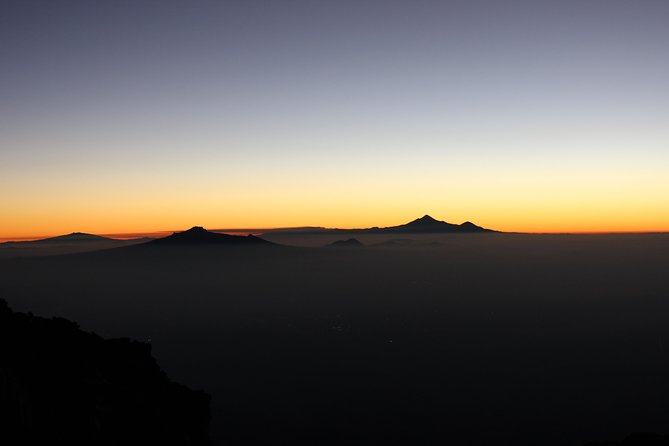
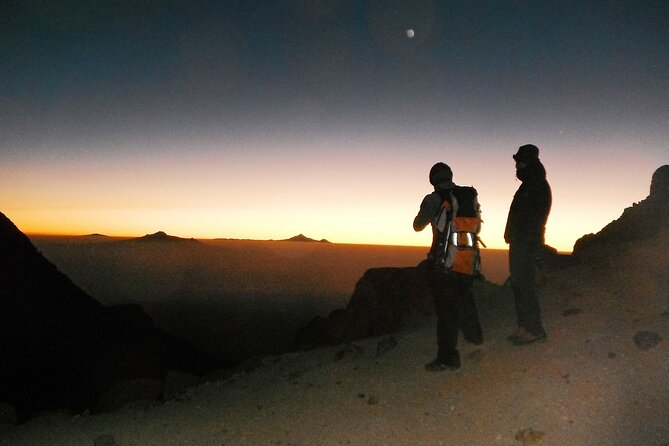
Day two is the heart of the experience. You get up at 2:00 am, and the summit is scheduled for around 12:00 pm. That long window is normal for a mountain like this: it’s not about speed. It’s about steady movement, careful footing, and staying mentally calm while you climb in cold, thin-air conditions.
After you reach the summit, you get time for a view moment. Even if you’re exhausted, the whole point is that pause. You’ll likely remember this as the part where the trip clicks—where the work becomes something you can look at.
Then you head back down to the truck. The timing matters here: you’re not left wandering for hours. The plan takes you from summit back to transport, and it closes with a regional meal in Amecameca. That last touch is more than comfort. It turns the day from “survive the climb” into “celebrate the accomplishment.”
Practical consideration: because the plan requires a 2:00 am start, you should plan to be sleep-deprived and cold. Bring a mindset that’s more about readiness than optimism.
Day 1 at Paso de Cortes and the Altzomoni refuge: acclimatize toward the first gate
Day one keeps things purposeful. You leave Mexico City and head toward Paso de Cortes, where you’ll register. Registration isn’t just paperwork. It’s part of how these climbs stay coordinated, and it helps you confirm you’re on the right schedule before altitude takes over the agenda.
From there, you go up to the Altzomoni refuge. The big goal on day one is acclimatization. You’ll do an acclimatization ascent toward the first gate, then return to the refuge for dinner and early rest.
That “ascent then return” rhythm is what you want on a short mountain trip. The tour isn’t pretending acclimatization is optional. It treats it as the first skill you practice. You’re not just hiking—you’re adapting your breathing and effort to altitude in a controlled way.
The refuge plan also helps you with recovery. You get dinner and you rest early, which sets you up better for that brutally early 2:00 am wake-up. If you rush day one, you pay for it on day two. This schedule is designed to avoid that.
One thing to be ready for: day one still involves real mountain movement. Even the acclimatization part can feel serious, especially if you’re coming straight from city life.
- Teotihuacan, Guadalupe Shrine & Tlatelolco Day Tour with Lunch★ 5.0 · 11,603 reviews
- Xochimilco, Coyoacan and Frida Kahlo with Optional Lunch★ 4.5 · 7,320 reviews
- Balloon flight + Breakfast in cave + Pyramids + Pick up CDMX.★ 5.0 · 6,335 reviews
- Teotihuacan pyramids morning or afternoon without tourist traps★ 5.0 · 6,186 reviews
- Teotihuacan Early Access Guided Tour with optional Lunch★ 4.5 · 6,138 reviews
Safety gear that’s actually useful at altitude
This trip includes the key mountaineering gear you need: helmet, lamp, crampons, and an ice ax. For me, that’s a major value point because it reduces your pre-trip stress. You don’t have to scramble for rentals or worry whether the gear fits your shoe setup and the conditions.
Each item has a clear job:
- A helmet protects you when you’re close to icy ground and steep terrain.
- A lamp matters because you start climbing extremely early.
- Crampons are about traction on icy surfaces.
- An ice ax helps with stability and control when footing gets technical.
The practical benefit is confidence. When gear is included, you can focus on technique and pacing instead of logistics. It also signals that this is designed as a real mountaineering climb, not a casual hike.
If you’re considering your own gear: only bring what you’re comfortable using. The included list is the baseline, and you’ll want to match the system the guide expects.
What makes the views special: Iztaccihuatl and Popocatépetl National Park
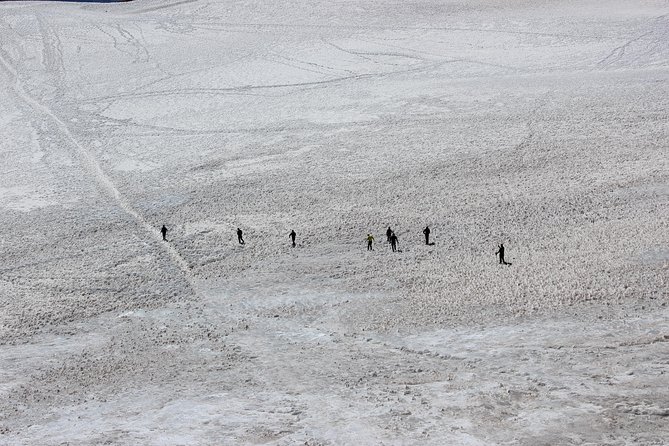
You’re climbing inside Iztaccihuatl and Popocatépetl National Park, and that shows up in the experience. Even without naming every peak and ridge, you’re in a volcanic neighborhood where the terrain and scale feel bigger than normal hiking.
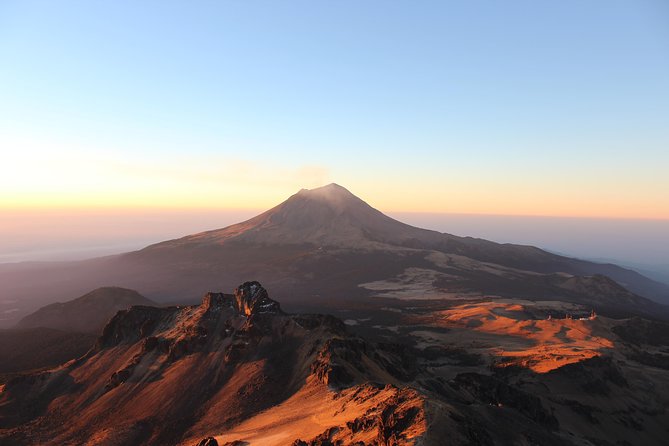
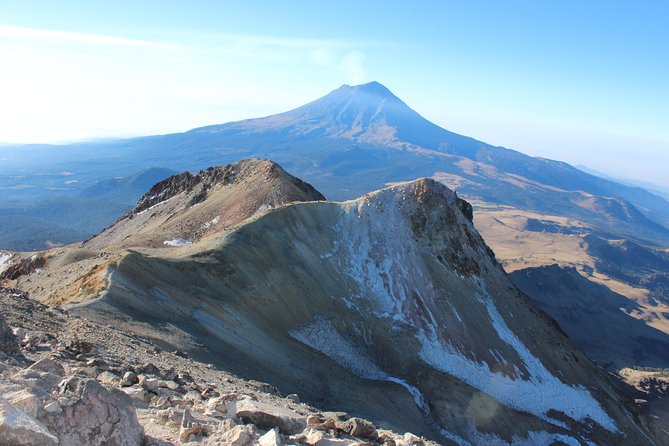
The summit is the payoff, especially for people who want to see Popocatépetl as an actual neighbor—not a distant dot on a map. The nearby active volcano is specifically part of what makes this climb memorable. When the conditions are clear, the perspective at altitude turns the view into something you can study, not just admire.
Another underrated part: the environment changes fast. You’re moving from refuge area terrain to summit conditions, and the shift affects visibility, effort, and how you feel physically. That’s why the day-by-day approach matters. If you come in thinking it’s just about a single long climb, the whole trip becomes harder than it needs to be.
From Mexico City to the mountain: meeting point and the “private transportation” advantage
The trip meets at Av. Vicente Suárez 38, Colonia Condesa, Cuauhtémoc, 06170 Ciudad de México, CDMX, Mexico. It ends back at the same meeting point. You’re also provided private transportation, which I consider a big deal for a mountain trip with an early schedule.
Private transport means fewer moving parts and less time coordinating with different schedules. It’s also easier if you’re traveling with gear and don’t want to juggle public transit timing while you’re preparing for altitude.
One more nice touch is how the day finishes. After summit day, you don’t just return to the city in a tired blur. You stop in Amecameca for a traditional regional meal before heading back. That helps you feel like you completed a local experience, not just climbed something and went home.
Price and value: what $579.45 covers on this 2-day climb
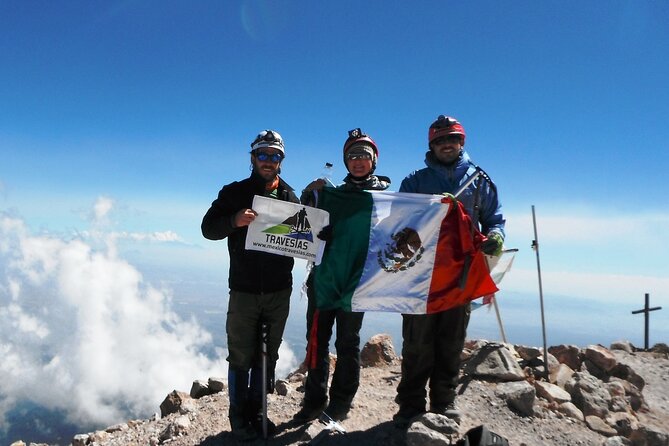
At $579.45 per person, this isn’t a cheap weekend activity—but it also isn’t priced like a simple hike. What you’re paying for is a real package of mountain logistics: private transportation, mountaineering safety gear (helmet, lamp, crampons, ice ax), and meals across the two days.
Meals included are listed as breakfast, dinner, and lunch. That matters because food timing on summit days is not optional. When you’re climbing at 2:00 am, hunger and timing can become distractions. Having meals handled is one less thing to manage.
You’re also going with a small group, capped at 10. Smaller groups tend to reduce chaos. On a mountain route, calm matters.
Language-wise, the experience is offered in English, so you can follow instructions and safety guidance clearly. And there are group discounts, which can make this even better value if you’re traveling with friends who want the same objective.
The only caution on value: you’ll get the most out of this if you’re genuinely prepared for altitude and technical conditions. If you’re unsure about your fitness level, the cost can feel steep for a trip you spend fighting the basics.
Who this climb suits best (and who should skip it)
This is for people with strong physical fitness. The plan is compact: two days, early wake-up, and a summit objective at 5,220 m. That combination means you can’t treat this like a casual weekend hike.
It’s also not recommended for children under 14 years. That’s a clear signal this is aimed at adults or teens with real stamina and comfort around mountaineering gear.
If you’re an experienced hiker who wants a step up into mountaineering-style terrain, this is a logical next goal. If you’re still building your fitness base, you might find the early schedule and technical footing harder than you expect.
A small but important mental note: a summit climb works best when you respect pacing. If you go too hard early, you’ll pay later. This tour’s day one acclimatization and day two timing are designed around that reality.
Practical expectations: pace, cold, and weather reality
The tour requires good weather. That’s not a throwaway line. On a summit objective, conditions can change how feasible the climb is, and the operation needs weather to keep it safe.
If weather cancels the experience due to poor conditions, you’ll be offered a different date or a full refund. That’s the right kind of flexibility for a mountain where plans depend on the sky.
For your own planning, treat the trip as “cold-and-serious” even if you think it’s just another hike. The gear list (crampons and ice ax) points to icy terrain. You should dress for layers and be ready for the kind of cold that makes slow down feel faster than you want.
Also, expect the timing to feel long on summit day. You’re awake at 2:00 am, and you reach the summit around 12:00 pm. The time gap means you need to stay comfortable and steady, not push at the start and burn out.
Finally, the early rest on day one is not optional. If you don’t wind down, day two will be harder than it needs to be.
Should you book México Travesías’ Iztaccihuatl climb?
If you want a high-altitude summit experience with a clear structure, included mountaineering gear, and a small group cap, I’d say this is a strong choice. The combination of acclimatization day one at the Altzomoni refuge, then a summit push on day two, is the right recipe for a short trip to a big objective.
I’d book this if:
- you’re fit and comfortable with early mornings
- you want included crampons and ice ax, not gear hunting
- you care about seeing Popocatépetl up close from the summit area
- you like guided organization (the operation is led by Bernardo, who comes up in feedback for running things smoothly and making the climb feel well managed)
I’d think twice if:
- you’re not confident in your physical readiness for altitude and icy footing
- you need a relaxed pace or lots of downtime built into the schedule
Also, consider timing: this experience is commonly booked about 17 days in advance, so earlier planning gives you a better shot at your preferred dates.
FAQ
How many days is the Iztaccihuatl climb?
It’s listed as 2 days (approx.).
What time do you start the summit day?
You get up at 2:00 am, and you reach the summit at approximately 12:00 pm.
What safety gear is included?
Helmet, lamp, crampons, and ice ax are included.
Where is the meeting point in Mexico City?
You meet at Av. Vicente Suárez 38, Colonia Condesa, Cuauhtémoc, 06170 Ciudad de México, CDMX, Mexico, and the activity ends back at the same meeting point.
Is this tour suitable for children?
It is not recommended for children under 14 years.
What happens if weather is poor or you need to cancel?
The tour requires good weather. If it’s canceled due to poor weather, you’ll be offered a different date or a full refund. For cancellations, it’s free up to 24 hours before the start time for a full refund. Less than 24 hours means no refund.
More Tour Reviews in Mexico City


Thin Air: Nevado de Toluca and the Volcanoes
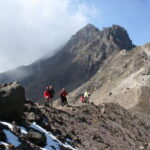
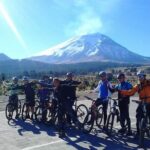
Fresh from our Mexico City notebook

Volcano Hikes & Nevado de Toluca, compared.
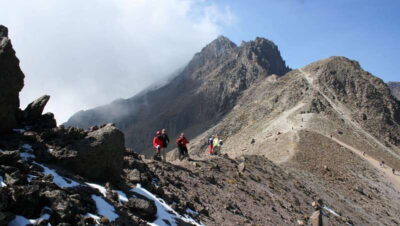 ★ 4.8Nevado De Toluca: Reach the Summit with ProfessionalsFrom $162250 reviews
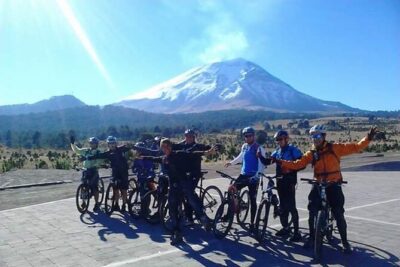 ★ 4.0Iztaccihuatl Volcano Hike with an AlpinistFrom $139244 reviews
 ★ 4.7Guided Volcano Trek with LunchFrom $105242 reviews
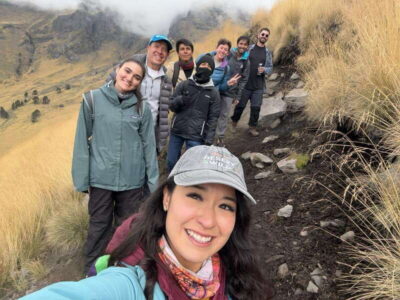 ★ 4.3From Mexico City: Hike Iztaccihuatl Volcano with an AlpinistFrom $168155 reviews
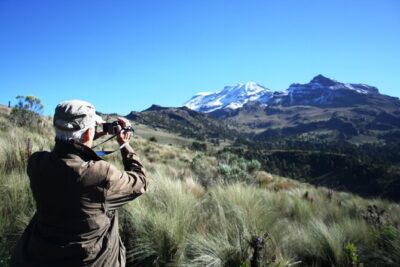 ★ 5.0Trekking Through The VolcanoesFrom $13396 reviews
 ★ 5.02 Volcanos – Special 2 pax, 3 -4 hr ride. Reserve Only 1 paxFrom $50081 reviews
 ★ 5.0Mountaineering to the Nevado de Toluca (altitude 4680m)From $16678 reviews
 ★ 5.0Hike at Nevado de Toluca VolcanoFrom $10569 reviews
Browse the lists this tour appears in