REVIEW · MEXICAN COOKING CLASSES
Mexican Bread Interactive Master Class
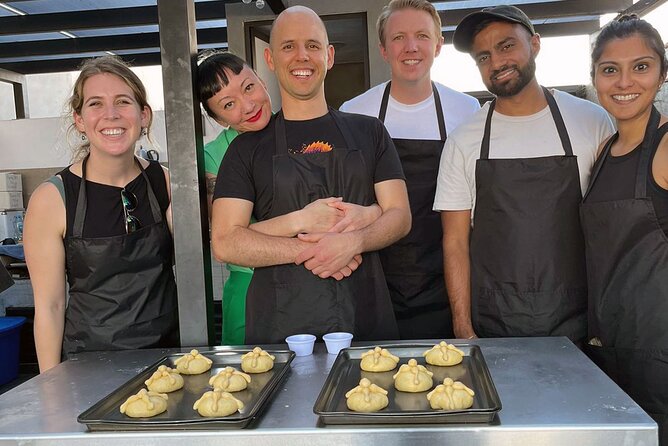
A rooftop bread lesson beats a museum day. You get to learn Mexican sweet breads from a professional baker, then make and taste your own on an outdoor terrace. The small group (max 12) also means individual attention, not a rushed demo.
Two things I especially like: the class focuses on both the bread-making technique and the meaning behind each process, and you finish by eating what you made with coffee. One thing to consider is that the bread you bake can be seasonal, so your best match depends on the months you visit.
In This Review
- Key things to know before you go
- Why Mexican sweet breads are worth learning (not just eating)
- The rooftop terrace experience in Mexico City
- What you’ll actually make: Concha vs Pan de Muerto
- Concha (Feb to Sep)
- Pan de Muerto (Oct to Nov)
- How the class is taught: pro baker guidance and real feedback
- A realistic timeline: from meeting to eating with coffee
- The value of $71.82: skills, not just a snack
- Who this class suits best (and who might not)
- Practical tips before you book
- Quick FAQ
- FAQ
- What’s the duration of the Mexican Bread Interactive Master Class?
- Is the class offered in English?
- What bread will I learn to make?
- How big is the group?
- Where does the class meet?
- Can I get a refund if my plans change?
- Should you book this Mexican bread class?
Key things to know before you go
- Hands-on instruction from a professional baker, not a passive tasting
- Small group size (up to 12), which helps with questions and pacing
- Outdoor terrace setting in Mexico City while you bake and socialize
- Seasonal breads: Pan de Muerto in Oct–Nov, Concha Feb–Sep
- English-led experience with a mobile ticket
- Finished with coffee and your homemade bread, so you leave with real satisfaction
More aprons-on time in a CDMX kitchen
- Mexican Cooking Class with Food Market Visit in Mexico City
★ 5.0 · 506 reviews - Essence of Mexico: Authentic Mexican Cooking Class & Market Tour
★ 5.0 · 289 reviews - Mexican Cooking Class & Cocktails in Mexico City
★ 5.0 · 134 reviews - Private Mexican Cooking Class with Gastronomic Historian, Lucia
★ 5.0 · 110 reviews
Why Mexican sweet breads are worth learning (not just eating)
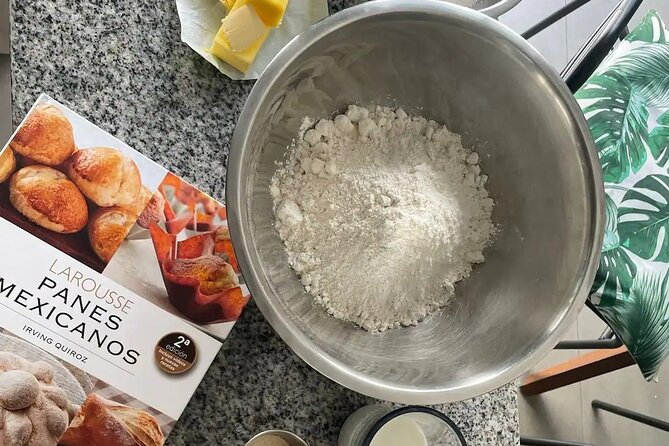
Mexican sweet breads have a way of turning breakfast—or dessert—into something with story. In this class, you’re not only picking up flavors. You’re learning what makes each bread special and why Mexicans treat certain breads like cultural events, not casual snacks.
I like that the workshop is built around Mexican baking traditions you can actually taste. You’ll spend your time making bread with guidance, so it sticks. Then you finish by eating your homemade breads with coffee, which is a simple combo that makes the whole experience feel complete.
The rooftop terrace experience in Mexico City
This isn’t a basement kitchen class. You’ll bake in a quiet outdoor terrace setting in Mexico City, with the relaxed feel that comes from being outside while food is happening. That matters more than you might think.
When you’re learning bread, you need focus: you’re working with dough, watching timing, and paying attention to small adjustments. An outdoor terrace can make that easier because it feels calmer than an indoor cooking school vibe. It also gives you a natural social atmosphere. You can talk with your group while you bake, which is a big part of why these classes tend to be memorable.
Also, the meeting point is in Colonia Condesa, and it’s near public transportation. That’s a practical win if you’re also doing other things around Roma/Condesa the same day.
What you’ll actually make: Concha vs Pan de Muerto
The menu is seasonal, so plan around your travel dates. The class highlights Mexican sweet breads that show up throughout the year, with dessert options tied to festivals and coffee culture.
More hands-on hours to book
- Mexican Cooking Class with Food Market Visit in Mexico City★ 5.0 · 506 reviews
- Essence of Mexico: Authentic Mexican Cooking Class & Market Tour★ 5.0 · 289 reviews
- Mexican Cooking Class & Cocktails in Mexico City★ 5.0 · 134 reviews
- Private Mexican Cooking Class with Gastronomic Historian, Lucia★ 5.0 · 110 reviews
- Mexican Churros Master Class★ 5.0 · 91 reviews
Concha (Feb to Sep)
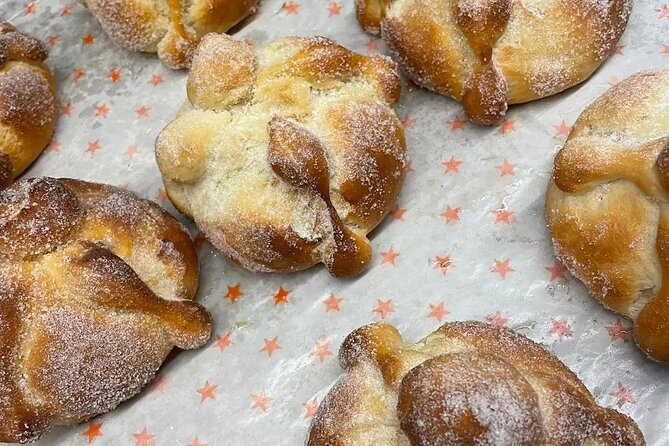
Concha is Mexico’s go-to sweet bread to pair with a hot cup of coffee. If you’re in Mexico City in the warmer months (or just want a classic flavor), this is the one to watch for. In a class setting, Concha is also a great bread to learn because it’s recognizable and has a distinctive style that many people associate with Mexican bakeries.
Pan de Muerto (Oct to Nov)
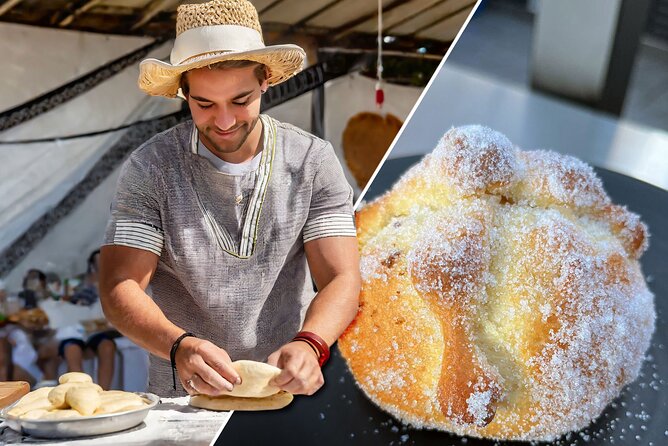
During October and November, you’ll get the secrets of Pan de Muerto, an essential part of the Day of the Dead tradition. This bread isn’t just a seasonal treat. It’s a way to learn how food carries meaning in Mexican culture. If your timing overlaps with Día de Muertos, this class becomes more than cooking—it becomes a hands-on cultural moment.
Important note: the specific dessert you get will depend on the season, so check your dates before you commit. If you’re traveling during Oct–Nov, you’ll be targeting the Pan de Muerto experience. If you’re in Feb–Sep, Concha is likely your focus.
How the class is taught: pro baker guidance and real feedback
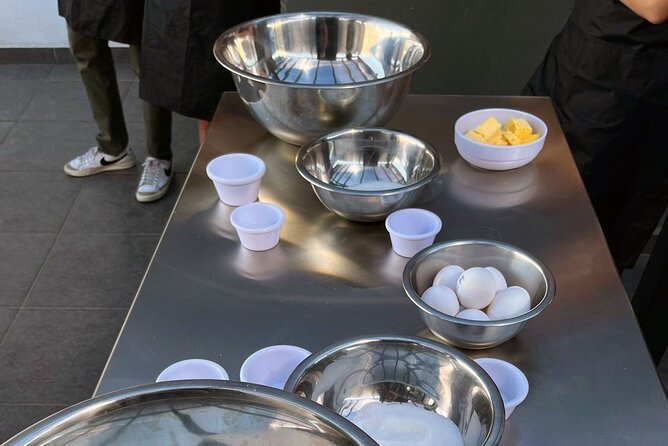
You’ll learn from a professional baker who provides full instruction. That’s the difference between a cooking class where you mostly watch and a bread class where you actually learn the process.
From what’s been shared about the teaching style, the guide (often described with the name Elizabeth) makes sure the steps make sense. The big theme is that you’re not just being told what to do—you get explanations for what each stage is doing and why it matters. That kind of clarity helps you feel confident, even if bread-making isn’t your hobby at home.
Also, the experience is capped at 12 travelers. In bread classes, small group size isn’t a luxury. It’s how you get help when something goes slightly off track—like if your dough feels different than you expected or you’re unsure about shaping. With a larger crowd, bread instruction turns into waiting your turn.
A realistic timeline: from meeting to eating with coffee
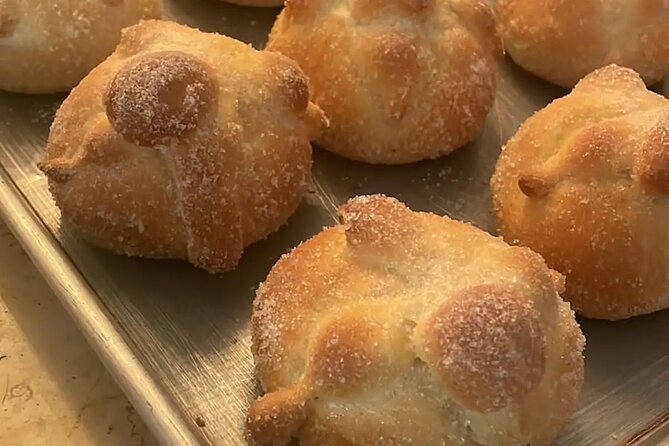
You’re looking at about 2 hours 30 minutes total. That’s long enough to learn something real, but short enough to fit into a sightseeing day.
Here’s how the flow typically feels based on what the workshop includes:
- You start at the meeting point in Condesa and get settled with your group.
- You get an introduction to different Mexican sweet breads and what makes them distinct.
- You then move into hands-on baking with full guidance—working through the steps alongside your instructor.
- While the bread is being made, you’re in an outdoor terrace setting that keeps the pace easy and the mood friendly.
- Finally, you eat what you made and pair it with coffee, so you can compare your finished result to what you expected.
That finish is practical. You’re not leaving with only a “project.” You’re leaving with something you can taste right away, which makes the skills feel usable for next time.
The value of $71.82: skills, not just a snack
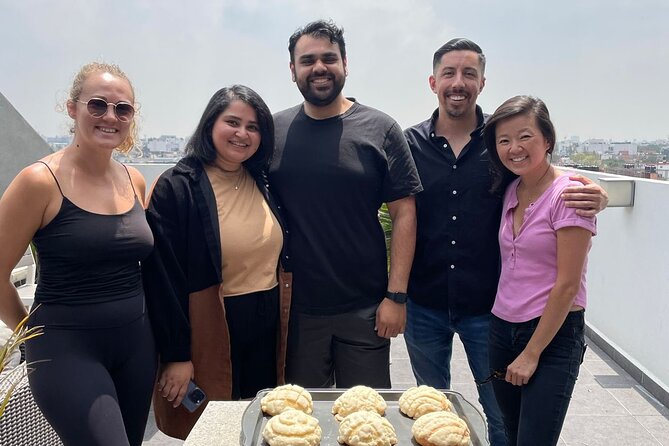
Price can be tricky with food experiences: sometimes you’re paying for theater, not technique. At $71.82 per person (about 2.5 hours), the value comes from the mix of:
- Hands-on instruction from a professional baker
- A group size limited to 12, which supports real teaching time
- A structured experience in English, with a mobile ticket
- The bread you make plus coffee, so you’re not paying extra for the meal
Bread classes are often worth it when they teach you something you can repeat. Even if you don’t become a home baker, learning how to approach dough, shaping, and bread culture helps you enjoy Mexican bakeries more intelligently afterward.
One practical tip: since this is commonly booked about 26 days in advance, don’t treat it as a last-minute plan. If you’re traveling during Oct–Nov (Pan de Muerto season) or in Feb–Sep (Concha season), it’s smart to lock it in earlier.
Who this class suits best (and who might not)
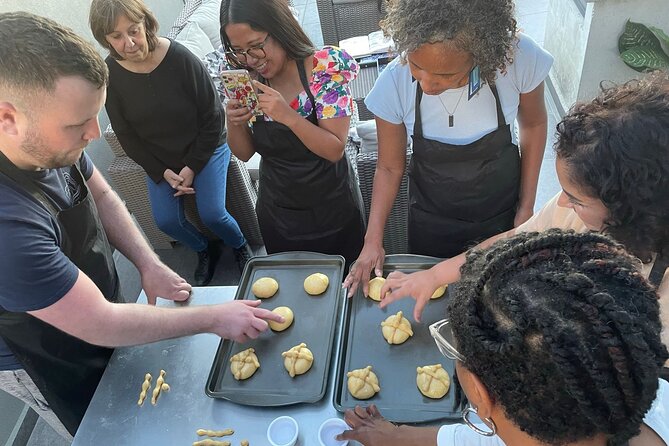
This works best if you enjoy hands-on experiences and want something more personal than a food tour tasting. I’d also recommend it if you like learning the “why” behind food—especially because the instruction includes meaning behind the processes.
It’s also a good choice if you’re traveling with friends and want a shared activity that still feels authentic. The class includes time on the terrace and a social, friendly atmosphere, which makes it easier to talk and learn together.
Who might not love it:
- If you’re only interested in quick street-food tastings, a 2.5-hour bread workshop might feel like a bigger time commitment than you want.
- If you’re visiting at a specific time and have your heart set on a specific bread, check the seasonal schedule first (Pan de Muerto vs Concha).
Practical tips before you book
A few things will make your experience smoother:
- Bring a mindset of learning, not perfection. Bread is forgiving, and guidance is part of the value.
- Plan your day so you can enjoy the class without rushing. A 2.5-hour food activity goes best when you’re not sprinting to your next stop.
- Since it’s offered in English, it’s a solid option if your Spanish is basic and you still want real instruction.
Also, use the fact that it’s near public transportation. That’s handy in Mexico City, where routing is half the battle.
Quick FAQ
FAQ
What’s the duration of the Mexican Bread Interactive Master Class?
The class runs about 2 hours 30 minutes (approx.).
Is the class offered in English?
Yes, it’s offered in English.
What bread will I learn to make?
The sample menu is seasonal: Pan de Muerto is listed for October and November, and Concha is listed for February through September.
How big is the group?
The experience has a maximum of 12 travelers.
Where does the class meet?
It starts at Cto. Interior Mtro. José Vasconcelos 76, Colonia Condesa, Cuauhtémoc, 06140 Ciudad de México, CDMX, Mexico.
Can I get a refund if my plans change?
Yes. You can cancel for a full refund if you cancel at least 24 hours in advance of the experience’s start time.
Should you book this Mexican bread class?
I think you should book it if you want an experience that mixes skill-building with Mexican food culture—and you’d rather make and eat bread than just sample it. The small group size, the professional baker instruction, and the fact that you finish with coffee and your own bread all point to a complete, satisfying activity.
Book early if your dates line up with Pan de Muerto (Oct–Nov) or you specifically want Concha (Feb–Sep). And if you’re already planning time in Condesa, this fits naturally into a day where you want something hands-on and genuinely local.
Make One to Take Home



More Tour Reviews in Mexico City




Learn a Dish in a Mexico City Kitchen
Fresh from our Mexico City notebook

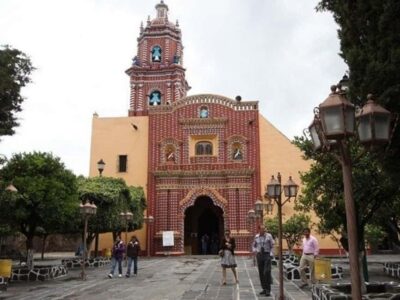


Mexican Cooking Classes, compared.
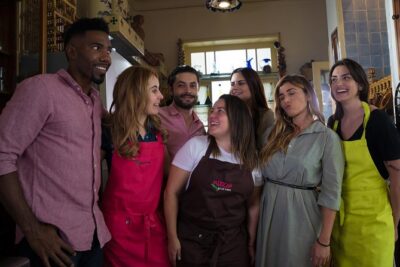 ★ 5.0Mexican Cooking Class with Food Market Visit in Mexico CityFrom $124506 reviews
 ★ 5.0Essence of Mexico: Authentic Mexican Cooking Class & Market TourFrom $178289 reviews
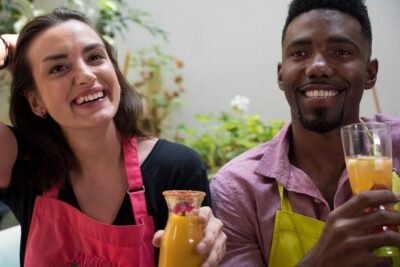 ★ 5.0Mexican Cooking Class & Cocktails in Mexico CityFrom $132134 reviews
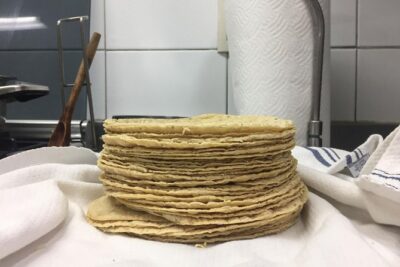 ★ 5.0Private Mexican Cooking Class with Gastronomic Historian, LuciaFrom $145110 reviews
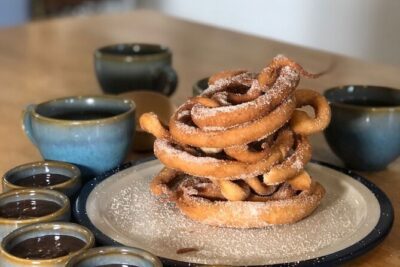 ★ 5.0Mexican Churros Master ClassFrom $7091 reviews
 ★ 4.8Mexican Cooking ClassFrom $12185 reviews
 ★ 5.0México City: Street Food to Home Cooking Food TourFrom $11084 reviews
 ★ 5.03h Cooking Class in Mexico City: 8 Recipes & Bottomless DrinksFrom $11059 reviews
Browse the lists this tour appears in