
REVIEW · FRIDA KAHLO & COYOACAN TOURS
La Catrina & Muralism: Diego Rivera’s Legacy & Frida Kahlo
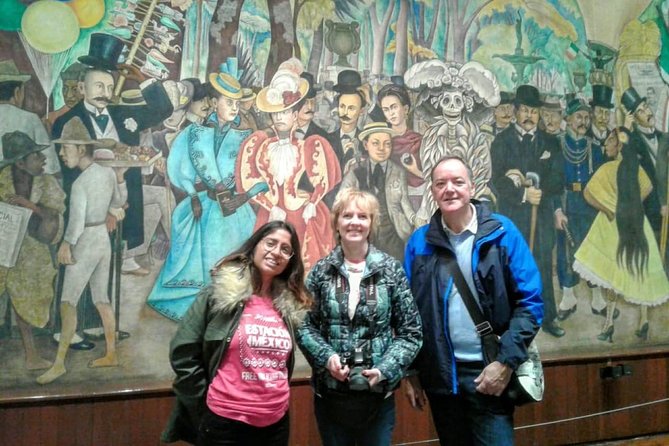
Stepping into muralism feels like stepping into history. This tour brings Diego Rivera murals to life with clear stories and symbolism, plus the unforgettable La Catrina connection to Día de Muertos. I really like how the guide ties art to Mexican identity, and how the tour links Rivera and Frida Kahlo’s story to what you’re actually seeing. The main drawback is simple: you’re walking, so bring comfortable shoes and don’t show up with heavy bags.
You also get a local-led perspective from passionate art fans (names you may see in past guides include Sam, Jesús, Luís, and Aldo). At 3 hours and offered in English and Spanish, it’s a smart way to start a Mexico City trip without needing museum-hours logic. I do think it’s best for people who enjoy explanations—this isn’t a “wander and guess” kind of tour.
In This Review
- Key things that make this tour worth your time
- Why Rivera and Kahlo murals matter more than you think
- The 3-hour route, in human terms
- Former College of San Ildefonso: starting where muralism took shape
- Museo Vivo del Muralismo: where the story gets hands-on
- The Rivera–Frida romance thread you’ll actually remember
- Diego Rivera Mural Museum: seeing legacy in one place
- Public transport segment: keep it light and you’ll glide
- Palacio de Bellas Artes: finishing with a big cultural bow
- Price check: $58 for 3 hours of guided mural reading
- Who this tour suits best
- Small but important things to bring (and not bring)
- What I’d look for during the tour (your homework, but fun)
- Should you book this tour?
- FAQ
- How long is the tour?
- Where does the tour start and end?
- How much does it cost?
- What meeting point should I use?
- What languages are available for the guided tour?
- Is the tour wheelchair accessible?
- Are meals included?
- What should I bring?
- Are there any items I’m not allowed to bring?
- What is the cancellation and booking policy?
Key things that make this tour worth your time
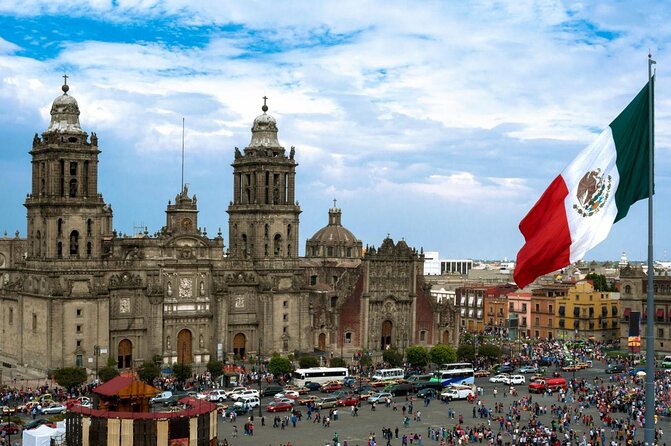
- Start at Colegio de San Ildefonso (Former College of San Ildefonso) with a muralism origin story
- La Catrina and Día de Muertos context you can connect to what you’ll see and hear
- Rivera’s work through social critique and technique, not just surface beauty
- The Rivera–Frida connection, including where their romance began
- Multiple major mural sites tied together by one clear narrative thread
- Finish at Palacio de Bellas Artes, a strong punctuation mark for the day
Still in Coyoacan? More time around Casa Azul
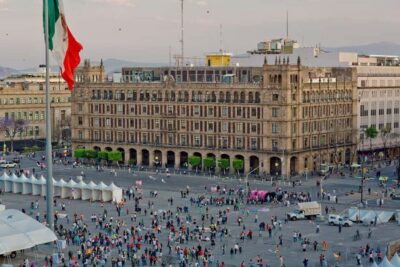
- Xochimilco, Coyoacan and Frida Kahlo with Optional Lunch
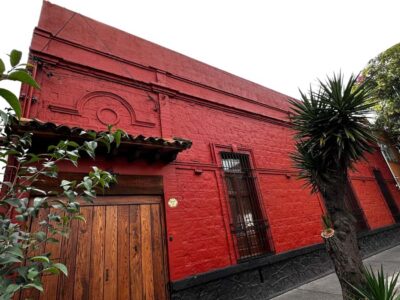
★ 4.5 · 7,320 reviews - CDMX: Xochimilco, Coyoacan, Frida Kahlo Museum & Murals Tour
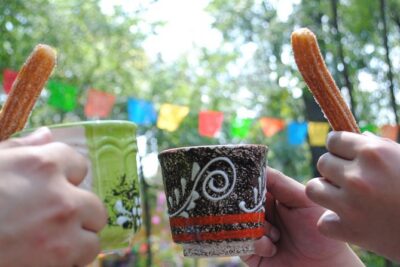
★ 4.4 · 3,025 reviews - Frida Kahlo VIP [Museum Tickets Included] Bike, Markets & Churros
★ 5.0 · 1,072 reviews - Frida Kahlo VIP [Museum Tickets Included] Walk, Markets & Churros
★ 5.0 · 982 reviews
Why Rivera and Kahlo murals matter more than you think
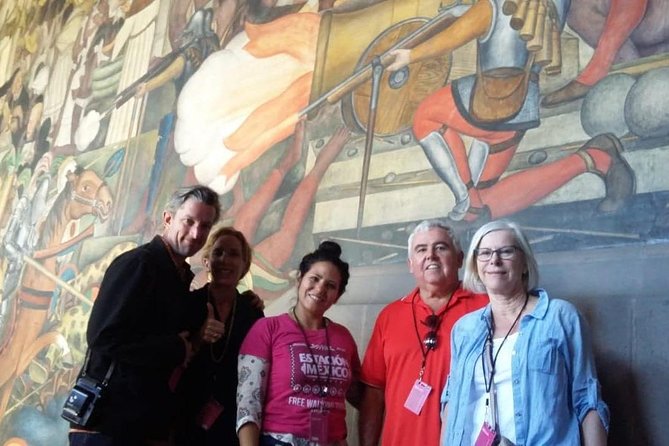
Muralism in Mexico isn’t only about big walls. It’s about who gets to speak, what gets remembered, and how public art can argue with society using color and characters. On this tour, you’ll see that muralism works like a visual newspaper—except it’s also poetry, history lesson, and political statement all at once.
Diego Rivera’s legacy can feel huge and political on paper. What makes this experience click is the way the guide helps you read murals like a story. You’re not just looking for famous faces; you’re learning how symbols, layout, and everyday imagery carry meaning.
And then there’s Frida Kahlo. Even if you only know her from photos and quotes online, the tour approach helps you understand why Rivera’s artistic world and her life are tangled together. The effect is practical: you leave knowing what to look for when you see other Rivera works later in Mexico City.
The 3-hour route, in human terms
This is a 3-hour guided walk that moves through key mural-focused stops, with a short segment of public transport between locations. That timing matters. You get enough time to absorb the story and technique, but not so much you melt in the heat or burn the morning.
You’ll start at the entrance of Colegio de San Ildefonso. The guides are easy to spot: pink shirts and umbrellas. Your day ends at Palacio de Bellas Artes, which is a great finish because you’re already emotionally invested in the art—and then you land in one of Mexico City’s most iconic buildings.
One more practical note: there are rules to keep things smooth. No large bags, no food, no flash photography, and no luggage. If you’re traveling light, you’ll be happier. If you brought a bulky daypack, plan to repack before you arrive.
Former College of San Ildefonso: starting where muralism took shape
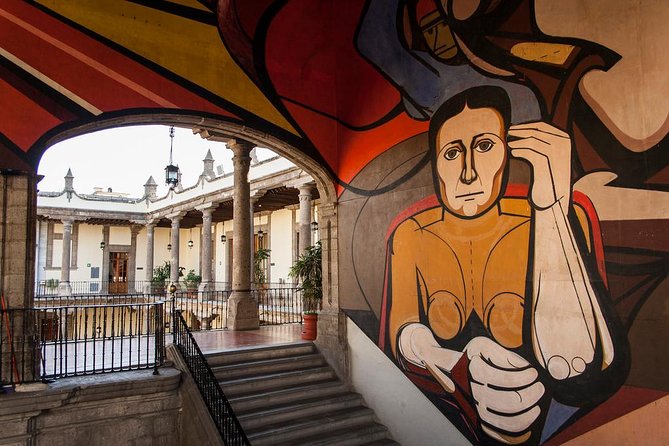
You begin at the Former College of San Ildefonso, a fitting place to start because this is where you can feel the institutional side of muralism—the idea that art belongs in public space, not tucked away.
This first stop is about context. You’ll learn about Rivera’s history and artistic vision, and how his work helped shape Mexican cultural identity. That matters because Rivera didn’t paint in a vacuum. The tour frames murals as a tool for memory and education—art that tries to speak to everyone, not only people who already know art vocabulary.
Expect more than dates. You’ll also hear about the movement’s earliest mural ideas and what muralism aimed to do socially—along with the aesthetic choices that make it both dramatic and accessible. Even if you usually rush through museums, you’ll find yourself slowing down here, because the guide is teaching you what to look for before you look.
More walls: further into the muralists
- Mexico City; ART NACO : Murals & Street Art Bike Tour★ 5.0 · 284 reviews
- EXCLUSIVE TOUR Casa Estudio Frida Kahlo-Diego Rivera Small Groups★ 5.0 · 237 reviews
- Walking Tour – Impressive murals in Historical Center of Mexico City★ 5.0 · 224 reviews
- La Catrina & Muralism: Diego Rivera’s Legacy & Frida Kahlo★ 4.5 · 197 reviews
- Muralist Art Semi Private Walking Tour in Mexico City Downtown★ 5.0 · 188 reviews
Museo Vivo del Muralismo: where the story gets hands-on
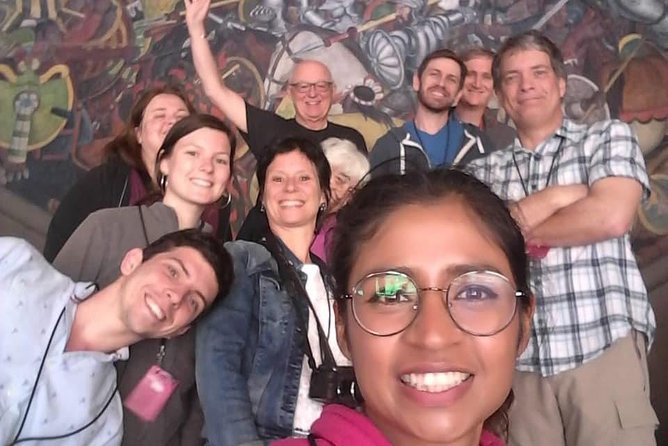
From here, you move into Museo Vivo del Muralismo for another guided visit. The name already hints at the tone: you’re not just reading plaques. You’re being guided through how murals function as living cultural storytelling.
This is where the tour starts connecting art to memory. You’ll hear how spaces where art and memory intertwine can work as a kind of time machine. You’ll also get historical context and the “why” behind mural techniques, as well as the stories murals communicate—often with social critique mixed into beauty and tradition.
If you like learning how artists build meaning—why figures are placed where they are, why certain symbols show up—you’ll feel in your element. This stop is less about ticking off famous paintings and more about helping you understand muralism as a language.
The Rivera–Frida romance thread you’ll actually remember
A standout part of this tour is the way it ties narrative to artwork. You’ll explore where the romance between Diego Rivera and Frida Kahlo began, presented as part of the wider creative world that shaped Rivera’s work.
In the guided storytelling, the Frida connection isn’t treated like a side note. It’s part of why Rivera’s murals have so much emotion in the middle of their political themes. You get the sense that for Rivera, art wasn’t just ideology. It was personal history made public.
One of the guide-driven details that comes up in past experiences is attention to an amphitheater connected to how Rivera met Frida. Even if you don’t remember every location name later, you’ll keep the bigger point: relationships and life events become artistic fuel, and you can often spot that in recurring themes and emotional tone.
Diego Rivera Mural Museum: seeing legacy in one place
Next comes the Diego Rivera Mural Museum, where the tour brings Rivera’s legacy into sharper focus. This is the stop where you can shift from “learning the movement” to “recognizing the artist.”
The guided approach helps you read the murals as layered work. The tour covers historical context and techniques, plus the kinds of stories Rivera chose to tell—stories that mix social critique with tradition and beauty. You’re learning to notice how murals use public space and scale to deliver messages that feel bigger than any single canvas.
For you, this is the most useful part if you’re visiting for the first time. It helps you understand why Rivera still shapes how people talk about Mexican art today. And it gives you a mental map for seeing other murals afterward without feeling lost.
Public transport segment: keep it light and you’ll glide
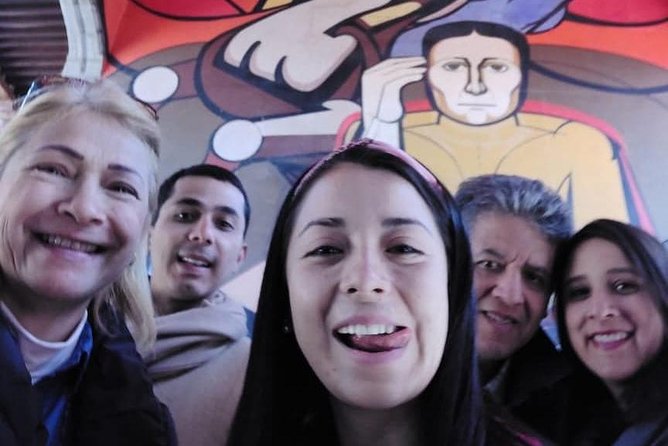
There’s about 20 minutes of public transport between stops. It’s not long enough to derail the tour, but it is long enough that you should plan your day around it.
Practical tip: if you’re prone to motion sickness, bring what you normally use. Also, since bags are restricted, keep what you carry small and easy. Once you’re in the groove, this segment becomes just the connective tissue between mural sites—time to cool off briefly and reset your attention.
Palacio de Bellas Artes: finishing with a big cultural bow
You end at Palacio de Bellas Artes (Palace of Fine Arts and its more famous neighbor, depending on how you picture it in your head). Ending here makes sense because the building itself frames art as central to national identity.
After the mural-focused stops, Bellas Artes can feel like a different genre—more formal, more grand, more traditional in style. That contrast is useful. It helps you see how Rivera’s mural world and Mexico City’s broader arts scene overlap, rather than existing as separate bubbles.
When the tour finishes, you’re positioned well for the next leg of your day. You’ve already been taught how to look at public art with meaning. So even if you only do a quick stroll outside and around the area, you’ll likely notice more than you would on a typical sightseeing route.
Price check: $58 for 3 hours of guided mural reading
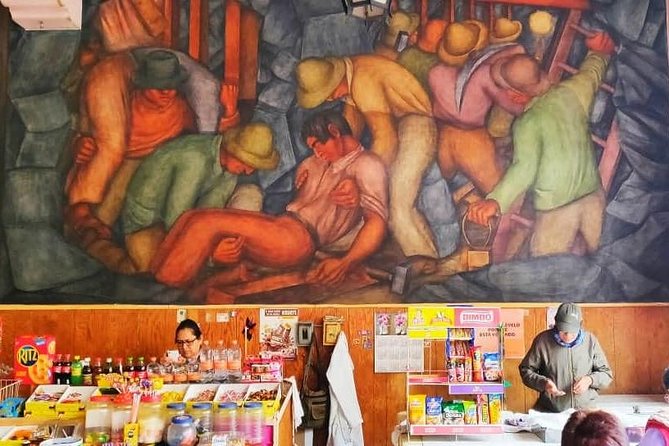
At $58 per person for 3 hours, the value comes from stacking multiple guided experiences into one coherent narrative. You’re not paying only for a single museum ticket. You’re paying for interpretation: the kind of explanation that helps you understand symbolism, technique, and cultural context.
That’s why this price can feel fair even if you’re cost-conscious. If you’ve ever visited art without a guide and left thinking I liked it but didn’t really learn anything, you’ll understand what you’re buying here. The guide’s job is to help murals stop being just impressive walls and start being readable stories.
One caution: meals and drinks are not included. So plan a snack or save your lunch for after. If you arrive hungry, you’ll spend more effort thinking about food than murals.
Who this tour suits best
This experience is a great fit if:
- you want context, not just photos
- you love Mexican art history, especially muralism
- you’re intrigued by the Rivera–Kahlo connection
- you want a structured route across major stops without building your own plan
It’s less ideal if:
- you prefer silence and self-guided wandering
- you don’t want to walk for a few hours on the day you book
- you rely on flash photography (it isn’t allowed here)
Small but important things to bring (and not bring)
Bring:
- Comfortable shoes (you’ll be walking)
- Sunscreen
Leave behind:
- luggage or large bags
- food
- flash photography devices
- bags that don’t meet the group’s restrictions
- baby carriages (not allowed)
This isn’t about being strict for the sake of it. It keeps the group moving smoothly between stops and makes it easier for the guide to manage entrances, viewing areas, and timing.
What I’d look for during the tour (your homework, but fun)
To get the most out of your three hours, don’t just ask what you’re seeing. Ask what the mural is trying to say. Here are a few smart angles:
- Look for social critique elements—how everyday people and power show up in the imagery.
- Notice technique cues the guide points out and see how they affect the mood of the mural.
- Watch for the symbols linked to Día de Muertos, especially the La Catrina depiction and why it’s so internationally recognizable.
- Use the Rivera–Frida storyline to connect emotion to public art. When you feel the personal layer, the murals read differently.
Should you book this tour?
Book it if you want a guided, story-driven way to understand Diego Rivera’s muralism legacy, with Frida Kahlo woven in as more than name-dropping. The $58 price makes sense because you’re getting several major stops in one path, plus interpretation that helps you actually read what’s on the walls.
Skip it if you’re the kind of visitor who loves to roam without explanation, or if walking is hard for you on travel days. Also, if your daypack situation is messy, fix it before you go—this tour keeps tight rules around what you can bring.
If you’re visiting Mexico City for the first time and want your art day to feel organized and meaningful, this is a solid way to start. You’ll leave with more than photos. You’ll leave with a set of eyes.
FAQ
How long is the tour?
It lasts 3 hours.
Where does the tour start and end?
It starts at Colegio de San Ildefonso (Former College of San Ildefonso) and finishes at Palacio de Bellas Artes.
How much does it cost?
The price is $58 per person.
What meeting point should I use?
The guides wait in front of the entrance of Colegio de San Ildefonso. Look for them wearing pink shirts and umbrellas.
What languages are available for the guided tour?
The live tour guide offers Spanish and English.
Is the tour wheelchair accessible?
Yes, it is wheelchair accessible.
Are meals included?
No. Meals and drinks are not included.
What should I bring?
Bring comfortable shoes and sunscreen.
Are there any items I’m not allowed to bring?
Yes. Luggage or large bags, food, flash photography, and bags (not allowed per the rules) are not permitted. Baby carriages are also not allowed.
What is the cancellation and booking policy?
There is free cancellation up to 24 hours in advance for a full refund, and you can reserve now & pay later.
More Tour Reviews in Mexico City



The Walls of Mexico City: More Mural Walks


Around Casa Azul: More Coyoacan Picks


Fresh from our Mexico City notebook

Frida Kahlo & Coyoacan Tours, compared.
 ★ 4.5Xochimilco, Coyoacan and Frida Kahlo with Optional LunchFrom $347,320 reviews
 ★ 4.4Xochimilco, Coyoacan, Frida Kahlo Museum & Murals TourFrom $893,025 reviews
 ★ 5.0Frida Kahlo VIP [Museum Tickets Included] Bike, Markets & ChurrosFrom $831,072 reviews
 ★ 5.0Frida Kahlo VIP [Museum Tickets Included] Walk, Markets & ChurrosFrom $83982 reviews
 ★ 5.0EXCLUSIVE TOUR Frida Kahlo Museum – SMALL GROUPSFrom $86901 reviews
 ★ 4.5Frida Kahlo Museum Entry Ticket w/Digital GuideFrom $34683 reviews
 ★ 5.0Private City Tour in Frida Kahlo, Coyoacan, and XochimilcoFrom $195626 reviews
 ★ 5.0PREMIUM Frida Kahlo Museum and Xochimilco (Small Groups)From $80549 reviews
Browse the lists this tour appears in