
REVIEW · SELF-GUIDED TOURS
Hidden Gems of Mexico City: Exploration Game and Tour
A quieter side of Mexico City is waiting. This self-guided exploration game in Chimalistac turns a short walk into a mini scavenger hunt, with you solving clues at real landmarks. I like that it’s open air and you can move at your own pace, so it feels less like a “tour” and more like wandering with purpose.
Two things I especially enjoy: the route through Chimalistac’s calmer streets (so you’re not stuck in the main-sight stampede), and the gradual challenge of the riddles, which start simple and then get tougher. One thing to keep in mind: there’s no tour guide, so if you want live explanations or a lot of background, you’ll be mostly relying on what the game tells you on your phone.
In This Review
- Key Highlights Worth Marking on Your Map
- Chimalistac: The Quieter Pocket You Get to Have
- How the Phone-Based Quest Actually Feels On Foot
- Starting Point on San Luis Potosí: A Route You Can Trust
- Stop 1: Parque de la Bombilla and the Story Behind the Monument
- Stop 2: The Chamber/Hermitage of the Secret on Del Secreto
- Stop 3: La Fuente en el Huerto and a Fountain That Has a Date
- Stop 4: Tagle Park and the Politics Behind the Name
- Stop 5: Chapel of San Sebastián Mártir, the Oldest Construction in Chimalistac
- Price and Value: Why $7.51 Can Make Sense
- The Best Time to Do It (and Why Timing Matters)
- Who This Experience Fits Best
- Practical Photo Tips as You Go
- Should You Book This Chimalistac Exploration Game?
- FAQ
- How long is the exploration game tour?
- Is there a tour guide with this experience?
- What language is the experience offered in?
- Do I need to pay entry tickets to attractions?
- Where does the tour start and end?
- Is it flexible if I want to take breaks?
- How far in advance is it usually booked?
- What’s the cancellation policy?
Key Highlights Worth Marking on Your Map
- Chimalistac pacing that dodges crowds while you still hit meaningful landmarks
- Questo app game with flexible start/stop, letting you go at your rhythm
- A sensible, walkable route designed for about 1 hour 40 minutes
- Free-to-enter stops at parks, courtyards, and chapels along the way
- Riddles that start easy and ramp up, great for keeping kids and adults interested
- Photo-friendly streets and small architectural details you might miss without a prompt
Wider loops around Mexico City
- Mexico City: Teotihuacan, Tlatelolco & Guadalupe Shrine Tour
★ 4.6 · 3,773 reviews - Teotihuacan Hot Air Balloon Flight from Mexico City / Volare
★ 5.0 · 3,262 reviews - Teotihuacan Private Tour from Mexico City
★ 5.0 · 1,890 reviews - Historic Center Food Tour in Mexico City
★ 5.0 · 1,263 reviews
Chimalistac: The Quieter Pocket You Get to Have
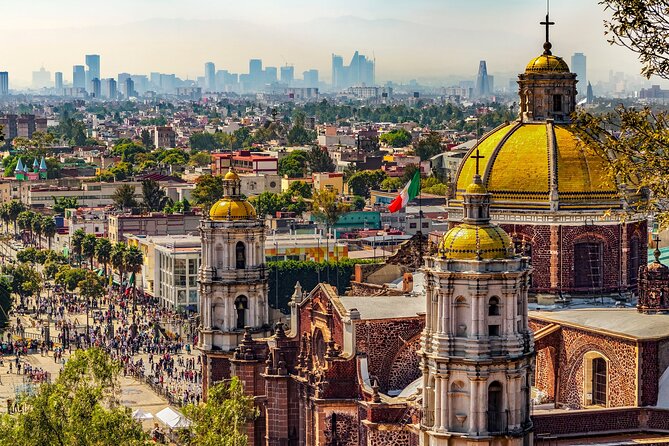
Mexico City can feel like a lot, even on good days. What I like about this experience is that it sends you to Chimalistac, a colonial-era neighborhood vibe where the air feels calmer and the walking feels more human. You’re not racing between major attractions. You’re taking small steps, reading the clues, and noticing things at street level.
Chimalistac also has the kind of character that doesn’t show up in broad travel photos: discreet corners, older construction tucked behind walls, and the sense that residents have lived with these landmarks for a long time. That matters because the game doesn’t just tell you what to look at. It pushes you to look closely enough that you start “seeing” the neighborhood instead of just passing through it.
How the Phone-Based Quest Actually Feels On Foot
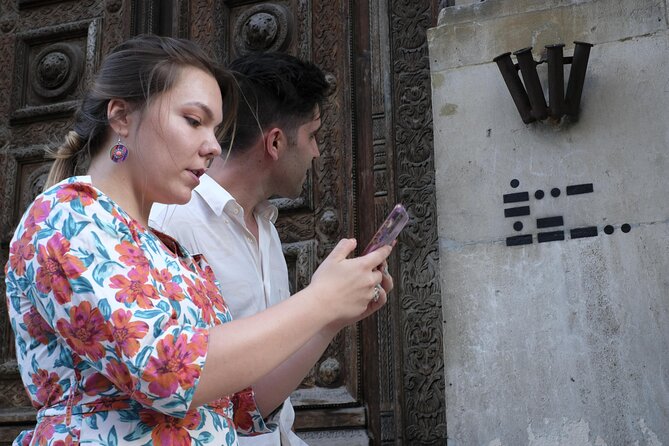
This is a self-guided tour/activity built around the Questo app. You get a mobile ticket, and the game is available on your phone with full access every day, 24/7. The big practical win here is flexibility: you can start, take a break, and continue, instead of being trapped by a strict group schedule.
And because it’s open air, you’re mostly outside. That’s a comfort when Mexico City weather shifts, and it’s also a crowd strategy—your route is designed so you can avoid the densest tourist flows. It’s private in the sense that only your group participates, so you’re not trying to coordinate with strangers while you’re solving clues.
One small caution: you’ll want to be comfortable with a phone as your guide. If your battery is fragile, bring a charger. If you dislike puzzles, set your expectations: the fun is in searching, not in watching someone explain.
Starting Point on San Luis Potosí: A Route You Can Trust
The walk begins at San Luis Potosí, Chimalistac, Álvaro Obregón (01070 CDMX). The endpoint is Federico Gamboa 11, Chimalistac, Álvaro Obregón (01070 CDMX). The exact addresses matter because this is the kind of neighborhood where landmarks can be close together but not obvious at first glance.
From there, the itinerary keeps stops compact—each one is basically a short, focused “find the answer” moment. Plan on about 1 hour 40 minutes total for the whole experience. That’s a good length for a half-day mood: enough time to feel like you explored, not so long that you’re exhausted before dinner.
If you’re going during busy travel days, I’d treat booking timing seriously. On average, this is booked about 15 days in advance, so reserving ahead helps you lock in your preferred day.
Worth a look right beside this Mexico City pick:
- Mexico City (Coyoacan) Scavenger Hunt and Sights Self-Guided Tour★ 5.0 · 4 reviews
- Self-Guided Audio Tour – Mexico for Beginners★ 3.0 · 4 reviews
- Mexico City Coyoacán, Frida Kahlo Exploration Game and Tour★ 4.0 · 4 reviews
- Mexico City (Historic Centre) Scavenger Hunt and Self-Guided Tour★ 5.0 · 3 reviews
Stop 1: Parque de la Bombilla and the Story Behind the Monument
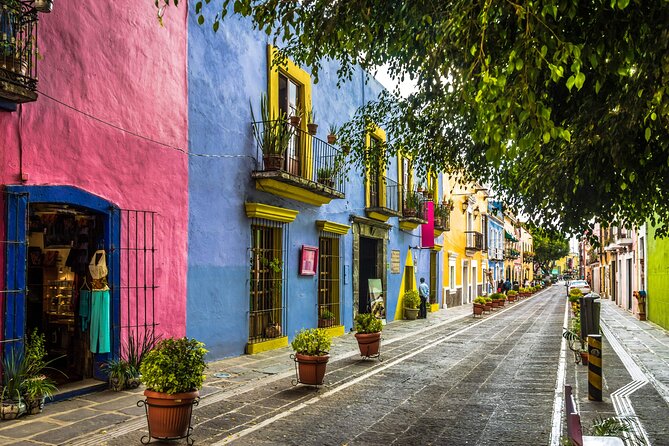
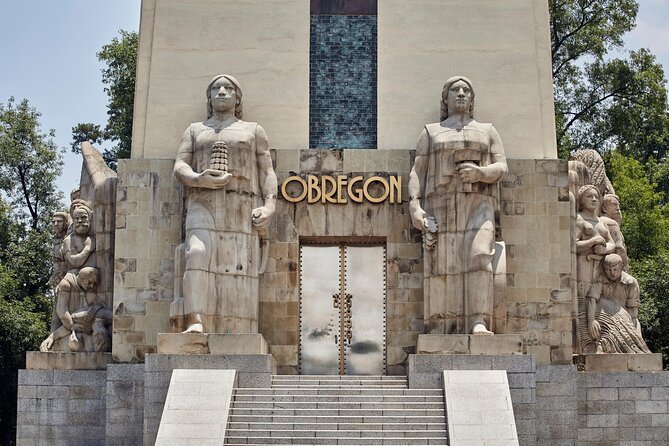
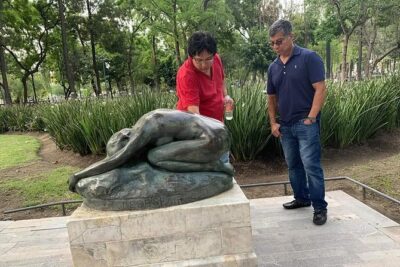
Your first major pause is Parque de la Bombilla, located in the San Ángel area of the Álvaro Obregón district, south of Mexico City. This park is tied to revolutionary history and presidential legacy through the monument complex that opened July 17, 1935.
Here’s what makes this stop click: it’s not just a park with a statue. It memorializes Álvaro Obregón—a revolutionary general and former president (1920–1924), and president-elect in 1928. He was assassinated in 1928 while dining at a restaurant called La Bombilla, now linked to the monument site.
Once you arrive, you’ll spend a few minutes looking around to solve the first challenge. The game approach is simple: don’t just read signage. Use the environment—position, sight lines, details—to find the answer that moves you forward.
Why this stop works: you immediately get a sense of how “history” lives in everyday spaces here. Parks aren’t neutral. They’re memory placed in public view.
Stop 2: The Chamber/Hermitage of the Secret on Del Secreto
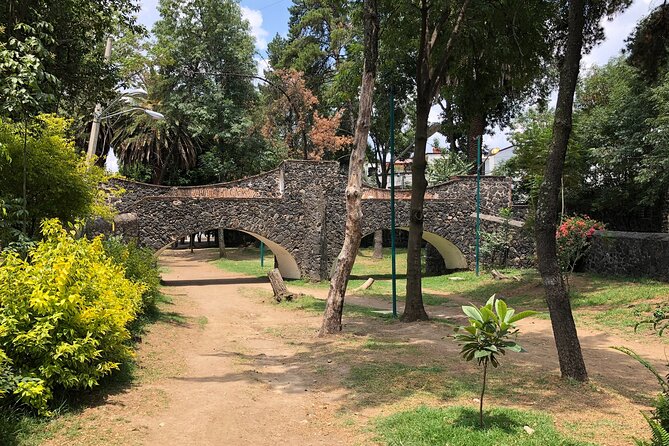
After the park, the mood shifts to something more intimate and distinctly literary. The next stop is known as the Chamber or Hermitage of the Secret, located on Del Secreto street, corner of the Huerto alley. It’s connected to the older orchards of Chimalistac, which gives you a sense of how the neighborhood used to be shaped by agriculture.
This small construction was built in 1626 under the tutelage of Carmelite friar Andrés de San Miguel, and it’s dedicated to the Virgen de los Dolores. Look closely and you’ll see paintings on the walls, including The Sermon on the Mount. Inside, there’s a stone cross that reaches the ceiling—one of those details that instantly feels worth the careful look.
Again, you’ll hunt for the answer to a challenge prompt by looking around. The payoff is that you don’t just “pass by” a chapel. You notice what’s there because the game forces your attention to specific things.
Possible drawback here: since this is a small space, if you’re expecting a large interior experience or a long guided interpretation, you might feel like it goes by quickly. The point is to spot and connect, not to linger in a museum-length explanation.
Stop 3: La Fuente en el Huerto and a Fountain That Has a Date
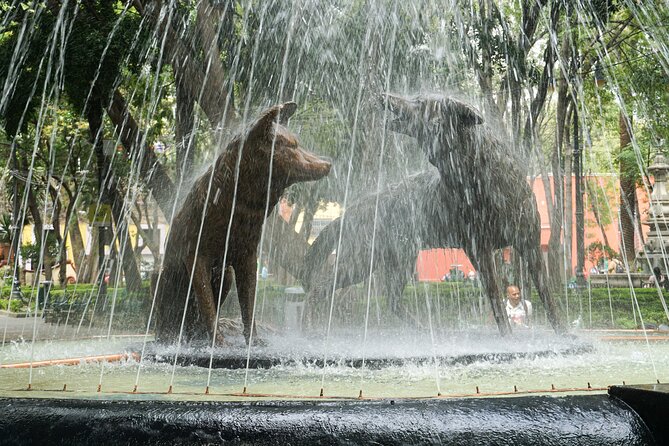
Next up is La Fuente en el Huerto, a well-known fountain (yes, the name repeats on purpose). The construction dates to 1896, and it was built to commemorate 400 years of the Carmelites’ arrival in the Chimalistac neighborhood.
This is the kind of landmark that’s easy to miss if you’re walking fast. But in a quest format, a fountain becomes a mini-history lesson. You’ll stop, look around, and answer the clue that keeps the route moving.
I like this stop because it’s visual. You can take photos without needing special viewpoints or fancy angles. It’s also a reminder that “religious history” here isn’t only in grand churches. It shows up in public features like wells and fountains—things people would have used and seen for generations.
Stop 4: Tagle Park and the Politics Behind the Name
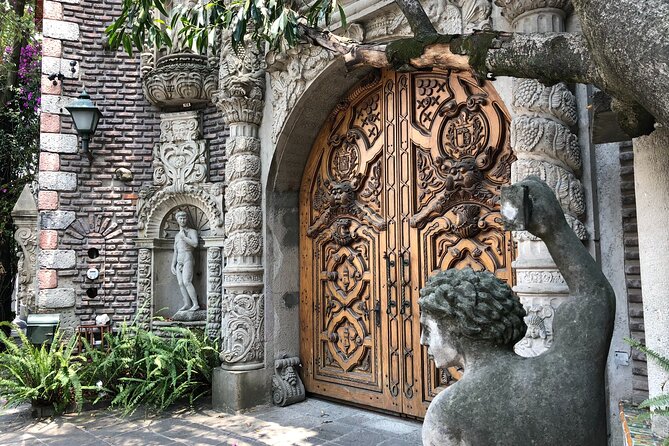
Then you arrive at Tagle Park, named for Protasio Tagle. This is a good moment for anyone who enjoys the human side of city geography—street and park names can be like secret breadcrumbs, and this park makes one of those breadcrumbs legible.
Protasio Tagle was a military figure and politician. He later became Governing Secretary of the Federal District (what Mexico City is now called), and also Secretary of Justice and Public Instruction. Those roles sound abstract until you realize they helped shape government and education systems tied to the city’s identity.
You’ll spend a few minutes here as part of the game’s clue chain. The goal is to keep momentum without turning the walk into a marathon.
Quick consideration: because this park is part of an active neighborhood, keep an eye on comfortable walking shoes and on where you’re stepping. The experience is designed to be easygoing, but you’re still moving through real streets and public spaces.
Stop 5: Chapel of San Sebastián Mártir, the Oldest Construction in Chimalistac
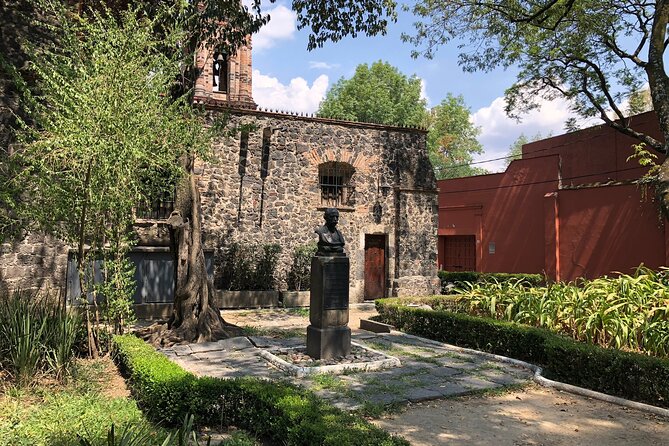
The final landmark is the Chapel of San Sebastián Mártir, a small Catholic temple in old town Chimalistac within the Álvaro Obregón mayor’s office area. It was built at the end of the 16th century and later modified in the 17th and 20th centuries.
Here are the details that make this stop feel anchored in place:
- Its patronal feast is celebrated January 30
- It’s characterized as the oldest construction in Chimalistac
- It was declared a historical monument on September 1, 1932
Just as at the earlier stops, you’re not done until you finish the final clue and move to the end of the route at Federico Gamboa 11.
If you enjoy the “I didn’t know this existed” satisfaction, this is the payoff stop. You finish with the sense that the neighborhood holds far more than the big sightseeing list, and you’ve earned that knowledge by looking carefully.
Price and Value: Why $7.51 Can Make Sense
At $7.51 per person, this is priced like a budget-friendly activity, not a premium guided tour. The value comes from how it’s structured: you’re getting a complete self-guided route, using the Questo app, for a walk that takes about 1 hour 40 minutes and includes multiple stops with free admission.
This is also one of those experiences where cost stretches further if you’re traveling with a family or a group that likes puzzles. The riddles can keep different ages engaged, and you can pause if you need a snack break. Group discounts are also part of the deal, which helps if you’re splitting costs.
Where the price won’t feel as amazing: if you prefer a traditional tour with a person answering every question. This experience doesn’t sell a guide’s voice. It sells your attention, your curiosity, and the phone-based challenge.
The Best Time to Do It (and Why Timing Matters)
Opening hours listed run Monday through Sunday, from 5:00 AM to 11:30 PM. That broad window is useful because you can choose a time that matches your energy level. Early or late can feel calmer, and you’re already aiming to avoid crowds.
Also, because the route is open air, you’ll want to consider weather and sun. The time you go won’t change the historical facts, but it will change how pleasant the walking and photography feel.
Who This Experience Fits Best
This quest works especially well if you:
- Want a break from chaos and a slower pace
- Like discovering small landmarks you would miss on a standard walk
- Enjoy challenges that start easy and get harder
- Prefer learning at your own pace without being steered by a group
It’s also a solid pick if you’re visiting as a family. The structure encourages shared participation—one person reads the clue while others scan for the detail that answers it.
If you’re the type who hates puzzles or gets stressed when a phone screen isn’t cooperating, you might find it less satisfying. This isn’t a guided lecture. It’s a thinking walk.
Practical Photo Tips as You Go
Chimalistac rewards attention, and the game nudges you toward details. For photos, I’d focus on:
- Close architectural details near chapels and entrances
- Street-level views where signage and stonework are readable
- The fountains and parks where you can frame the landmark with surrounding buildings
Don’t try to shoot everything like you’re on a commercial set. The route is short. Aim for a few strong images and let the rest of the walk be the experience.
Should You Book This Chimalistac Exploration Game?
I’d book it if you want a crowd-avoidant way to see meaningful Chimalistac landmarks without paying for a classic guided tour. The combination of free stops, a flexible phone format, and riddles that actually challenge you at the right pace is the kind of structure that turns a simple walk into a memorable afternoon.
Skip it if you’re set on having a guide explain every detail out loud, or if you know you’ll be impatient with scavenger-style tasks. In that case, you might prefer a traditional tour where someone fills in the context continuously.
If you want something light, fun, and genuinely different from the usual checklist, this is a smart bet.
FAQ
How long is the exploration game tour?
It takes about 1 hour 40 minutes.
Is there a tour guide with this experience?
No. It’s self-guided, using the Questo app on your phone.
What language is the experience offered in?
It’s offered in English.
Do I need to pay entry tickets to attractions?
No. The tour does not require entry tickets to complete the experience, and the listed stops are free.
Where does the tour start and end?
It starts at San Luis Potosí, Chimalistac (01070 CDMX) and ends at Federico Gamboa 11, Chimalistac (01070 CDMX).
Is it flexible if I want to take breaks?
Yes. You can start, take a break, and continue at your own pace.
How far in advance is it usually booked?
On average, it’s booked 15 days in advance.
What’s the cancellation policy?
You can cancel for a full refund up to 24 hours before the experience’s start time. If you cancel within 24 hours, the amount paid is not refunded.
The City in a Single Day



More Tours in Mexico City

More Tour Reviews in Mexico City



Fresh from our Mexico City notebook

Self-Guided Tours, compared.
 ★ 5.0Mexico City (Coyoacan) Scavenger Hunt and Sights Self-Guided TourFrom $104 reviews
 ★ 4.0Mexico City Coyoacán, Frida Kahlo Exploration Game and TourFrom $54 reviews
 ★ 3.0Self-Guided Audio Tour – Mexico for Beginners4 reviews
 ★ 5.0Mexico City (Historic Centre) Scavenger Hunt and Self-Guided TourFrom $103 reviews
Browse the lists this tour appears in