
REVIEW · ROMA & CONDESA TOURS
Colonia Roma Musical Walking Tour
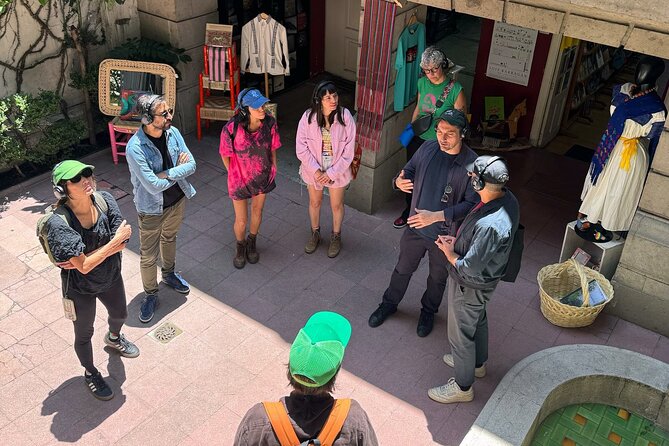
One neighborhood, a whole soundtrack of ideas. This walking tour through Colonia Roma mixes architecture with social and political stories you would never guess from the street. I especially love how it pulls in the “not touristic” corners, and I like the way the guide connects music, crime news, and even food history. The only real drawback to plan for is the walk is outdoors and depends on good weather.
You get a tight loop with 11 locations and a surprisingly creative theme: Mexican identity told through buildings, plazas, and small everyday places. Guide Gabriel Acevedo Velarde keeps the story moving in English, and the route stays inside the Roma area with stops that feel local rather than staged. If you hate walking or prefer big, famous sights only, this may feel too neighborhood-focused.
Logistics are straightforward: about 2 hours 15 minutes, start at 10:30 am, and you finish at Río de Janeiro Plaza. The group size tops out at 12, and you’ll use a mobile ticket. Expect frequent short stops for photos and talk, not a long museum session.
In This Review
- Key things to know before you go
- Why Colonia Roma feels like a living textbook
- Start at Pl. Romita: the chapel that connects centuries
- Everyday objects and the Lamm House: modern life and built space
- Avenida Álvaro Obregón: corridos, crime press, and the Revolution mood
- Plaza Luis Cabrera: the 1933 debate and the pressure of growth
- Plaza Río de Janeiro: from “residential only” to services for real life
- La Casa de Las Brujas: eclectic architecture and a new role for buildings
- Roma Norte and Tortillería Premier: how tortillas connect to ancient states
- Price and what you actually get for $41.63
- Timing, pace, and how to enjoy the outdoor walking
- Who should book this Colonia Roma musical walking tour
- Should you book this tour?
- FAQ
- What language is the tour offered in?
- How long is the Colonia Roma Musical Walking Tour?
- What is the price per person?
- Where does the tour start and end?
- What is the maximum group size?
- What is the cancellation policy, and what happens if the weather is bad?
Key things to know before you go
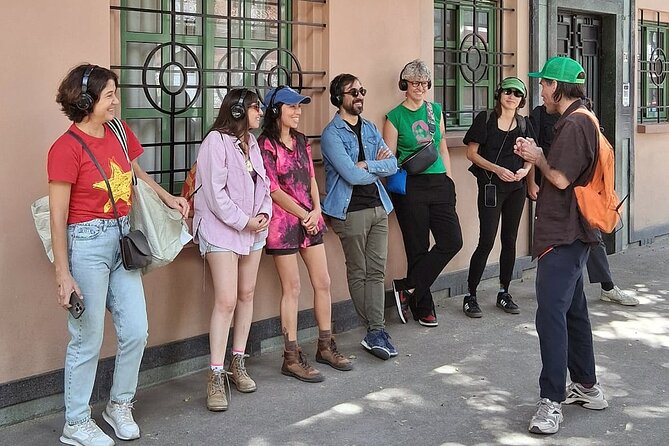
- 11 stops across Colonia Roma: the whole story is built as you walk block to block
- Music + history + everyday life: corridos, crime press, and modern household objects all show up
- Local-feeling venues: including a tortillas store and small plazas you can easily miss alone
- Free admissions at multiple sites: so your money mostly goes to the walk and guidance
- Small group (up to 12): easier questions, less rushing
- English tour with a named guide: Gabriel Acevedo Velarde leads the narrative
More slow hours around Roma and Condesa
- Colonia Roma Food Tour
★ 5.0 · 838 reviews - Narvarte At Night: Tacos, Chelas & Mezcal
★ 5.0 · 216 reviews - Michelin Taco Bike Tour: Roma Norte & Condesa /All-Inclusive.
★ 5.0 · 100 reviews - Epic Condesa and Roma Norte Walking Tour
★ 5.0 · 46 reviews
Why Colonia Roma feels like a living textbook
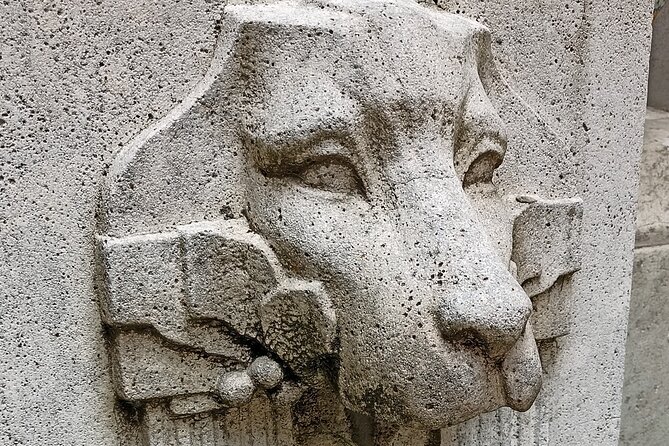
Colonia Roma in Mexico City is often described as pretty, stylish, and a bit European in mood. This tour agrees, but then it goes past the facades. You’ll see how the neighborhood changed its mind about what it was supposed to be: residential first, then practical, then mixed-use, then part of the city’s daily engine.
What makes this experience useful is the way the guide ties themes together. You won’t just hear facts about dates and buildings. You’ll hear how identity forms: through housing pressure, through the media people consumed, through religion, and through food that seems too ordinary to study.
The result is a walking tour that feels like someone handed you a pencil and told you to draw lines between things. And the lines actually make sense by the end.
Start at Pl. Romita: the chapel that connects centuries
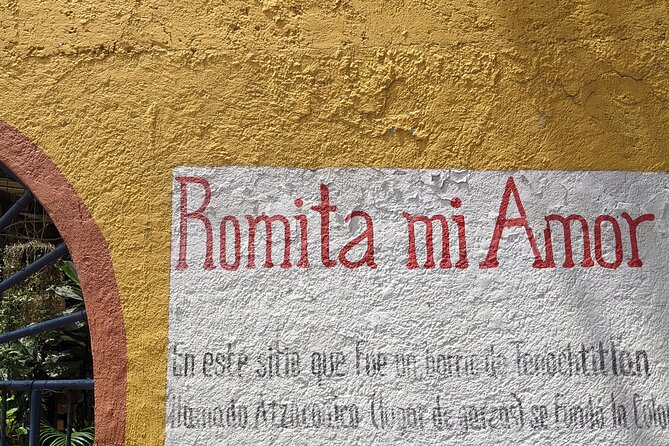
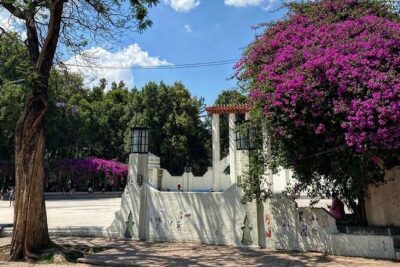
You begin at Capilla de San Francisco Javier de la Romita (Pl. Romita 30, La Romita). Even in a big city, it’s the kind of spot that helps you reset your brain. A 16th-century chapel in this setting is a reminder that Mexico City didn’t just spring up as modern blocks and traffic.
This stop is also where the tour’s religious thread appears. The guide uses the chapel and the small community that formed around it to talk about how the Virgin of Guadalupe story connects to local identity. You don’t need to be a theology expert. The point is the way a single religious symbol can shape a neighborhood’s memory—and how that memory survives even as the city around it changes.
The practical upside: this is a short stop, so you get the idea fast. The downside: if you’re expecting a long interior visit, your time here is meant for the outside setting and the conversation.
Everyday objects and the Lamm House: modern life and built space
After the chapel, the route shifts from big symbolism to smaller, more human details. One stop is an amusing museum of everyday life objects from Mexican modern times. That’s a smart choice because it tells you what people used daily, not just what the city wanted them to admire. It’s the “what was life like?” angle that history lessons often skip.
From there, you’ll visit a house described as connected to the Lamm family, with the note that they never actually lived here. What you learn isn’t gossip for gossip’s sake. It’s about how the design attitude toward space (and the way people envisioned living) clashes with the reality that Mexico City had a serious housing need at the time.
This stop is one of the clearest examples of what you’re paying for: a guide who turns architecture into human problem-solving. When you leave, you’ll start noticing how neighborhoods are built around assumptions, and then forced to adjust when those assumptions fail.
More of Mexico City taken slowly, on foot
- Frida Kahlo VIP [Museum Tickets Included] Walk, Markets & Churros★ 5.0 · 982 reviews
- Anthropology Museum Private Experience Walking Tour★ 5.0 · 355 reviews
- Walking Tour in Mexico City for Exploring their Cultural Heritage★ 5.0 · 245 reviews
- Walking Tour – Impressive murals in Historical Center of Mexico City★ 5.0 · 224 reviews
- Muralist Art Semi Private Walking Tour in Mexico City Downtown★ 5.0 · 188 reviews
Avenida Álvaro Obregón: corridos, crime press, and the Revolution mood
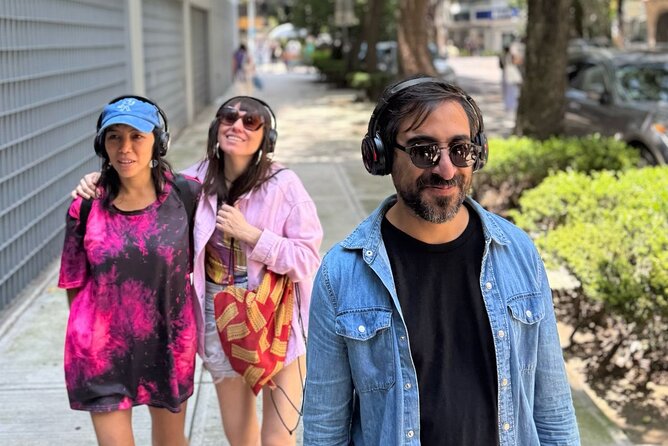
Next comes Avenida Álvaro Obregón, one of the neighborhood’s most iconic roads. This isn’t just a photo-friendly stretch. The guide uses the avenue to connect corridos (the narrative musical genre) with crime press during the Mexican Revolution.
That combo is fascinating because it reframes what corridos do. They aren’t only about heroes and battles. They also track stories people heard, repeated, feared, and believed. Crime news adds another layer: it shows what information moved through society, and how that information shaped the emotional texture of the times.
If you’re a music person, you’ll like this stop. If you’re more into media history, you’ll still get something. The tour doesn’t treat the topic like a lecture. It’s framed like a street-level detective story: follow the narrative threads through what people sang and what people read.
Plaza Luis Cabrera: the 1933 debate and the pressure of growth
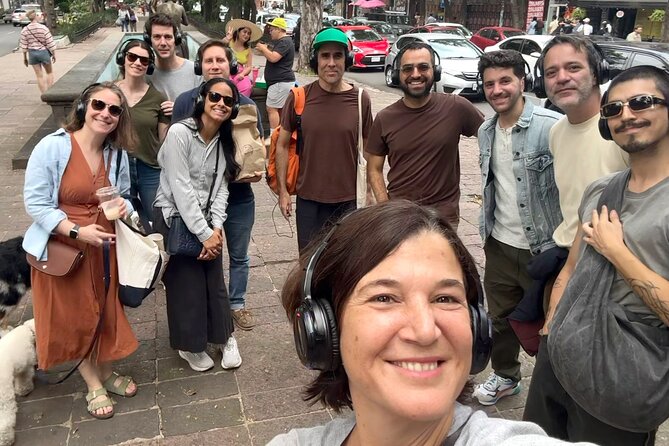
At Plaza Luis Cabrera, you shift into city-planning and architectural politics. The guide points to the 1933 debate between conservative and modernist architects, then connects it to the kind of hopes cities carry during intense growth.
This stop matters because housing pressure isn’t abstract here. The tour explains that the city was doubling its inhabitants every decade, which makes the architectural arguments feel less like style wars and more like survival questions. You can almost see the tension: old ideas about form and new ideas about function, all pushed against by the reality of overcrowding.
This is a good stop for slowing down. You’ll likely want to pause, look around, and think about what a plaza is doing besides being pretty: it’s a space where competing visions of the city meet.
Plaza Río de Janeiro: from “residential only” to services for real life
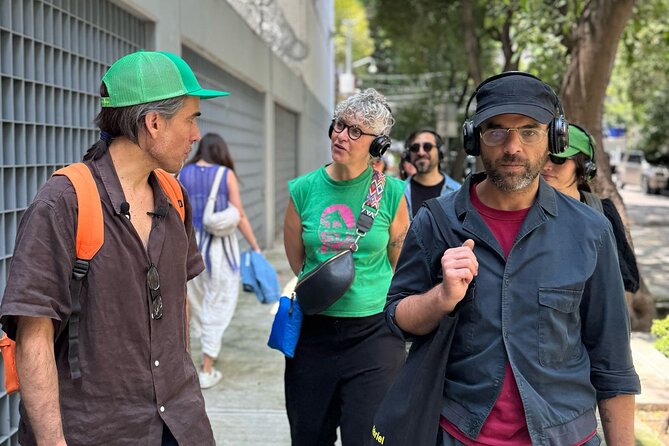
Then you’re at Plaza Río de Janeiro, another key point for understanding how Roma evolved. The neighborhood was originally conceived as exclusively residential. The tour explains that planners and owners quickly realized this idea didn’t hold up.
So what changed? The neighborhood moved toward a more autonomous setup for basic services. In plain terms: people still needed daily stuff. They needed places to buy, to eat, to handle errands, to live without crossing half the city for everything.
This stop helps you read the neighborhood’s layout. When you walk after the tour, you’ll start spotting the logic of services embedded into residential streets. It’s a small shift, but it changes the texture of daily life—and it’s exactly the kind of pattern you miss if you only visit for monuments.
La Casa de Las Brujas: eclectic architecture and a new role for buildings
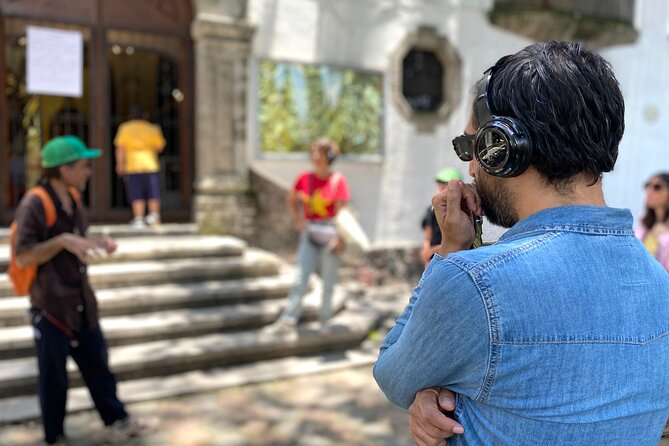
At La Casa de Las Brujas (the Witches’ House), you get a quick, powerful architectural story. The tour frames it as a building that started as a hotel, then became an apartment building. That shift is the point: it’s the neighborhood changing jobs.
The guide also highlights the eclectic architecture, which gives you something visual to anchor the conversation. You don’t have to be an architecture student. The stop works because you’re looking at the form and hearing the function story right away.
This is one of the places where the tour’s theme clicks for first-timers: neighborhoods don’t just change people and politics. Buildings change purpose too. And when the purpose changes, the identity of the area changes with it.
Roma Norte and Tortillería Premier: how tortillas connect to ancient states
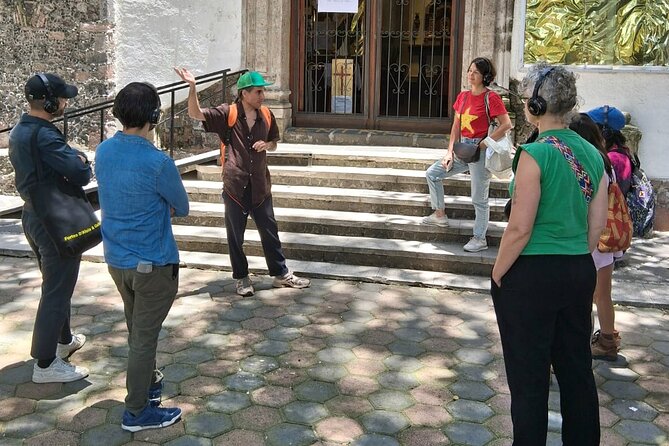
To end in a memorable way, the tour reaches Roma Norte and stops by Tortillería Premier. On paper, a tortillas shop sounds like a casual detour. On this walk, it becomes a history checkpoint.
The guide connects tortillas to a historical event: the invention of tortillas, including an intriguing link to the first Zapotec state around five centuries BC. The tour’s whole lesson is that something you take for granted can carry deep roots.
This stop also reflects the tour’s best idea: pairing the “big story” with the everyday action. You’re standing where modern life happens, then you’re stepping back in time with a food history thread. That contrast makes both pieces land harder.
One practical note: because it’s a food-adjacent stop, it’s smart to arrive with an open mind and a normal walking energy. You might end up thinking about snacks the rest of the day.
Price and what you actually get for $41.63
At $41.63 per person for about 2 hours 15 minutes, the price feels fair for what you get: guided conversation across multiple stops, thematic connections, and on-site admissions that are listed as free for the locations where admission applies.
The real value isn’t the buildings by themselves. Lots of self-guided walks can show you nice streets. The value here is the guided linking of ideas: architecture tied to housing growth, religion tied to neighborhood identity, and music tied to media and crime reporting during the Revolution.
And because the group is limited to 12, you’re not competing with a crowd for the guide’s attention. You can usually ask a question and get an answer that fits the story, not an unrelated sidebar.
If you want a tour where you finish with a sharper sense of how Mexico City thinks and remembers, this price makes sense.
Timing, pace, and how to enjoy the outdoor walking
This is not an all-day trek. It’s a focused walk built around short stops. Plan for plenty of standing and short walking segments, plus time to take photos and listen while the guide points out details in the buildings, plazas, and street edges.
Wear comfortable shoes you’d trust for a couple hours of city walking. Bring water. And if you know Mexico City weather is changeable where you’ll be staying, keep an eye on the forecast the day of.
The tour also notes it requires good weather. If weather is poor, you’ll be offered a different date or a full refund, so you’re not stuck eating the cost.
Who should book this Colonia Roma musical walking tour
I think this tour is a great fit if you like:
- walking tours with a clear theme (not just a list of places)
- mixing art/architecture with social context
- culture stories that include the everyday side: objects, food, and local businesses
- learning in English with a specific guide leading the narrative
It may be less ideal if you want only world-famous landmarks or long museum time. This walk is about the neighborhood’s logic, not about big-ticket attractions.
Should you book this tour?
If you’re spending time in Mexico City and you want a way to understand Colonia Roma beyond Instagram-worthy streets, I’d book it. The combination of music (corridos and crime press), religion (the Guadalupe origin conversation), and daily life (everyday objects and tortillas) keeps the tour lively and makes the area feel real.
The best reason to choose it is also the simplest: the guide, Gabriel Acevedo Velarde, connects ideas that usually stay in separate boxes. If you like that kind of storytelling, you’ll enjoy how the walk ends up teaching you how neighborhoods form and reform.
FAQ
What language is the tour offered in?
This experience is offered in English.
How long is the Colonia Roma Musical Walking Tour?
It runs for about 2 hours 15 minutes.
What is the price per person?
The price is $41.63 per person.
Where does the tour start and end?
The tour starts at Capilla de San Francisco Javier de la Romita, Pl. Romita 30, La Romita, Centro, Cuauhtémoc, 06700 Mexico City. It ends at Río de Janeiro Plaza, Calle Durango y Orizaba, 01000 Mexico City, Roma Nte.
What is the maximum group size?
The tour has a maximum of 12 travelers.
What is the cancellation policy, and what happens if the weather is bad?
You can cancel for a full refund up to 24 hours before the experience starts. If the tour is canceled due to poor weather, you’ll be offered a different date or a full refund.
More Tours in Mexico City


More Tour Reviews in Mexico City



Slow Hours in Roma and Condesa



Fresh from our Mexico City notebook
Roma & Condesa Tours, compared.
 ★ 5.0Colonia Roma Food TourFrom $110838 reviews
 ★ 5.0Narvarte At Night: Tacos, Chelas & MezcalFrom $143216 reviews
 ★ 5.0Michelin Taco Bike Tour: Roma Norte & Condesa /All-Inclusive.From $101100 reviews
 ★ 5.0Roma & Condesa Private & Personalized Walking TourFrom $7770 reviews
 ★ 5.0Epic Condesa and Roma Norte Walking TourFrom $5946 reviews
 ★ 4.9Roma and Condesa Neighborhoods Walking TourFrom $5843 reviews
 ★ 5.0Cheerful Introduction Walking Tour in Roma, Condesa & JuarezFrom $5940 reviews
 ★ 5.0Mexican Fiesta Cooking Class (Roma Norte)From $11921 reviews
Browse the lists this tour appears in