
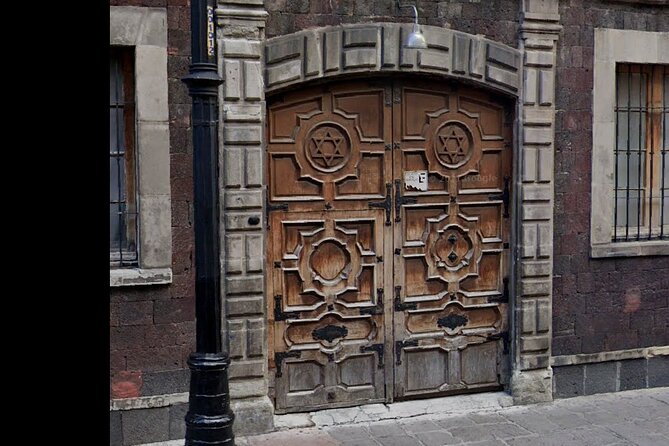
REVIEW · MEXICO CITY MUSEUMS & GALLERIES
Arrivals & Survival of Jews in Mexico from 1519
Jewish survival in Mexico City is not a quiet story. This 3.5-hour walk links the Spanish Inquisition era to synagogues you can still stand near today, with a clear timeline and real places to match it. I especially like the start at Librería Porrúa, where you get a calm, high view before the history turns serious.
I also love the small group feel (max 10), and how guide Carlos ties big themes to specific architecture, like the Chapel of the Souls and what it was designed to do. One drawback: the tour deals directly with persecution (anti-religious teachings, a perpetual prison, torture and death sentences), so it can feel heavy if you prefer lighter sightseeing.
In This Review
- Key things you’ll notice on this tour
- Start at Librería Porrúa: your bearings before the history turns dark
- The Metropolitan Cathedral and the Chapel of the Souls
- Plaza de Santo Domingo: where trade happened under surveillance
- Inside the Inquisition’s shadow: administration, quarters, and the perpetual prison
- San Ildefonso: Rivera meets Kahlo, and political help for Jewish refugees
- Plaza Loreto: the first purpose-built synagogues you can actually point to
- Justo Sierra Synagogue: the decommissioned first Ashkenazi shul in Mexico
- What makes Carlos’s guiding style work
- Price and value: what $99 buys you in Mexico City
- Walking, timing, and comfort: plan like a city walk, not a museum day
- Who should book this tour
- Should you book Arrivals & Survival of Jews in Mexico from 1519?
- FAQ
- How long is the tour?
- Is the tour offered in English?
- How many people are in the group?
- Where do I meet the guide, and where does the tour end?
- Is there any requirement for physical ability?
- Can I cancel for a refund?
Key things you’ll notice on this tour
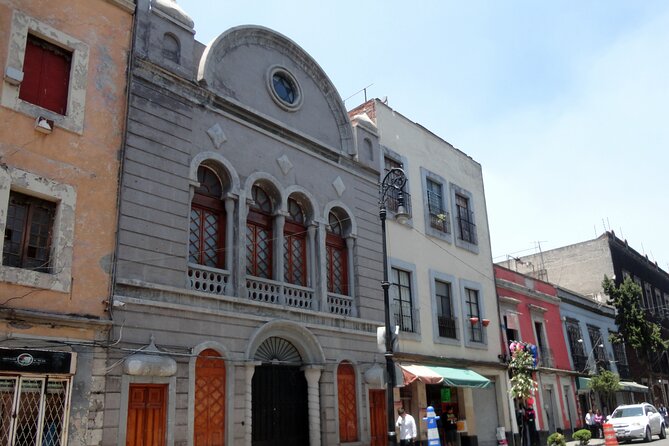
- Sephardic and Ashkenazi landmarks in one route, including Mount Sinai and Nidjei Israel
- Real Inquisition-era messages, shown in colonial spaces meant to control religious life
- Carlos’s storytelling style, with time for questions and a personal, heartfelt approach
- Centro Histórico walking that stays manageable, despite touching intense subject matter
- Connections to wider Mexican history, including Diego Rivera and Frida Kahlo’s meeting point and Leon Trotsky’s refugee moment
More galleries and rooftops worth the ticket
- CDMX: Xochimilco, Coyoacan, Frida Kahlo Museum & Murals Tour
★ 4.4 · 3,025 reviews - Chapultepec Castle & Anthropology Museum Tour
★ 4.5 · 1,348 reviews - Frida Kahlo VIP [Museum Tickets Included] Bike, Markets & Churros
★ 5.0 · 1,072 reviews - Anthropology Museum Guided Tour
★ 4.5 · 1,035 reviews
Start at Librería Porrúa: your bearings before the history turns dark
You begin in Centro Histórico at Librería Porrúa, at República de Argentina 15. The setup is practical: you start with an intro chat from a terrace overlooking the ruins of the Great Aztec Temple. It’s a good way to orient yourself fast, because the tour then bounces between pre-Hispanic Mexico, colonial religious power, and later Jewish community life.
This first moment matters. You’re not just collecting dates. You’re learning how Mexico City became a layered religious crossroads where different groups had to negotiate space, survival, and visibility.
The Metropolitan Cathedral and the Chapel of the Souls
Next, you head to the Metropolitan Cathedral area and walk behind it. From a vantage point, you’ll see the Chapel of the Souls, including teachings displayed against heresy—targeting other religions—and you’ll connect that to colonial architecture built to keep Jews away, imposed under the Spanish Inquisition.
This is one of those stops where the stonework does the talking. Even without entering a museum room, you can read the intent of the design: control, warning, and restriction. It also gives you a framework for everything that follows, because the tour keeps showing how “religion” often worked as policy and power.
Plaza de Santo Domingo: where trade happened under surveillance
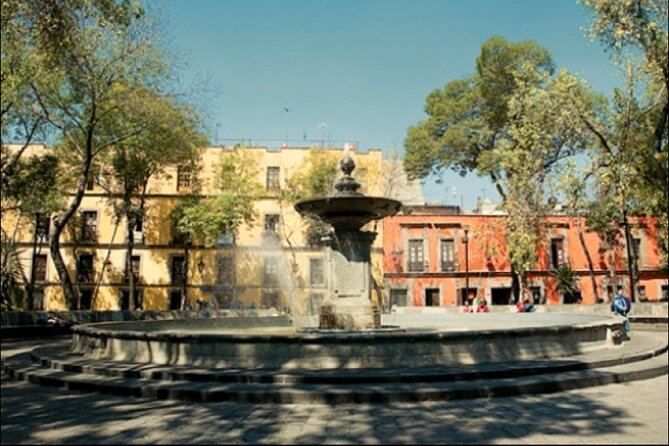
Then you move to Plaza de Santo Domingo, the main trading marketplace from the 16th to the 19th centuries. Here, the theme shifts from buildings to behavior: Jews-in-hiding had to trade their goods while being watched, with the Palace of the Inquisition nearby.
You’ll also spend time interpreting anti-Semitic hidden messages tied to that era—both at the palace and around the Santo Domingo church area at the start of El Camino Real. That road-angle matters. It’s one reason the Jewish presence in Mexico isn’t only a local story; it’s part of a bigger network of travel and commerce. You come away seeing why traders needed routes and safe points, not just courage.
- Teotihuacan, Guadalupe Shrine & Tlatelolco Day Tour with Lunch★ 5.0 · 11,603 reviews
- Xochimilco, Coyoacan and Frida Kahlo with Optional Lunch★ 4.5 · 7,320 reviews
- Balloon flight + Breakfast in cave + Pyramids + Pick up CDMX.★ 5.0 · 6,335 reviews
- Teotihuacan pyramids morning or afternoon without tourist traps★ 5.0 · 6,186 reviews
- Teotihuacan Early Access Guided Tour with optional Lunch★ 4.5 · 6,138 reviews
Inside the Inquisition’s shadow: administration, quarters, and the perpetual prison
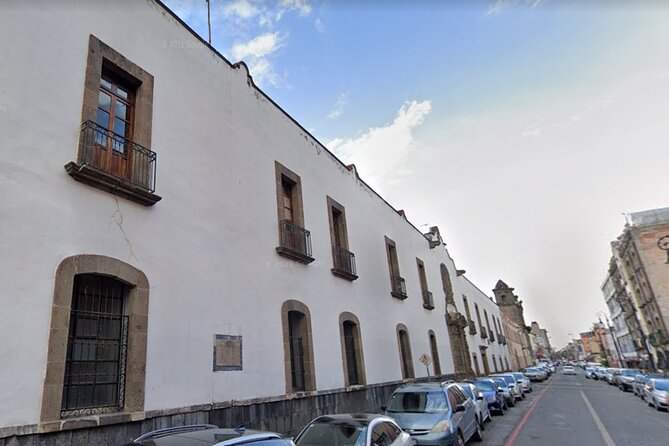
After the market, you pass by the Antiguo Palacio de la Santa Inquisición. Even as a “pass-by” stop, it hits hard: you see the administration area, the living quarters, and next to it the Perpetual Prison, where Jews were tortured and sentenced to death.
I’ll be frank: this is the emotional core of the whole walk. The tour doesn’t soften the historical reality. If you’re the type who wants history without the cruelty spelled out, you may feel uncomfortable here. If you can handle it, the payoff is understanding what survival meant—practically, physically, and psychologically.
San Ildefonso: Rivera meets Kahlo, and political help for Jewish refugees
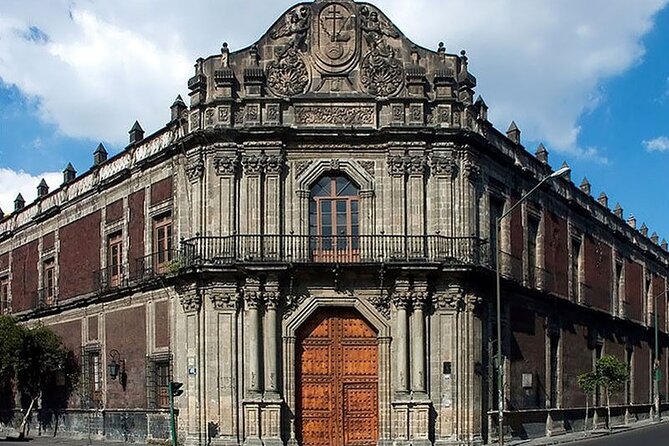
From there, you head toward Antiguo Colegio de San Ildefonso. You view it from the outside, but the guide uses that spot to connect several stories at once.
You’ll hear about the crossing point of Diego Rivera and Frida Kahlo, and the tour links Rivera’s Sephardic origin and Kahlo’s Ashkenazim origin to the wider narrative of Jewish identity in Mexico. That cultural thread is one of the ways this tour stays more than just “old-world oppression.”
The other thread is political. You’ll learn how the Mexican anti-Fascist movement supported the cancellation of the first and only anti-Semitic national convention, and how it relates to the refugee reception of Lev Davidovich Bronstein (Leon Trotsky). It’s not a quick name-drop either; it’s part of the tour’s argument that Mexico City didn’t only inherit persecution—it also generated resistance.
Plaza Loreto: the first purpose-built synagogues you can actually point to
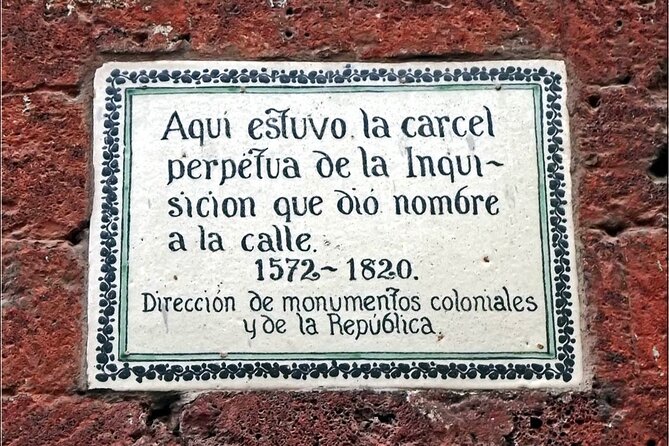
Next is Plaza Loreto, where you pass by two neighboring, first-purpose-built synagogues: Sephardic Mount Sinai and Ashkenazim Nidjei Israel. The key word here is purpose-built. This is where the timeline flips from survival under pressure to community building with physical presence.
It also helps you understand why the route ends where it does. You’re not finishing in theory. You’re finishing next to architecture that represents Jewish life that had to exist somehow—hidden at times, then gradually more visible, and finally institutional.
Justo Sierra Synagogue: the decommissioned first Ashkenazi shul in Mexico
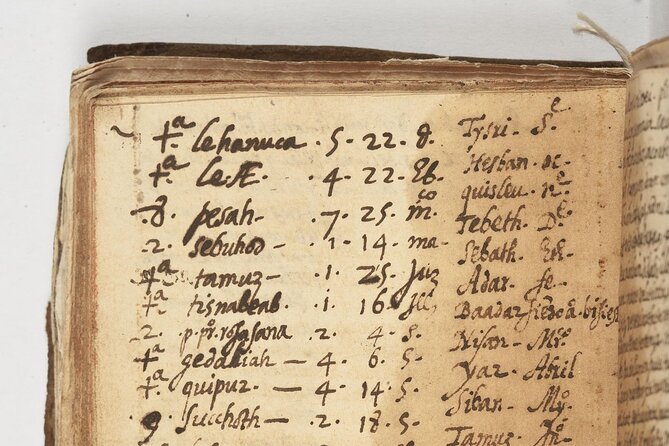
The tour finishes with a visit to the Justo Sierra Synagogue, described as the decommissioned and first Ashkenazi shul in Mexico. This is a strong closing moment because it pulls your attention back to a single site you can truly look at, and then compare to everything you saw earlier: colonial exclusion, public power, secret trade, and community roots.
You end right in front of Loreto Park on the Justo Sierra Street (south) side, at Justo Sierra 71. It’s a convenient finish zone for stretching your legs afterward, grabbing a coffee, and continuing Centro Histórico at your own pace.
What makes Carlos’s guiding style work
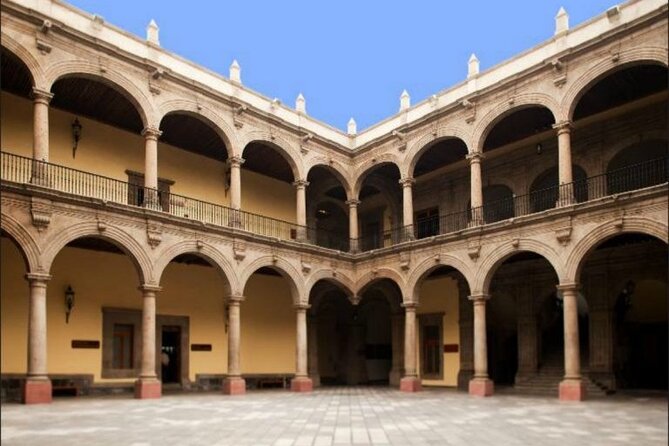
A lot of Jewish history tours can sound like a lecture. This one tends to feel like storytelling with structure, led by Carlos. The recurring theme in the experience description is how he’s able to connect Jewish history in Mexico to the wider sweep of Spanish empire influence, the Spanish Church, and the forces that shaped who could live openly, who had to hide, and who could only travel with extra risk.
You’ll also find that the pacing is built for questions. Carlos is described as answering everything you ask, and he keeps a clear timeline so your brain doesn’t have to juggle names and centuries without help.
Price and value: what $99 buys you in Mexico City
At $99 per person for about 3 hours 30 minutes, you’re paying for a guided, small-group route through specific landmarks—especially the synagogue portion. Most of the stops are marked as admission free in the route details, and entrance to agreed public and private places is handled as part of the package.
So the value isn’t the ticket cost for each site. The value is:
- access to interpretation inside sensitive, high-signal locations
- time with a guide who can connect architecture, politics, and community life
- a route designed to keep you from wandering randomly through Centro Histórico
Also, max group size of 10 matters more than many people expect. It keeps the tour from turning into a silent shuffle, which is crucial when you’re dealing with heavy topics and lots of details to track.
Walking, timing, and comfort: plan like a city walk, not a museum day
This is a guided city walk in Mexico City’s Centro Histórico. Expect outdoor time between stops, and a pace that can include several short transfers. The tour is described as requiring moderate physical fitness, and reviews note that it’s not nonstop long-distance walking, but you should still be ready to stand and move at street level.
Language is English, and you’ll receive a mobile ticket. Start time is 10:00 am, with a meeting point at República de Argentina 15 in Centro Histórico. If you’re taking public transportation, you’re in the right area for it.
If you’re sensitive to topics like torture, death sentences, and anti-Jewish messaging, consider bringing a quick reset plan—sit down with water afterward or save the lighter parts of your day for after the tour.
Who should book this tour
This one is a great fit if you want:
- a Jewish history tour in Mexico City that stays grounded in buildings and street-level context
- both Sephardic and Ashkenazi landmarks in one outing
- a guide who links big political and religious systems to local, visible sites
- a small-group experience with time for questions
It may be less ideal if you want strictly architectural sightseeing with minimal discussion of persecution. Here, the history is front and center, and the route makes sure you see the mechanisms, not just the outcomes.
Should you book Arrivals & Survival of Jews in Mexico from 1519?
If your goal is to understand how Jewish life in Mexico City was shaped by conquest, religious power, forced change, and later community presence, then yes—this is a smart booking. The route makes you look at colonial spaces differently, and then it gives you a clear payoff at Mount Sinai, Nidjei Israel, and the Justo Sierra Synagogue.
I’d book it early in your trip if you also plan to explore Centro Histórico on your own. You’ll get a mental map of what you’re seeing—why those religious buildings exist, why certain messages were planted, and why synagogues had to become more than just a concept.
FAQ
How long is the tour?
It runs for approximately 3 hours 30 minutes.
Is the tour offered in English?
Yes, it’s offered in English.
How many people are in the group?
The group is limited to a maximum of 10 travelers.
Where do I meet the guide, and where does the tour end?
You start at República de Argentina 15, Centro Histórico de la Ciudad de México. The tour ends at Justo Sierra 71, Centro Histórico, right in front of Loreto Park on the Justo Sierra Street side.
Is there any requirement for physical ability?
The tour notes a moderate physical fitness level, since it’s a walk with multiple stops.
Can I cancel for a refund?
You can cancel for a full refund if you cancel at least 24 hours before the experience’s start time.
If you want, tell me your travel dates and whether you’re comfortable with heavier historical content—I can help you decide the best day/time to place this in your Mexico City plan.
More Tour Reviews in Mexico City



Behind the Ticket: More CDMX Museums


Fresh from our Mexico City notebook

Mexico City Museums & Galleries, compared.
 ★ 4.4Xochimilco, Coyoacan, Frida Kahlo Museum & Murals TourFrom $893,025 reviews
 ★ 4.5Chapultepec Castle & Anthropology Museum TourFrom $791,348 reviews
 ★ 5.0Frida Kahlo VIP [Museum Tickets Included] Bike, Markets & ChurrosFrom $831,072 reviews
 ★ 4.5Anthropology Museum Guided TourFrom $391,035 reviews
 ★ 5.0Frida Kahlo VIP [Museum Tickets Included] Walk, Markets & ChurrosFrom $83982 reviews
 ★ 5.0EXCLUSIVE TOUR Frida Kahlo Museum – SMALL GROUPSFrom $86901 reviews
 ★ 4.4Anthropology Museum Guided VisitFrom $67708 reviews
 ★ 4.5Frida Kahlo Museum Entry Ticket w/Digital GuideFrom $34683 reviews
Browse the lists this tour appears in