REVIEW · MEXICO CITY
The hidden archaeology in the CDMX
Ancient Mexico City isn’t hard to spot. You just need to know where to look. This private, English-friendly route connects Tenochtitlán to Spanish-era Mexico City, using stops where the archaeology is visible from the outside and the story clicks fast.
I like that the pace is built for noticing: a long anchor in the Historic Center, then quick hits at sites like the Museo del Templo Mayor area and the House of Tiles. I also like that admissions are free for the listed stops, so you spend money on the guide, not repeated entry fees.
One thing to consider: it’s not a stroller-friendly format. It’s also a walking-oriented plan, with many short segments, so bring comfortable shoes and plan for time on foot.
In This Review
- Key highlights you’ll actually feel on the route
- Why this tour works for hidden archaeology in CDMX
- Price and value: what $30.49 buys you in real life
- Where you meet: start in the Centro and end at Bellas Artes
- The itinerary, stop by stop: what you’ll notice and why it matters
- Stop 1: Historic Center (Centro Histórico) — the 1 hour 50 minutes anchor
- Stop 2: Hospital de Jesus Nazareno — 10 minutes of story and a little magic
- Stop 3: Museum of the City of Mexico — 10 minutes, quick orientation
- Stop 4: Zócalo — 20 minutes of iconic details
- Stop 5: Museo de Arte SHCP / Antiguo Palacio del Arzobispado — 20 minutes of archaeological windows
- Stop 6: Museo del Templo Mayor — 30 minutes of how the sacred space worked
- Stop 7: Centro Cultural España en México — 20 minutes in the old elite Mexica university area
- Stop 8: House of Tiles — 15 minutes of beauty and texture
- Who this tour suits best (and who should skip it)
- The one downside to plan around: reliability and the outside-only approach
- Quick tips to get more out of the “street archaeology” style
- Should you book the Hidden Archaeology in CDMX tour?
- FAQ
- How long is the tour?
- What does it cost?
- Is the tour offered in English?
- Is the tour private?
- Will we enter the sites?
- Where does the tour start and end?
- Are admission tickets included?
- Do I need a physical ticket?
- Is it near public transportation?
- What’s the cancellation policy?
Key highlights you’ll actually feel on the route
- Street-level archaeology clues: you’ll study windows and building edges rather than doing ticketed digging.
- Historic Center focus (1 hour 50 minutes): enough time to connect the map of Mexico City to what happened to Tenochtitlán.
- Templo Mayor explanations without entering: you learn how the sacred space worked, even from outside viewpoints.
- House of Tiles stop: a quick look at one of the most beautiful historic structures in the Centro Histórico.
- Old elite Mexica university site: you’ll visit the area known as the old university of the Mexica elite.
Weighing this one up? Here is how it lands next to a few Mexico City favourites:
- Teotihuacan, Guadalupe Shrine & Tlatelolco Day Tour with Lunch
★ 5.0 · 11,603 reviews - Xochimilco, Coyoacan and Frida Kahlo with Optional Lunch
★ 4.5 · 7,320 reviews - Balloon flight + Breakfast in cave + Pyramids + Pick up CDMX.
★ 5.0 · 6,335 reviews - Teotihuacan pyramids morning or afternoon without tourist traps
★ 5.0 · 6,186 reviews
Why this tour works for hidden archaeology in CDMX
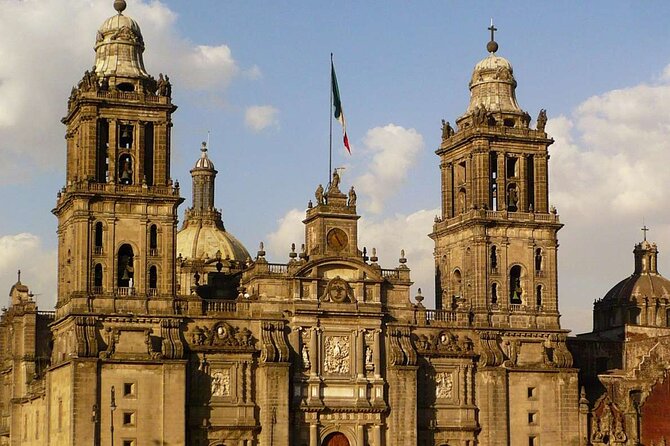
Mexico City can feel like it’s all modern streets and big landmarks—until you slow down. This experience is built around that moment when the city stops being just scenery and starts acting like a clue trail. You walk the Historic Center, then branch into places where you can still read the past in architecture, layout, and references to sacred and civic life.
The big win is that it doesn’t rely on you getting inside every building. The tour specifically notes that all sites will be visited from outside. That approach matters. It makes the route easier to fit into a day that may already include museums, meals, and traffic-changes. You still get the “I see it” effect, but with fewer bottlenecks.
Another practical win: it’s a private tour/activity, meaning you’re not stuck in a slow-moving group shuffle. Only your group participates, which usually translates to more listening time for the parts you care about—like the Aztec city plan or what Spanish conquest changed.
Finally, the route is designed for story speed. Even with short stop times, the guide’s goal is to help you imagine Mexico Tenochtitlán before the Spanish arrived and then understand what changed after—especially the mix of Indigenous allies, conquest, and new urban power.
Price and value: what $30.49 buys you in real life
At $30.49 per person for about 4 hours, you’re paying for guidance and time management more than paid access. The itinerary lists free admission tickets at each stop, which is huge for value in Mexico City, where you can easily stack up entry costs if you do everything independently.
So what are you truly buying?
- A guided route that points you toward details most people miss while walking past.
- Context that turns “a building I saw on a corner” into a story about Tenochtitlán, Spanish-era transformation, and sacred space design.
- An English experience format (offered in English), which can matter if you’re trying to keep up without constantly translating on your phone.
Is it perfect? Not if you’re expecting long museum browsing. This is more like a guided walk-and-look tour. It’s not built for spending hours inside galleries. If that’s your style, you’ll appreciate the focus.
Where you meet: start in the Centro and end at Bellas Artes
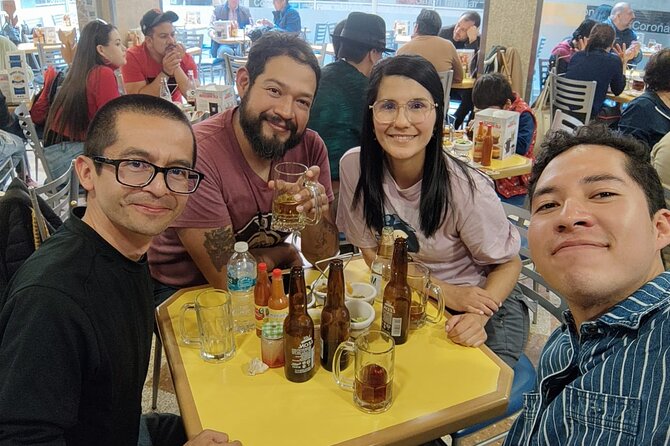
You start at José María Izazaga 129, Centro Histórico de la Cdad. de México, Centro, Cuauhtémoc, 06090 Ciudad de México, CDMX. The tour ends at Palacio de Bellas Artes, with the finish in the Plaza del Palacio de Bellas Artes area.
This start-to-finish design helps you in two ways:
- It anchors the Historic Center early, when your brain is still fresh and you haven’t zigzagged all over town.
- It uses a logical “grand finale” at Bellas Artes, which makes it easy to transition to dinner plans, shows, or just a scenic walk.
Also, the tour is marked as near public transportation. That’s a lifesaver in CDMX, where one wrong turn can add time.
- Teotihuacan, Guadalupe Shrine & Tlatelolco Day Tour with Lunch★ 5.0 · 11,603 reviews
- Xochimilco, Coyoacan and Frida Kahlo with Optional Lunch★ 4.5 · 7,320 reviews
- Balloon flight + Breakfast in cave + Pyramids + Pick up CDMX.★ 5.0 · 6,335 reviews
- Teotihuacan pyramids morning or afternoon without tourist traps★ 5.0 · 6,186 reviews
- Teotihuacan Early Access Guided Tour with optional Lunch★ 4.5 · 6,138 reviews
The itinerary, stop by stop: what you’ll notice and why it matters
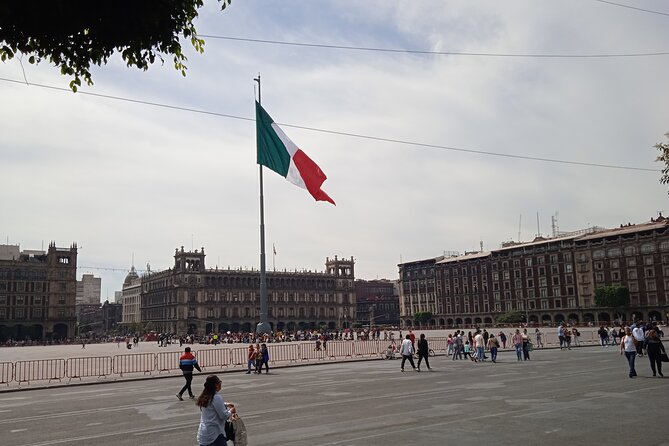
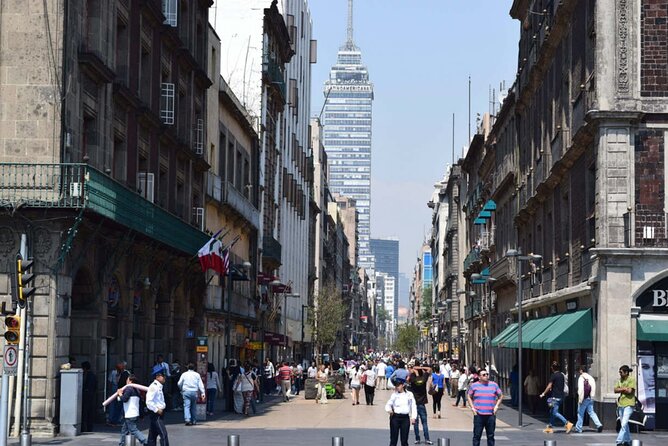
Stop 1: Historic Center (Centro Histórico) — the 1 hour 50 minutes anchor
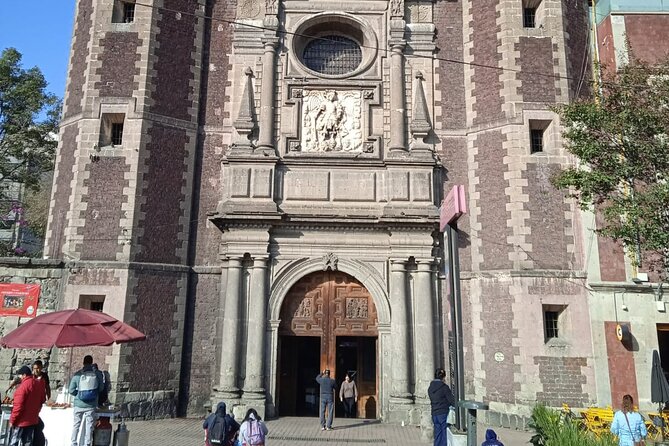
This is the big segment: 1 hour 50 minutes. You’ll visit several points of archaeological and historical interest that people often miss during the daily rush through the Centro Histórico.
The goal here is to help you imagine the city of Mexico Tenochtitlán and then follow the story of its fall at the hands of Spanish conquerors and their Indigenous allies. Even if you already know the basics, a good guided walk is where details start to connect: street patterns, building layers, and the way power shows up in where monuments land.
One important rule: sites are visited from outside. That shapes what you can expect. You’ll be looking at what’s visible—how places are placed, what you can observe from street level, and which features a guide points out as “this is the clue.” It’s a smart way to keep momentum without running from one indoor ticket line to another.
If you only have energy for one part of the tour, make it this one. The time allotment shows what the tour values most: building your mental map.
Stop 2: Hospital de Jesus Nazareno — 10 minutes of story and a little magic
After the Centro segment, you get a shorter stop at the Hospital de Jesús Nazareno. You’ll get the history of the hospital and why it’s relevant, plus an extra layer described as magic around the site.
That sounds poetic, but in practice it usually means this: the guide will connect the architecture and reputation of a place to the social and spiritual life of the city. Even in 10 minutes, that can be enough to change how you see a building. You stop treating it as a facade and start understanding it as a piece of the city’s functional and symbolic world.
This stop is brief, so I’d use it like a reset button. Stay alert, listen closely, and be ready for the context shift.
Stop 3: Museum of the City of Mexico — 10 minutes, quick orientation
Next up is the Museo de la Ciudad de México. The plan here is short: 10 minutes, and you’re focused on the building that houses the history of Mexico City.
When tours move quickly, you have to ask yourself: what do I want from this moment? For this stop, the answer is usually orientation. It helps you understand that Mexico City’s story isn’t linear. The museum building is part of the narrative structure—another “layer” you’re seeing while the guide explains how the city’s identity was shaped.
If you later want deeper museum time, you’ll have better direction on what to pick.
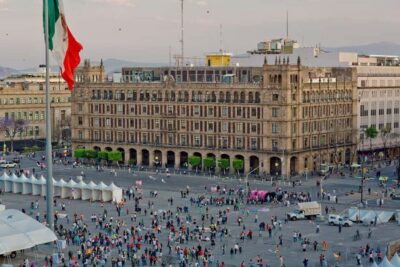
Stop 4: Zócalo — 20 minutes of iconic details
You’ll spend 20 minutes at the Zócalo. This is one of those stops that can feel obvious—until you learn which details are worth your attention.
You’ll see some of the most relevant details of this iconic site. In a hidden archaeology context, that matters because the Zócalo area is tied to the long transformation of the city from Indigenous origins to colonial and modern power centers. Even if the visible surfaces are stone and monuments, the meaning changes depending on where you stand and what you’ve learned earlier.
Use the time to look up and outward, not only around. The guide’s pointers are likely aimed at visible structure and symbolic layout.
Stop 5: Museo de Arte SHCP / Antiguo Palacio del Arzobispado — 20 minutes of archaeological windows
This stop is 20 minutes and centers on archaeological windows in the area, tied to the space associated with the Antiguo Palacio del Arzobispado.
This is one of the most “hidden archaeology” moments in the route, because archaeological windows let you see a slice of the past without a full excavation experience. From street level, they act like framed views: you learn to connect them to what was happening below, and you start noticing the city’s stacked timeline.
Even though the stop is short, it’s the kind of place where your brain goes quiet in a good way. You’re not just looking at something pretty; you’re seeing a time layer made visible.
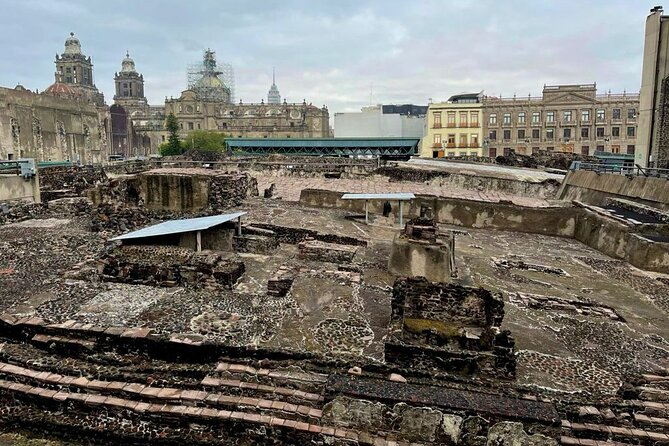
Stop 6: Museo del Templo Mayor — 30 minutes of how the sacred space worked
You’ll spend 30 minutes at the Museo del Templo Mayor. The focus is on how the sacred space of the Aztecs worked and what its structure was like.
This stop is a big one, because it tackles the core idea of the tour: helping you understand what the city meant before conquest changed the system. Even if you’re not going deep into exhibits, the guide’s explanation about sacred space design can make the concept click.
Structure is the key word here. When someone explains how a sacred area functioned, it’s not just a diagram in your head. It changes how you interpret later monuments, neighborhood layouts, and the location of major religious power in the city.
If you’re someone who likes architecture and city planning, this is likely the most satisfying part of the afternoon.
Stop 7: Centro Cultural España en México — 20 minutes in the old elite Mexica university area
You’ll visit the Centro Cultural España en México for 20 minutes. The tour frames it as the old university of the Mexica elite.
This stop is a reminder that Indigenous education and elite institutions existed in complex systems long before Spanish colonial schools. Even without deep museum time, the “why here” story can be strong—especially when you’ve just been learning about sacred spaces and historic transformation.
Take note of the building setting and how it’s used now, then let the guide connect past function to present use.
Stop 8: House of Tiles — 15 minutes of beauty and texture
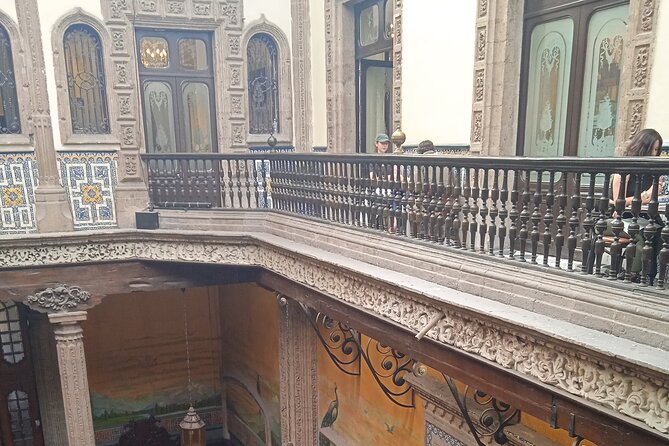
Finally: Casa de los Azulejos, often called the House of Tiles, for 15 minutes. This is one of the best “stop and reset” finales because the structure is visually striking. It’s also meaningful in a historical context, since it reflects the decorative and architectural tastes of the period.
In a tour focused on archaeology clues, it might feel like a left turn. That’s exactly why it’s a good ending. After learning about what’s hidden and what changed, you end with a building that you can appreciate with your eyes first—then understand with your new historical lens.
Who this tour suits best (and who should skip it)
This works best if you like:
- walking and looking at details instead of only inside-ticket experiences
- city-layer stories (Indigenous origins → Spanish conquest → modern Mexico City)
- English commentary and a private format
It may not be ideal if you:
- need baby-stroller access (it’s not recommended for people with babies)
- expect a lot of indoor museum time
- want a slow pace with long stops at each attraction
Given the itinerary’s many short segments, this is more “focused walk” than “wander all day.”
The one downside to plan around: reliability and the outside-only approach
There’s one caution worth taking seriously: one booking issue in the review record involved the guide not showing up and no message about cancellation. I can’t fix the past, but I can help you reduce risk.
My practical suggestion: if you book, keep your confirmation details handy and watch for any updates close to start time. This matters even with good operators. When your day depends on a guide showing up, you want a Plan B—like a nearby café or a flexible museum block after your scheduled tour.
Also remember the outside-only design. If you love hands-on archaeology experiences, you’ll get the concept and visible clues, but not long indoor artifact time at every stop.
Quick tips to get more out of the “street archaeology” style
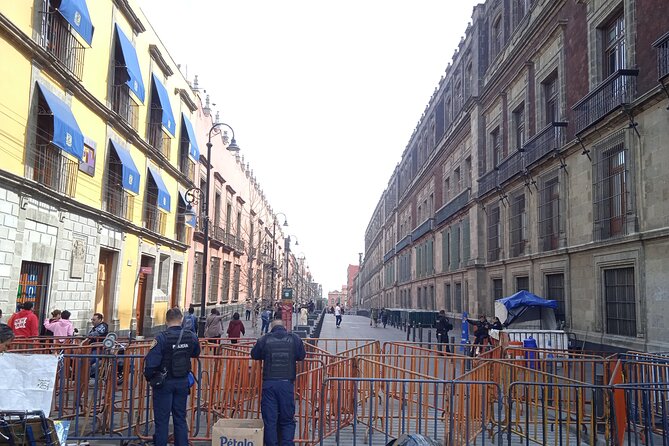
- Bring comfortable shoes. Many stops are short, so your legs do the work.
- Have your phone ready for notes, not constant scrolling. The guide’s cues matter.
- Don’t rush Zócalo and the Templo Mayor area. Those are where the story usually becomes clear.
- If you want extra depth later, pick one museum afterward with purpose. The tour gives you direction, not exhaustion.
Should you book the Hidden Archaeology in CDMX tour?
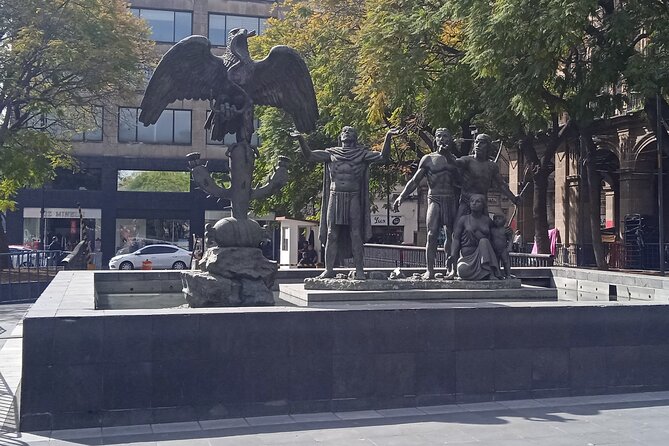
If you want a structured way to understand how Mexico City evolved—without paying repeated entry fees—this tour is a solid choice. The price is fair for a guided, English private walk, and the outside-only design keeps it efficient while still focused on meaning.
I’d book it if you like archaeology-as-you-walk and you want the city’s layers connected in one afternoon. I’d think twice if you need baby-friendly logistics or you’re mainly after long indoor museum time.
If you’re the kind of person who enjoys noticing what others miss—archaeological windows, sacred-space structure, and the way buildings carry history—this is exactly your kind of route.
FAQ
How long is the tour?
It’s approximately 4 hours.
What does it cost?
The price is $30.49 per person.
Is the tour offered in English?
Yes, it’s offered in English.
Is the tour private?
Yes. It’s private, and only your group will participate.
Will we enter the sites?
No. The itinerary notes that all sites will be visited from outside.
Where does the tour start and end?
It starts at José María Izazaga 129 in the Centro Histórico area. It ends in the Plaza del Palacio de Bellas Artes.
Are admission tickets included?
The itinerary lists admission ticket free for each stop.
Do I need a physical ticket?
You’ll have a mobile ticket.
Is it near public transportation?
Yes, it’s marked as near public transportation.
What’s the cancellation policy?
You can cancel for a full refund up to 24 hours before the experience’s start time. Free cancellation is available per the policy details provided.