
REVIEW · PUEBLA & CHOLULA DAY TRIPS
Puebla, Cholula & Tonantzintla Plus Taxco, Cuernavaca & Mine, 2 day Combo
You’ll feel like you’re zipping through Mexico’s layers in just two days. This Puebla–Cholula plus Taxco combo mixes Baroque-indigenous church art, UNESCO-linked Talavera craft, and the thrill of going into a pre-Hispanic mine before ending in Taxco’s silver-and-colonial streets. One cool bonus: the pace is structured, so you get guided context instead of just hopping from place to place.
What I like most is how clearly the days connect. Day 1 pairs Puebla’s big colonial landmarks with Cholula’s sacred art in Santa María de Tonantzintla, then you get a hands-on look at Talavera Celia and how the tiles are made. Day 2 turns the spotlight to mining heritage with a real descent by elevator and a walk through an illuminated 150-meter tunnel, then finishes at Santa Prisca, built in 1758 by French immigrant José de la Borda. The one drawback to plan around is time and comfort: you start early and you can spend a lot of the day on the road, and some buses have been reported as lacking A/C on hot days.
In This Review
- Key things to know before you go
- Starting Early in Mexico City: The Pickup Rhythm and Road-Time Reality
- Cholula and Santa María de Tonantzintla: Where Baroque Meets Indigenous Art
- Talavera Celia in Puebla: Seeing How Tiles Are Made
- Puebla’s Historic Center: Zócalo, Cathedral, and a Walking Pace That Works
- Day Two’s Big Attraction: Descending the Pre-Hispanic Mine in Taxco
- Taxco de Alarcón and Santa Prisca: Silver Streets and a 1758 Story
- Cuernavaca Mentioned, Taxco Delivered: How to Handle the Combo Name
- Price and Value: What Your $129 Includes (and What It Doesn’t)
- Who This Tour Fits Best (and Who Should Think Twice)
- Final Verdict: Should You Book This 2-Day Puebla, Cholula, and Taxco Combo?
- FAQ
- FAQ
- What time does the tour start?
- Where is the meeting point?
- Is lunch included?
- Are entrance fees included for all stops?
- How long is the mine visit?
- Do I need a passport for this tour?
- What physical level do I need?
Key things to know before you go
- 6:20 am departure from Hostal Amigo (Centro) keeps the day efficient, but also means an early wake-up.
- Santa María de Tonantzintla is the big visual payoff on Day 1, with Baroque-meets-indigenous decoration.
- Talavera Celia shows the process behind Puebla’s famous tiles, a craft tied to UNESCO recognition.
- Pre-Hispanic Mine includes a guided explanation and an elevator descent plus an illuminated 150-meter tunnel.
- Taxco’s old-town walk is short, but focused—cobblestones, squares, silver shops, and Santa Prisca.
- Language can vary in real life, even when English is offered, so a few Spanish basics can save stress.
More days out to Puebla and Cholula
- Puebla, Cholula & Tonantzintla Day Trip with Optional Lunch
★ 4.5 · 1,702 reviews - From Mexico City: Puebla, Cholula and Tonantzintla Day Trip
★ 4.3 · 1,191 reviews - From Mexico City: Puebla and Cholula Day Tour
★ 4.2 · 194 reviews - 6-Night Best of Central Mexico Tour: Teotihuacan Pyramids, Taxco, Cuernavaca and Puebla from Mexico City
★ 4.5 · 58 reviews
Starting Early in Mexico City: The Pickup Rhythm and Road-Time Reality
This tour runs on a morning rhythm, with a 6:20 am start at Hostal Amigo in Mexico City’s Centro Histórico (near public transportation). That early start matters because you’re driving to towns that sit about two hours from the city—plus you’re doing multiple stops each day.
Here’s the honest trade-off: you’ll be grateful for the early start when you want to pack in Puebla, Cholula, and then still make Taxco feel like more than a quick drive-by. But plan for long stretches seated. Some past groups have noted traffic delays on the Mexico City-to-Cholula route, and also longer-than-expected bus time when pickups take a while.
On hot days, comfort becomes the practical deciding factor. A few people have complained about buses without A/C, especially on long rides toward Taxco. Even if your day feels cooler in the morning, you can easily hit heat by midday—so bring water, sunscreen, and something light for sun protection. If you run cold, add a thin layer anyway; bus air (when it’s working) can be chilly.
Also, don’t treat the meeting point like a vague suggestion. Be there before the official start so you’re not scrambling in Centro traffic. One frustrated traveler reported showing up but not finding anyone at the meeting point, so arriving early is not just courteous—it’s smart.
Cholula and Santa María de Tonantzintla: Where Baroque Meets Indigenous Art
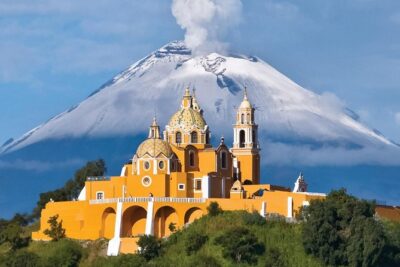
Cholula is the kind of place that rewards a guided approach. Without help, it’s easy to look at buildings and miss what makes them special. With a guide, you get the story behind the scenes—why people built what they built, and how local culture shaped the results.
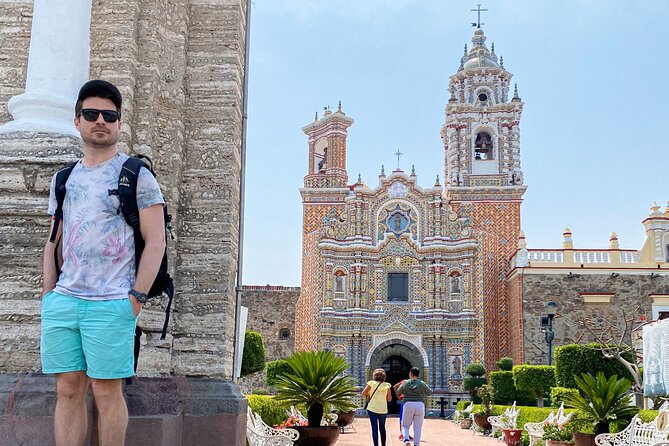
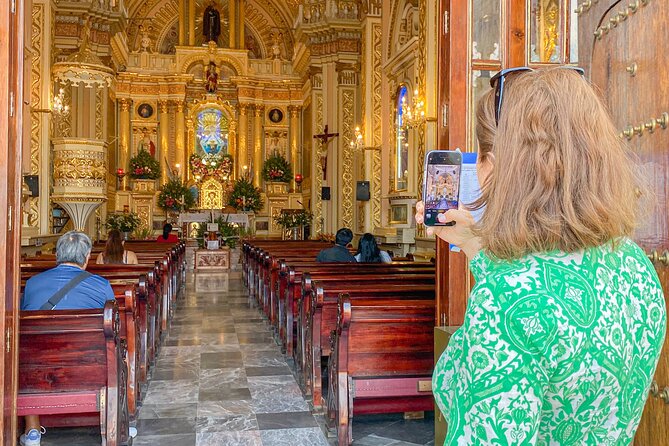
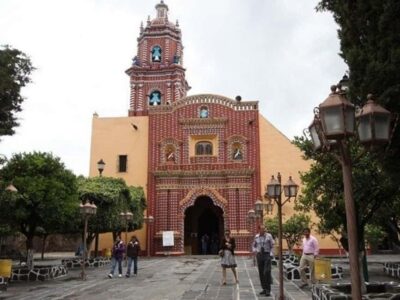
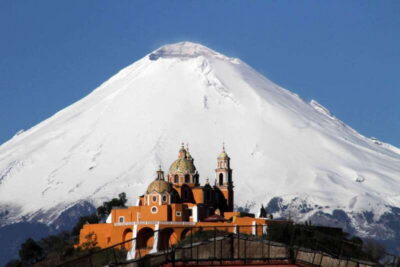
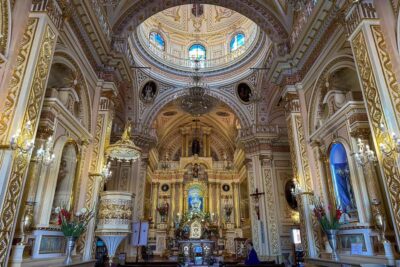
The standout stop is Santa María de Tonantzintla, known for the blend of Baroque and indigenous architecture with lavish decoration. This is not a quiet, plain church experience. It’s a visual overload in the best way: ornament, textures, and symbolism all working together. You’ll probably find yourself slowing down and looking up more than once, because the details are the point.
What makes it worth your time is the contrast. Day 1 isn’t only about big-name colonial sites. It’s also about how Catholic forms were adapted locally—so the church doesn’t feel like an imported template. It feels like a local language.
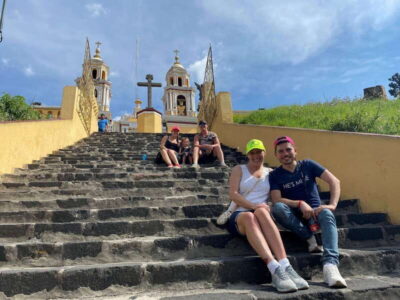
Practical tip: wear shoes you can walk in. Even if the church stop isn’t physically intense, you’ll likely be doing stairs, uneven areas, and short walks between viewpoints.
Talavera Celia in Puebla: Seeing How Tiles Are Made
After Cholula, the tour steers toward Puebla, and part of the value is that you don’t just see Puebla’s famous ceramics—you learn how they’re made. The stop at Talavera Celia is focused on the craft process, using an artisan setup to show you what goes into Talavera work.
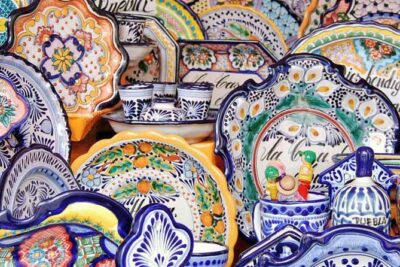
Talavera is one of those things people mention, but few people ever get the actual maker’s view. Here, you get a real sense of how the material and finishing process matter, and why the style has become part of Puebla’s identity. The craft’s recognition by UNESCO is also part of why this stop feels more than like a shop stop dressed up as culture.
If you’re tempted to buy tiles (or a gift) here, give yourself time. You may see multiple styles, and the differences can be subtle once you’re back on the road. If you care about quality, ask questions about the making process and the finish while the guide is still nearby.
More runs south to Taxco and Cuernavaca
- Taxco, Cuernavaca & Pre-Hispanic Mine optional visit★ 4.5 · 597 reviews
- Mexico City: Taxco & Cuernavaca Tour with Pre-Hispanic Mine★ 4.6 · 271 reviews
- From Mexico City: 10-Hour Cuernavaca and Taxco Tour★ 4.0 · 133 reviews
- Cuernavaca and Taxco Tour from Mexico City★ 4.0 · 88 reviews
- 6-Night Best of Central Mexico Tour: Teotihuacan Pyramids, Taxco, Cuernavaca and Puebla from Mexico City★ 4.5 · 58 reviews
Puebla’s Historic Center: Zócalo, Cathedral, and a Walking Pace That Works
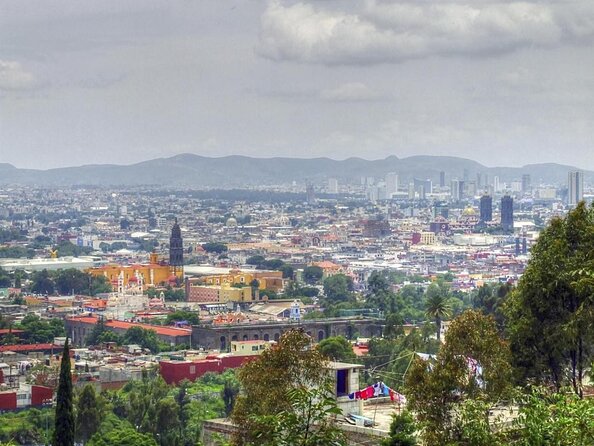
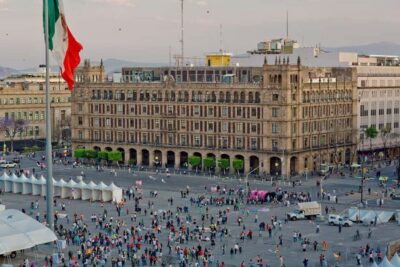
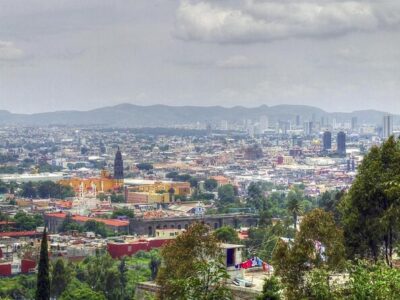
Once you hit Puebla, the day turns into a guided walking loop through the historic center. You’ll see the Zócalo, the Cathedral, and the Rosario church, plus other landmarks from the 16th to 18th centuries.
This is one of the best parts of the combo because the walking format helps you absorb scale. You get to see Puebla as a living colonial city, not a list of photos. The guide’s commentary is what makes it click—what to notice, which features signal the period, and how the city’s identity formed.
Lunch is your own expense. The tour usually builds a lunch slot so you can try local favorites like mole poblano or a semita sandwich. It’s a practical moment: you’ll want to eat before the walking gets you tired, and before you need energy for market time and shopping.
After lunch, the day continues with time in a local market for snacks and the chance to pick up souvenirs. This is where you can score small gifts without turning the whole trip into a shopping mission.
Quick decision tip: if your suitcase is limited, buy one meaningful item rather than a pile of smaller ones. Talavera and silver-related souvenirs can add weight fast, especially if you’re bringing bottles, ceramics, or heavier silver pieces.
Day Two’s Big Attraction: Descending the Pre-Hispanic Mine in Taxco
If you like hands-on history, Day 2 delivers. The highlight is the Pre-Hispanic Mine with its reported exploitation dates from 1400 to 1500. You don’t just hear about mining—you go down.
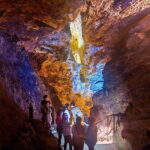
Expect an authentic elevator descent and then a guided passage through a 150-meter tunnel that’s illuminated so you can see the wall sparkle. You’ll get an explanation of how ancient settlers carried out mining work, what tools they used, and the techniques used to locate and extract precious metals.
This stop is valuable for two reasons. First, it reframes mining from a modern industrial story into a human one—people, tools, and problem-solving. Second, it gives you a physical sense of scale: the mine is dark, narrow, and close enough to make you respect how hard this work must have been.
Practical note: this is still an underground experience, so even in warm weather you may want a light layer. Also, stick with closed-toe shoes. You’re not in a museum floor environment; you’re in a working-style tunnel where footing matters.
Taxco de Alarcón and Santa Prisca: Silver Streets and a 1758 Story
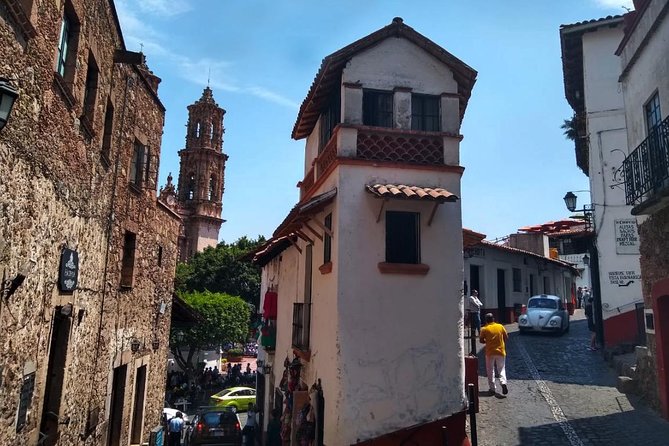
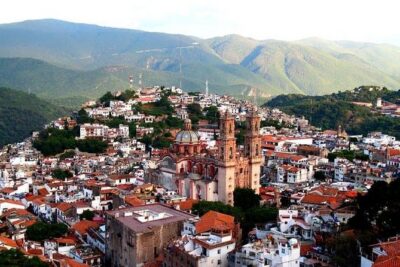
Taxco’s feel is the payoff after the mine. The city sits on a hillside, with cobblestone streets and cozy squares, and it’s easy to understand why it’s considered one of Mexico’s classic “old world” mining towns.
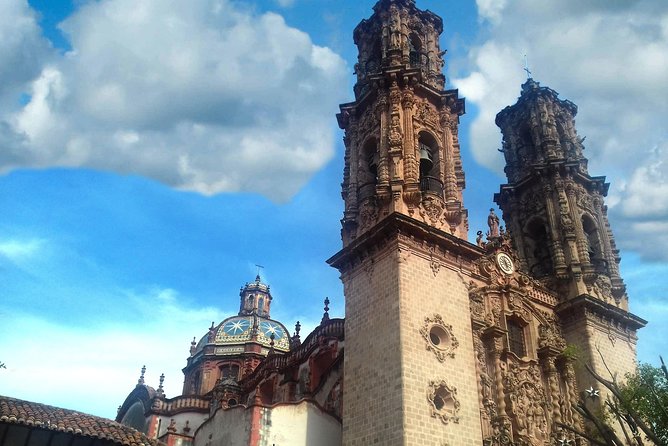
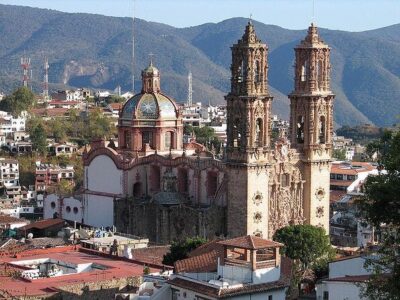
The guided portion is shorter than Day 1’s walking loop, but it’s focused. You’ll stroll through the old streets, take in the atmosphere, and visit Santa Prisca, one of Mexico’s grand churches. Santa Prisca was built in 1758 by French immigrant José de la Borda, tied to the story of discovering a major silver spring.
That French connection is part of what makes Taxco feel different from other colonial cities. It’s not only Spanish colonial style—you’re also seeing how outsiders and local power dynamics shaped what ended up on the hillside.
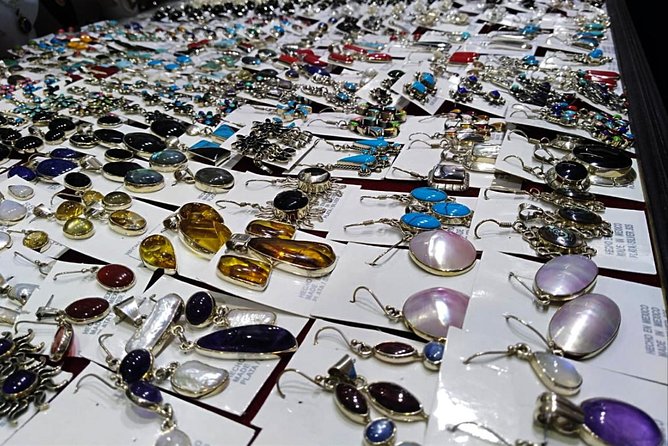
Silver shops and artisan stores are a major part of Taxco. You’ll have time for handicrafts and you’ll see a lot of locally made silver and small craft pieces. This is a good place to buy if you’re looking for souvenirs that feel specific to the region rather than generic Mexico-branded items.
Practical buying strategy: decide your budget before you start walking. Silver pricing can jump once you move from small items to larger pieces. If you’re unsure, start with small crafts and ask for what’s adjustable, what’s polished, and what’s best for travel.
Cuernavaca Mentioned, Taxco Delivered: How to Handle the Combo Name

The combo name includes Cuernavaca in addition to Puebla/Cholula and the mining stop. But the detailed flow you’ll feel on the ground is centered on Puebla/Cholula and then Taxco plus the pre-Hispanic mine.
So here’s what you should do: when you confirm your booking, check whether your specific departure includes a Cuernavaca stop or whether it’s mostly a naming variant. If Cuernavaca is included, you’ll want to know in advance so you can adjust your expectations and walking stamina.
This isn’t about being picky. It’s about making the day match what you’re hoping to photograph and experience.
Price and Value: What Your $129 Includes (and What It Doesn’t)
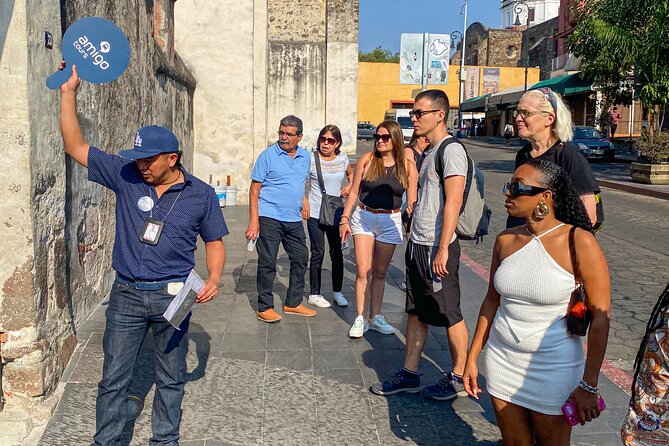
At $129 per person for about two days, you’re paying for more than sightseeing. You’re paying for round-trip transportation, a professional guide, and included entrance to the pre-Hispanic mine. You also get an included craft stop at Talavera Celia and guided city time in Puebla and Taxco.
That makes the price feel more reasonable than a pure self-guided approach. The road time is part of the deal, and entrance fees for a mine experience aren’t trivial. Food is not included, and you’ll cover snacks, lunch, and any shopping yourself.
Here’s how I’d judge value if you’re on the fence: this is a good deal if you want guided context and you’re excited about the mine. If you only care about one city and you’re happy to do the rest by taxi or bus on your own, then this combo might feel like too much “tour” and not enough “free exploring.”
Also consider language expectations. English is listed as an option, and in practice some guides have strong English and keep the group engaged. But a few people have reported communication issues when English wasn’t actually used well. If you’re not comfortable in Spanish, it may be worth preparing yourself with basic phrases and a flexible mindset.
Who This Tour Fits Best (and Who Should Think Twice)
This combo works best for you if:
- you like guided storytelling in historic places, not just photo stops
- you want a mine experience that includes a real descent, not just a viewpoint
- you enjoy short walking tours and don’t mind the early start
- you’re shopping for Talavera or silver souvenirs tied to local craft
It may not be the right fit if:
- you’re extremely sensitive to heat or long bus rides, especially if your group ends up on a bus without A/C
- you want lots of free time to wander independently; this tour keeps you on a schedule
- you expect Cuernavaca to be a major, detailed stop based only on the combo name
Final Verdict: Should You Book This 2-Day Puebla, Cholula, and Taxco Combo?
I’d book it if you want a packed two-day snapshot that mixes sacred art, craft, and mining work. The strongest draw is the combination: Santa María de Tonantzintla’s visually intense interior, Talavera Celia for craft process, and the mine descent that gives you something physical and memorable. Add Santa Prisca in Taxco, and you get a complete arc from Puebla’s colonial streets to Taxco’s silver identity.
But go in with eyes open about logistics. Start early, expect road time, and pack for comfort even if you think it will stay cool. If you’re counting on Cuernavaca, double-check the specific wording on your confirmation so the day matches your plan. If you do that, this is a smart value way to see a lot of Mexico’s culture beyond Mexico City without feeling lost.
FAQ
FAQ
What time does the tour start?
The tour starts at 6:20 am, with pickup at Hostal Amigo (Centro Histórico de la Cdad. de México), and it ends back at the meeting point.
Where is the meeting point?
The meeting point is Hostal Amigo, Isabel La Católica 61-A, Centro Histórico de la Cdad. de México, Centro, Cuauhtémoc, 06000 Ciudad de México, CDMX.
Is lunch included?
Lunch is not included. You’ll have a lunch break, and you can try local options like mole poblano or semita during that time.
Are entrance fees included for all stops?
Entrance is included for the Pre-Hispanic Mine, and the Talavera Celia stop also shows as included. Other sights like cathedral and historic center time are listed as free.
How long is the mine visit?
The mine stop is scheduled for about 1 hour, including the descent and tunnel time.
Do I need a passport for this tour?
Yes. You must present your passport (physical, digital, or photocopied) to prove legal stay in Mexico, including the entry stamp page and the page with your data.
What physical level do I need?
You should have a moderate physical fitness level. You’ll be walking in historic centers and doing the mine experience.
More Tour Reviews in Mexico City



South to Taxco and Cuernavaca

East to Puebla and Cholula




Fresh from our Mexico City notebook


Puebla & Cholula Day Trips, compared.
 ★ 4.5Puebla, Cholula & Tonantzintla Day Trip with Optional LunchFrom $491,702 reviews
 ★ 4.3From Mexico City: Puebla, Cholula and Tonantzintla Day TripFrom $891,191 reviews
 ★ 4.0Puebla and Cholula Day Trip from Mexico CityFrom $54274 reviews
 ★ 4.2From Mexico City: Puebla and Cholula Day TourFrom $68194 reviews
 ★ 4.56-Night Best of Central Mexico Tour: Teotihuacan Pyramids, Taxco, Cuernavaca and Puebla from Mexico CityFrom $68558 reviews
 ★ 4.6From Mexico City: Cholula Pyramid & Puebla Small Group TourFrom $19254 reviews
 ★ 4.6From Mexico City: One-day adventure: Puebla, Cholula, and TonantzintlaFrom $8540 reviews
 ★ 4.0Tour to Puebla and CholulaFrom $5140 reviews
Browse the lists this tour appears in