REVIEW · MEXICO CITY
Museo Nacional de Antropología – Small Groups
Six rooms can feel like a full education. This small-group tour at Mexico City’s Museo Nacional de Antropología is built to help you understand the museum’s design and the Mesoamerican cultures that shaped life before 1521. You’ll also get a time-saving path through the building, so your 3 hours feel used instead of spent wandering.
I like the small group size (max 6). It keeps the pace relaxed, and it’s the reason the guide can slow down when a question matters. I also like the focus on the museum’s story: it’s not just objects on walls, but the project behind the museum’s design, plus a tour of 6 of the 11 archaeology rooms.
One caution: the tour price doesn’t include the museum admission ticket. You’ll need an extra MX$210 per person, and you should buy it only through the museum’s official site.
In This Review
- Key things to know before you go
- Why this small-group Anthropology Museum tour works
- Getting to the meeting point and starting without stress
- The route: 6 archaeology rooms, built for your 3-hour time window
- The cultures you’ll connect: Olmeca, Zapoteca, Teotihuacan, Mexica
- The museum’s design story—and why the 1985 theft matters
- English guide quality is the difference between seeing and understanding
- Price and what’s actually included (and what you must buy)
- Who should book this tour, and who might prefer another plan
- Should you book Museo Nacional de Antropología – Small Groups?
- FAQ
- How long is the Museo Nacional de Antropología small-group tour?
- Where does the tour meet?
- Is museum admission included in the $83.63 price?
- How much is the museum admission ticket?
- How many people are in the group?
- Is the tour offered in English?
- What does the tour focus on inside the museum?
- Which cultures are referenced during the tour?
- What’s the physical requirement?
- What’s the cancellation rule?
Key things to know before you go
- Max 6 travelers: you get a calmer pace and more back-and-forth with your guide.
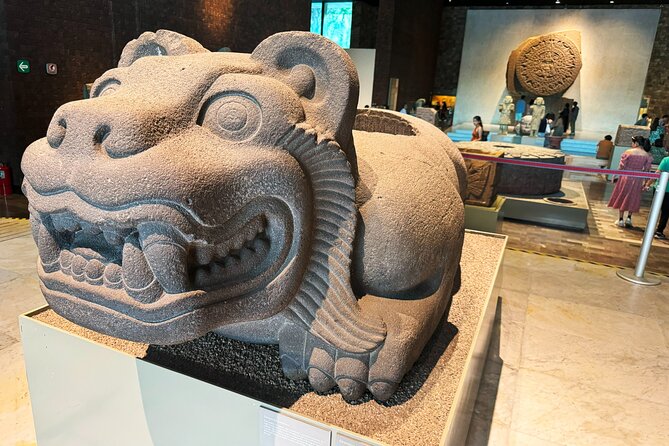
- Focus on 6 of 11 archaeology rooms: you’ll hit the most representative stops instead of trying to see everything.
- English tour option: helpful when your eye is drawn to artifacts but the labels are Spanish.
- Culture timeline before 1521: Olmeca, Zapoteca, Teotihuacan, Mexica, and more connections between them.
- Museum-design context: you learn the project behind how the museum presents Mesoamerica.
- 3 hours is fast: it’s a highlights route, not an all-day museum pass.
Weighing this one up? Here is how it lands next to a few Mexico City favourites:
- Teotihuacan, Guadalupe Shrine & Tlatelolco Day Tour with Lunch
★ 5.0 · 11,603 reviews - Xochimilco, Coyoacan and Frida Kahlo with Optional Lunch
★ 4.5 · 7,320 reviews - Balloon flight + Breakfast in cave + Pyramids + Pick up CDMX.
★ 5.0 · 6,335 reviews - Teotihuacan pyramids morning or afternoon without tourist traps
★ 5.0 · 6,186 reviews
Why this small-group Anthropology Museum tour works
The Museo Nacional de Antropología is huge, and it can trick you. You start thinking you’re going to “just walk around,” and suddenly you’re spending your time locating hallways instead of learning what you came for.
This tour fixes that with a tight plan and a group cap of 6. That small size matters more than most people think. With fewer people, the guide can keep the tempo comfortable, explain why certain artifacts matter, and shift attention when someone is trying to read a label they can’t quite translate. You also feel less rushed. In a museum this big, feeling rushed is basically the enemy.
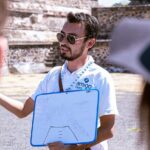
Another big plus: this is an English-guided experience, and the museum signs are in Spanish. A great guide turns the walls into a coherent story. You’re not just looking at objects—you’re connecting them to societies, technologies, politics, and beliefs. The goal here is clear: you leave with a map in your head of the cultures that lived in Mesoamerica before the fall of Mexico Tenochtitlan in August 1521.
Getting to the meeting point and starting without stress
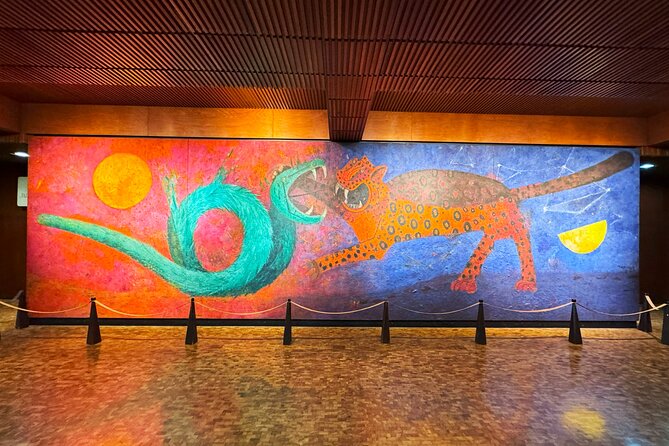
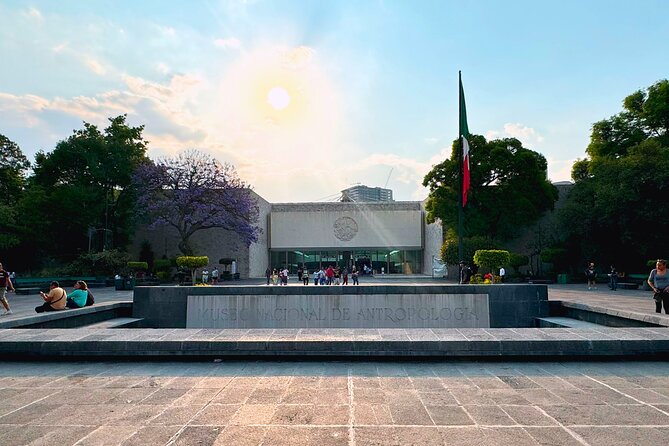
You start at the Museo Nacional de Antropología, on Av. P.º de la Reforma s/n, Polanco (Bosque de Chapultepec I Secc). The tour ends back at the same meeting point, so you’re not left figuring out how to “make your way out” after the guided portion.
A practical tip: the museum area sits in one of Mexico City’s busiest zones, and the museum lobby can be crowded. You’ll waste less time if you arrive a bit early and get your bearings before the group forms. Since this is a small tour, you want to make sure you find your guide quickly and don’t spend your first 10 minutes scanning faces.
Also note the walking style. This isn’t described as a heavy hike, but it does require a moderate physical fitness level. If you’re someone who tires quickly standing in place, bring that reality with you. One of the recurring strengths of these guides is that they know how to keep explanations going with short seated breaks when needed. That kind of flexibility can make the whole experience feel easier.
Finally: bring your confirmation details (mobile ticket). You don’t want to be hunting for paperwork once you’re inside.
The route: 6 archaeology rooms, built for your 3-hour time window
Here’s the real value of a guided highlights route: the museum has 11 archaeology rooms, and you only have about 3 hours. Trying to see it all on your own usually turns into a checklist with no meaning.
This tour keeps it focused by targeting 6 of the 11 archaeology rooms. That means you get enough variety to understand patterns across time and cultures, but not so much that you end up glazed over by fatigue. The guide’s job is to help you connect the dots so each room feels like a chapter, not a disconnected stop.
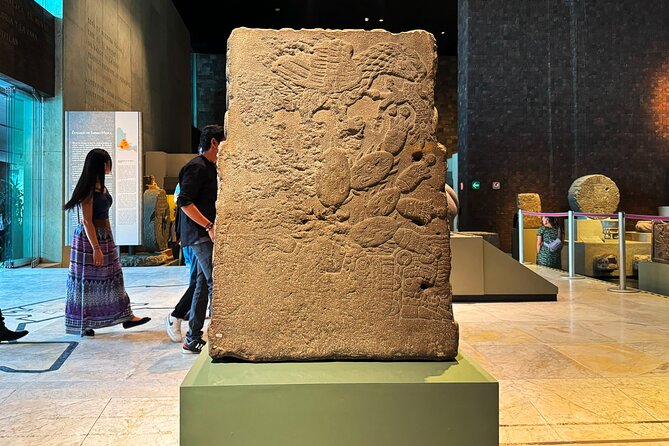
The tour centers on the project behind the museum’s design, then uses archaeological objects as vehicles for traveling through time. In other words: you’re not just “looking at rooms.” You’re being guided through the museum’s argument—how it presents representative cultures and how those cultures influenced later societies.
What you’ll likely feel during the tour is pacing and clarity:
- You’ll move through different archaeology rooms and get orientation fast.
- You’ll hear explanations that make the artifacts feel like evidence, not decoration.
- You’ll build a mental timeline before you head to other archaeology sites in Mexico.
And one practical takeaway: because it’s only 3 hours, you can treat this as your foundation visit. Then, if something sparks your curiosity, you’ll know exactly what to revisit afterward on your own.
- Teotihuacan, Guadalupe Shrine & Tlatelolco Day Tour with Lunch★ 5.0 · 11,603 reviews
- Xochimilco, Coyoacan and Frida Kahlo with Optional Lunch★ 4.5 · 7,320 reviews
- Balloon flight + Breakfast in cave + Pyramids + Pick up CDMX.★ 5.0 · 6,335 reviews
- Teotihuacan pyramids morning or afternoon without tourist traps★ 5.0 · 6,186 reviews
- Teotihuacan Early Access Guided Tour with optional Lunch★ 4.5 · 6,138 reviews
The cultures you’ll connect: Olmeca, Zapoteca, Teotihuacan, Mexica
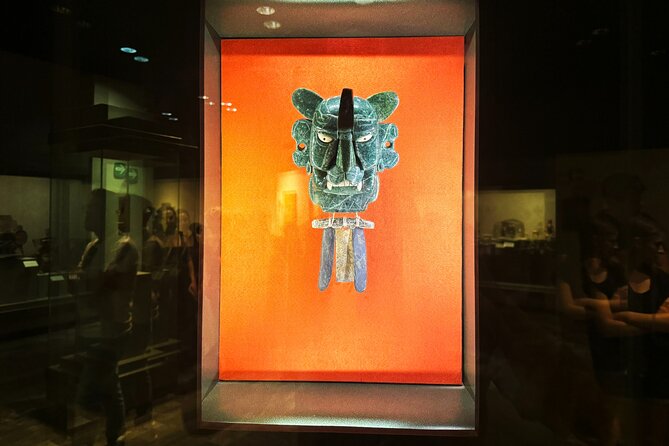
This tour is designed to help you understand the societies that inhabited Mesoamerica before August 1521. That’s a key framing point. Instead of a scattershot view of “ancient stuff,” you get a guided understanding of who lived there and how their worlds worked.
You’ll specifically spend time using pieces from these cultures as stepping stones:
- Olmeca
- Zapoteca
- Teotihuacan
- Mexica
Each of those names can mean something different depending on what you’ve read before. A good guide helps you move beyond the name and into the society: what people valued, how they organized power, and what their material culture can tell us.
One of the neat advantages of this route is that it helps with comparisons. When you see objects from different cultures in sequence—rather than scattered across the museum—you start noticing contrasts and overlaps. You might catch patterns in style, materials, or themes, and it becomes easier to understand what later groups inherited, adapted, or resisted.
If you’re planning other trips, this kind of foundation visit pays off. It’s the same reason a museum tour like this often makes you feel more ready for sites such as Teotihuacan and Monte Albán: you arrive already thinking in time periods and cultural contexts, not just architecture shapes.
The museum’s design story—and why the 1985 theft matters
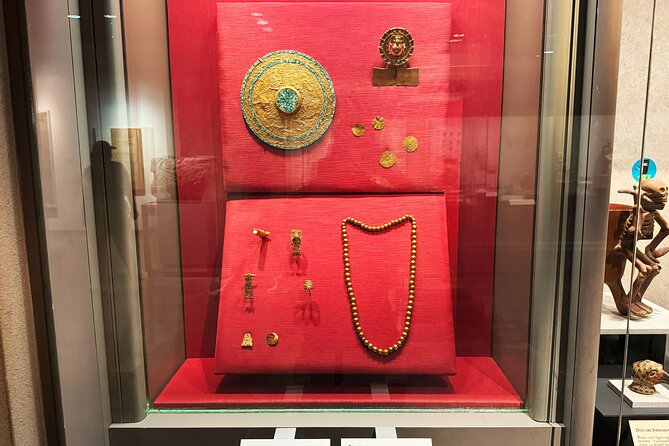
One of the most interesting parts of this experience is that it’s not purely object-based. The tour looks at the project behind the National Anthropology Museum’s design, then uses the archaeology rooms to explain what you’re seeing.
That matters because museums aren’t neutral. How a museum chooses to present Mesoamerica shapes what you understand. Learning the design project helps you read the museum like a guidebook, not like a warehouse.
Then there’s the human drama side of museum history. The tour includes a striking detail about certain precious items—made of gold, jade, and obsidian—that were stolen on December 25th, 1985. Stories like this do more than create suspense. They remind you that museums are modern custodians of fragile history, and that the context around an artifact can be as significant as the artifact itself.
If you’re the type who likes facts you can remember later (not just trivia you forget), this story is the kind that sticks. It also helps you pay closer attention to what’s on display and why.
English guide quality is the difference between seeing and understanding
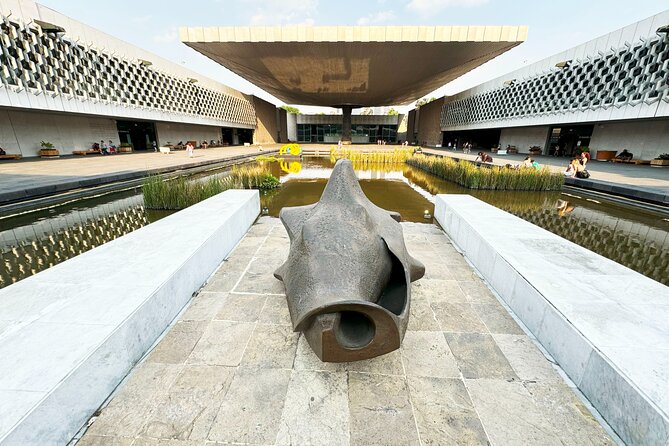
When you book a guided museum tour, you’re really buying two things: time saved and explanation quality. This tour is built around a guide service, and the standout theme from guide performance is strong, clear English.
People often mention that the explanations were easy to follow because the guide spoke very good English while the museum signage is in Spanish. That’s not a small detail—it changes how much you can actually absorb. Without that, you’re stuck translating in your head the whole time, and you miss the connections.
Another repeated strength is that guides bring energy and structure. Some guides are described as having formal training in areas like archaeology and history, and the best ones know how to pace the group so you don’t feel like you’re being marched through glass cases. You’re also not left holding silent questions. The small-group format helps questions land.
There’s also a practical human touch. One example from a guide description notes that seated breaks were used when someone in the group couldn’t stand for long, while the guide still kept explaining. In a museum setting, that kind of adaptability is a big deal.
Price and what’s actually included (and what you must buy)
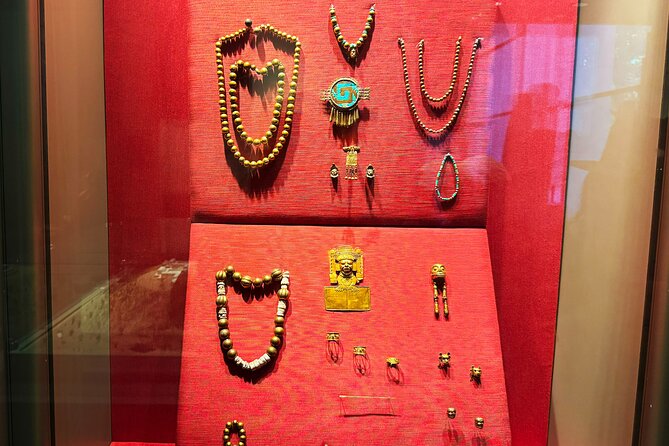
The tour is priced at $83.63 per person for about 3 hours. The key detail: the price includes guide service, but museum admission isn’t included.
Admission is MX$210 per person, and tickets are available at the museum’s official site. The important part of that advice is simple: don’t buy from random resellers. For a museum with tight entry flow, you want the ticket that matches the museum’s own system.
So is this worth the money? In my view, it often is, because you’re buying:
- A guided route that targets 6 archaeology rooms (not random browsing)
- English interpretation that matches how the museum presents information
- A group size that supports questions and slower explanations
If you’re the kind of traveler who enjoys reading Spanish labels and building your own timeline, you could skip the guide. But if your goal is to get a strong understanding quickly, you’ll usually feel like the guide price is doing its job.
Who should book this tour, and who might prefer another plan
This tour is a great fit if you:
- Want a guided orientation to Mesoamerican cultures before you visit other archaeology sites
- Prefer an English explanation where the signage is Spanish
- Like small groups and a more personal museum pace
- Want to see multiple archaeology rooms without spending your whole day routing yourself
It’s also a solid choice for history lovers who like context, not just facts. The mix of culture timeline + museum design story helps you understand the museum’s point, not just what’s displayed.
You might skip or modify your plan if:
- You want to spend most of your time in one or two rooms and go very slow. This is only 3 hours.
- You’re expecting a full museum day. The tour intentionally covers a selection (6 rooms), not everything.
- You don’t want to add the separate admission cost. The guided portion is only part of your spend.
Should you book Museo Nacional de Antropología – Small Groups?
Yes, if you want your visit to feel organized and meaningful fast. This is one of those tours where the small-group size and the tight route are the point. You get a guided path through major archaeology rooms, an explanation of the museum’s design project, and a clear timeline of cultures connected to life in Mesoamerica before 1521.
Book it especially if you’re short on time in Mexico City or you’re excited to pair museum learning with upcoming archaeology sites like Teotihuacan and Monte Albán. Starting with a guided understanding will make those stops easier to read.
If you have all day and you love wandering at your own pace, you might prefer a self-guided plan. But if you’d like to walk out with more than impressions—if you want structure—this one is hard to beat.
FAQ
How long is the Museo Nacional de Antropología small-group tour?
It runs for about 3 hours (approx.).
Where does the tour meet?
The meeting point is Museo Nacional de Antropología, Av. P.º de la Reforma s/n, Polanco, Bosque de Chapultepec I Secc, Miguel Hidalgo, 11560 Ciudad de México, CDMX, Mexico.
Is museum admission included in the $83.63 price?
No. The tour price includes guide service, but admission is not included.
How much is the museum admission ticket?
Admission is MX$210.00 per person.
How many people are in the group?
The tour has a maximum of 6 travelers.
Is the tour offered in English?
Yes, the experience is offered in English.
What does the tour focus on inside the museum?
It focuses on the project behind the museum’s design and on 6 of the 11 archaeology rooms, using objects to explain major Mesoamerican cultures before the fall of Mexico Tenochtitlan in August 1521.
Which cultures are referenced during the tour?
The tour uses pieces from Olmeca, Zapoteca, Teotihuacan, and Mexica cultures as part of the time-travel style route.
What’s the physical requirement?
It recommends a moderate physical fitness level. The tour is near public transportation.
What’s the cancellation rule?
Free cancellation is available, and you can cancel up to 24 hours in advance for a full refund.