REVIEW · FOOD & DRINK
Learn How To Cook Mexican Food
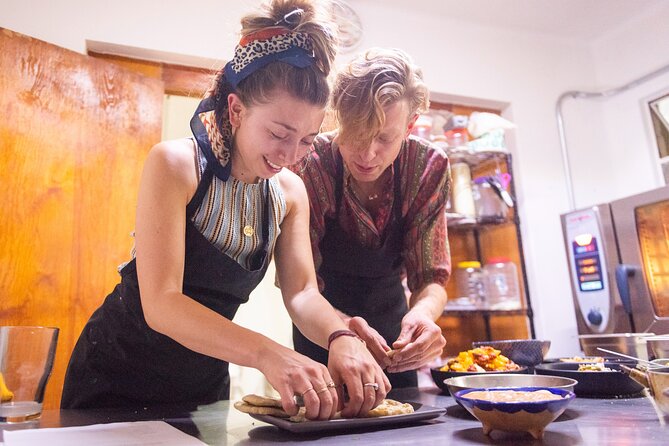
There’s something satisfying about making dinner with your own hands. In Mexico City’s Roma neighborhood, you’ll join a small class (max 8 people) and learn classic techniques at an easy pace, not a rushed demo.
I especially like that you don’t just hear about flavors—you handle chiles, work with corn masa, and cook components like nopales in a working kitchen. One thing to consider: this class is in a specific spot (Tonalá 194, Roma Nte.), and private transportation isn’t included, so you’ll want to plan on using public transit or taxis.
In This Review
- Key Things to Know Before You Cook in Roma
- Roma’s Working Kitchen, Small Group Energy
- What You’ll Learn: Green Salsa, Chiles, Masa, Nopales
- Starter Course: Sopes You Can Actually Replicate
- Starter Course: Nopales Salad and the “Try It” Factor
- Main Course: Tinga (Chicken or Oyster Mushroom)
- Main Course: Papas con Chorizo for Comfort-Food Confidence
- Main Course: Chilaquiles Rojos with Thick Crema
- Dinner Is the Point: Eat What You Cook (Then Take More)
- The Take-Home Recipes: How to Use Them Without Guesswork
- Price and What You Get for $149.28
- Logistics That Actually Matter: Timing and Location
- Who This Class Suits Best
- Should You Book This Mexican Cooking Class?
- FAQ
- What is the duration of the cooking class?
- Where does the class meet and start?
- What time does the class begin?
- Is transportation included?
- How many people are in the class?
- Is the class taught in English?
- What dishes are included in the sample menu?
- Is there a vegetarian option?
- What’s included in the price besides cooking?
- What is the cancellation policy?
Key Things to Know Before You Cook in Roma
- Small group, hands-on focus: A maximum of 8 people keeps questions from getting lost.
- Real Mexican staples, not just one recipe: Green salsa, fresh and dried chiles, masa, and nopales are part of the basics.
- Dinner is included, and you can take more home: You eat everything you cook, plus containers are provided for leftovers.
- Chef Julieta Carrion runs it: She teaches in her professional working kitchen that supplies food to restaurants and coffee shops.
- Vegetarian option for tinga: Oyster mushrooms can replace the chicken in the main course.
- Written recipes to keep: You’ll take home notes for what you make in class.
More plates worth crossing Mexico City for
- Historic Center Food Tour in Mexico City
★ 5.0 · 1,263 reviews - Lucha Libre Tickets & Tacos & Beer & Mezcal – BEST NIGHT EVER!
★ 5.0 · 1,077 reviews - Polanco Food Tour: The Bestselling Food Adventure in Mexico City
★ 5.0 · 881 reviews - Colonia Roma Food Tour
★ 5.0 · 838 reviews
Roma’s Working Kitchen, Small Group Energy
This class happens in a professional working kitchen right in the Roma Nte. area. The address is Tonalá 194, and it starts at 6:00 pm, which makes it a smart evening plan: you get dinner included, and you’re not stuck eating a late, random taco hunt after.
The small size (up to 8 people) matters more than it sounds. When the group is tight, you get real time to ask how to manage the hands-on parts—corn masa, chopping, mixing salsa, and cooking nopales—without watching everyone else go first.
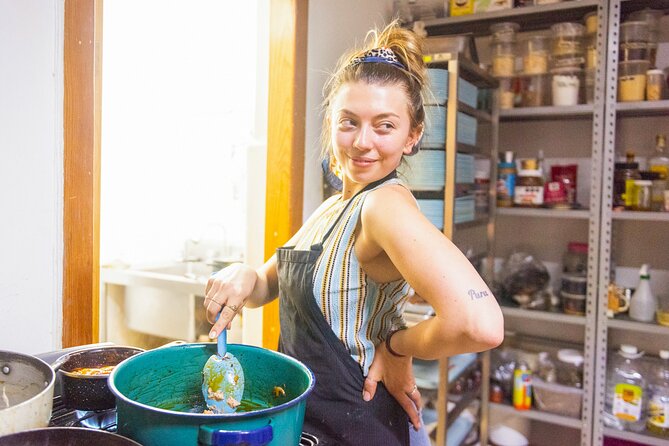
Chef Julieta Carrion also brings a practical food-business background. She owns a pastry business that supplies restaurants and coffee shops, and she teaches here too, using the same kind of professional setup you’d expect in a working kitchen.
What You’ll Learn: Green Salsa, Chiles, Masa, Nopales
This is one of those classes where the point is skill, not just dishes. You’ll cover the basics that many Mexicans learn early at home, so you can reproduce the flavors later without guessing.
Here’s what the class is built around:
- How to make a basic green salsa
- How to use fresh and dried chiles
- How to handle corn masa and shape it with your hands
- How to cook nopales (cactus)
If you’ve ever made salsa at home but felt stuck on what to do with chiles or how to get the right texture for masa, this is the kind of guidance you can actually use. And because it’s taught in an encouraging environment, you’re learning technique while still having fun in the process—key if you’re not the type who always cooks confidently.
One nice detail: the class focuses on flavor control. With the main dish tinga, the seasoning uses smoked chipotles and you can choose how mild or spicy you want it to be. That makes the class feel flexible rather than one-size-fits-all.
Starter Course: Sopes You Can Actually Replicate
You’ll start with sopes—round patties made from nixtamalized corn dough. These aren’t just tortillas. Sopes have that distinct shape and structure, so learning how to work with masa matters.
You’ll top the sopes with refried beans, salsa, and onion, with cilantro if desired. In practice, this teaches you a simple but powerful formula: masa base + savory beans + salsa + fresh bite on top. Once you understand that build, you can remix toppings at home without needing a full new recipe each time.
Why it’s a great starter for a beginner: even if you miss a small detail the first time, the overall result can still taste like Mexican street food. And you’ll see how the different elements balance—creamy beans, bright salsa, and crunchy fresh onion/cilantro.
Worth a look right beside this Mexico City pick:
- Colonia Roma Food Tour★ 5.0 · 838 reviews
- Mexico City Historical Centre Food Tour with 7 Authentic Tastings★ 5.0 · 723 reviews
- Mexico City Boat Tour Food and Unlimited Drinks Priority Boarding★ 5.0 · 653 reviews
- Mexican Cooking Class with Food Market Visit in Mexico City★ 5.0 · 506 reviews
- Street Food Tour with Friends★ 5.0 · 326 reviews
Starter Course: Nopales Salad and the “Try It” Factor
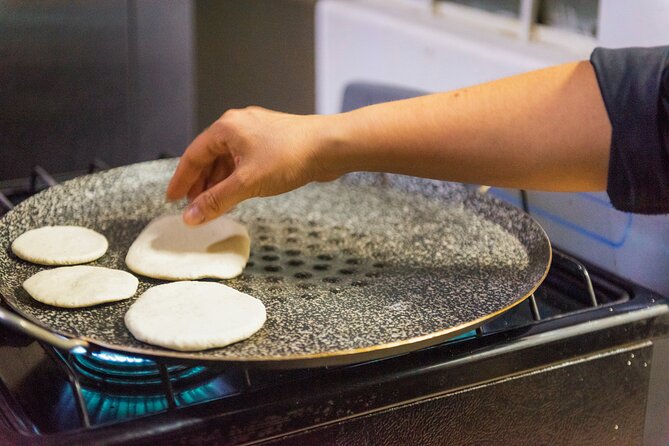
Next up is nopales (cactus) salad. It’s described as a staple of the Mexican diet and something fresh and delicious, with amazing health benefits.
Even if nopales feel intimidating on a menu, this is a useful class moment because you’ll already have the basics of nopales cooking in the background. A salad like this also helps you learn how ingredients behave outside heavy sauces—more crunch, more freshness, and a different texture than you might expect.
This starter slot works well because it expands your idea of what “Mexican food” means. You’re not stuck in the same chicken-and-cheese lane. You get to experience cactus as a real, everyday ingredient—not an exotic afterthought.
Main Course: Tinga (Chicken or Oyster Mushroom)
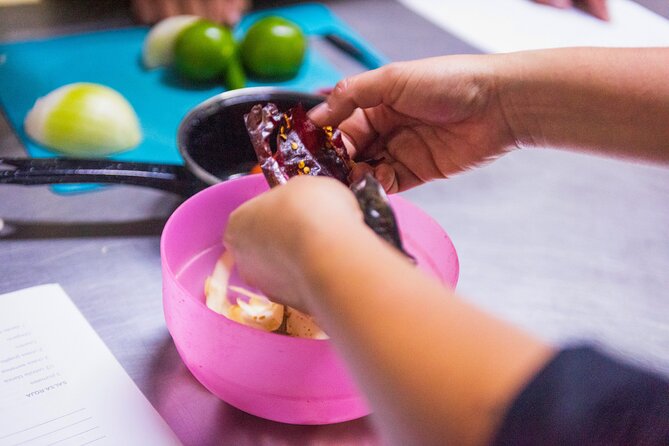
For the main, you’ll make tinga with either chicken or an option for vegetarians: oyster mushrooms seasoned with smoked chipotles. The class notes that you can adjust it to be as mild or as spicy as you like.
That chipotle detail is more than flavor trivia. Chipotles bring smoky depth, and learning how they’re used in tinga helps you understand how Mexican “heat” often works—warm, smoky, and layered, not just hot.
And the vegetarian option is genuinely practical. Oyster mushrooms can stand in for meat because they soak up sauce flavors well. You’ll get a sense of how tinga can be built as a sauce-and-protein dish, which makes it easier to adapt later.
Main Course: Papas con Chorizo for Comfort-Food Confidence
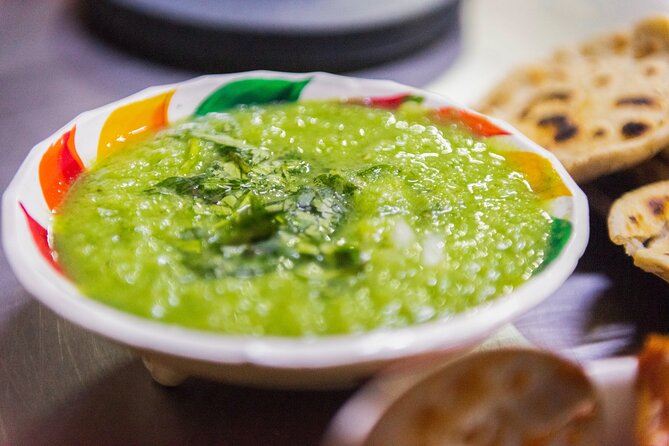
Another main is papas con chorizo: potatoes with chorizo, flavored and mildly spiced.
This course is a great contrast to the smoky chipotle flavor of tinga. Potatoes bring comfort and bulk, while chorizo adds savory punch. If your kitchen skills are still growing, a potato-and-sausage dish is also forgiving—there’s more room for texture mistakes, and the flavors help carry you through.
Also, pairing this with the salsa and masa skills you learn earlier gives you a full “toolbox” meal—something you can turn into a home dinner with minimal extra ingredients.
Main Course: Chilaquiles Rojos with Thick Crema
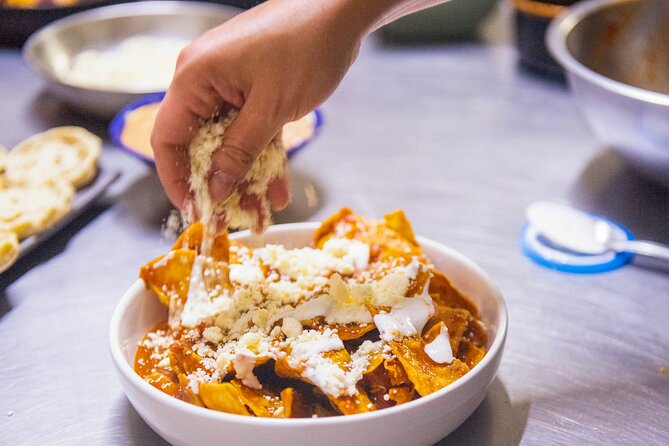
You’ll also make chilaquiles rojos. The description is clear: crunchy tortilla chips dipped in red salsa, topped with thick crema.
This dish teaches you something important about timing. If the chips are soaked too long, they lose crunch. If they’re not coated enough, you miss the salsa flavor. A class like this is one of the best places to learn the balance—because you can see and taste the difference immediately.
The thick crema topping is the finishing lesson. It rounds out heat from salsa and adds richness. If you’ve ever wondered why some chilaquiles taste smoother and more complete than others, crema is often the reason.
Dinner Is the Point: Eat What You Cook (Then Take More)
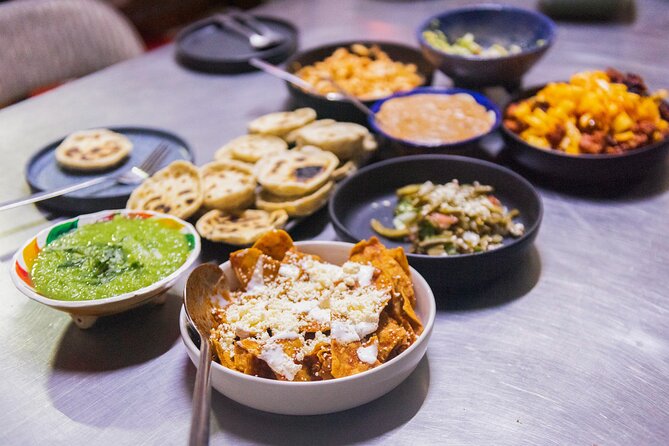
Everything you cook is for you to eat. Once the class is over, you can eat as much as you want, and if you don’t finish, you can take leftovers in containers provided by the class.
This is a big value factor. Many cooking classes teach you skills but don’t let you fully enjoy the results. Here, dinner is built into the experience, so you’re paying for instruction plus a real meal.
It also helps if you’re traveling. You can avoid planning a separate dinner that evening. You’re getting an actual dinner you can trust, with the bonus of learning how to repeat parts of it later.
The Take-Home Recipes: How to Use Them Without Guesswork
You’ll take home written recipes for the dishes you prepare. That matters because once you’re back home, your memory won’t be perfect—especially with things like chile types, salsa consistency, and how masa should feel while you shape it.
Written instructions won’t replace taste, but they do help you recreate your results. Use them right away while the class is fresh, and you’ll be amazed how much easier it becomes to remember the flavor logic.
If you cook a lot already, think of these notes as a shortcut. If you’re newer to Mexican cooking, they’re your safety net. Either way, they help you turn a great night out into something you can repeat.
Price and What You Get for $149.28
At $149.28 per person for about 3 hours, the price looks reasonable once you break down the components.
You’re paying for:
- A small group (max 8)
- Hands-on teaching in a professional kitchen
- All ingredients for the class
- An apron
- A full dinner worth of dishes you cook and eat
- Written recipes to take home
- Leftover containers
In other words, you’re not just buying a class. You’re buying dinner, recipes, and skill-building time all together. That’s where the value sits.
The one extra cost to think about is transportation, since private transport isn’t included. If you plan your route to Roma Nte. ahead of time, that cost stays manageable.
Logistics That Actually Matter: Timing and Location
The class starts at 6:00 pm and ends back at the meeting point. The start location is Tonalá 194, Roma Nte., Cuauhtémoc, 06700 Ciudad de México.
Because there’s no private transportation included, I’d treat this like a normal evening appointment. If you rely on public transit, build a little buffer for walking and finding the exact entrance.
Also, since the class is in English, it’s a good pick if you’re more comfortable learning culinary technique in plain terms rather than through a language barrier.
Who This Class Suits Best
This cooking class is a strong match if:
- You want to learn core Mexican techniques like salsa, chile usage, masa handling, and nopales cooking
- You prefer small group instruction over a big, noisy show
- You want to eat what you make without worrying about where dinner will be
- You like taking notes you can actually use later at home
You might skip it if you’re looking for a super fast, single-recipe workshop. This class is built for learning basics and cooking multiple dishes, so it’s more about progression than quick hits.
Should You Book This Mexican Cooking Class?
If you want a practical night in Mexico City that rewards you twice—once with a real dinner, and again when you cook those flavors at home later—this is a smart choice. The max 8 group size and the focus on fundamentals (green salsa, chiles, masa, nopales) are the core reasons it works, not just the menu.
Book it if you like hands-on learning and you’ll use the written recipes. Pass if you only want a casual taste test with minimal cooking.
FAQ
What is the duration of the cooking class?
The class runs for about 3 hours.
Where does the class meet and start?
It starts at Tonalá 194, Roma Nte., Cuauhtémoc, 06700 Ciudad de México.
What time does the class begin?
The start time is 6:00 pm.
Is transportation included?
No. Private transportation is not included.
How many people are in the class?
The class has a maximum group size of 8.
Is the class taught in English?
Yes, it’s offered in English.
What dishes are included in the sample menu?
You’ll cook and eat sopes, nopales (cactus) salad, tinga (chicken or oyster mushrooms), papas con chorizo, and chilaquiles rojos.
Is there a vegetarian option?
Yes. For tinga, the protein can be oyster mushrooms instead of chicken.
What’s included in the price besides cooking?
You get the ingredients, an apron, and dinner of everything you cook, plus written recipes. If you don’t finish, you can take leftovers in containers.
What is the cancellation policy?
You can cancel for a full refund if you cancel at least 24 hours before the experience start time. Free cancellation is allowed up to that window.
More Good Plates in Mexico City


Eat and Drink Across Mexico City

More Tour Reviews in Mexico City




Fresh from our Mexico City notebook



Food & Drink, compared.
 ★ 5.0Historic Center Food Tour in Mexico CityFrom $1151,263 reviews
 ★ 5.0Lucha Libre Tickets & Tacos & Beer & Mezcal – BEST NIGHT EVER!From $841,077 reviews
 ★ 5.0Polanco Food Tour: The Bestselling Food Adventure in Mexico CityFrom $109881 reviews
 ★ 5.0Colonia Roma Food TourFrom $110838 reviews
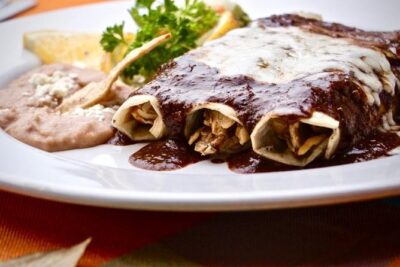 ★ 5.0Mexico City Historical Centre Food Tour with 7 Authentic TastingsFrom $65723 reviews
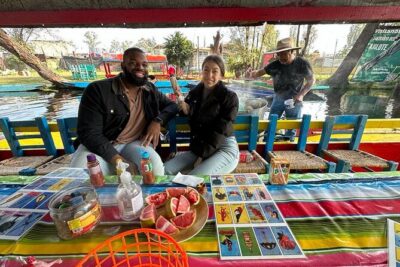 ★ 5.0Mexico City Boat Tour Food and Unlimited Drinks Priority BoardingFrom $63653 reviews
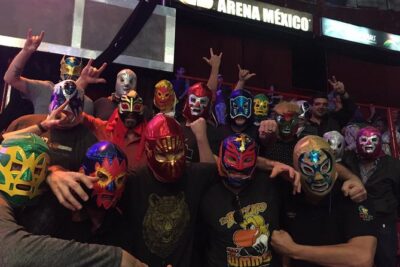 ★ 5.0Lucha Libre Tour and Mezcal Tasting in Mexico CityFrom $134519 reviews
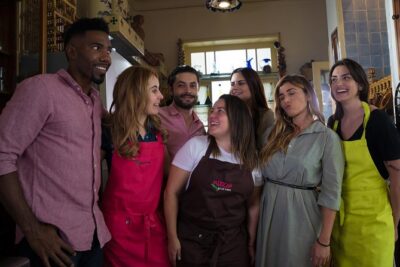 ★ 5.0Mexican Cooking Class with Food Market Visit in Mexico CityFrom $124506 reviews
Browse the lists this tour appears in