REVIEW · MEXICO CITY
Baking Delicious Traditional Mexican Bread
A market walk becomes bread magic. This CDMX class blends a trip through San Cosme Market with neighborhood stops in San Rafael, then ends at Verónica’s home kitchen to bake traditional breads and make Oaxacan chocolate. You’ll also fit in a stop at a Michelin-star taqueria and a look at major cultural spots tied to the area’s arts scene.
I especially love the market-to-kitchen flow: you get the right ingredients first, then you actually turn them into something you can eat (and repeat later). I also like that Verónica’s teaching style feels welcoming and practical, so even if you’ve never baked in your life, you’ll still leave with real confidence.
One thing to consider: this isn’t a sit-and-watch food tour. You’re doing hands-on baking in a home kitchen, and the experience starts at Mercado De San Cosme, so you’ll want to plan your own transit to that meeting point since private transportation isn’t included.
In This Review
- Key highlights you’ll actually care about
- San Cosme Market: the smartest start to your baking lesson
- The Michelin-star taqueria stop (and why it fits)
- Opera House, cinema, and the architect colony vibe
- From dough talk to real baking: conchas and pan de muerto
- Oaxacan chocolate pairing: real origin, real flavor
- What you take home: recipes that actually help
- Price and logistics: how $70 pencils out
- Who should book this CDMX bread and chocolate class?
- Should you book this San Rafael baking class?
- FAQ
- How long is the baking experience?
- How many people are in the group?
- What language is the tour offered in?
- Where does the tour start and end?
- What’s included in the price?
- What will I be making?
Key highlights you’ll actually care about
- San Cosme Market ingredients first so your baking lesson starts with what you’ll use
- A Michelin-star taqueria stop tucked into the neighborhood walk
- Opera House and the architect-colony stories, including references to Remedios Varo
- Conchas and pan de muerto baking in Verónica’s home kitchen
- Oaxacan chocolate brought in from Oaxaca, paired directly with your bread
- Recipes to take home so your next batch doesn’t rely on memory
Weighing this one up? Here is how it lands next to a few Mexico City favourites:
- Teotihuacan, Guadalupe Shrine & Tlatelolco Day Tour with Lunch
★ 5.0 · 11,603 reviews - Xochimilco, Coyoacan and Frida Kahlo with Optional Lunch
★ 4.5 · 7,320 reviews - Balloon flight + Breakfast in cave + Pyramids + Pick up CDMX.
★ 5.0 · 6,335 reviews - Teotihuacan pyramids morning or afternoon without tourist traps
★ 5.0 · 6,186 reviews
San Cosme Market: the smartest start to your baking lesson
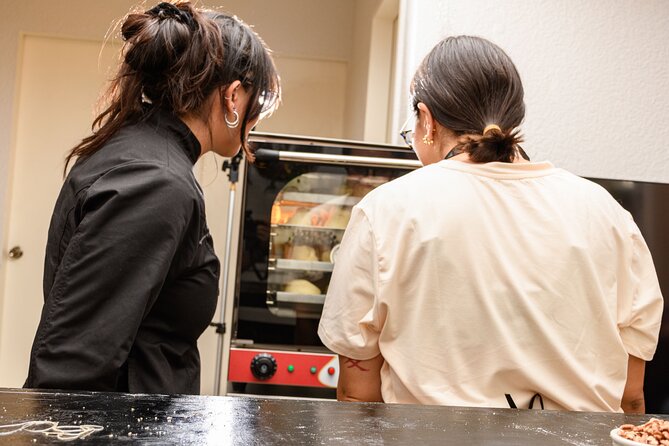
Your afternoon begins at Mercado De San Cosme in the San Rafael area. Instead of jumping straight to dough, you go where the ingredients live and you get your bearings in the neighborhood while you’re learning what matters. That matters because Mexican bread isn’t just flour and sugar—it’s technique, timing, and the right pantry items.
Expect a guided walk that helps you notice what you’d usually pass by in a hurry. The whole point of this start is to connect what you see in the market with what you’ll make later. When you reach the kitchen, the shopping choices stop feeling abstract.
Also, the market start helps you pace the day. You’ll be walking, seeing, and learning before you switch into a focused baking rhythm.
The Michelin-star taqueria stop (and why it fits)
The tour includes a stop at the only taqueria in Mexico City that’s described as having a Michelin star. I like how this works in context: you’re not just “adding food,” you’re grounding your bread lesson in Mexico City eating culture right in the middle of the neighborhood.
This is a practical break, too. You’ll keep your energy up with snacks, and the meal stop gives you a contrast from the sweet bread you’ll be baking later. In a day like this, that contrast is what keeps your taste buds fresh instead of overloaded.
One small caution: if you’re hoping to spend lots of time sitting down and ordering a long meal, this stop is best treated as part of the route. The emphasis stays on the baking experience.
Opera House, cinema, and the architect colony vibe
After you leave the market area, you shift from food shopping to cultural stops. The experience includes the Opera House and a cinema that’s described as one of the most important in the region, plus time in what’s known as the colony of architects.
What I like about this portion is that it gives meaning to the streets you’re walking. You’re not just ticking off landmarks. You learn why the area became a home for artists, including Remedios Varo, and you start to see the neighborhood as a creative zone, not only a place to eat.
This is also a good pacing tool. After market browsing (which can be visual and a little sensory-chaotic in a normal way), the cultural stories slow your brain down. You get a calmer mental reset before the kitchen work starts.
- Teotihuacan, Guadalupe Shrine & Tlatelolco Day Tour with Lunch★ 5.0 · 11,603 reviews
- Xochimilco, Coyoacan and Frida Kahlo with Optional Lunch★ 4.5 · 7,320 reviews
- Balloon flight + Breakfast in cave + Pyramids + Pick up CDMX.★ 5.0 · 6,335 reviews
- Teotihuacan pyramids morning or afternoon without tourist traps★ 5.0 · 6,186 reviews
- Teotihuacan Early Access Guided Tour with optional Lunch★ 4.5 · 6,138 reviews
From dough talk to real baking: conchas and pan de muerto
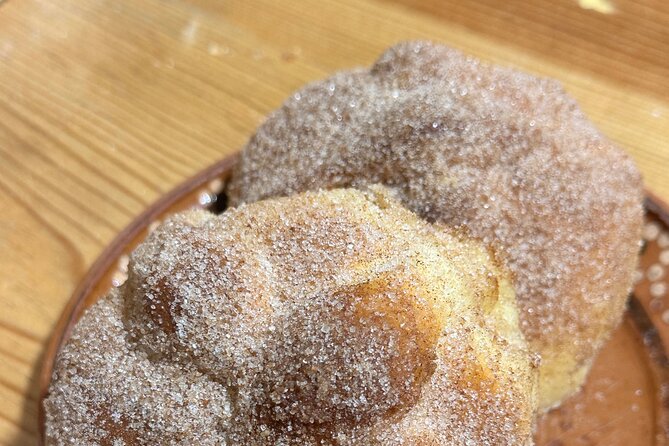
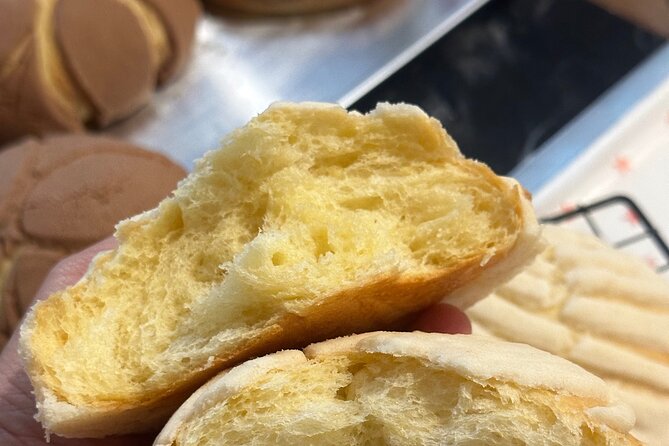
Then you get to the heart of it: baking at Verónica’s house. This is where the experience earns its keep. The class focuses on traditional Mexican breads, including conchas (the shell-shaped sweet bread) and pan de muerto—often called dead bread—depending on what the session prepares.
I love lessons like this because you’re not learning baking as a concept. You’re learning it as a sequence. You’ll work with the dough, shape what you’re making, and follow the steps that get the texture right. The hands-on format is the difference between tasting bread and understanding bread.
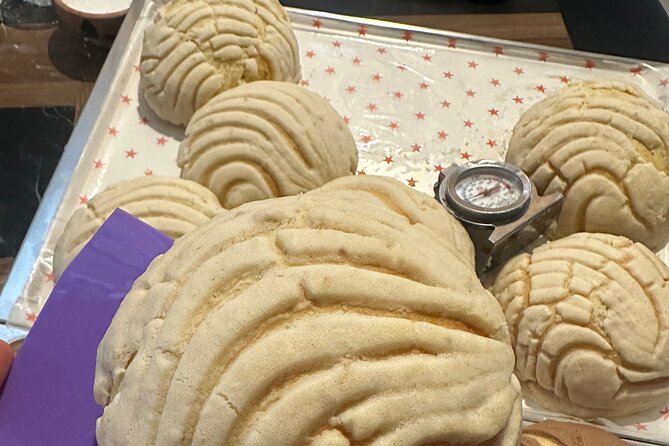
And yes, the names matter. Conchas teach you about sweetness and structure—those signature patterns aren’t just decoration. Pan de muerto teaches you about shaping and finishing a bread meant to be soft, fragrant, and pillowy on the inside.
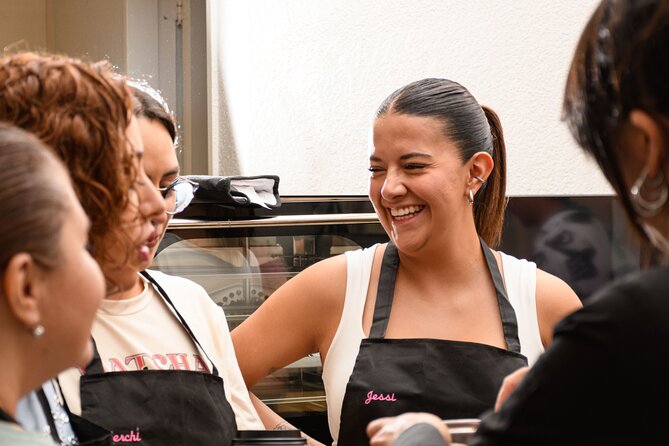
Because the group is limited to a maximum of 6 people, the class can actually stay interactive. You’ll have time for questions and adjustments instead of getting lost in a crowd.
Oaxacan chocolate pairing: real origin, real flavor
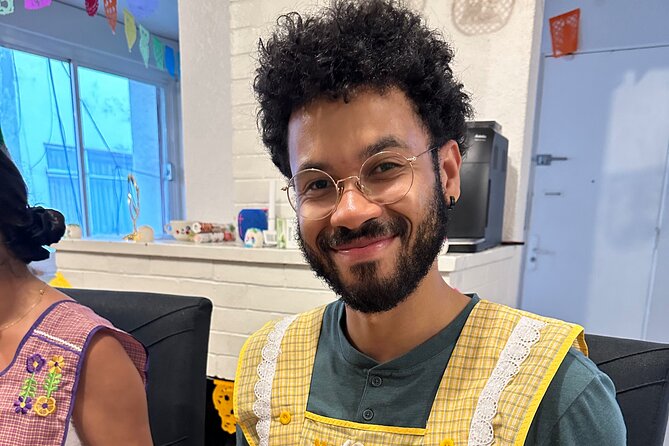
Your baking doesn’t end with bread. You’ll also make an Oaxacan chocolate to go with it. The tour specifies that the chocolate is brought directly from Oaxaca, which is important if you care about authenticity rather than using generic grocery-store chocolate.
What you’re aiming for here is a classic pairing: bread with a chocolate that feels deep, warm, and made for drinking or spooning. In most Mexican baking experiences, chocolate is treated like an afterthought. Here, it’s part of the core plan.
And pairing is where your lesson becomes useful at home. Once you know how the bread tastes with chocolate—rather than just tasting them separately—you can recreate that balance later.
One more practical note: since you’ll be working with dough and making chocolate, you’ll want to keep your hands clean and be ready for a bit of mess. That’s not a problem—it’s the price of learning to bake properly.
What you take home: recipes that actually help
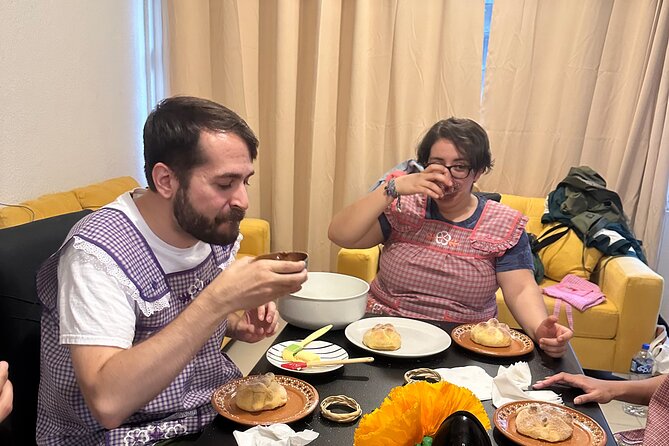
At the end, you take the recipes to prepare at home. I consider this a key value point, because cooking lessons can be fun and still leave you with nothing usable after. Recipes turn the memory into a plan.
You also leave with skills, even if you’re a first-timer. The “how” matters as much as the “what.” Once you’ve shaped conchas or pan de muerto and made chocolate that matches the bread, you can start thinking in steps instead of guessing.
This is also why the two-and-a-half-hour length works. It’s long enough to learn and produce results, but short enough that you’re not stuck in a half-day you can’t mentally manage.
Price and logistics: how $70 pencils out
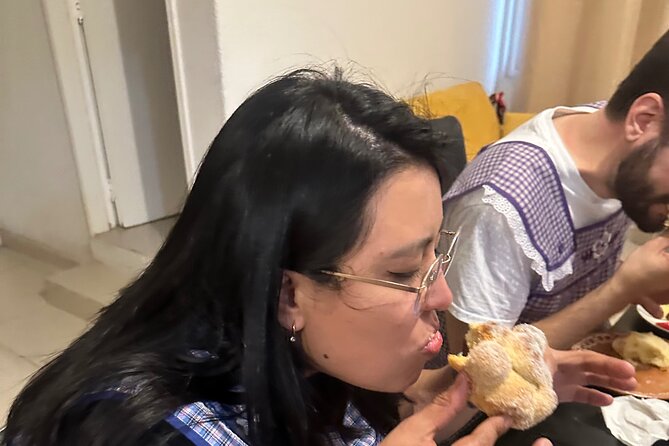
The price is $70 per person, and you’re getting a package-style experience: market time, guided cultural stops, a home-kitchen baking lesson, kitchen equipment, snacks, and coffee and/or tea, plus the guide. Private transportation is not included, so you’ll pay for getting yourself to the meeting point.
Here’s how I’d judge the value: if you want a simple market walk plus a snack, you can do that on your own. But if your goal is to learn bread-making with ingredients, tools, and direct instruction, this is where the cost makes sense. Baking lessons require setup, supplies, and time. You’re paying for that structure—plus the cultural context that runs alongside it.
Also, the group size matters. A maximum of 6 people usually means better attention per person, which is hard to find with food tours that cram dozens of people into the same stop.
The English offering helps, too, because it keeps the lesson from turning into a “watch and guess” experience.
Who should book this CDMX bread and chocolate class?
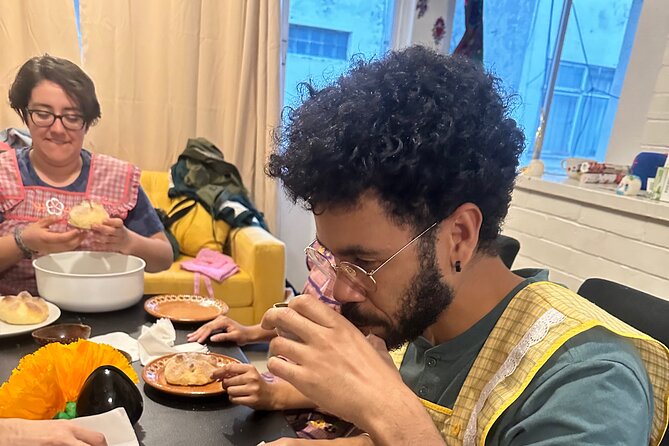
This tour is ideal if you want more than photos. You’ll enjoy it most if you like hands-on food experiences, you want to learn traditional Mexican breads, and you’d rather eat what you make than just observe.
It also suits couples and small groups because the class is sized tightly. And because the format is practical—market, then mixing, shaping, and pairing—this isn’t limited to people who already cook.
If you’re the type who hates kitchen mess or you need a very low-activity itinerary, you might find the hands-on part tiring. You’ll also want to be comfortable meeting at Mercado De San Cosme and handling your own local transit, since private transportation isn’t included.
Should you book this San Rafael baking class?
Book it if you want an authentic, skills-based food experience in Mexico City. The combination of San Cosme Market, a major neighborhood cultural walk, and then baking conchas or pan de muerto in Verónica’s home kitchen makes the afternoon feel complete instead of piecemeal.
I’d also book it if you care about pairing—bread plus Oaxacan chocolate—because the lesson treats chocolate as a real companion to what you bake, not just a sweet extra.
Skip it only if you’re strictly looking for passive sightseeing or you want a long sit-down meal experience. This is a working kitchen day, and the best results come from leaning in, rolling up your sleeves, and tasting as you go.
FAQ
How long is the baking experience?
It lasts about 2 hours 30 minutes.
How many people are in the group?
The tour has a maximum of 6 travelers.
What language is the tour offered in?
It’s offered in English.
Where does the tour start and end?
It starts at Mercado De San Cosme, C. Gabino Barreda 18, San Rafael, Cuauhtémoc, 06470 Ciudad de México, CDMX, Mexico, and ends back at the same meeting point.
What’s included in the price?
Included are snacks, kitchen equipment, coffee and/or tea, and a guide.
What will I be making?
You’ll learn to prepare traditional Mexican bread, including shells/conchas and pan de muerto, and you’ll prepare Oaxacan chocolate to go with it. You’ll also take recipes home.